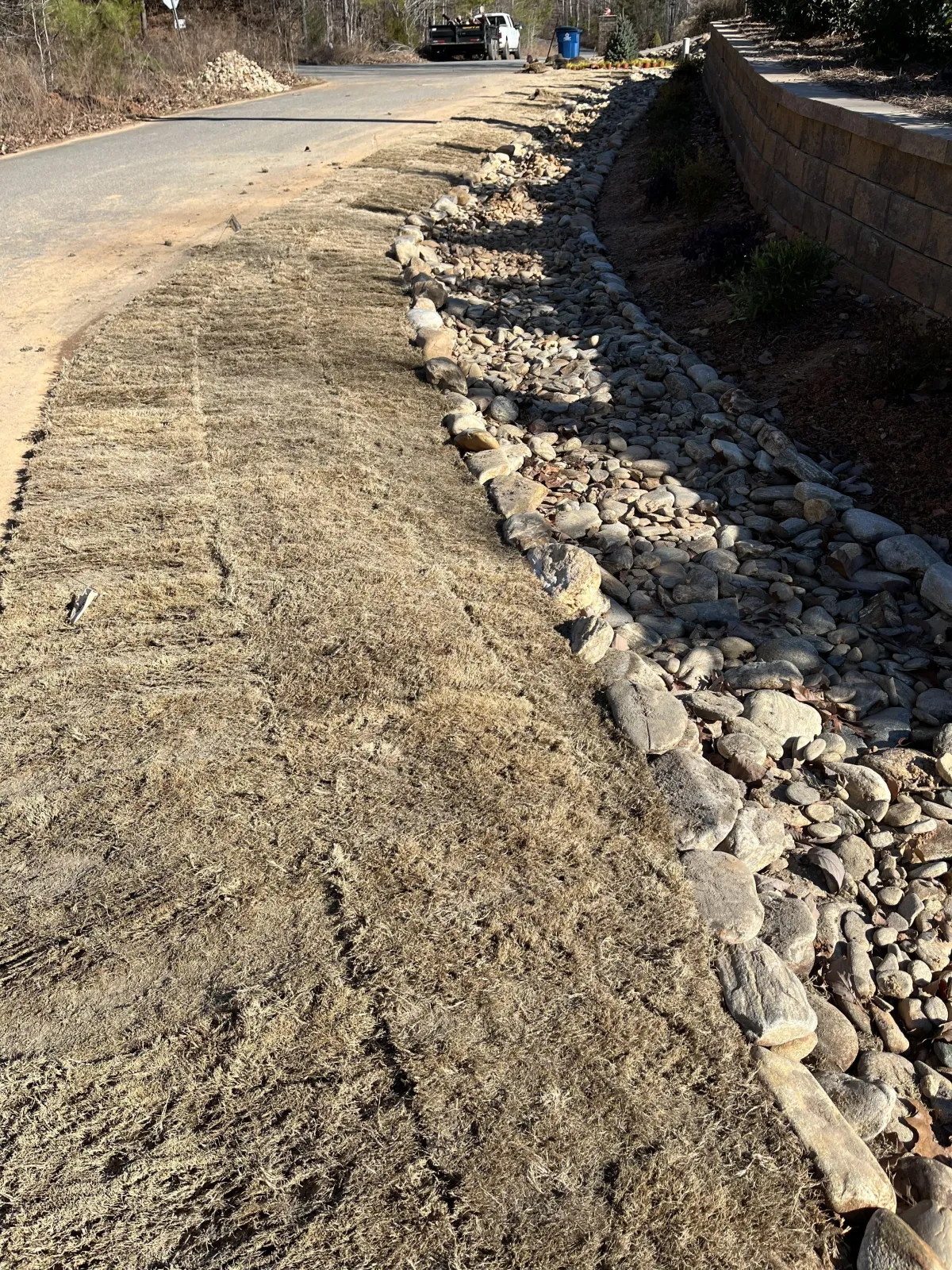
Lake Norman's heavy red clay does not absorb water. When rain has nowhere to go it pools in the low spots, runs toward the foundation, and kills whatever you planted last spring. We fix the cause — where the water comes from and where it needs to end up — instead of patching the puddle.
If any of these sound like your property, it's worth a free on-site look.
Perforated pipe in a fabric-wrapped stone trench that intercepts water moving underground and carries it to a safe outlet. French drain installation.
Grated basins at low spots that collect surface water and send it through solid pipe to the outlet. Catch basin installation.
Linear grates across driveways, patio edges and walkways where water sheets across hard surfaces.
Buried solid pipe from each downspout to daylight or a pop-up emitter well away from the foundation. Downspout drainage.
Reshaping the ground so water moves away from the house by gravity, often with a shallow swale to carry it. Drainage correction grading.
Finding why a spot holds water — compaction, a bowl in the grade, a buried outlet — and fixing that. Standing water & soggy yards.
Getting roof and surface water away from the walls and crawlspace before it becomes a moisture problem.
Drain stone and pipe behind walls so water pressure doesn't push them over. Retaining wall drainage.
Dry creek beds, stone channels and stabilization where runoff is cutting the ground. Erosion control.
Pipe under a driveway or through a ditch line so water stops going over the top. Culvert pipe installation.
Access points so pipe can be flushed, and discharge lines that carry pumped water far enough that it doesn't circle back.
Not every wet yard needs a French drain. Before we recommend anything, we answer four questions on site: where the water comes from (roof, an uphill lot, a seep, or the grade itself), how it moves across and through the property, how fast the soil takes it in, and where it can legally and physically be discharged.
That last question decides more jobs than people expect. A drain without a lower, legal outlet just moves the puddle. Depending on the answer the fix might be grading, buried downspout lines, a catch basin, a French drain, a swale — or a combination tied into one outlet.
Surface water and subsurface water are different problems. Catch basins, channel drains and grading handle water on top of the ground; French drains handle water moving through it. See surface vs. subsurface drainage and French drain vs. catch basin.
We're a mobile crew — we come to your property. Most of our drainage calls come from Denver, Mooresville and Cornelius, plus Davidson, Huntersville, Troutman and the surrounding communities.
Price depends on the length of pipe, trench depth, how far the water has to travel to a legal outlet, access for equipment, and how much lawn or bed has to be restored afterward. We put that in a written, line-item quote after walking the property — no trip fee.
For the factors in more detail, read our Lake Norman drainage cost guide and what goes into French drain pricing.
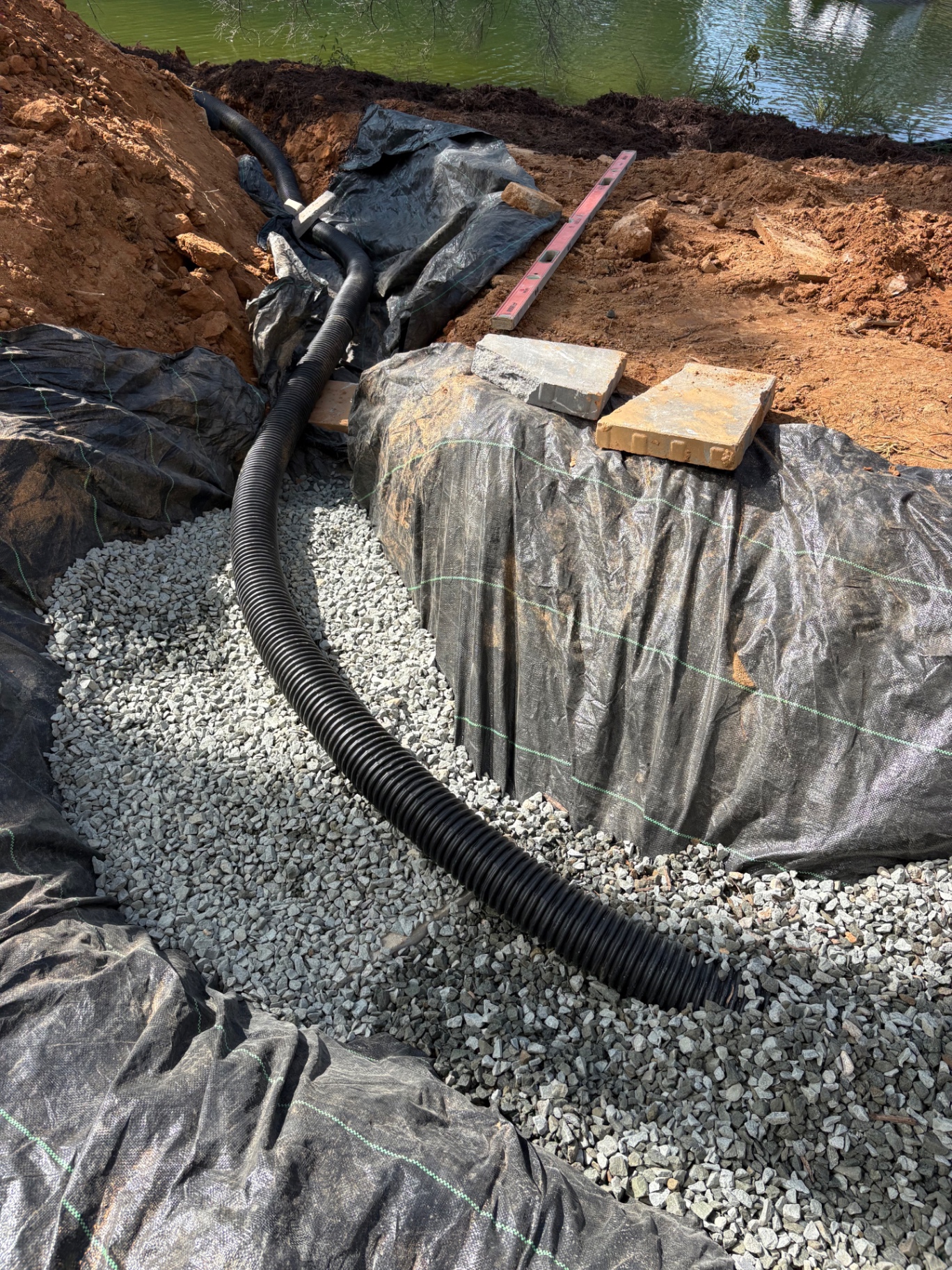
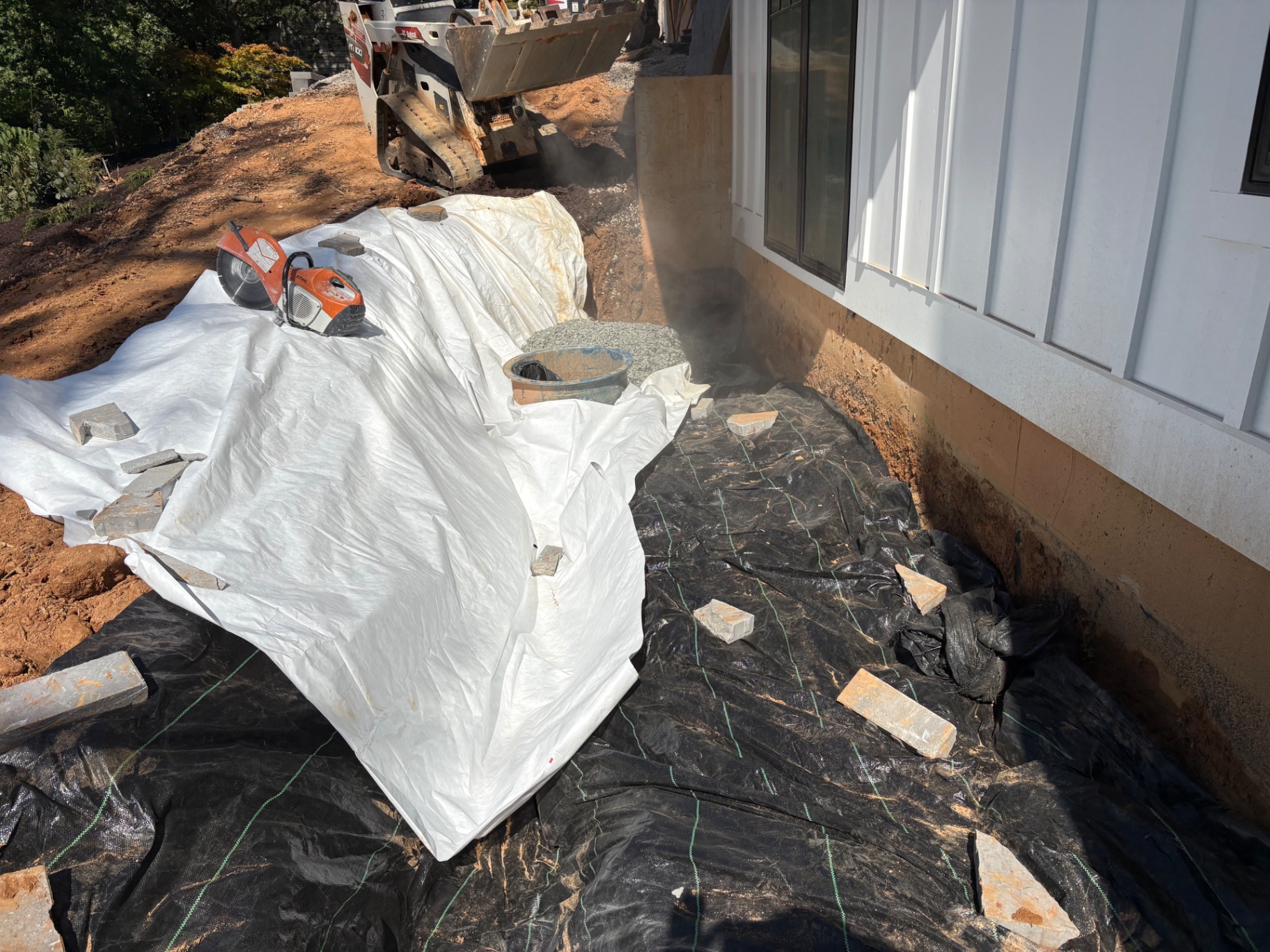
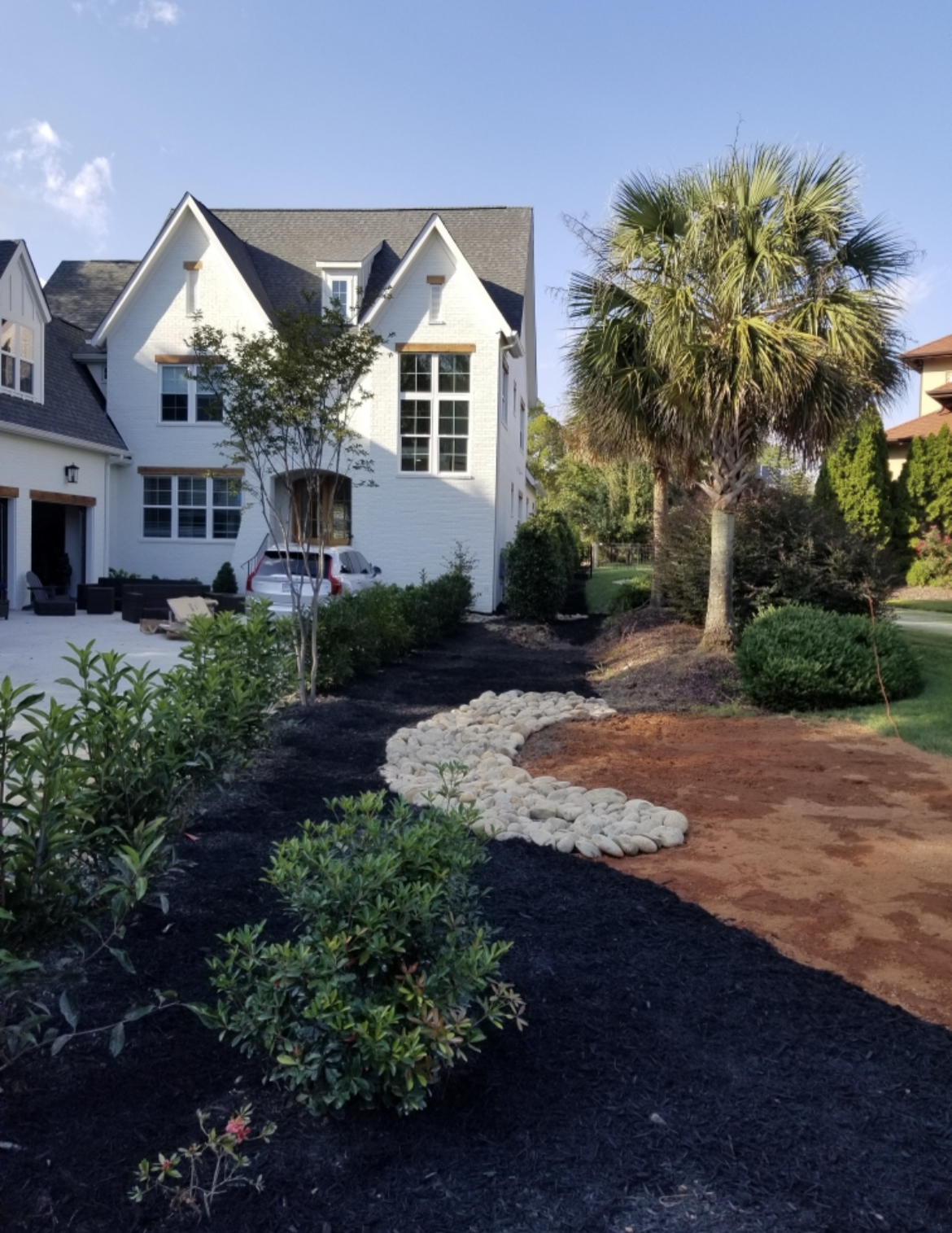
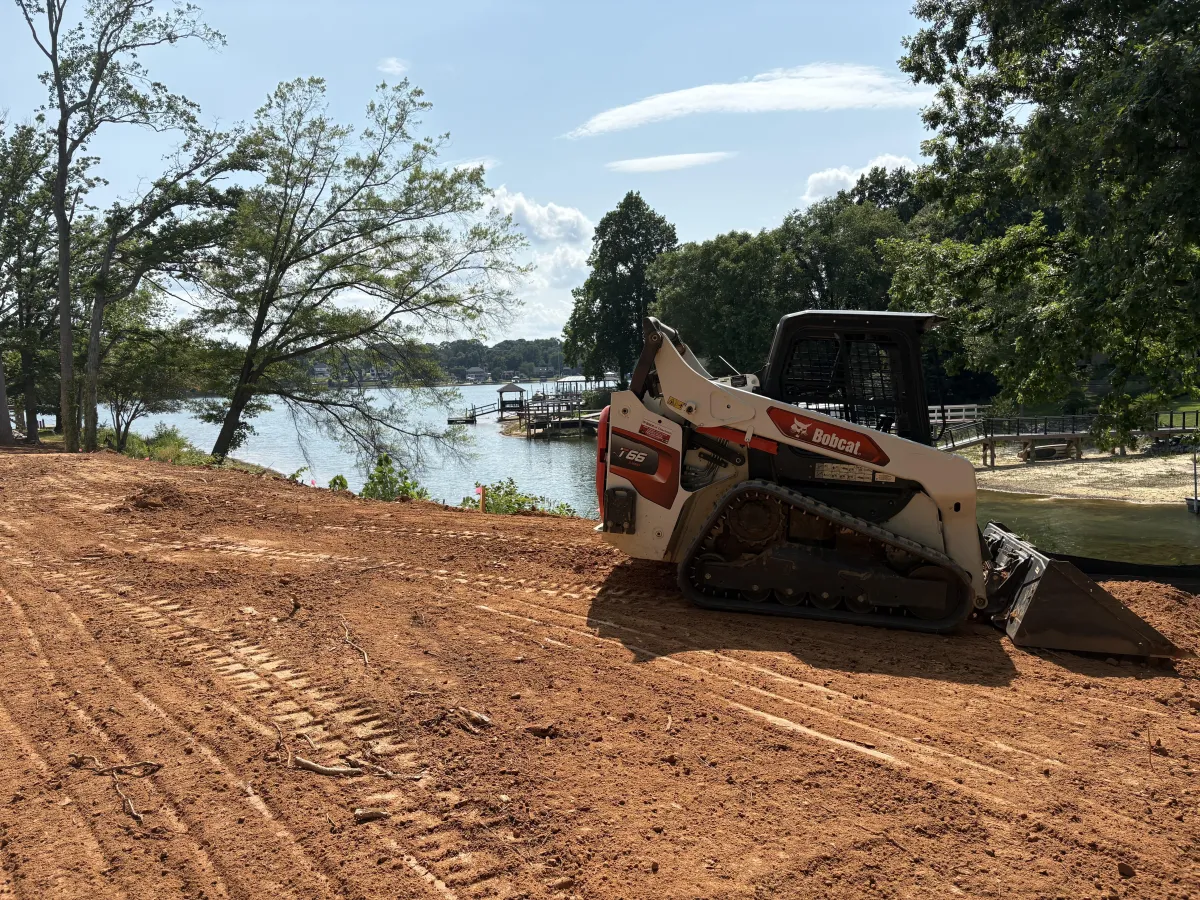
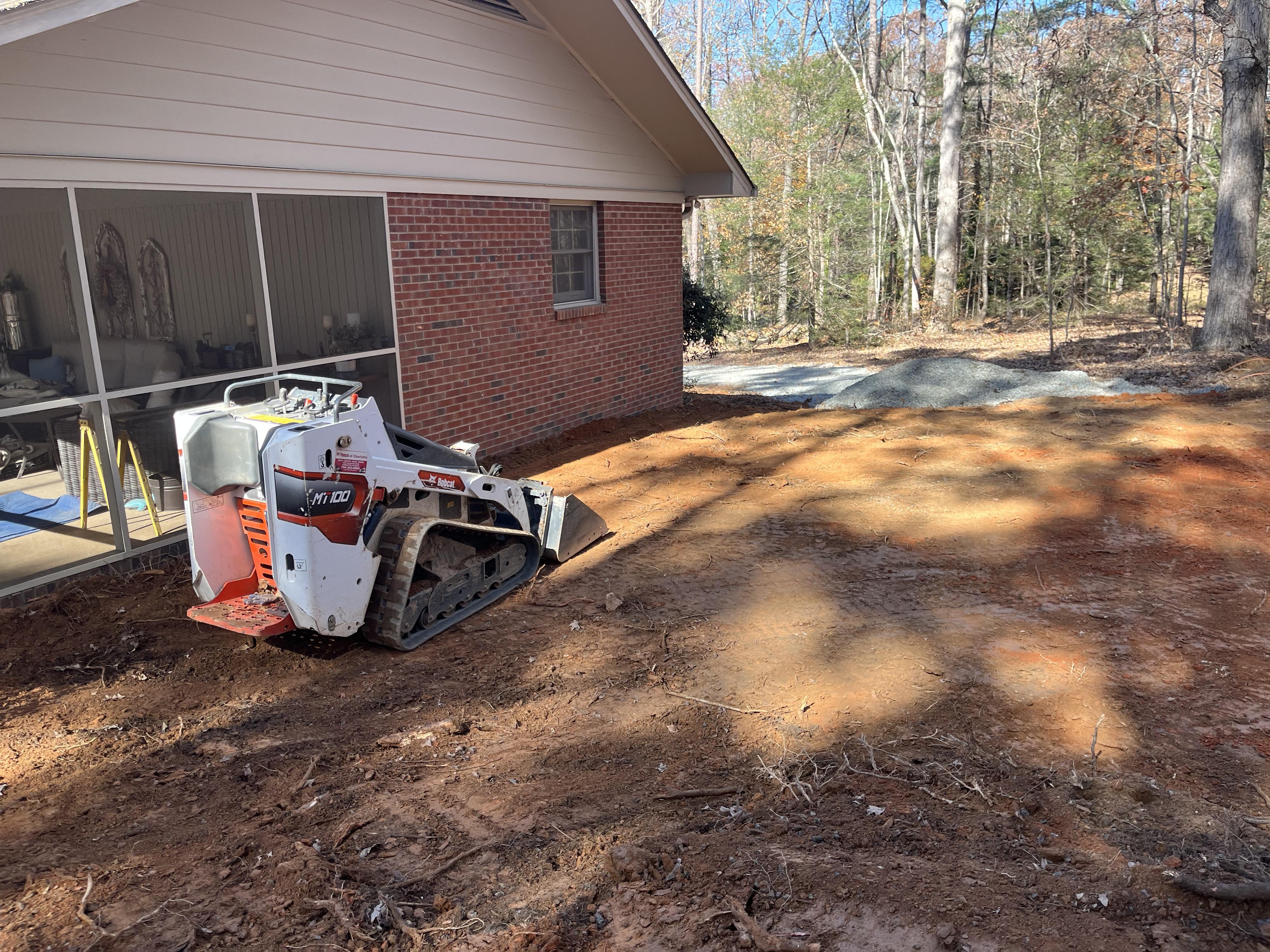
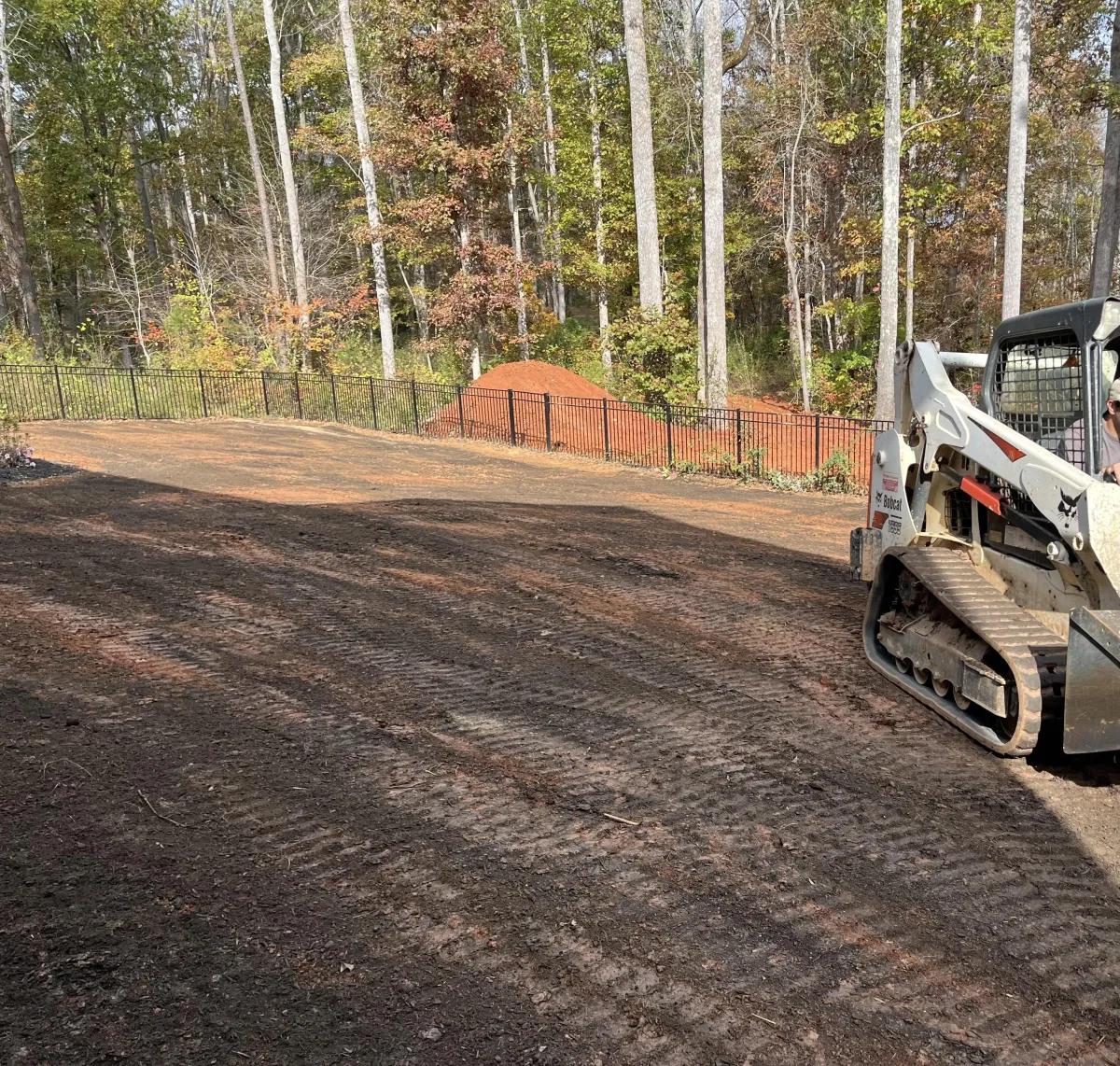
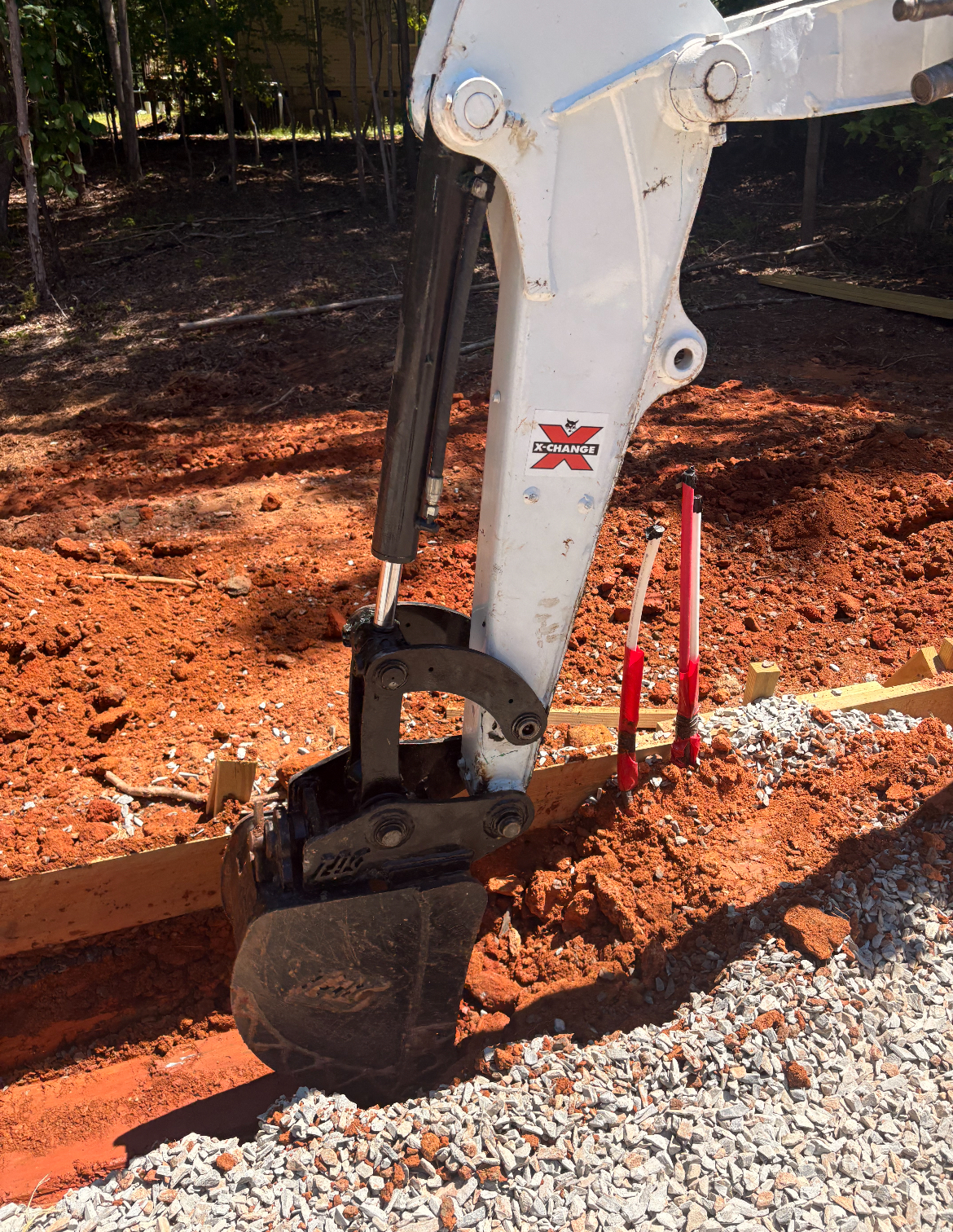
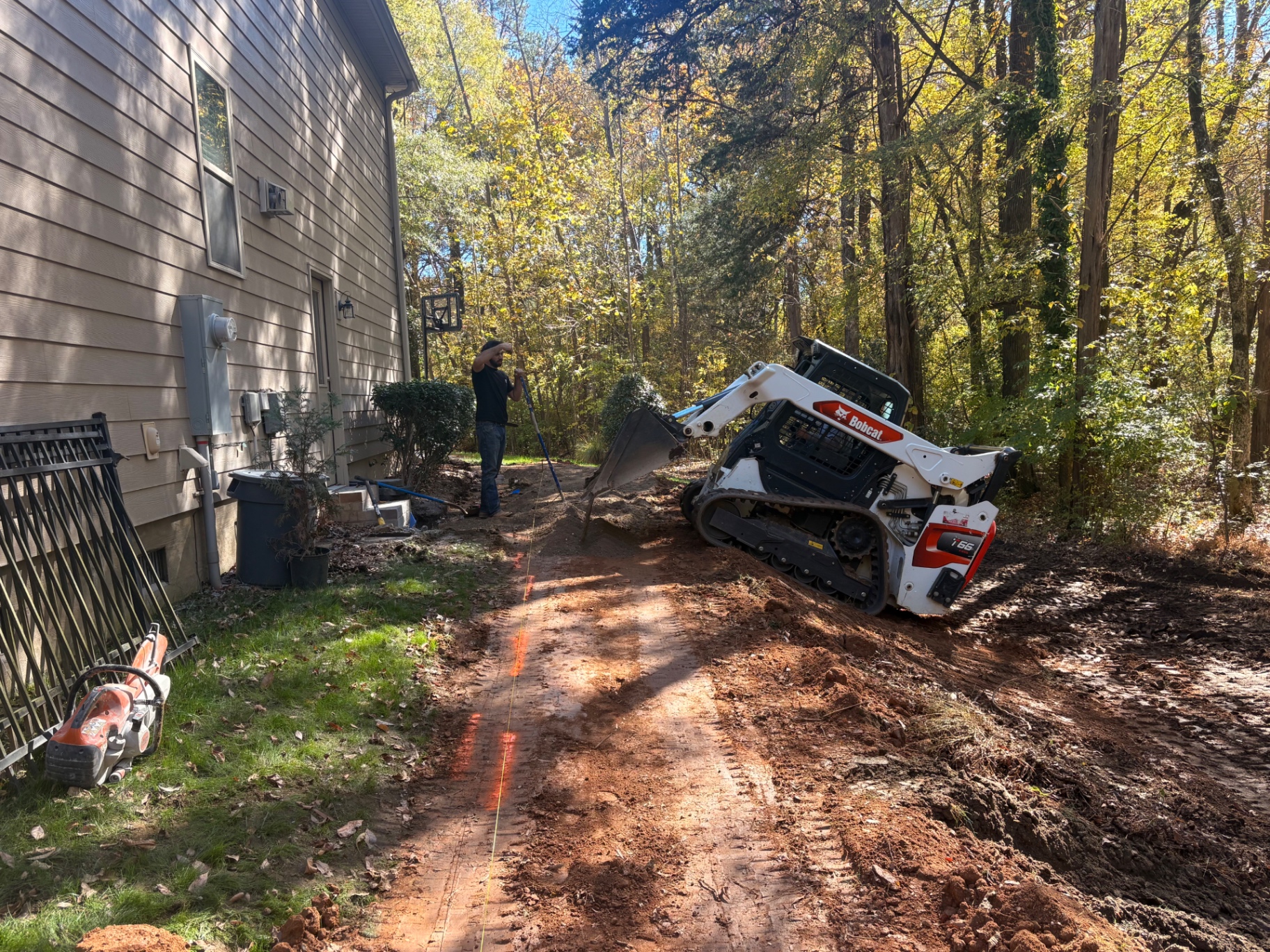
Drainage work on a Lake Norman property.
Tell us what's happening on the property. We'll set a time to come out.
We walk the property, check grade and soil, and identify the real cause — not just the symptom.
Clear scope and pricing in writing before anything starts. No trip fee, no pressure.
In-house crew, no subcontractors. We clean up and walk the finished job with you.
Where it stands, when it shows up, and whether your downspouts are buried. We reply the same day or first thing the next morning.
Because water is arriving faster than the ground can take it in. Across Lake Norman the usual culprits are roof runoff dumped at the foundation, a grade that falls toward the house instead of away from it, and heavy clay that holds water for days. A simple test tells you a lot: water gone within a few hours is normal, water still standing after 24 hours means infiltration has failed and the yard needs a piped outlet, not more topsoil. See how we diagnose a flooding yard.
A catch basin when water is standing on the surface in a defined low spot, and a French drain when water is moving underground and surfacing where you do not want it. Catch basins collect; French drains intercept. Many Lake Norman properties need both, tied into the same outlet. Here is how to tell which one your yard needs.
It depends on length, depth, soil, access and where the water can be discharged. We give a written quote after walking the property — estimates are free and there's no trip fee. Our French drain cost guide explains what moves the price.
Usually yes, when the water is coming from surface runoff or saturated soil against the foundation. We identify the source first so you are not paying for the wrong fix.
Most residential drainage jobs are completed in one to three days.
To a lower point where it can legally discharge — daylight at a lower grade, a pop-up emitter, a ditch or an existing storm structure, depending on the property. It can't be pushed onto a neighbor's lot. Finding that outlet is the first thing we check.
Yes. We can locate, test and flush existing lines, and tell you whether a failed system can be repaired or needs to be rebuilt.
Completed projects with the problem, the build, and the result.
Straight answers from our crews on how this work is planned, built and maintained around Lake Norman.
Related work we handle across Denver, Mooresville, Cornelius, Davidson, Huntersville and Troutman, NC.
Free on-site estimate — no trip fee, no obligation. Mobile service throughout Lake Norman and surrounding communities; we come to your property.