Denver sits on the rolling Piedmont uplands on the west side of Lake Norman, and the ground there is heavy red clay — the Cecil-series soil common across Lincoln County. That combination of clay and terrain is why drainage work in Denver can't be done from a generic spec sheet. The techniques that work are specific: where the trench is cut, how the pipe is protected from clay fines, how much fall the run has, and where the water is allowed to end up.
How water actually moves through Piedmont clay
Clay soil is made of very fine particles packed tightly together, so rain soaks in slowly. In practice that creates two separate water problems, and they need different fixes.
The first is surface water. When rain arrives faster than the clay can absorb it, water moves across the top of the ground toward the lowest point — usually a foundation, a patio edge or a swale that was graded during construction.
The second is interflow. Water that soaks through the top few inches of loosened soil hits the dense clay layer underneath and stops. It then travels sideways along the top of that clay until it surfaces somewhere downhill — which is why the soggy patch in a Denver yard is often nowhere near where the rain landed or where the puddle forms.
Any drainage plan that only addresses one of these two usually fails. Surface grading won't dry out a yard whose water is moving underground, and a French drain alone won't stop runoff that never soaks in at all.
Why French drains in clay have to be built differently
A French drain is a perforated pipe in a gravel-filled trench that intercepts subsurface water. On sandy ground you can put one almost anywhere and it will collect something. On red clay, three details decide whether it works for decades or silts up in two seasons.
Trench depth. To catch interflow, the trench has to be cut down into or through the top of the dense clay layer — the exact elevation where water is traveling sideways. A shallow trench skimming the topsoil collects almost nothing, because the water is moving below it.
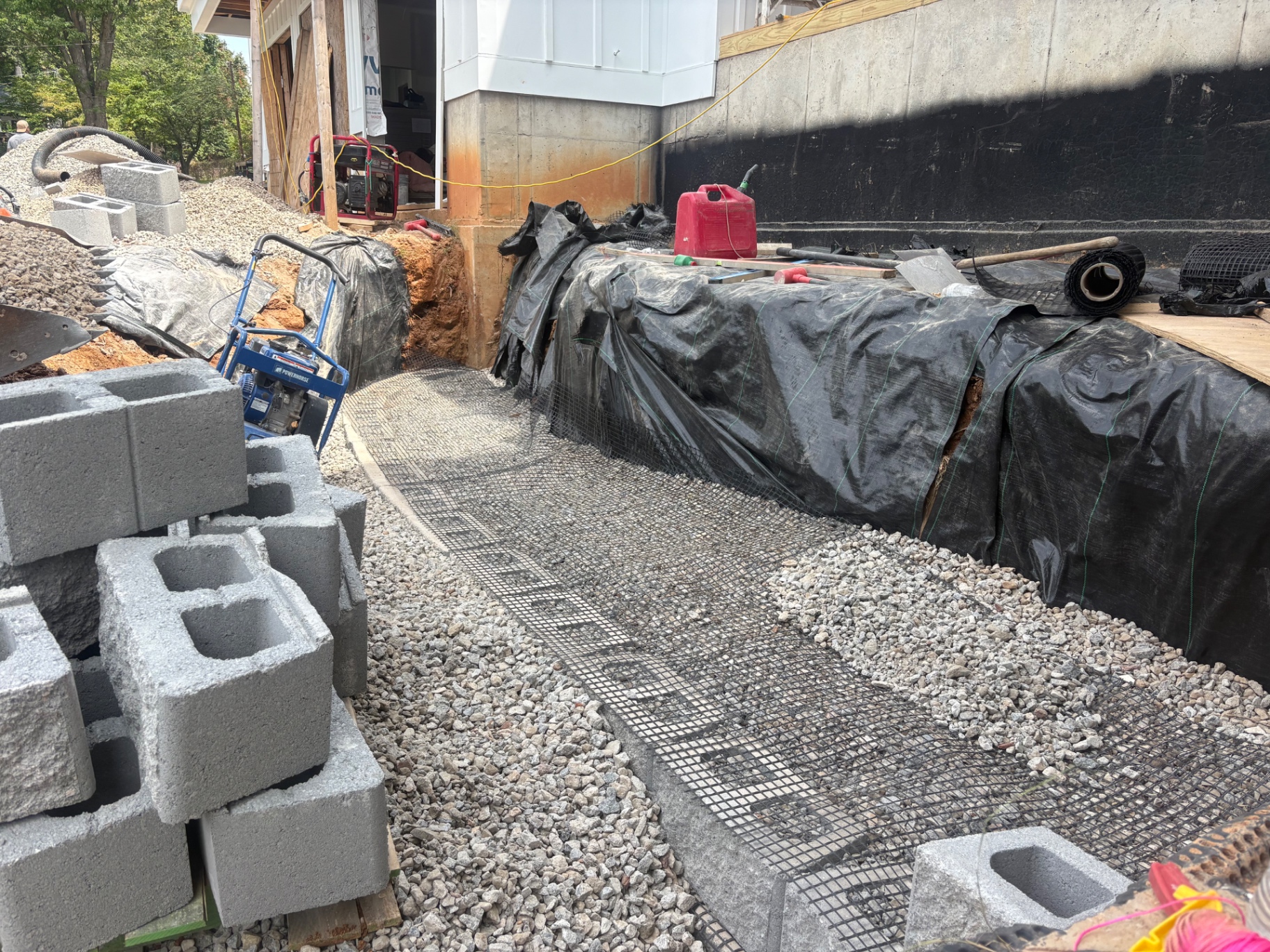
Stone and fabric. Clay particles are fine enough to wash into gravel and migrate into pipe openings, slowly sealing the drain from the inside. That's why we line the trench with filter fabric, use washed stone with no fines, and avoid the flexible sock-wrapped pipe often sold for clay ground — the sock clogs first and the whole run is scrap.
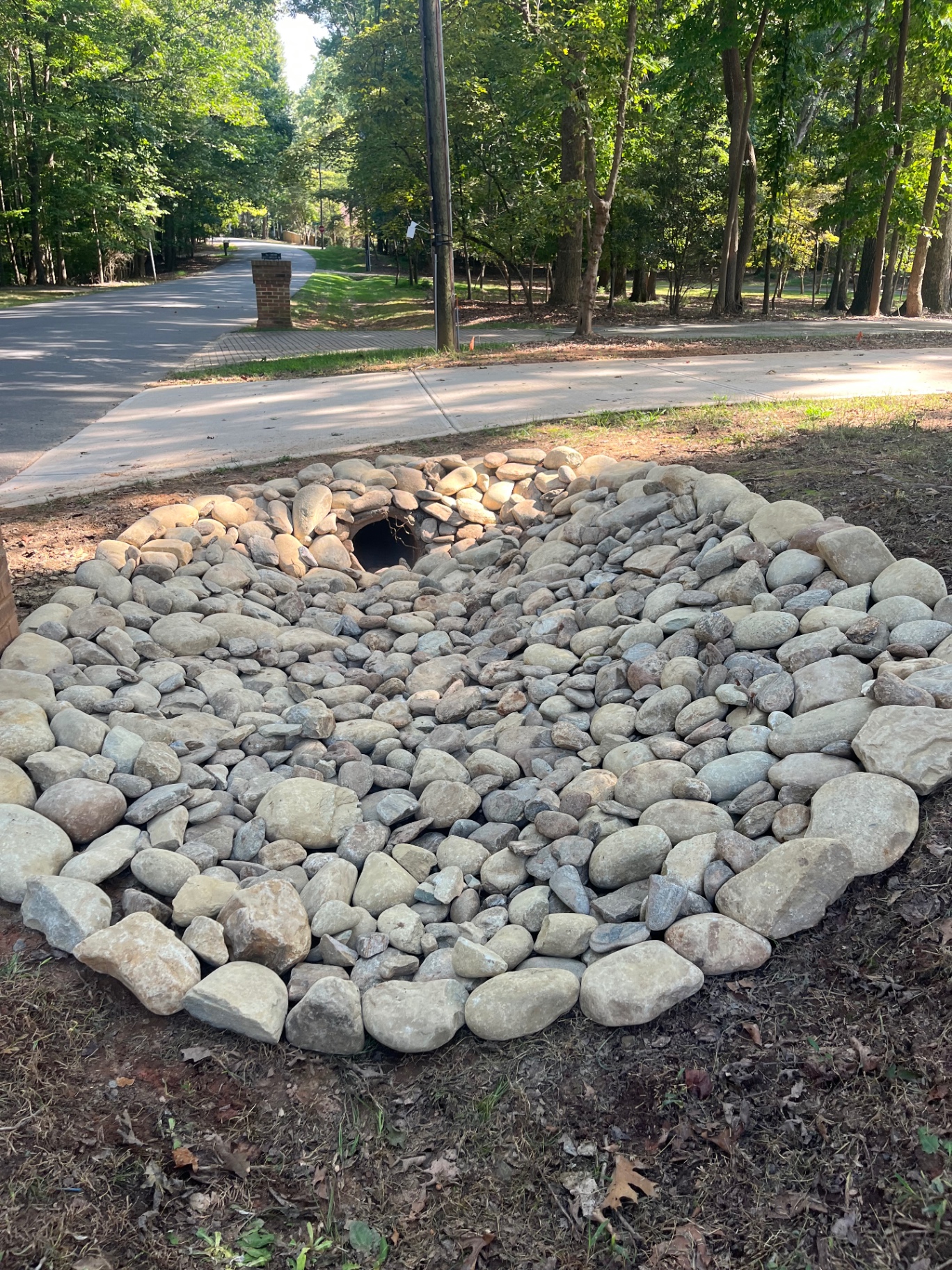
Slope and outlet. The pipe needs a consistent downhill grade for its entire run and an outlet that discharges to a point lower than the trench. On Denver's rolling lots there is usually usable fall somewhere on the property, and finding it is a design step, not an afterthought. Where a low spot has no natural outlet, a catch basin tied into solid pipe is the better tool.
More detail on the system itself is on our French drain installation page, and our comparison of dry wells versus French drains in clay covers when a drain is the wrong tool entirely.
Why grading is the first tool, not the backup
On clay, the cheapest and most durable fix is usually to reshape the surface so water never has a reason to pool. That means specific techniques, not just pushing dirt around.
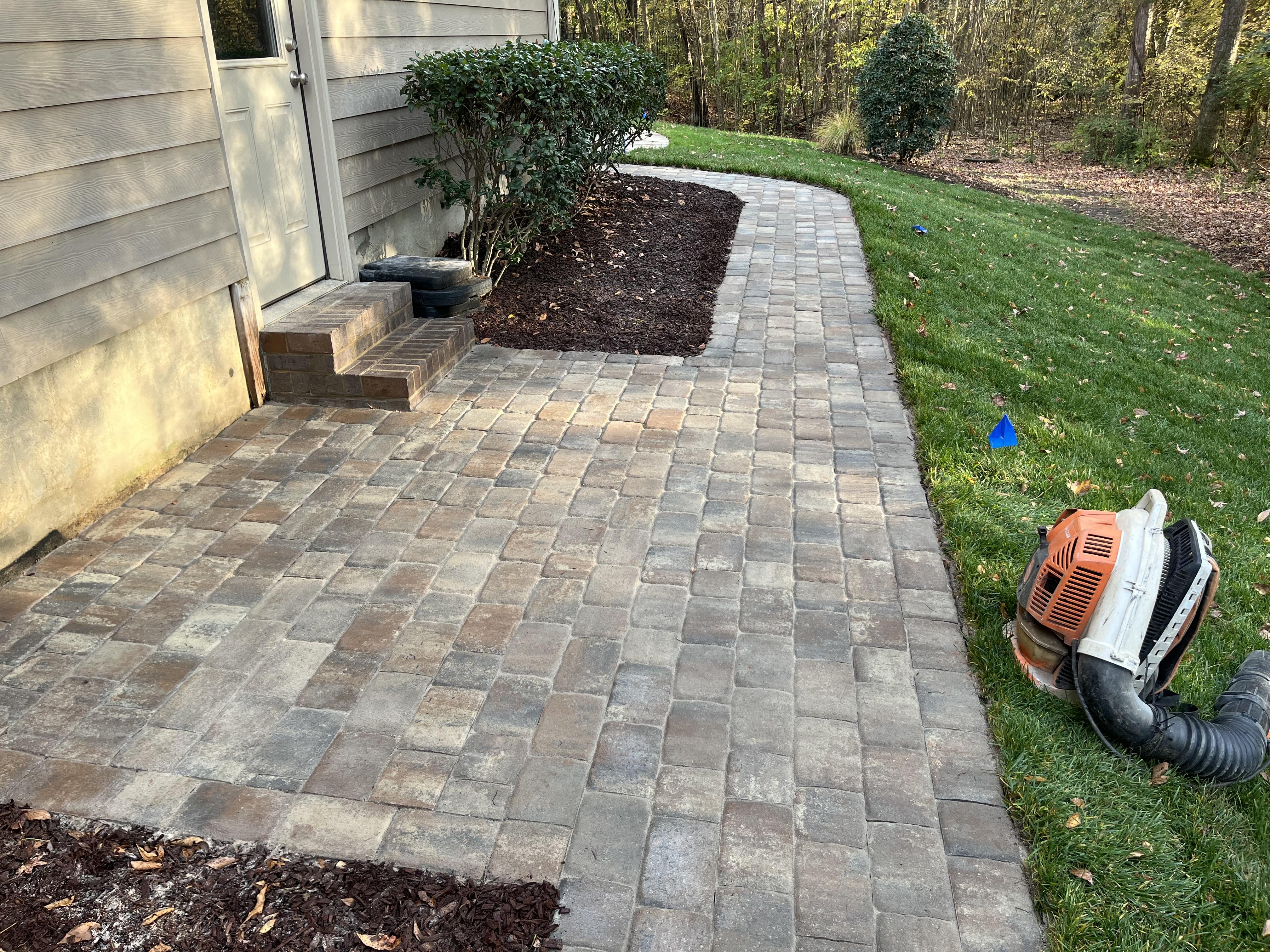
Positive fall at the foundation. The ground around the house should drop steadily for the first ten feet or so. On many Denver lots, years of mulch, bed edging and settling have flattened or reversed that fall, and water sits against the foundation after every storm.
Restoring swales. Subdivision lots in Denver were graded as a system, with shallow swales carrying water between properties toward a shared outlet. When landscaping fills a swale in, the water still arrives — it just no longer has a path. Re-cutting the swale to its original line is often the whole fix.
Benching on slopes. Where a yard runs downhill toward a house, patio or the lake, long uninterrupted slopes concentrate runoff and let it gather speed. Cutting a gentle bench or shallow channel partway down breaks the run and lets the water be intercepted and piped instead of washing the hillside.
Respecting the lot line. Grading that pushes your water problem onto the neighbor's property just moves the dispute. On compacted clay lots, bringing in fill to raise a low spot often does exactly that — the puddle relocates, and the soil underneath is still sealed.
Our grading and excavation page covers this work in more depth.
Denver's terrain adds slope problems most towns don't have
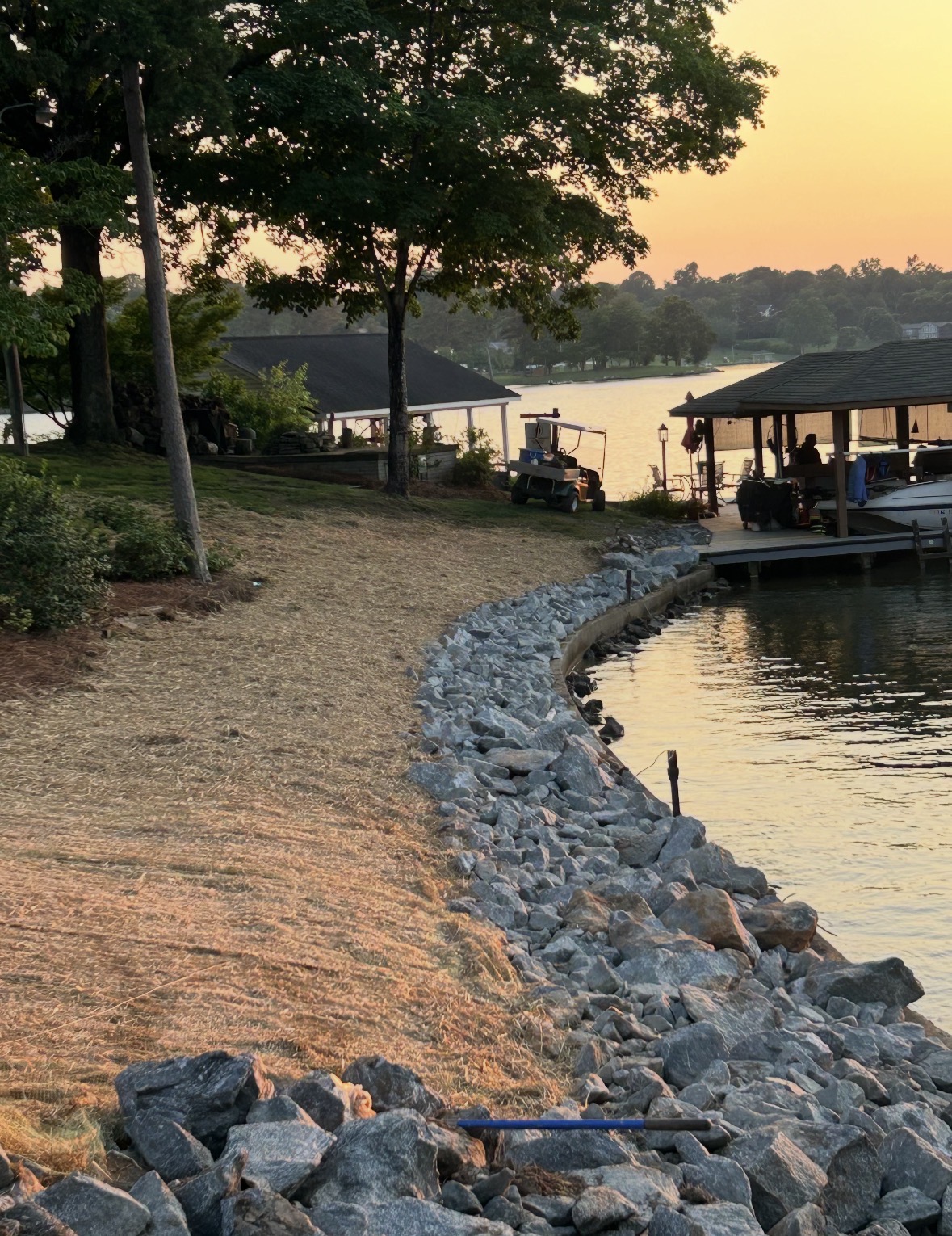
Because Denver sits on the uplands above Lake Norman, a lot of properties drop noticeably from the street toward the water or a wooded cove. That shape changes the drainage math.
Runoff from the roof, driveway and upper lawn all concentrates on the same downhill run. On clay, that flow erodes as it goes — you see it as washed-out mulch, bare clay streaks, and sediment collecting at the bottom of the slope.
The outlet question is different too. Lots sloping toward the lake usually have plenty of fall to daylight a pipe, which is a genuine advantage — but work near the shoreline can require approval from the lake's managing authority or the county, so requirements should be confirmed before any outlet is cut into a slope face.
For properties like these, erosion control and drainage get planned together: the same water that pools on a flat lot is carving the slope on a hillside lot.
Matching the technique to the water
The table below is how the diagnosis usually sorts out on a Denver property.
| What you're seeing | What it points to | The technique that fits |
|---|---|---|
| Puddle near the foundation after storms | Reversed or flattened grade at the house | Regrading for positive fall, plus downspout extensions |
| Soggy strip downhill from a neighbors' lot | A filled-in swale or interflow along the clay layer | Re-cut the swale, or a shallow interceptor French drain at the right depth |
| Low spot that holds water for days | Sealed clay depression with no outlet | Catch basin tied into solid pipe to a real discharge point |
| Bare streaks and washed mulch on a slope | Concentrated runoff gathering speed downhill | Benching the slope, then piping or a stone-lined channel |
Getting the diagnosis right in Denver
None of these techniques can be chosen honestly from a description over the phone — they depend on where the clay layer sits, which way the lot falls and where a legal outlet exists. That takes eyes on the property.
If you're not ready for a site visit yet, our free Drainage Helper tool asks a few questions about what you're seeing and suggests likely causes.
Southern Style Turf & Design diagnoses and builds drainage and grading work across Denver and the Lake Norman area, with our own crew on every project. The site visit and estimate are free, and you can also see what we do locally on our Denver service area page.
Frequently asked questions
Why does my Denver yard stay wet when my neighbor's dries out?
Clay depth and grading vary lot to lot. Your yard may sit where interflow from the surrounding lots surfaces, or your lot's swale was filled in during landscaping. Both are fixable once the water's path is traced.
Do French drains work in red clay?
Yes, if the trench is cut deep enough to reach the layer where water moves sideways, the gravel is washed stone with filter fabric, and the pipe has real slope to an outlet. A shallow trench or a sock-wrapped pipe in clay clogs and fails within a couple of seasons.
Can regrading fix standing water without a drain?
Sometimes. If the water is strictly on the surface, restoring the fall away from the foundation and re-cutting swales can solve it on its own. If water is also moving underground along the clay layer, grading alone only changes where it surfaces.
Does drainage work near the lake need approval?
Work near the shoreline can require approval from the lake's managing authority or the county. We check the requirements for the specific property before any outlet or slope work starts.
Want this looked at on your property?
We give free, no-pressure on-site estimates across Denver, Mooresville, Cornelius, Davidson, Huntersville and Troutman.