Standing water two days after a storm is the single most common call we get around Lake Norman. It is almost never bad luck. It is usually a combination of tight clay soil, a lot that was graded for the builder's convenience instead of the finished landscape, and roof water being dumped right next to the house.
Why Lake Norman soil holds water
Most lots from Denver through Mooresville and Cornelius sit on red Piedmont clay. Clay drains slowly by nature, and construction traffic compacts it further, so rain that would soak into sandy soil in an hour can sit on clay for a day or more.
Newer subdivisions make it worse. Topsoil is stripped during construction, the lot is compacted by equipment, and a thin layer of soil and sod goes back down on top. Water hits the compacted layer a few inches down and travels sideways instead of soaking in.
The four problems we actually find
Nearly every wet-yard call traces back to one of these, and each one has a different fix:
- Roof water — downspouts discharging at the foundation instead of being piped away.
- Negative or flat grade — the ground slopes toward the house or has no fall at all.
- Uphill runoff — water from a neighboring lot or the street crossing your property.
- Trapped low spots — a bowl in the lawn with nowhere for water to go.
Matching the fix to the cause
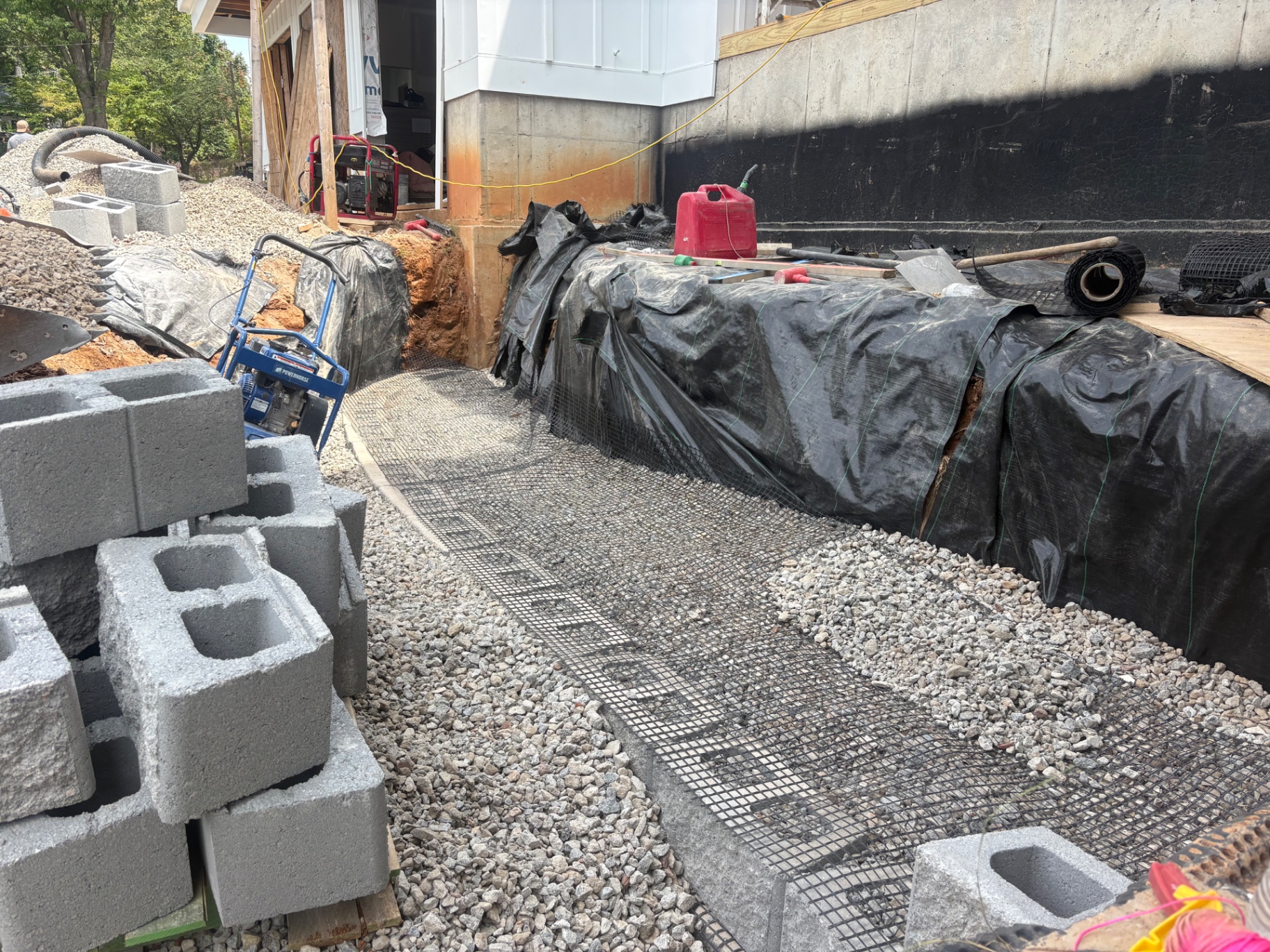
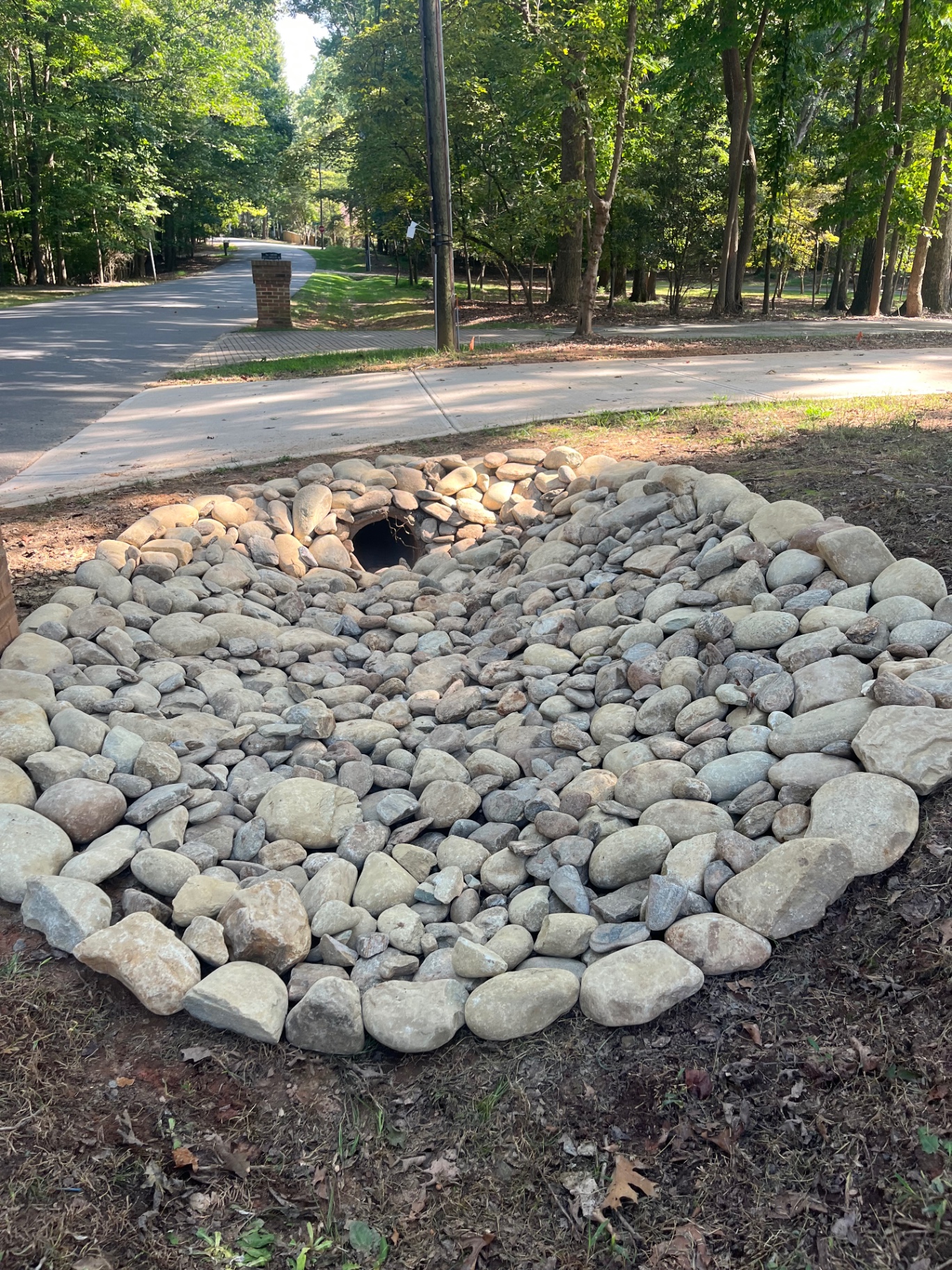
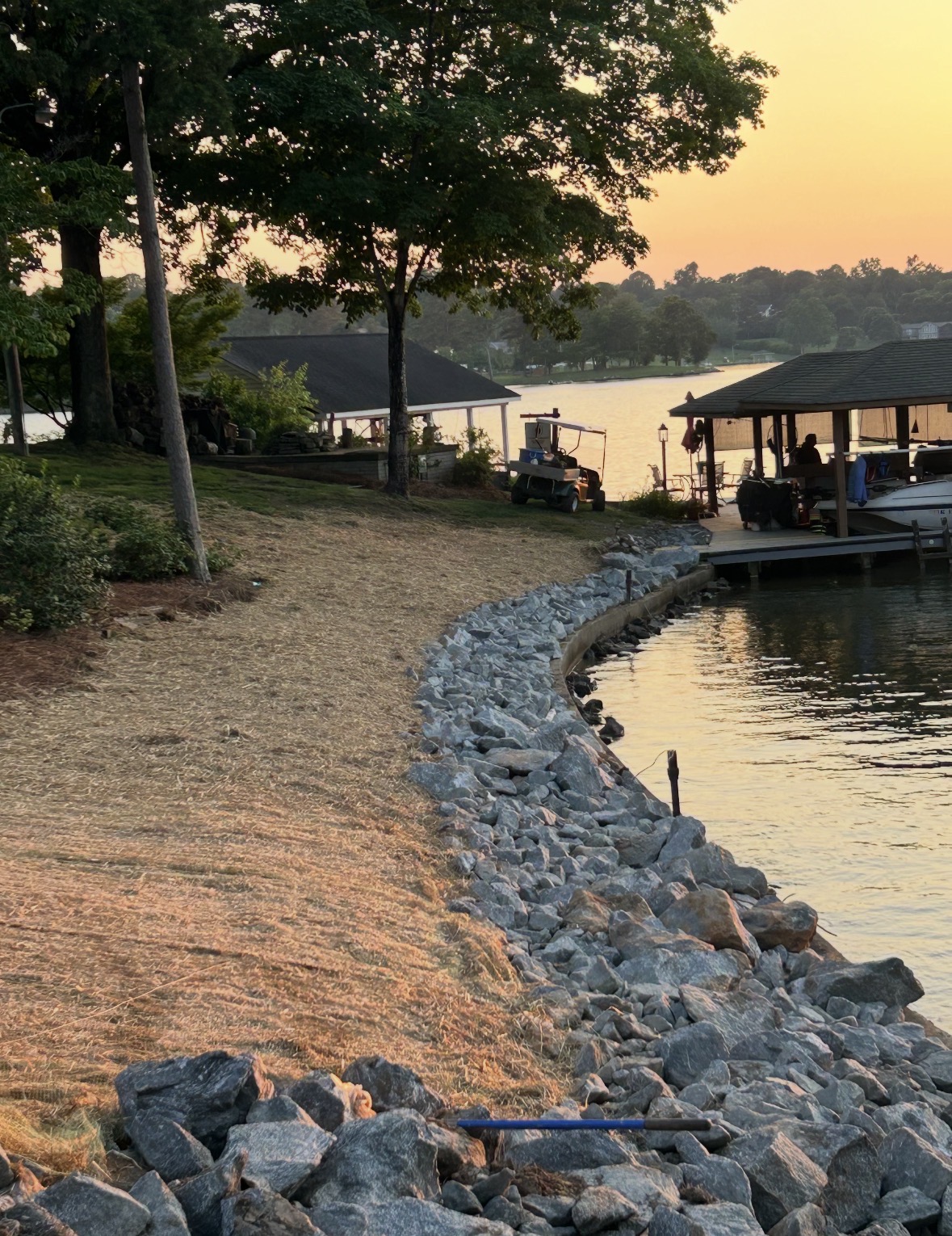
Downspout drainage lines solve roof water. Regrading solves flat and negative grade. A French drain intercepts water moving through the soil across a slope. A catch basin collects surface water sitting in a defined low spot. Erosion control matting, plantings or a wall handles a slope that is washing out.
Installing the wrong one is why people end up paying twice. A French drain in a spot where the real problem is a downspout will keep working exactly as designed and the yard will stay wet.
How we diagnose it
We walk the property, ideally during or right after rain, and follow the water. We check downspout discharge points, shoot grades from the foundation out, look for the outlet — the low point where water can legally and physically leave the property — and probe the soil.
If there is no viable outlet, no drain system will work. That is the first thing we confirm, before anyone talks about pipe.
Helpful outside reference
For background on why hard surfaces send more water across a yard, see the EPA guidance on urban runoff.
Frequently asked questions
How long should water stand after rain?
Puddles that clear within a few hours are normal. Water still standing 24 to 48 hours after the rain stops points to a grading or drainage problem worth correcting.
Will a French drain fix any wet yard?
No. A French drain moves subsurface and slope water. If your problem is roof water at the foundation or a flat grade, downspout lines or regrading is the correct fix.
Do you offer estimates on drainage work?
Yes — on-site drainage assessments across Lake Norman are free, with no trip fee.
Want this looked at on your property?
We give free, no-pressure on-site estimates across Denver, Mooresville, Cornelius, Davidson, Huntersville and Troutman.