
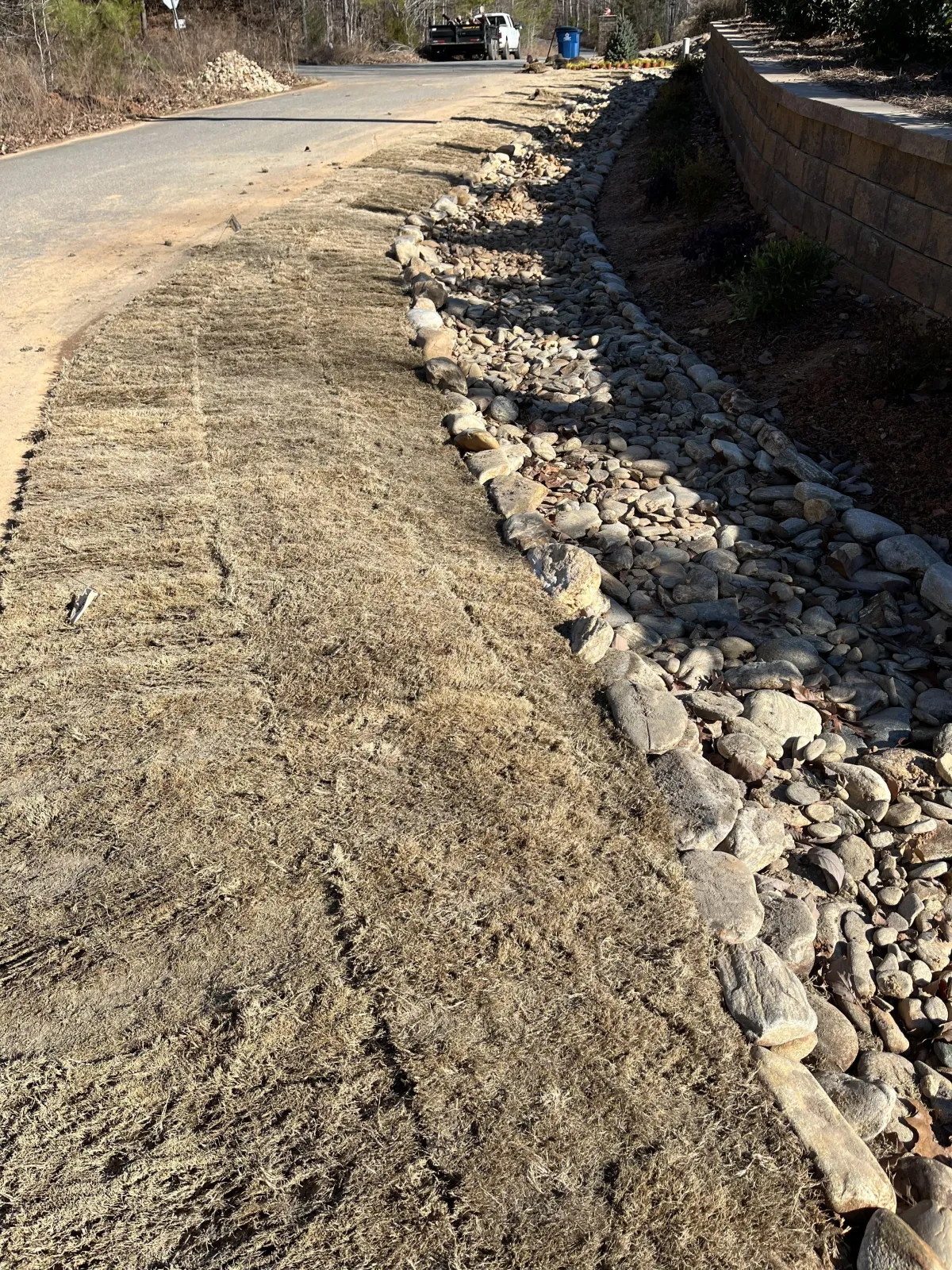
Can You Dig a Gravel Pit for Yard Drainage in Denver, NC?
You can dig a gravel pit for yard drainage in Denver, NC, but in our red clay it rarely works for long. A gravel-filled hole is a basic dry well: it only drains as fast as the surrounding soil absorbs water, and Lincoln County clay absorbs it very slowly. The pit fills in the first heavy rain and stays full for days, leaving no room for the next storm.
Read the full guide, including a one-afternoon percolation test you can do yourself: Dry Well vs French Drain: Which One Fails in Clay?
What Will Soak Up Standing Water in a Denver, NC Yard?
In a Denver, NC yard, very little will soak up standing water for long, because our red clay barely absorbs it. Sand, gravel or absorbent products only help for a storm or two, and sand mixed into clay can make it pack even harder. The lasting fix is to give the water somewhere to go: regrade the low spot, or carry it off with a swale, catch basin or French drain.
Read the full guide: Yard Drainage for Clay Soil: What Piedmont Homeowners Need
What Is the Best Way to Divert Water Away From a House in Denver, NC?
The best way to divert water away from a house in Denver, NC is to fix the grade and the downspouts first. The ground should fall about 6 inches over the first 10 feet away from the foundation, and downspouts should run through solid pipe to a spot well away from the house. If there's no room to regrade, a shallow swale can carry the water around the house instead.
Read the full guide: Grading for Drainage: How Slope Protects Your Foundation
How Do You Fix a Yard With Poor Drainage in Denver, NC?
To fix a yard with poor drainage in Denver, NC, start by finding where the water comes from and where it can go. Watch the yard during a hard rain, fix downspouts dumping onto the lawn, then match the fix to the problem: regrading for low spots, a swale for surface runoff, or a French drain or catch basin when the water needs to be piped to a lower outlet.
Read the step-by-step guide: How to Fix a Yard That Won't Drain (Step by Step)
How Do I Know If I Have Drainage Problems at My Denver, NC Home?
You likely have drainage problems at your Denver, NC home if water stands in the yard more than a day after rain, the lawn stays soggy or has bare muddy patches, mulch or soil washes out of beds, or you see water stains, damp spots or musty smells in a crawlspace or basement. Water pooling against the foundation is the sign to deal with first.
See the full list: 10 Signs Your Yard Has a Drainage Problem
How Can I Improve Drainage in My Denver, NC Yard?
You can improve drainage in a Denver, NC yard by working with the clay instead of against it. Clean gutters and extend downspouts, aerate compacted lawn areas, and work compost into planting beds rather than sand. For water that keeps pooling, reshape the grade or add a swale, catch basin or French drain that carries the water to a real outlet.
Read the full guide: Yard Drainage Solutions: What Works and What Doesn't