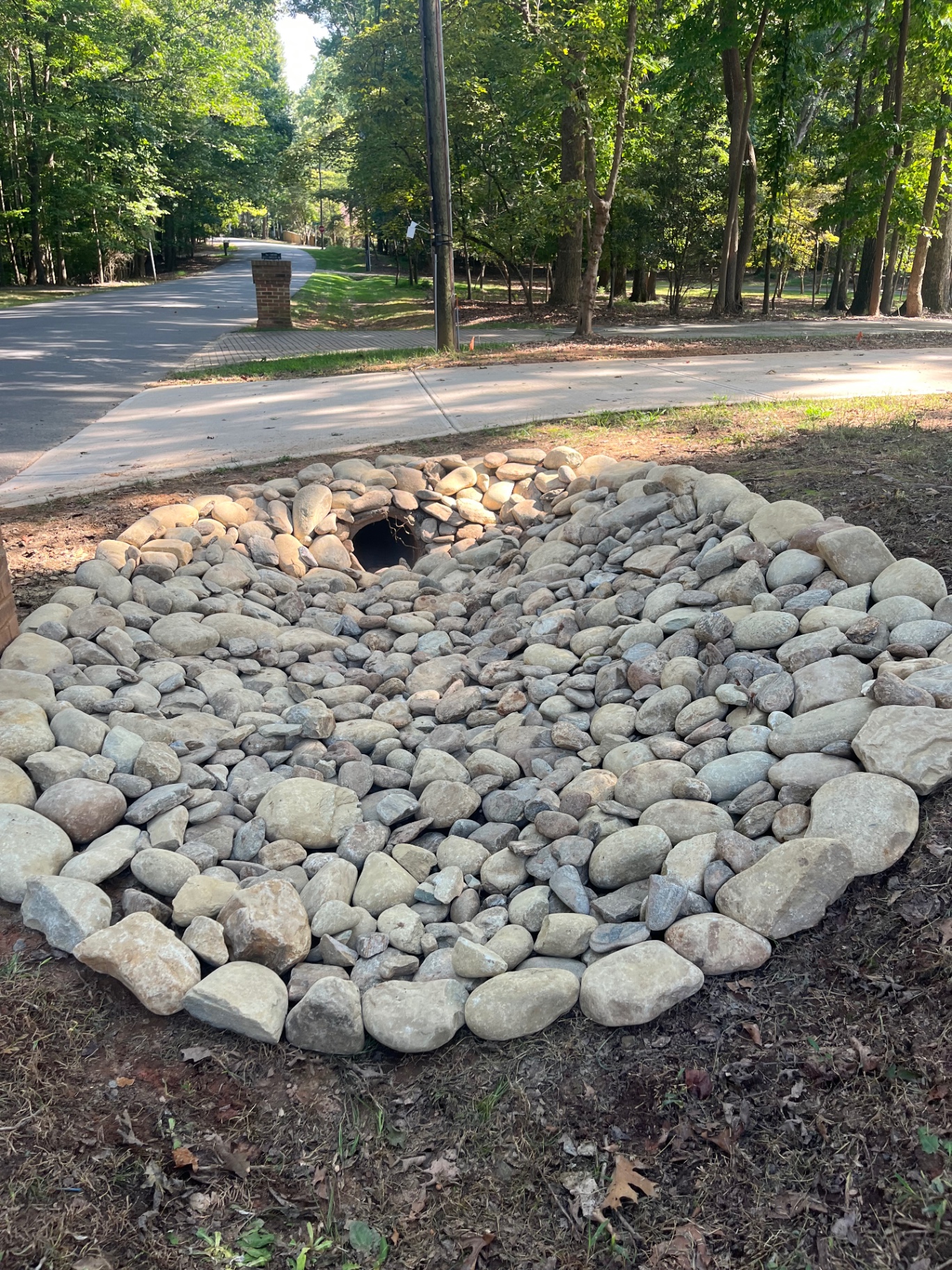
Start with the outlet, not the puddle. That single reordering is what separates drainage work that lasts from drainage work that moves the problem four feet to the left. Once you know where water can legally and physically leave your property, the rest of the decisions get much simpler.
Start by finding the outlet, not the puddle
Walk your property and find the lowest point on it. Then find the lowest point you can reach without crossing onto a neighbour's land in a way that would dump water on them.
If that point is lower than the wet area by enough to run pipe with consistent fall, you have a gravity outlet and everything downstream of this decision is routine. If it is not, you are in pump territory or you are looking at reshaping the surface instead of piping it.
This is also the moment to rule out the illegal options: no sanitary sewer connection, no septic field, no discharge that creates a problem next door.
The next time it rains hard, grab your phone and walk the yard. Take photos of where water collects, where it flows, and where it leaves the property. Then take more the next morning, and again the day after. Note how long each puddle sticks around. Water that's gone within a day is usually fine; puddles that last longer point to a soil, grade or runoff problem. Those photos help a lot during an estimate, because they show the problem even on a dry day.
Want to check how fast your soil drains? Dig a hole about a foot deep and fill it with water. Let it drain, then fill it again. If the second fill takes more than a few hours to empty, the soil is holding water and surface fixes may only go so far.
If you just want the short answer for Denver, NC yards, here's how to fix poor drainage.
Fix one: the roof water
Clear the gutters. A blocked gutter overflows at the wall, which is the single worst place for it to land.
Then follow every downspout to where it actually lets out. Splash blocks put a large volume of water right beside the foundation. Extending or piping that discharge well away from the house costs very little and, on a meaningful share of properties, ends the problem entirely.
Do this before spending money on anything else, because it changes what the rest of the yard is dealing with.
Fix two: the surface shape
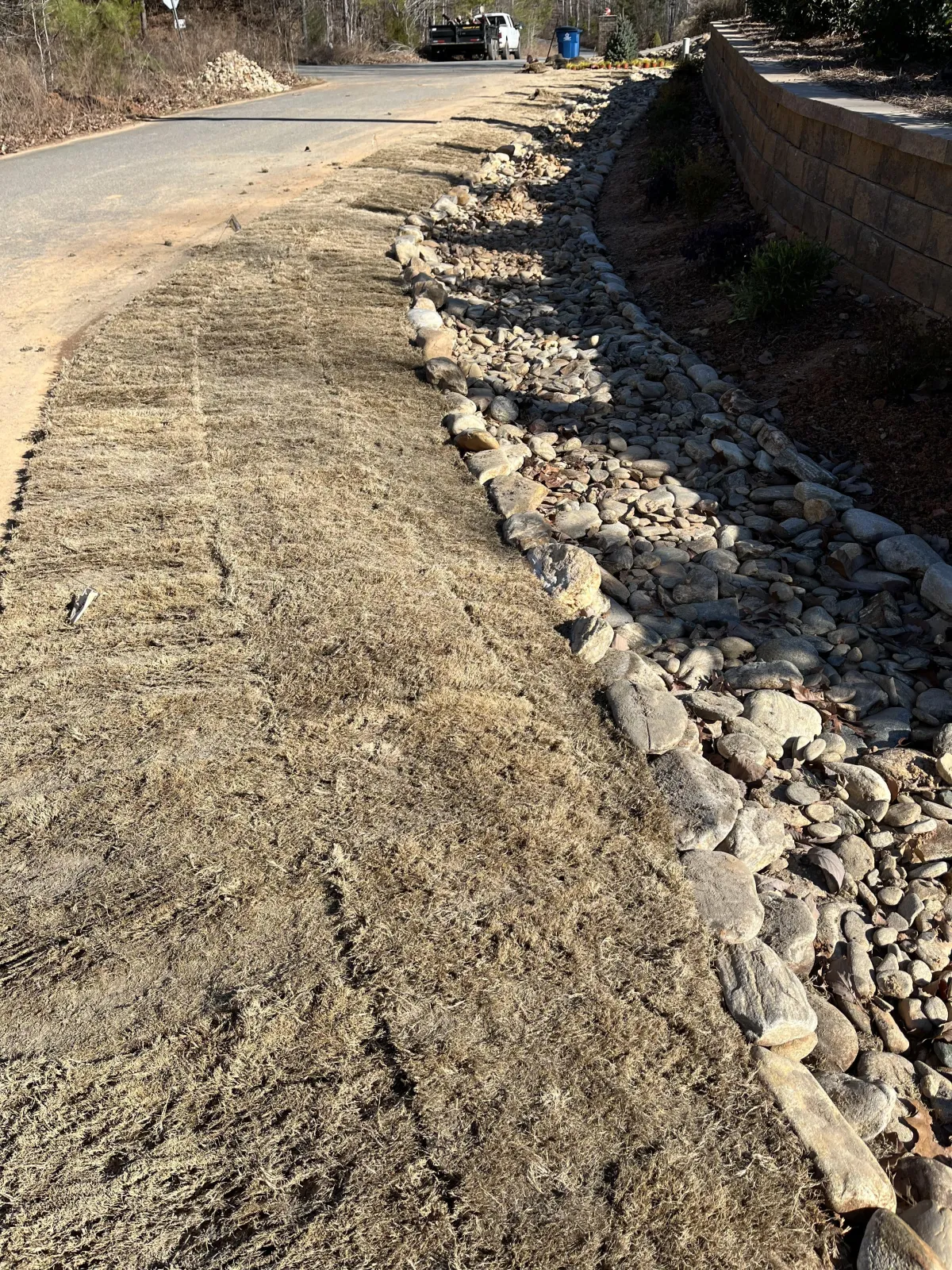
If water sits because the ground holds it, reshaping the ground is the honest fix. That can be a modest regrade to give the area fall toward the outlet, or a swale — a shallow shaped channel that carries water along a route you choose without looking like infrastructure.
Don't fill low spots with pure sand. It seems like it should help, but sand sitting on top of clay makes a small bowl that holds water even longer. Low spots get fixed with the right soil and grade, not a sand patch.
Grading is disruptive while it happens and invisible afterward, which is exactly what you want. It also has the advantage of no pipe to silt up later.
The limitation is fall. You cannot grade water uphill, and on a flat lot there may not be enough drop available to work with.
Fix three: collect and pipe it
When the low spot is defined and repeatable, a catch basin set into it with solid pipe running to the outlet does the job cleanly. Sediment settles in the basin below the outlet pipe, which is why it needs a rinse out every year or two.
This is the right answer when the water is genuinely surface water and you have somewhere to send it. It is the wrong answer when the ground is soggy without ponding — a basin cannot collect water that never reaches the surface.
Fix four: intercept it underground
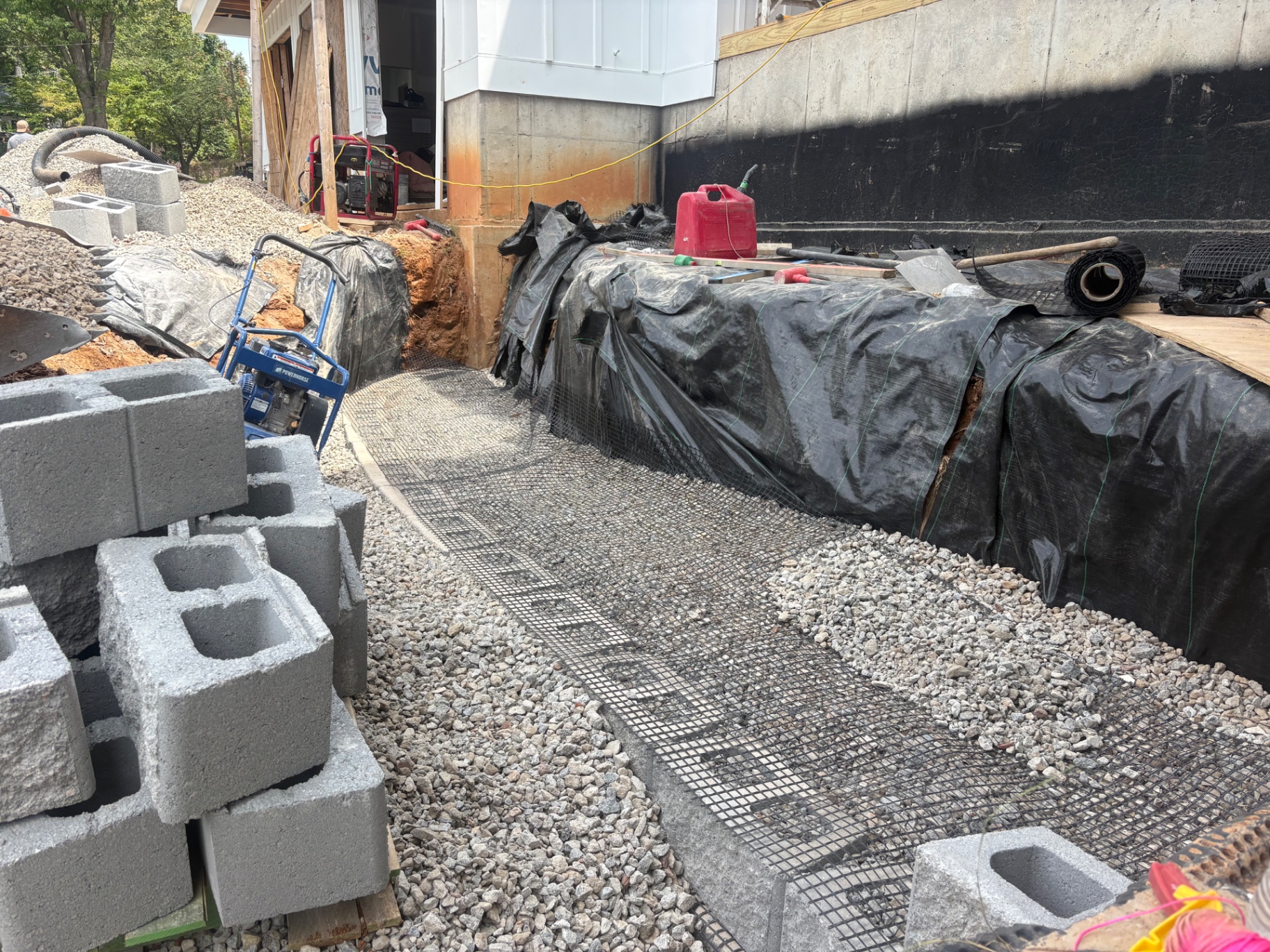
A French drain handles water moving through the soil. Perforated pipe, gravel, filter fabric, consistent fall, real outlet. All four elements, or it silts up.
This is the most disruptive of the four and the most often installed unnecessarily. It is also the only thing that works when the problem is subsurface, so the diagnosis matters more here than anywhere else in the list.
When grading alone won't do it
There are properties where the surface cannot be shaped into a solution: no fall to work with, a house sitting low relative to the lot, a slope above feeding water in continuously, or a neighbouring property discharging onto yours.
In those cases the answer is a designed system — collection, piping, sometimes a pump chamber — rather than more dirt. Recognising that early saves a season of moving soil around and being disappointed.
Southern Style Turf & Design assesses drainage across Lake Norman and quotes in writing after seeing the property. No phone quotes for drainage, because the outlet cannot be assessed from a description.
Frequently asked questions
How do I fix a yard that won't drain?
In order: clear gutters and extend downspouts, reshape the surface so it falls toward an outlet, add a catch basin if water collects in a defined low spot, and install a French drain only if the water is moving through the soil rather than across it.
Why does water sit in my yard for days?
Either there is no outlet — a low area with nowhere lower to drain to — or the soil beneath is compacted clay that will not absorb it. Both are common in Piedmont subdivisions.
Will adding topsoil to a low spot fix it?
Rarely. Fill settles, the low spot returns, and you have often disrupted the grade around it in the meantime. Reshaping toward an outlet lasts; filling a hole does not.
Do I need a pump?
Only when there is genuinely no gravity fall available to any legal discharge point. Pumps work, but they add power, maintenance and a failure point, so they are the last option rather than the first.
Want this looked at on your property?
We give free, no-pressure on-site estimates across Denver, Mooresville, Cornelius, Davidson, Huntersville and Troutman.