Almost every wet yard around Lake Norman traces back to one of four water sources, and the right fix depends entirely on which one you have. Surface water gets collected and carried. Subsurface water gets intercepted. Roof water gets moved away from the house before it becomes either. Get the diagnosis right and the work is straightforward; get it wrong and you pay to install something that never had a chance.
The four places yard water actually comes from
Roof water is the biggest single volume on most properties and the easiest to redirect. A moderate storm sheds hundreds of gallons off an average roof, and every downspout concentrates that into one point on the ground.
Surface runoff is water crossing your property from somewhere uphill — a driveway, a neighbouring lot, a road, a patio. It travels visibly and collects in the lowest spot it can find.
Subsurface water moves through the soil rather than across it. On Piedmont clay it often rides along the top of the clay layer under a shallow band of topsoil, then surfaces partway down a slope with no obvious source.
Trapped water is the fourth, and the most common in subdivisions: a low area with no outlet at all. Nothing is wrong with the volume arriving — there is simply nowhere for it to leave.
For the quick Denver, NC yard version, here's the short answer on improving drainage.
Surface solutions vs subsurface solutions
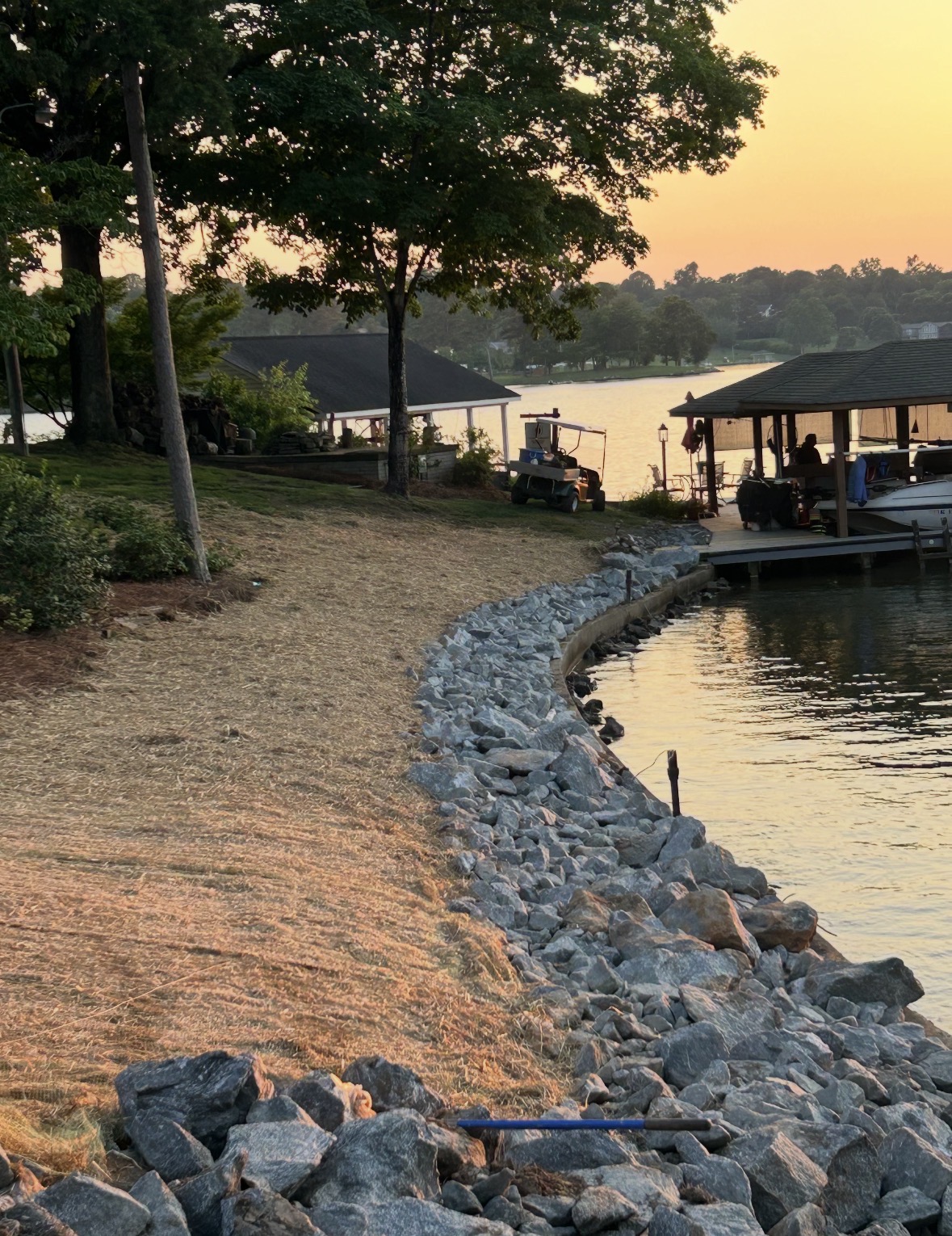
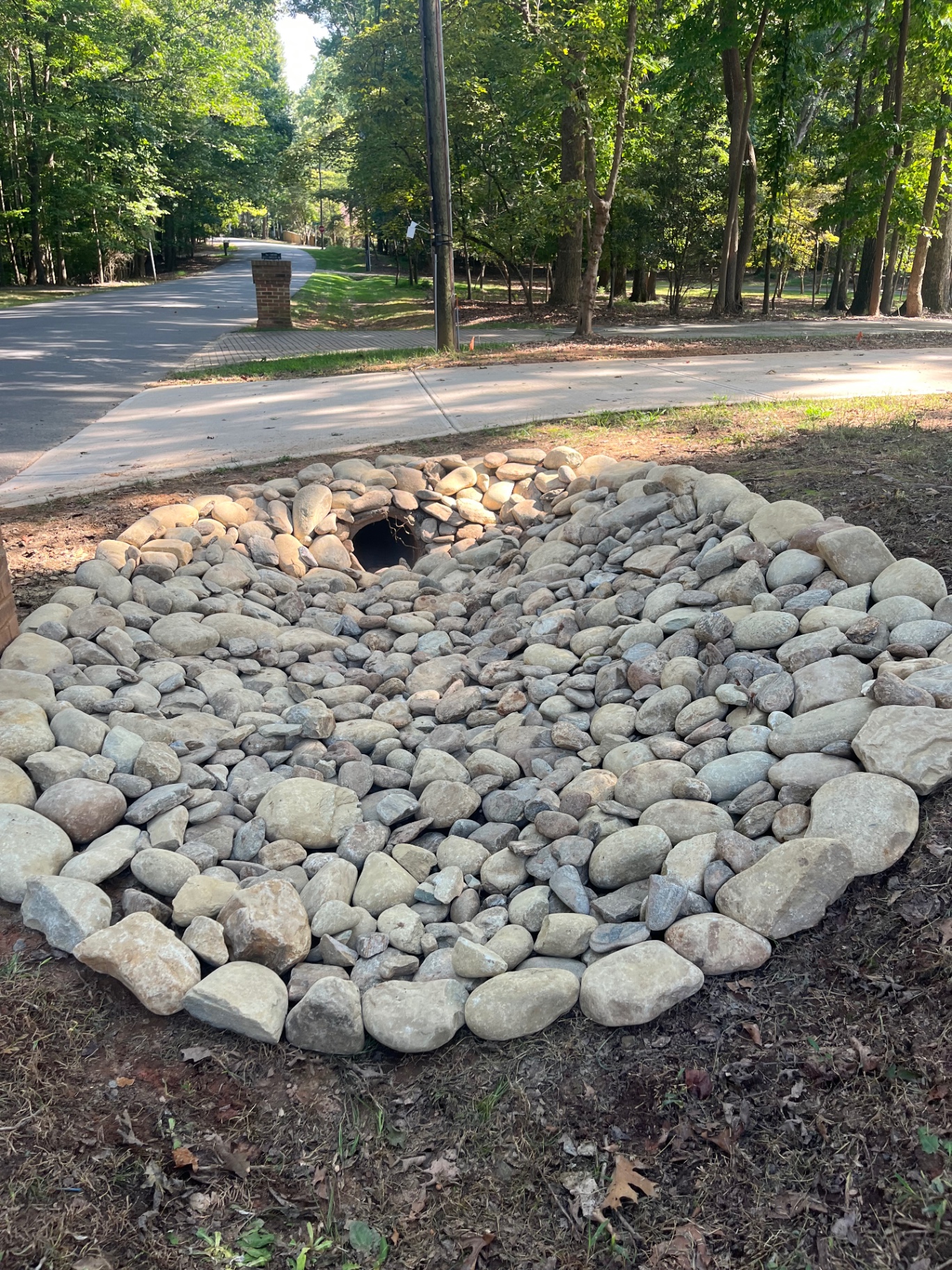
Surface solutions move water you can see. Regrading reshapes the ground so water leaves under gravity. Swales are shallow shaped channels that carry it along a route you choose. Catch basins collect it at a defined low point and drop it into pipe. Dry creek beds do the same job while looking like a landscape feature.
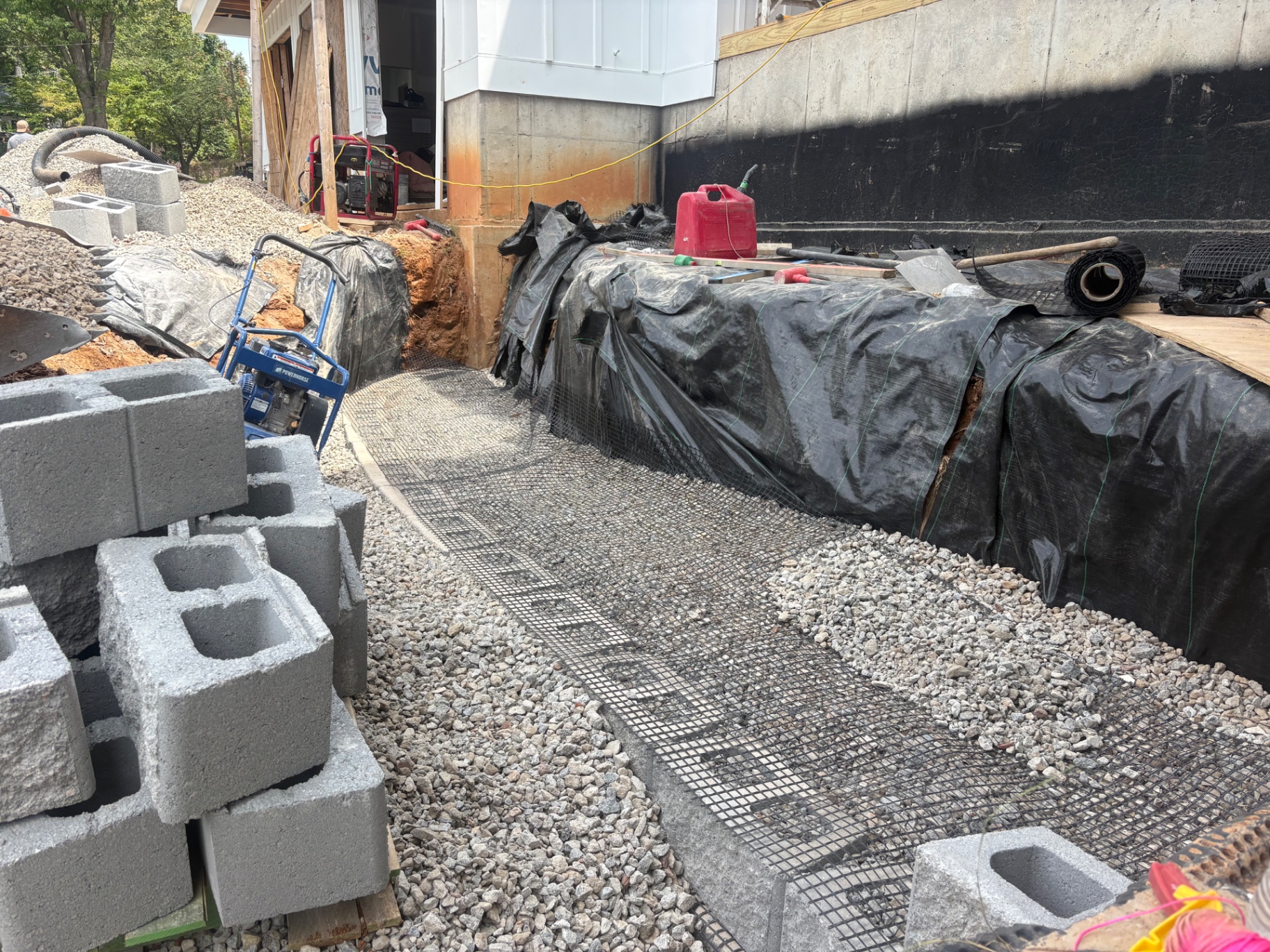
Subsurface solutions intercept water in the soil. A French drain — perforated pipe in a gravel trench, wrapped in filter fabric, sloped to an outlet — is the workhorse. Curtain drains do the same along the uphill side of a structure. Foundation perimeter drains protect the house itself.
The two are not alternatives. Plenty of properties here need one of each, tied into a shared outlet.
How to tell which one your property needs
Go outside during a hard rain. It is the single most useful thing a homeowner can do, and almost nobody does it.
- Water visibly running and pooling — surface problem. Grading, a swale, or a catch basin.
- Ground that gets soggier without ever ponding — subsurface problem. French drain.
- Wet band appearing partway down a slope — subsurface, fed from uphill. Curtain drain across the slope above it.
- Water bouncing off the ground at the wall, splash marks on siding — roof problem. Fix the downspouts first.
- A puddle that sits for days on flat ground — outlet problem. The design question is where the water can go, not how to collect it.
The outlet decides everything
Every drainage system has to end somewhere lower, with water leaving under gravity. On a sloped lot that is easy. On a flat lot it is the entire job, and it is why two neighbours with identical puddles get very different quotes.
There are three places the outlet cannot go: onto a neighbouring property in a way that creates a problem there, into a sanitary sewer, or into a septic field. The first ends in a dispute and the other two are code violations.
What doesn't work
Gravel in a trench with no pipe and no filter fabric. It silts up, usually within two seasons, and then it is just an expensive hole.
A dry well on clay. Dry wells store water and let it percolate away. Piedmont clay does not percolate at any useful rate, so the well fills and stays full.
Topsoil dumped in a low spot. It compacts, the low spot returns, and now the grade around it is wrong too.
Any system that ends in the middle of the yard. Water has to leave the property or reach a place where it can safely spread out.
Where to start
Clear the gutters, extend every downspout well away from the house, and watch what changes over the next two storms. That is free or close to it, and on a surprising number of properties it is the whole fix.
If water is still standing after that, the next step is a site visit — because the outlet question cannot be answered from a photograph.
Southern Style Turf & Design designs and installs drainage across Lake Norman. Free on-site estimate, no trip fee, written quote before any work starts.
Frequently asked questions
What is the best drainage solution for a yard?
The one that matches the water source. Surface pooling calls for grading, a swale or a catch basin; water moving through the soil calls for a French drain; water off the roof calls for downspout extensions before anything else.
Can I fix yard drainage myself?
Downspout extensions and gutter cleaning, yes — and they solve a lot of yards. Trenching to a proper outlet with consistent fall, around irrigation and utilities, is where DIY work usually goes wrong.
Why does my yard drain badly when my neighbour's is fine?
Usually the outlet. Two identical lots can differ by forty feet in the distance water has to travel before it reaches somewhere lower, and that single factor drives both the design and the price.
Does drainage work damage the lawn?
Trenching disturbs a strip of turf, which is restored with sod or seed as part of the job. On clay, scheduling the work in drier conditions produces a noticeably better result.
Want this looked at on your property?
We give free, no-pressure on-site estimates across Denver, Mooresville, Cornelius, Davidson, Huntersville and Troutman.