On a flat lot the question is never how to collect the water — it is where the water is allowed to go. Drainage runs on gravity, and gravity needs fall. When a property has almost none, the design work shifts entirely to finding, borrowing or manufacturing somewhere lower.
Why the outlet is the whole problem on flat ground
A drainage pipe needs consistent fall along its entire length. Lose that fall anywhere and water stalls, sediment settles, and the low point in the pipe becomes a permanent puddle underground.
On a sloped lot you have fall to spare and the design is straightforward. On a flat lot every inch is accounted for, which is why the same catch basin that costs very little to install in one yard becomes a substantial project in the yard next door.
It is also why an honest contractor will not quote a flat lot over the phone. The answer depends on elevations that have to be measured on site.
Gravity options before you consider a pump
Work through these in order. Each is cheaper and more reliable than pumping.
- Extend the run. Somewhere on the property, or at its boundary, there is usually a point a few inches lower. A longer pipe with less fall per foot is still a gravity system.
- Lower the collection point. Setting a basin deeper buys fall at the upstream end, as long as the outlet still has somewhere to emerge above grade.
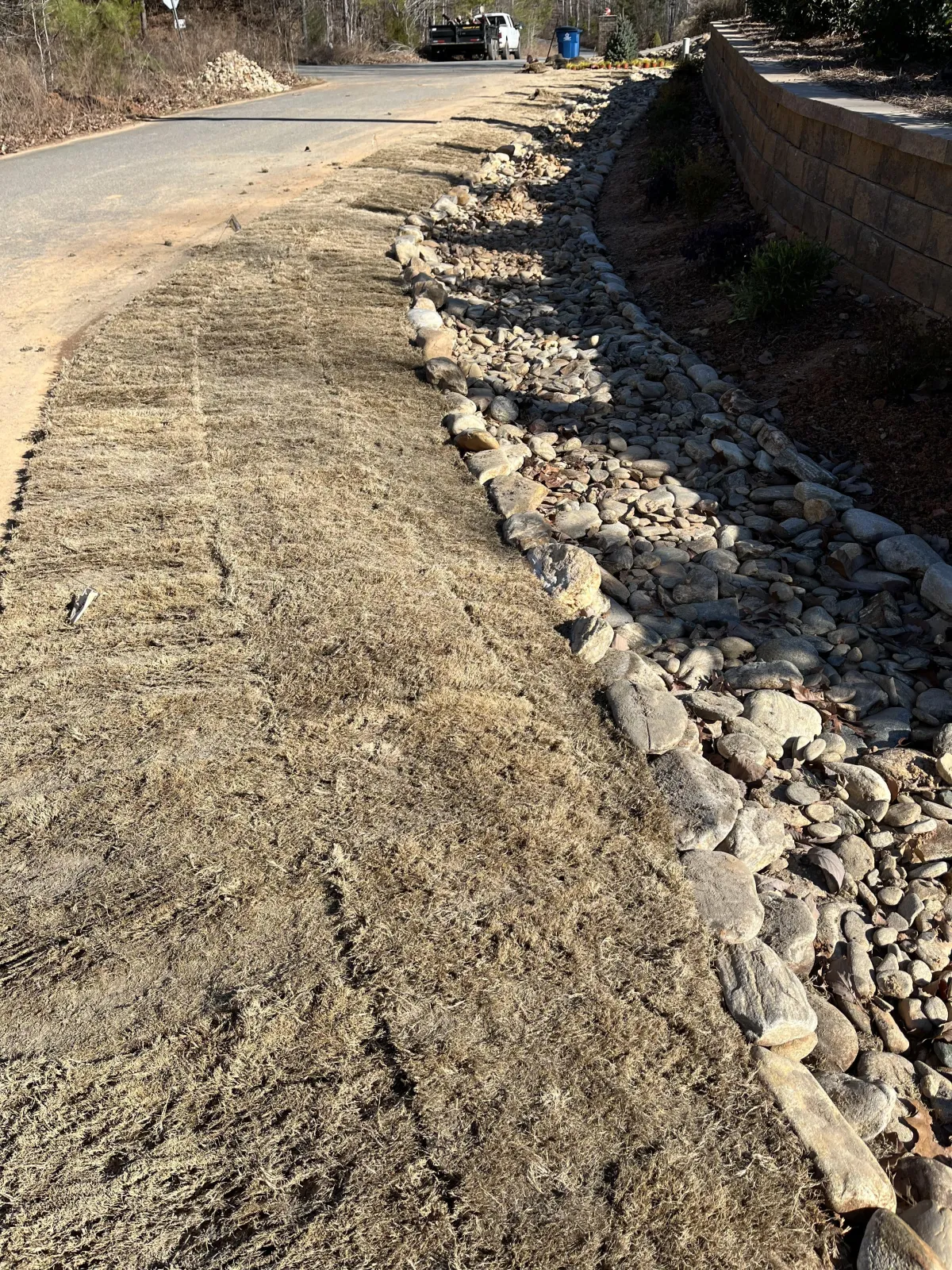
- Reshape the surface. On flat ground a broad shallow swale can move water across a long distance with very little drop, and it never silts up.
- Create fall by raising, not digging. Building the wet area up slightly — with proper compaction, not loose topsoil — sometimes gives the fall that digging cannot.
- Spread rather than concentrate. Where there is genuinely nowhere to send water, a wide planted infiltration area that holds and releases it slowly may beat trying to pipe it anywhere.
The neighbour question
The lowest available point is often just past your property line, and that is where flat-lot projects run into trouble.
You cannot pipe your water onto someone else's land in a way that creates a problem for them. Concentrating flow that previously arrived spread out is exactly the kind of change that ends in a dispute, regardless of which direction the ground falls.
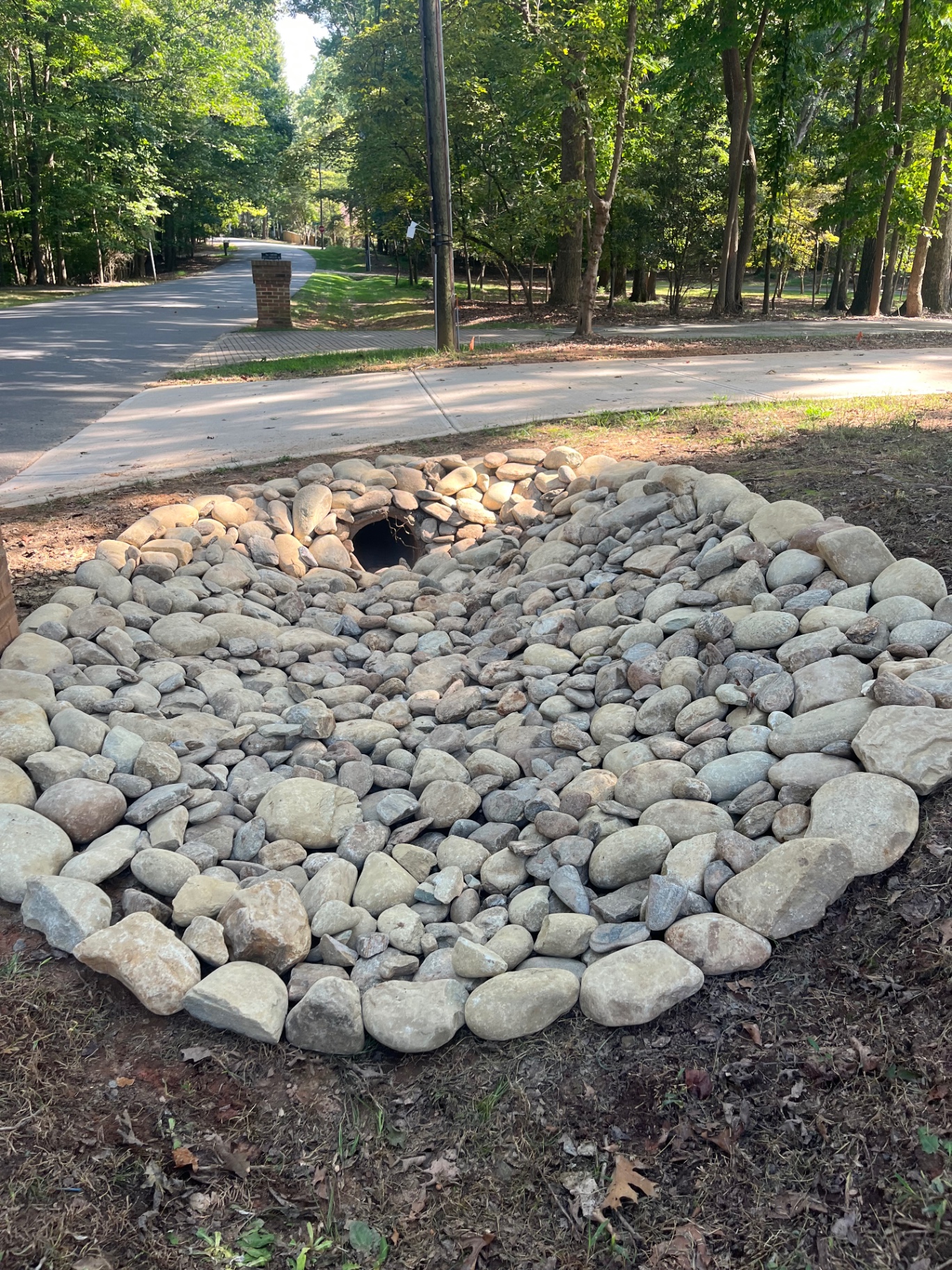
Where a shared low area, a subdivision swale or a road ditch is the natural destination, that route needs checking before anyone digs — including whether it is maintained by an HOA or the county.
What a pumped system costs you in maintenance
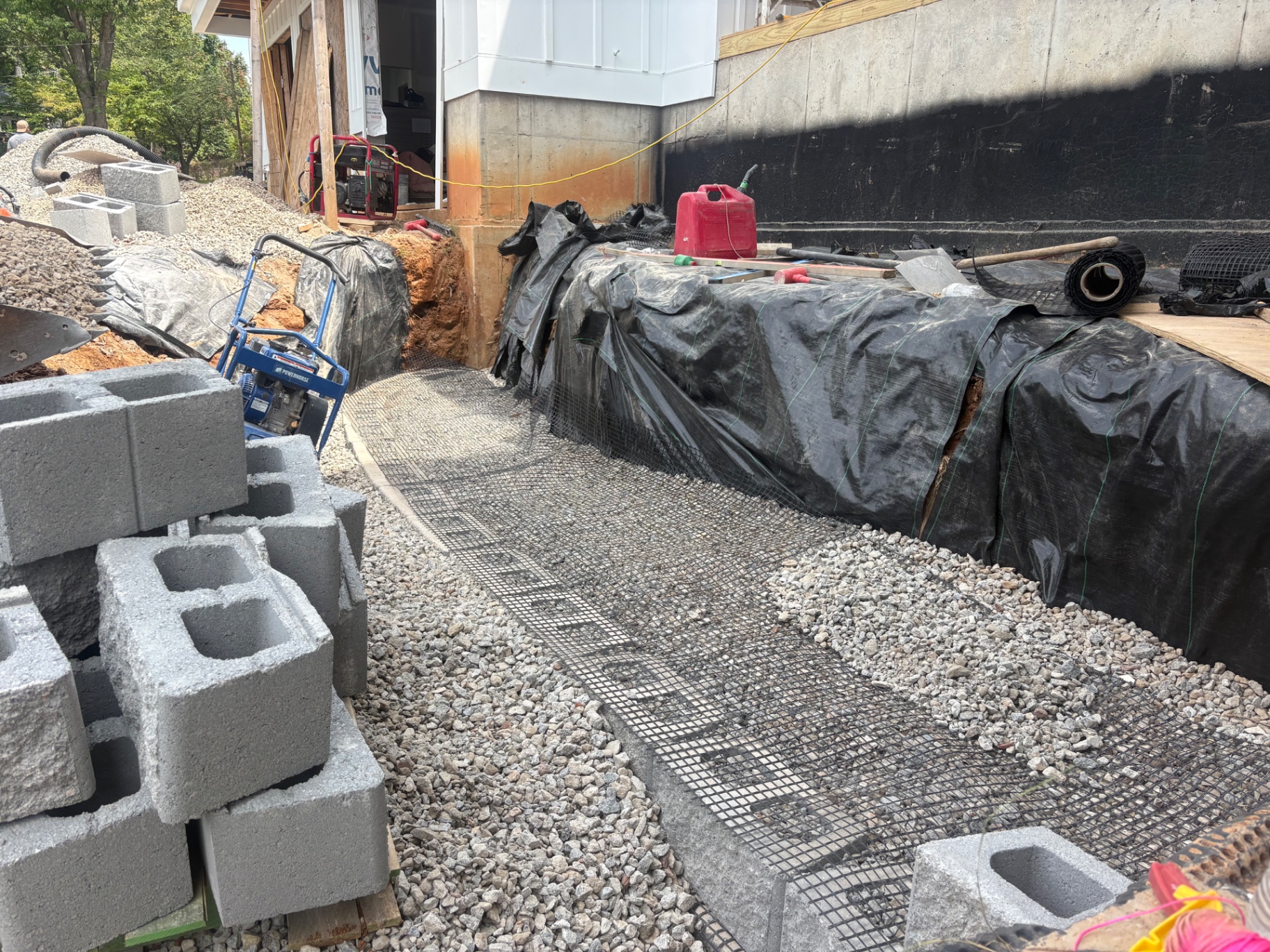
When every gravity option is exhausted, a pump chamber is legitimate engineering rather than a failure. Water collects in a basin, a float switch triggers the pump, and the water is lifted to a discharge point higher than the collection point.
What it asks of you afterward is the part worth understanding before you commit. It needs power, and it needs power most during the storms that are most likely to cause an outage. The pump is a mechanical part with a service life, so it will need replacing eventually. The float switch is the most common failure point and is worth testing seasonally. The discharge line has to be protected from freezing and from backflow.
None of that is difficult, but it turns a passive system into one with an owner's manual. Every gravity option is worth exhausting first for exactly that reason.
Lakefront and subdivision lots
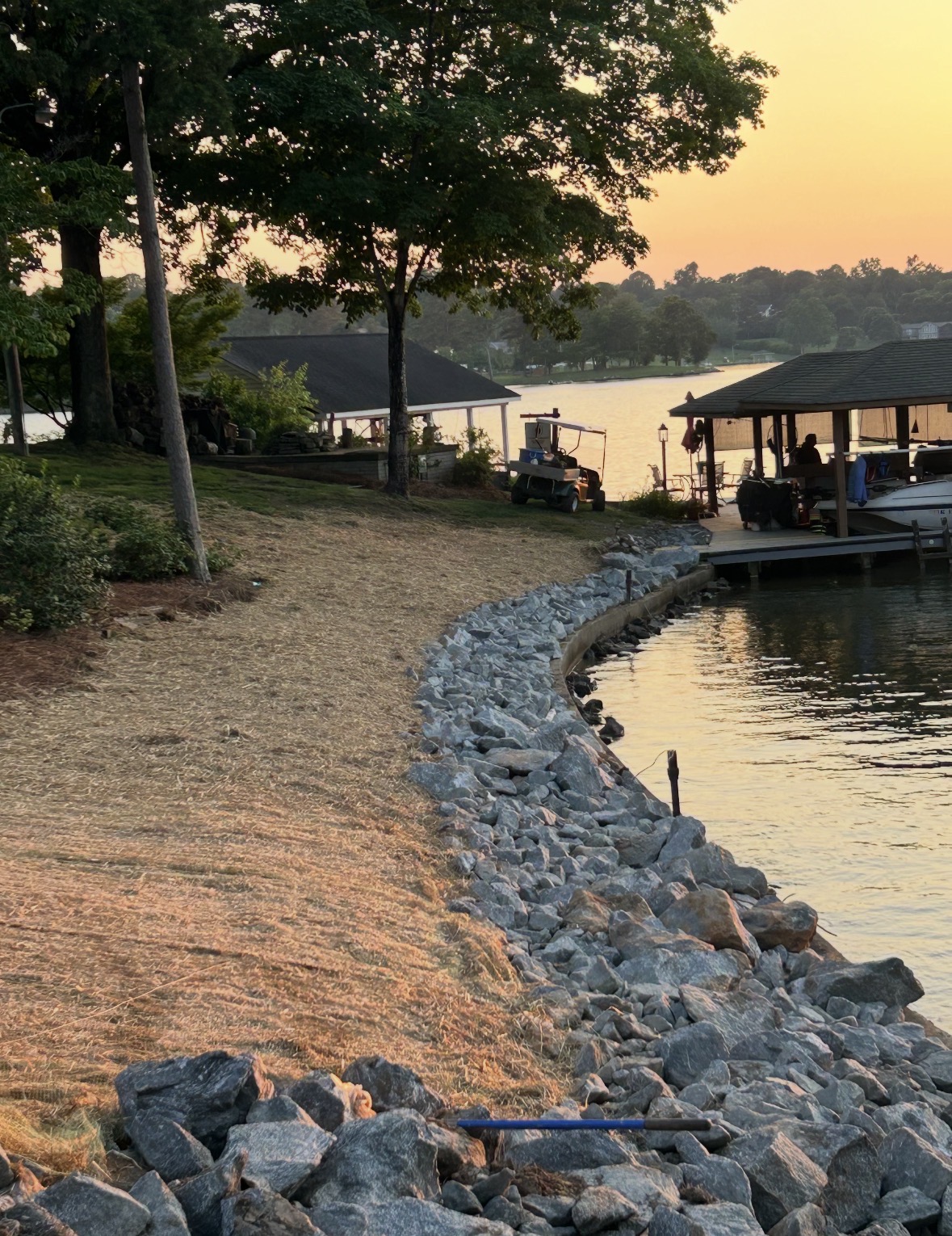
Around Lake Norman two flat-lot situations come up repeatedly. Lakefront properties often have fall toward the water but sit close enough to it that the discharge point, buffer plantings and shoreline conditions all need care. Subdivision lots graded flat during construction frequently rely on a swale between houses that has been partly filled in, planted over or fenced across since.
In the second case the fix is often restoring the swale that was supposed to be doing the work all along.
Southern Style Turf & Design surveys elevations on site before proposing anything on a flat lot. Free estimate across Lake Norman, written quote before work starts.
Frequently asked questions
How do you drain a flat yard?
By finding fall you did not know you had: extending the pipe run to a lower point, setting the collection deeper, shaping a broad shallow swale, or building the wet area up. A pump is the option once all of those are exhausted.
How much slope does a drainage pipe need?
Consistent fall along the whole run is what matters more than any single figure — any flat or reversed section becomes a silt trap. The available drop is measured on site, which is why flat lots cannot be quoted remotely.
Can I drain water onto my neighbour's property?
Not in a way that creates a problem for them. Concentrating flow that used to arrive spread out is the change most likely to cause a dispute, even when the ground naturally falls that direction.
What maintenance does a drainage pump need?
Seasonal testing of the float switch, keeping the basin clear, protecting the discharge line, and planning for the pump itself to be replaced at the end of its service life. It also depends on power during storms.
Want this looked at on your property?
We give free, no-pressure on-site estimates across Denver, Mooresville, Cornelius, Davidson, Huntersville and Troutman.