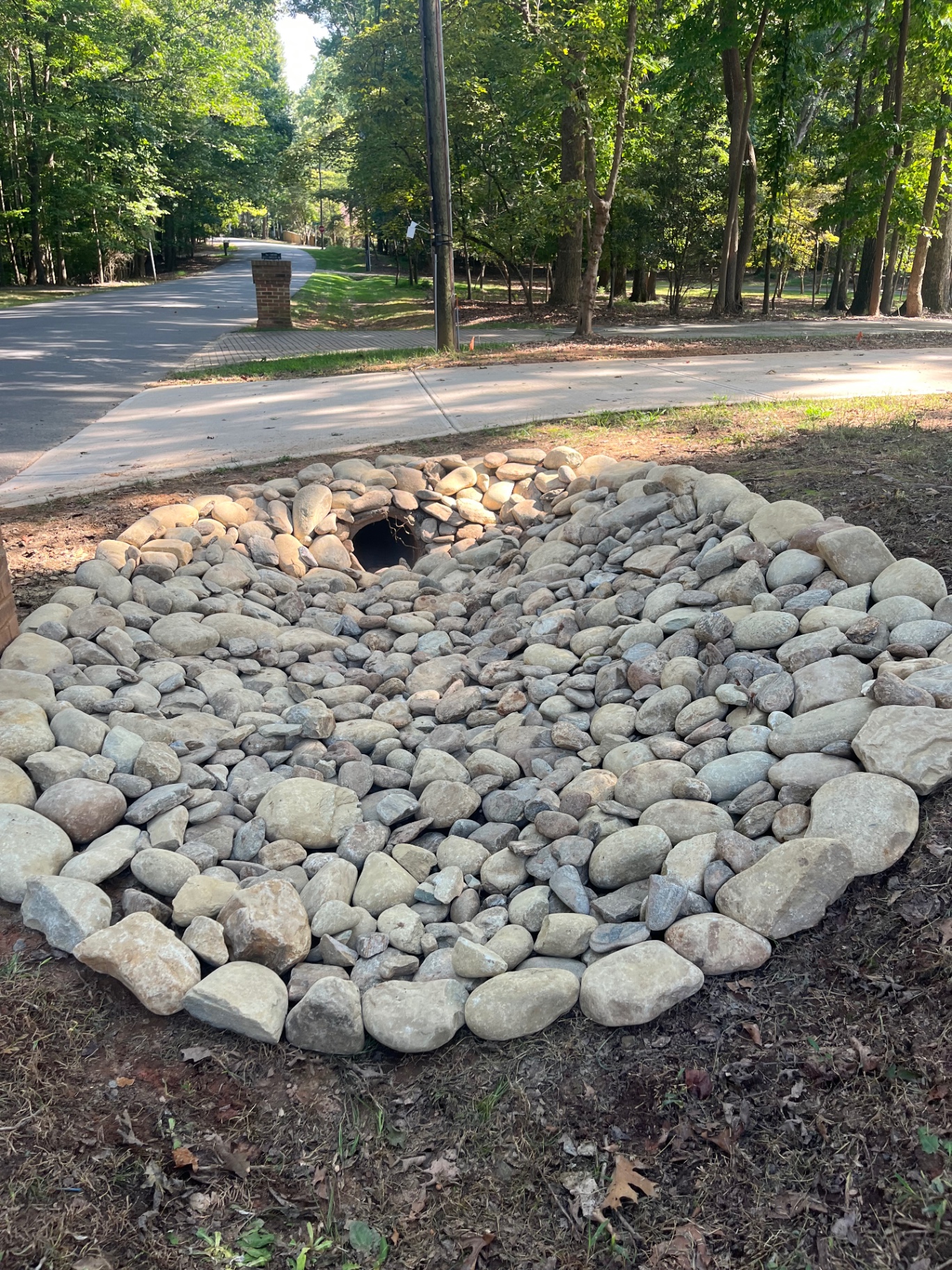
Most small residential drainage work — extending downspouts, a short French drain, a catch basin and outlet within your own yard — does not require a permit in North Carolina. What triggers review is the size of the area disturbed, proximity to water or a floodplain, and any change to how water leaves your property. The thresholds are set locally, so the only reliable answer comes from your county or town before work starts.
What generally triggers a permit
Four things move a project from routine to reviewable, and they are worth understanding even if the details differ by jurisdiction.
- Land disturbance above a set area threshold. North Carolina's Sedimentation Pollution Control Act sets a statewide baseline, and local programs may apply stricter limits. Larger regrading and excavation projects are where this comes into play.
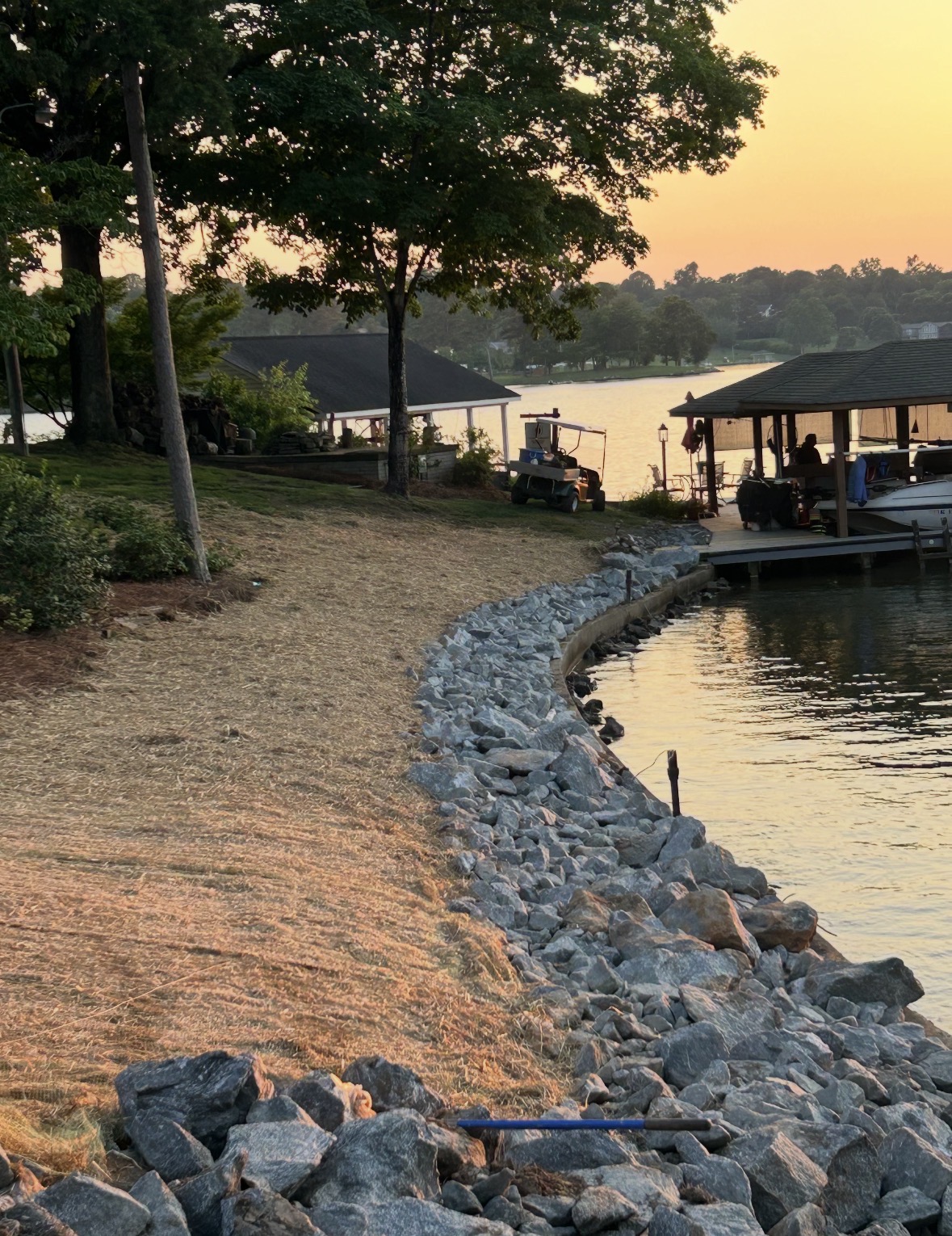
- Proximity to water. Work near a lake, stream, wetland or shoreline brings buffer rules into the picture, which around Lake Norman also means reservoir shoreline management.
- Floodplain. Anything within a mapped floodplain is reviewed separately, and grading that changes the ground surface there is treated seriously.
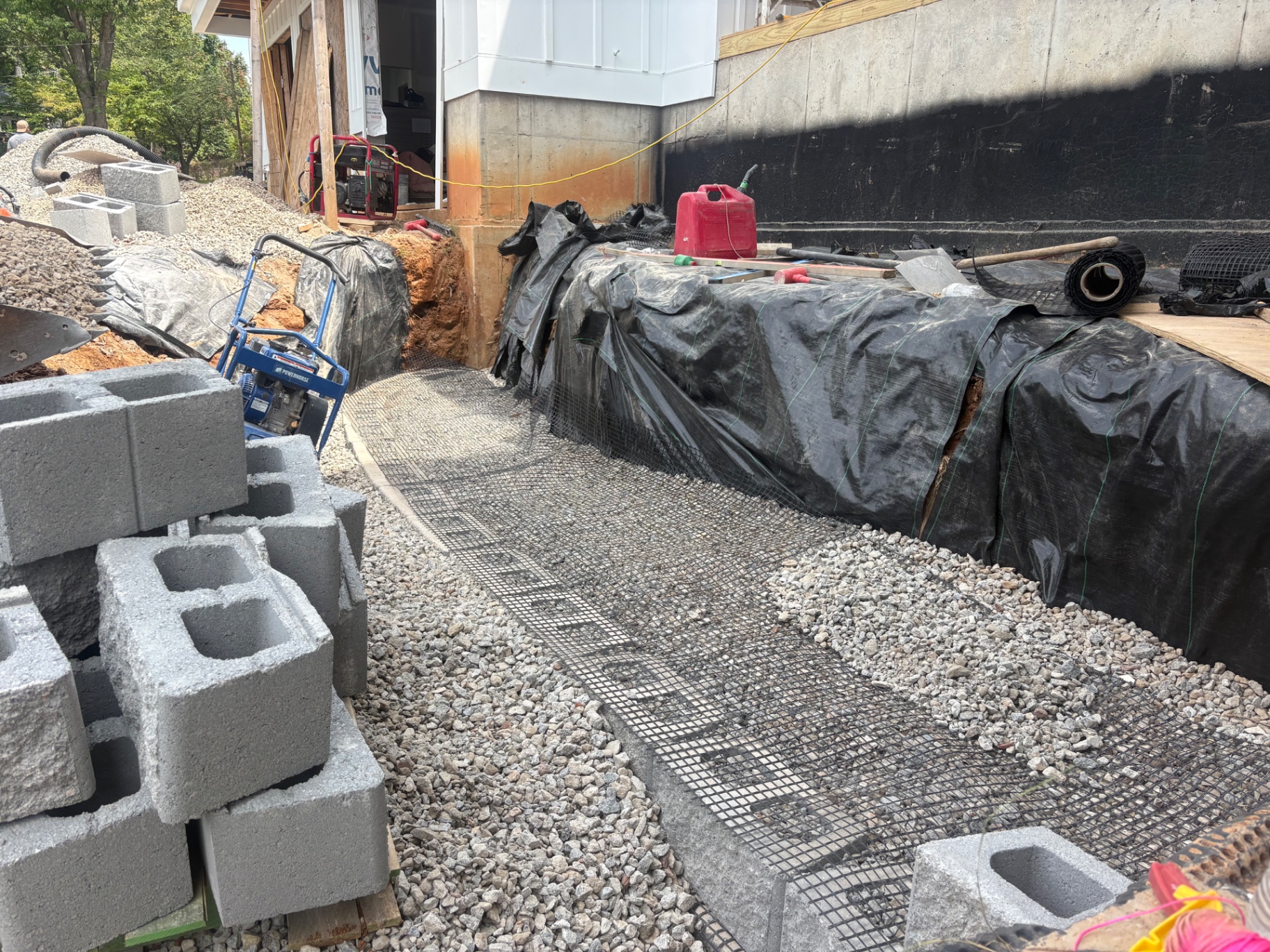
- Structures. Retaining walls above a certain height typically need a permit and engineered plans, whether or not the drainage around them does.
How local requirements differ
Lake Norman spans three counties, and the towns within them administer their own rules on top of county and state requirements. Denver falls under Lincoln County. Mooresville, Troutman and part of the lake's north end are Iredell. Huntersville, Cornelius and Davidson are Mecklenburg, each with its own town-level review in addition to county programs.
That means two houses fifteen minutes apart can face genuinely different requirements for identical work. Anyone quoting you a specific area threshold or fee for the whole region is guessing.
We deliberately do not publish figures here, because thresholds and processes change and an out-of-date number in a blog post is worse than no number at all. Call the county or town office, or ask your contractor to confirm in writing what applies to your project.
HOA approval is separate
This catches people out. An HOA has no bearing on whether the county requires a permit, and a permit has no bearing on whether the HOA approves.
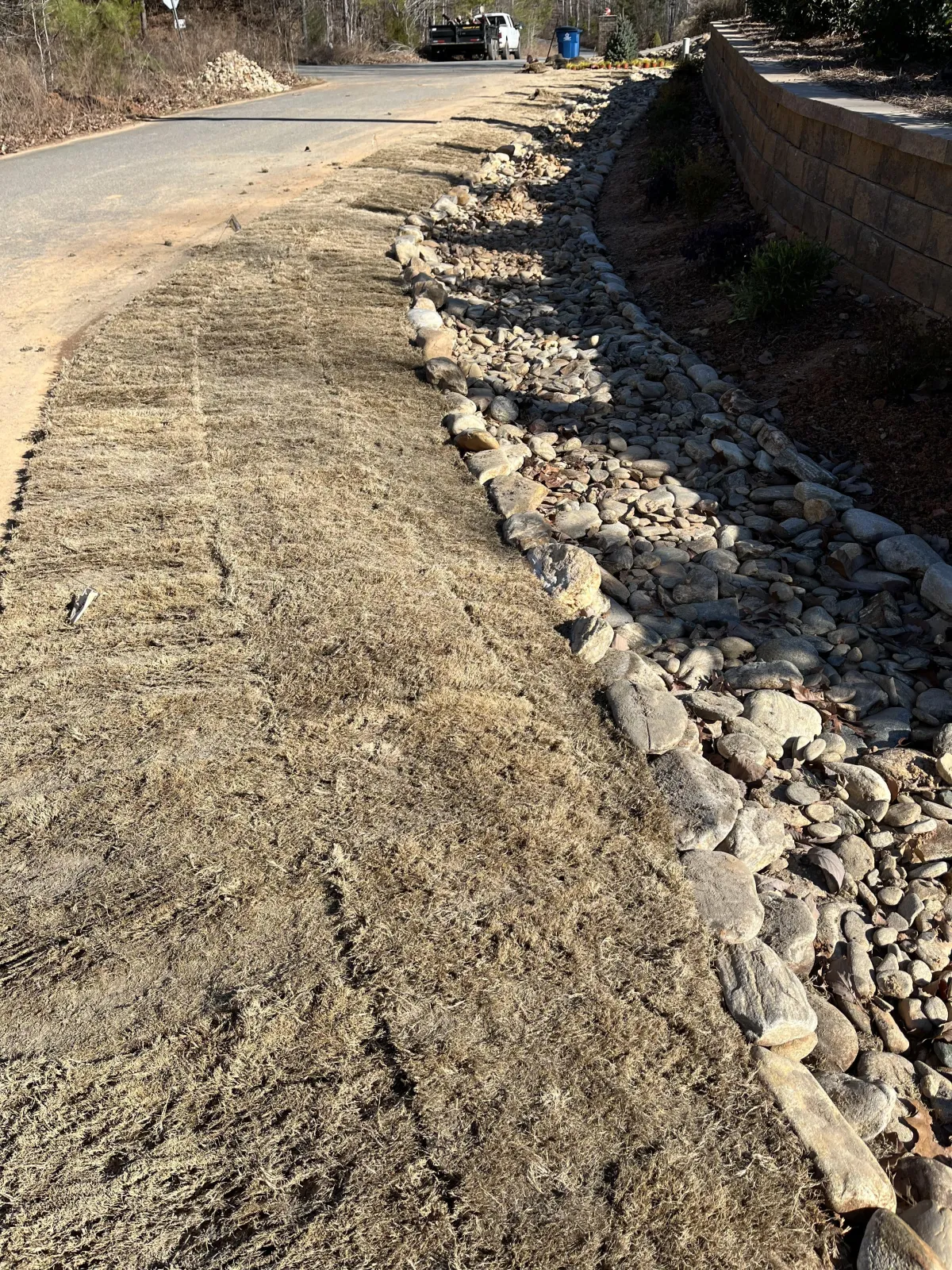
Many subdivisions have covenants covering visible changes to the yard, drainage swales between lots, planting in common areas, and anything altering the graded drainage plan the community was built with. Filling or fencing across a swale that carries water between houses is a common violation and a common cause of a neighbour's flooding.
Check the covenants before, not after.
Questions to ask before any contractor breaks ground
A contractor who works locally should be able to answer all five without hesitation.
- Does this project need a permit in this jurisdiction, and if so who pulls it?
- Are we disturbing enough area to trigger erosion control requirements?
- Where does the water discharge, and is that discharge permissible?
- Have utilities been located — both public through 811 and private irrigation, lighting and septic?
- If a wall is involved, does it need engineered design at this height?
The rules that apply regardless of permits
Even permit-free work has limits. You cannot discharge into a sanitary sewer or a septic field. You cannot concentrate water onto a neighbouring property in a way that creates a problem there. And you are responsible for what your changes do downhill, whether or not anyone reviewed the plan.
Those constraints shape the design of nearly every drainage system we build, far more often than permitting does.
Southern Style Turf & Design works across Lincoln, Iredell and Mecklenburg counties and confirms local requirements as part of the estimate rather than after the quote is accepted.
Helpful outside reference
North Carolina's adopted building codes are published on the NC Office of State Fire Marshal building codes page; your county permit office applies them locally.
Frequently asked questions
Do you need a permit for yard drainage work in NC?
Usually not for small residential work like downspout extensions, a short French drain or a catch basin within your own yard. Larger land disturbance, work near water or in a floodplain, and retaining walls above a certain height are the common triggers for review.
Who decides whether my drainage project needs a permit?
Your county or town, working within state law. Lake Norman spans Lincoln, Iredell and Mecklenburg counties with town-level rules on top, so requirements vary within a short drive.
Does my HOA need to approve drainage work?
Often yes, and it is entirely separate from permitting. Covenants commonly cover visible yard changes and the swales that carry water between lots.
What is not allowed even without a permit?
Discharging into a sanitary sewer or septic field, and concentrating water onto a neighbouring property in a way that creates a problem there.
Want this looked at on your property?
We give free, no-pressure on-site estimates across Denver, Mooresville, Cornelius, Davidson, Huntersville and Troutman.