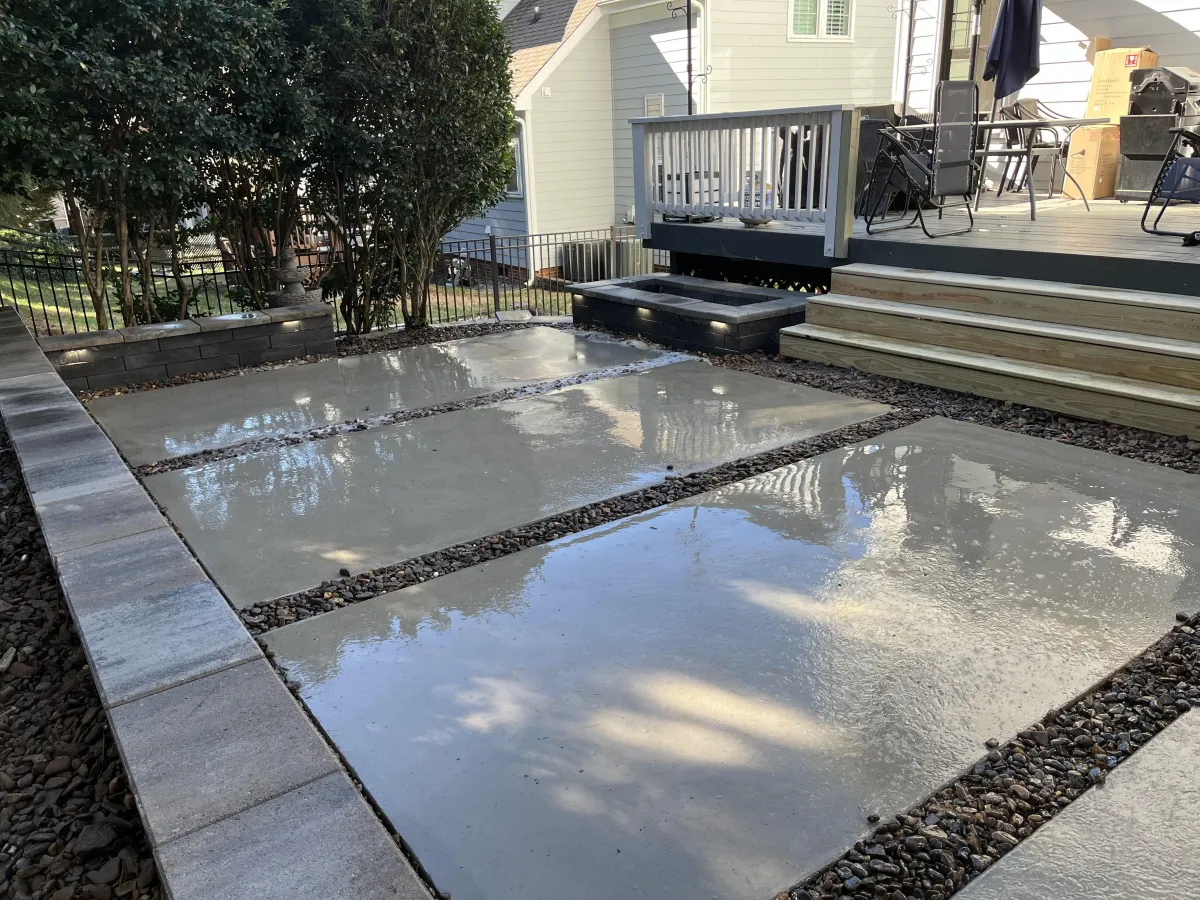
Drainage does not have to look like drainage. A dry creek bed, a planted low area or a well-screened outlet can carry exactly the same volume as a grate and a pipe while reading as a deliberate part of the garden. The engineering underneath is identical — the difference is what you see.
Dry creek beds that carry real volume
A dry creek bed is a shaped channel lined with stone that carries surface water across the yard to an outlet. Done properly it moves serious volume during a storm and looks like a landscape feature the rest of the year.
The ones that work share a few traits: a genuine shaped channel underneath rather than rock scattered on flat ground, filter fabric beneath the stone so it does not sink into the soil, a mix of stone sizes rather than uniform gravel, and a course that curves the way water actually moves rather than running arrow-straight.
Larger boulders placed at the bends and edges make it read as natural and also slow the water where it would otherwise scour. Planting along the banks finishes the effect.
Where volume is high, a dry creek bed can be built over a buried pipe — the pipe handles routine flow, the channel handles storms.
Rain gardens and what will grow in them here
A rain garden is a shallow planted depression that receives runoff, holds it briefly and lets it drain down or soak in. On Piedmont clay a true infiltration rain garden needs the soil in the basin to be excavated and rebuilt with a draining mix, and it still benefits from an underdrain to a real outlet. Without that it becomes a pond.
Plant for a place that is wet for a day or two and dry for weeks. Around Lake Norman that means natives comfortable with fluctuation — inkberry holly, Virginia sweetspire, switchgrass, soft rush, blue flag iris and swamp milkweed in the base, with less water-tolerant plants along the rim.
Site it well away from the foundation and clear of the septic field, and give it an overflow route for the storm that exceeds its capacity, because that storm will come.
Planting to hide inlets and outlets
Grates and pop-up emitters are the visible parts of an otherwise invisible system, and they are easy to disguise without compromising them.
Around a catch basin, keep low groundcover or ornamental grasses set back far enough that water can still reach the grate freely and leaves do not blanket it. Never mulch over a grate — it blocks it and you will not notice until the yard floods.
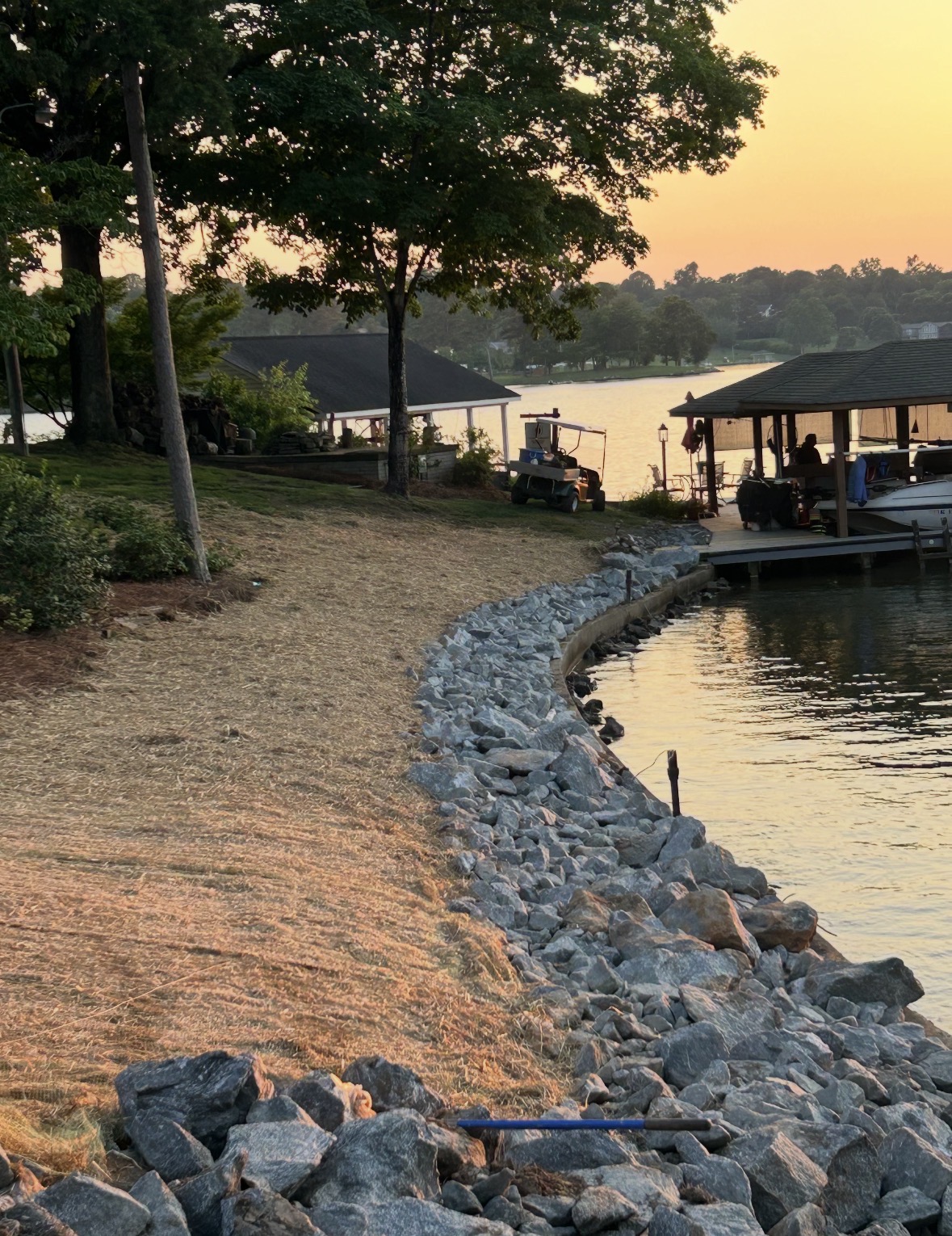
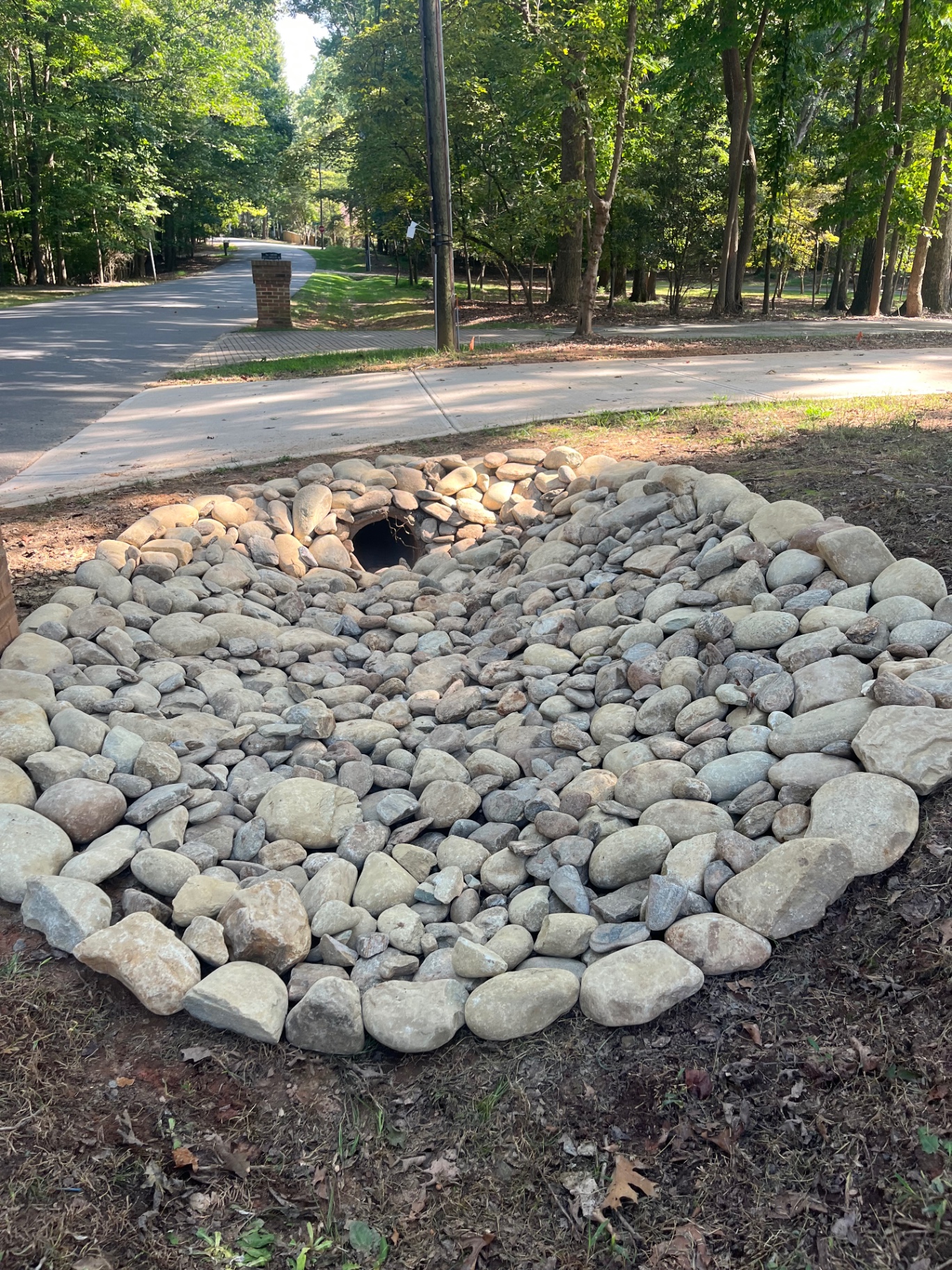
At an outlet, a small stone apron prevents scouring and gives the discharge somewhere to spread. Shrubs behind it screen the pipe from view while leaving the mouth clear.
Along a French drain run, remember the trench is a working part of the system: shallow-rooted planting is fine above it, trees are not.
Terraces and walls that double as drainage
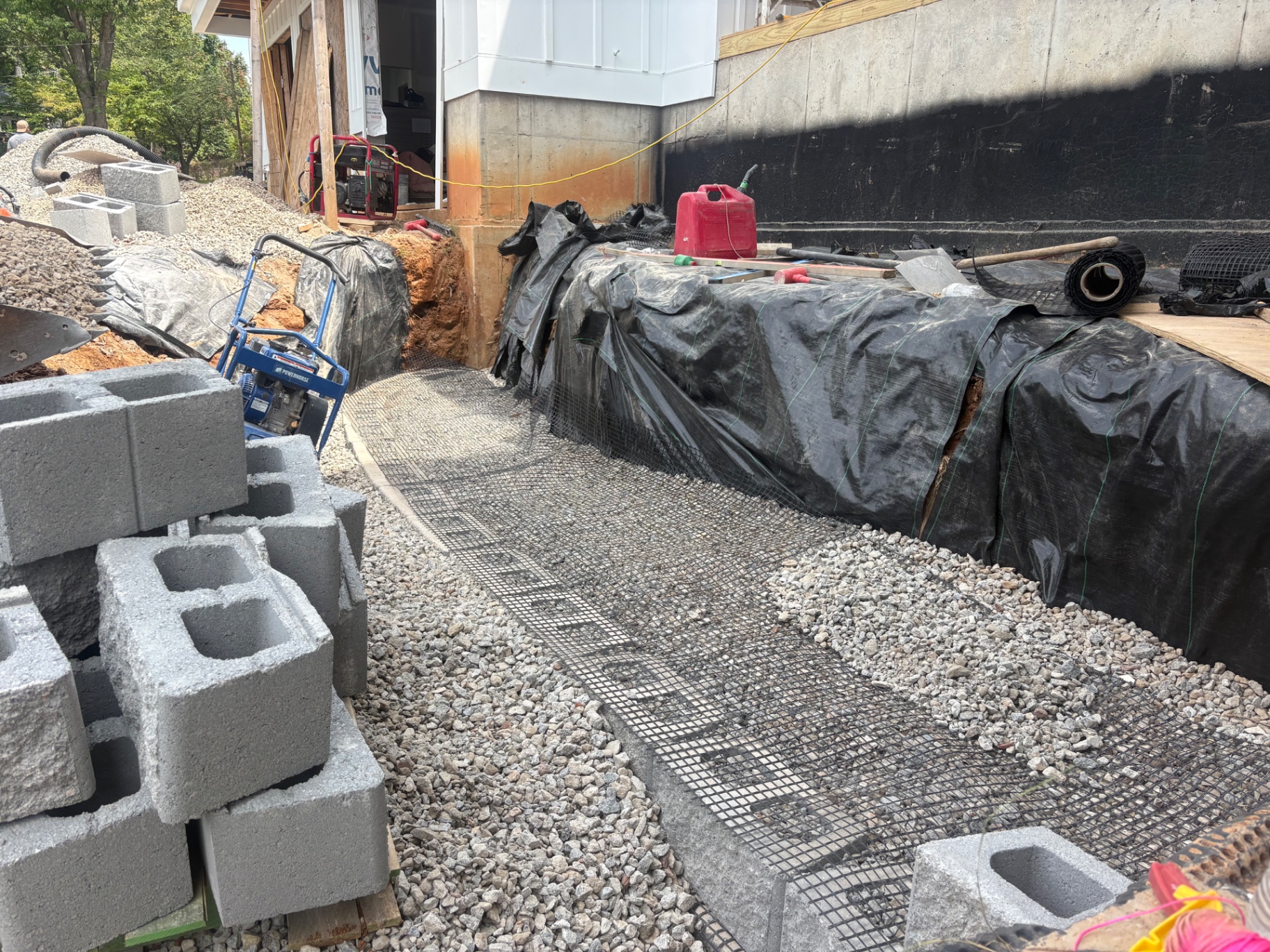
On sloped backyards a low retaining wall or a set of terraces solves erosion and creates usable flat space at the same time. The drainage is built into the wall — gravel backfill, filter fabric and a drain line behind it — so it is doing structural and hydraulic work simultaneously.
That combination is often the better value on a slope, because you would be spending money moving soil regardless.
What not to do for the sake of appearance
Do not skip the pipe because a rock channel looks nicer without one, where volume genuinely needs pipe. Do not omit filter fabric to save a step. Do not undersize an inlet so it disappears better. And do not place a rain garden where the water has nowhere to overflow to.
The visible layer is design. The layer beneath it is not negotiable.
Southern Style Turf & Design builds drainage that fits the landscape rather than interrupting it, across Lake Norman. Free on-site estimate.
Frequently asked questions
Do dry creek beds actually work for drainage?
Yes, when there is a properly shaped and fabric-lined channel underneath and a real outlet at the end. Stone scattered over flat ground is decoration, not drainage.
Will a rain garden work on clay soil?
Only if the basin soil is excavated and replaced with a draining mix, and usually only with an underdrain to an outlet. Dug straight into clay it holds water instead of releasing it.
What plants suit a wet area in the Piedmont?
Natives that tolerate swings between saturated and dry: inkberry holly, Virginia sweetspire, switchgrass, soft rush, blue flag iris and swamp milkweed.
Can I plant over a French drain?
Shallow-rooted groundcover and perennials are fine. Trees and large shrubs are not — roots seek the water in the pipe and eventually block it.
Want this looked at on your property?
We give free, no-pressure on-site estimates across Denver, Mooresville, Cornelius, Davidson, Huntersville and Troutman.