Piedmont clay does not absorb water at any useful rate, which is why yards here pond on the surface while the soil a foot down stays dense and wet. Any drainage plan that depends on water soaking away is fighting the soil. The plans that work move the water instead.
Why clay holds water at the surface
Clay particles are microscopic and sit tightly together, leaving very little pore space for water to travel through. Sandy soil drains quickly because the gaps between grains are large. Clay drains slowly for the opposite reason.
Most Lake Norman lots have a thin layer of topsoil over red clay subsoil. Rain soaks through the topsoil in minutes, hits the clay, and then has nowhere to go but sideways or up. That is why a yard can pond in an area that was dry an hour earlier and stay wet for days afterward.
Construction makes it worse. Heavy equipment compacts clay severely, and on newer lots the topsoil layer is often thin and spread over a compacted subgrade.
If you're wondering what will soak up standing water in a Denver, NC yard, here's the short answer on standing water in clay.
Solutions that fail on clay, and why they get sold anyway
Dry wells. They require percolation. Clay does not percolate. They work once, then stay full.
Aerating or amending your way out of a drainage problem. Improving soil structure is genuinely worthwhile for turf and planting health, but it does not create an outlet, and no amount of compost changes what happens beneath the root zone.
Gravel trenches with no pipe. On clay especially, fines migrate into the gravel and clog it. Without filter fabric and a real perforated pipe it becomes a buried mud channel.
Filling the low spot. The fill compacts and settles, and now the surrounding grade drains toward a slightly different low spot.
All four get recommended because they are quick, cheap to install, and slow to visibly fail.
Working with the soil instead of against it
Because clay sheds water rather than absorbing it, surface shaping is unusually effective here. Grading and swales work well on clay precisely because the water stays on top where you can steer it.
Where water is moving through that thin topsoil layer above the clay, a shallow French drain intercepts it — often shallower than people expect, because that is where the water actually is.
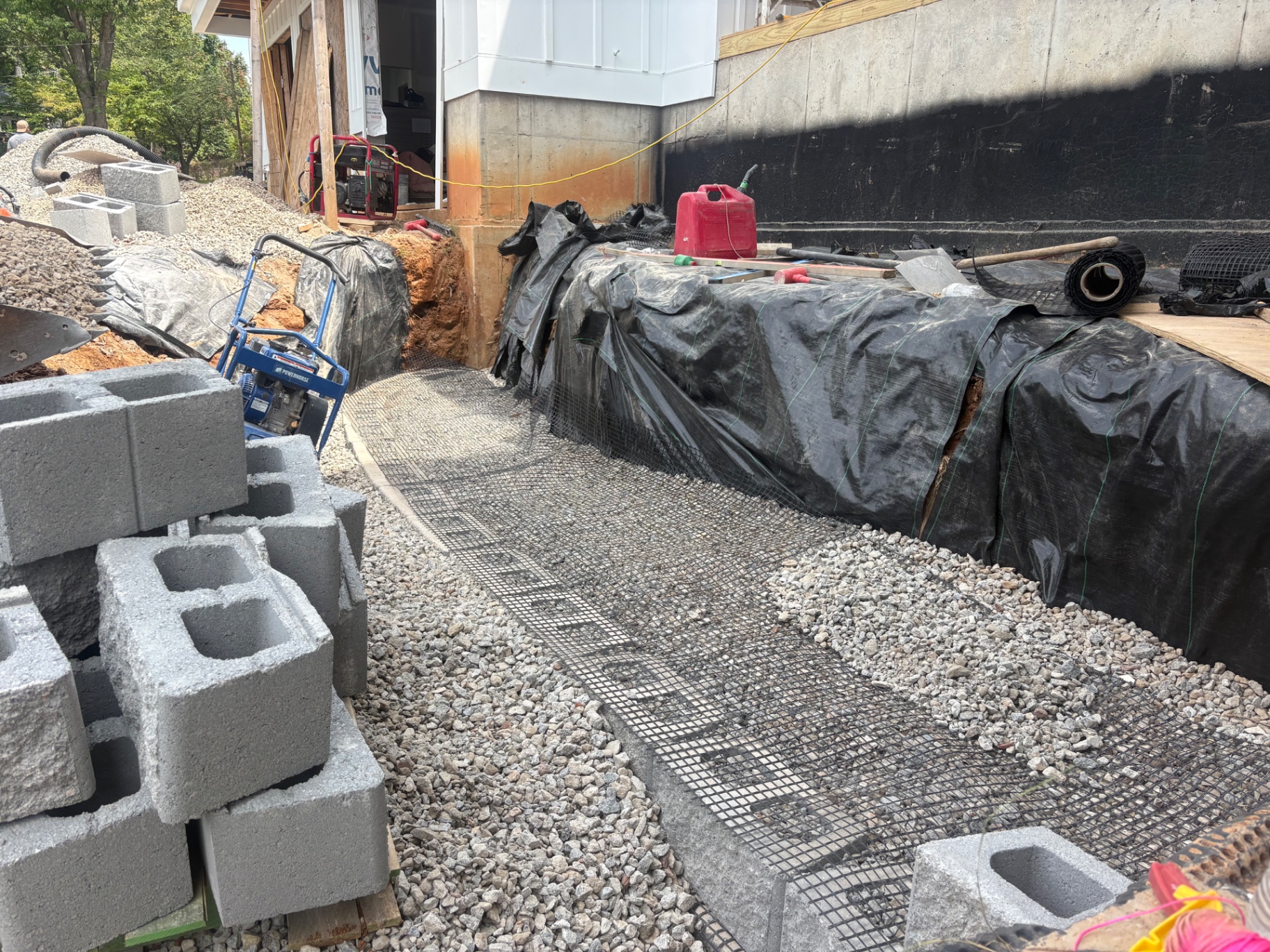
Filter fabric is not optional on clay. Fines will find their way into unwrapped gravel, and once the gravel is clogged the system is finished.
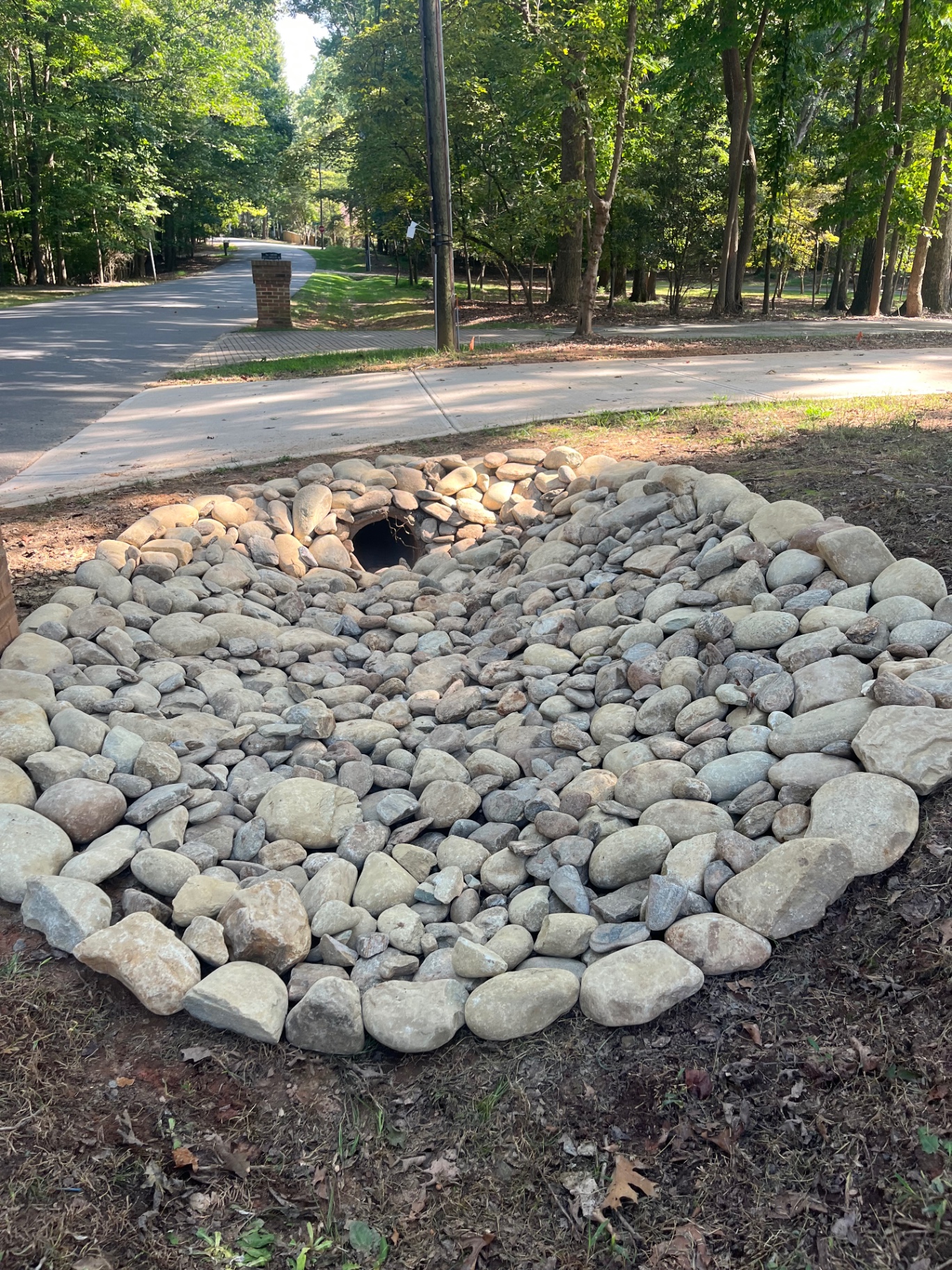
Downspout water needs to be piped clear of the yard entirely rather than released to soak in, because it will not soak in.
Clay and your lawn
Two separate problems often get bundled together. Drainage is about where the water goes. Soil health is about whether grass and plants thrive in what is left.
Fix the drainage first. Core aeration, organic matter and appropriate plant selection all pay off on clay, but they pay off far more once water is no longer standing on the area for days at a time.
For planting on clay, raised beds and species that tolerate periodic wet feet do considerably better than fighting for perfect conditions in a hole cut into subsoil.
Local reality
Denver, Huntersville, Cornelius, Davidson, Mooresville and Troutman all sit on the same broad clay belt, and the drainage problems look remarkably similar across all six. What differs is the lot: how much fall it has, how much of the original soil profile survived construction, and how far it is to somewhere the water can go.
Southern Style Turf & Design digs on this soil every week. Free on-site estimate, written quote, no trip fee.
Frequently asked questions
How do you improve drainage in clay soil?
Move the water rather than trying to absorb it: shape the surface so it falls toward an outlet, intercept shallow subsurface water with a fabric-wrapped French drain, and pipe roof water off the area entirely.
Does adding sand or compost fix clay drainage?
No. Amendments improve soil health in the root zone, which is worth doing, but they do not create an outlet or change what happens in the compacted subsoil below.
Why does my yard stay wet for days after rain?
Water passes through the shallow topsoil, reaches dense clay, and stops. With no fall to carry it away it sits until it evaporates or is used by plants.
Is filter fabric really necessary on clay?
Yes. Clay fines migrate into unwrapped gravel and clog it, which is the most common reason a French drain on this soil quietly stops working.
Want this looked at on your property?
We give free, no-pressure on-site estimates across Denver, Mooresville, Cornelius, Davidson, Huntersville and Troutman.