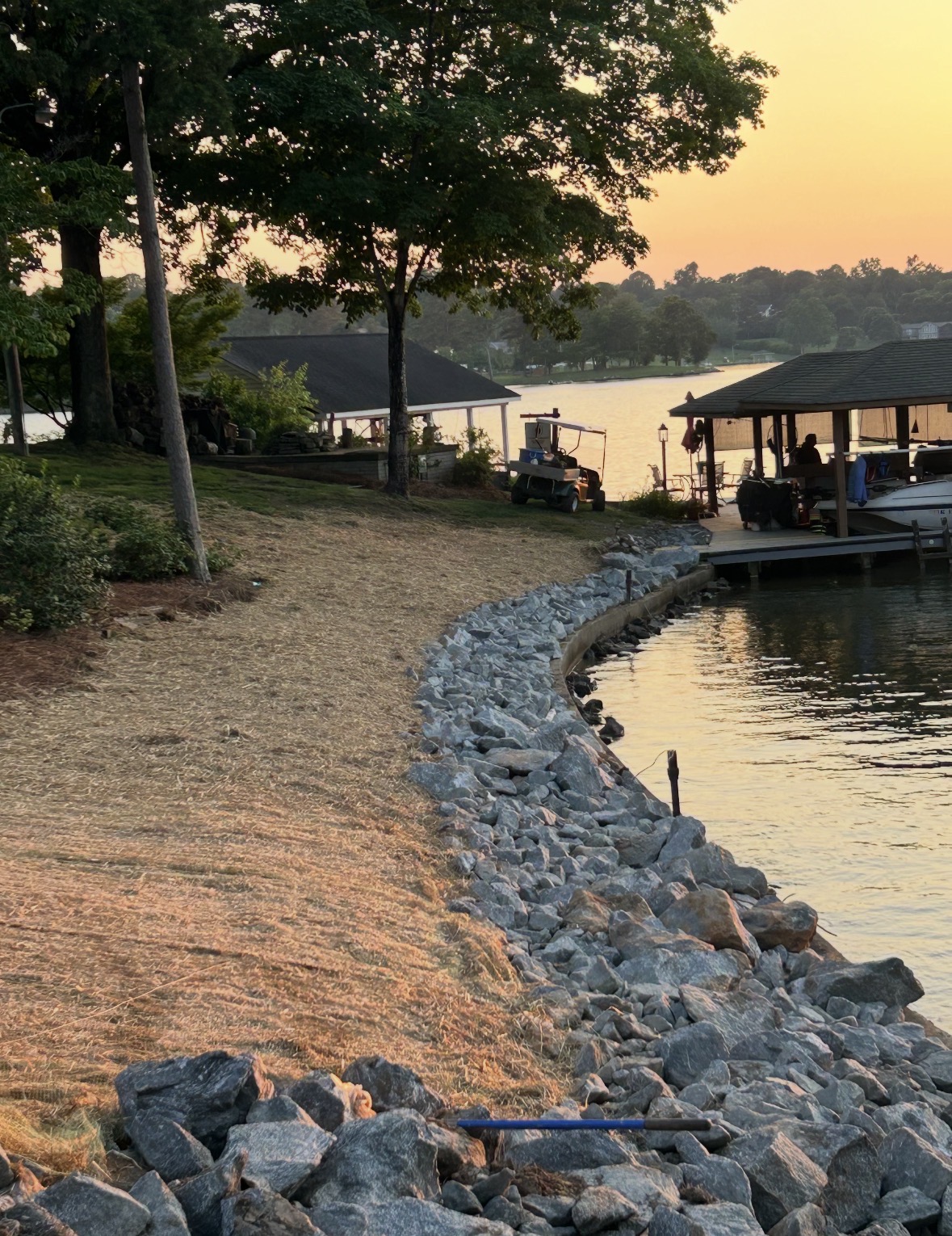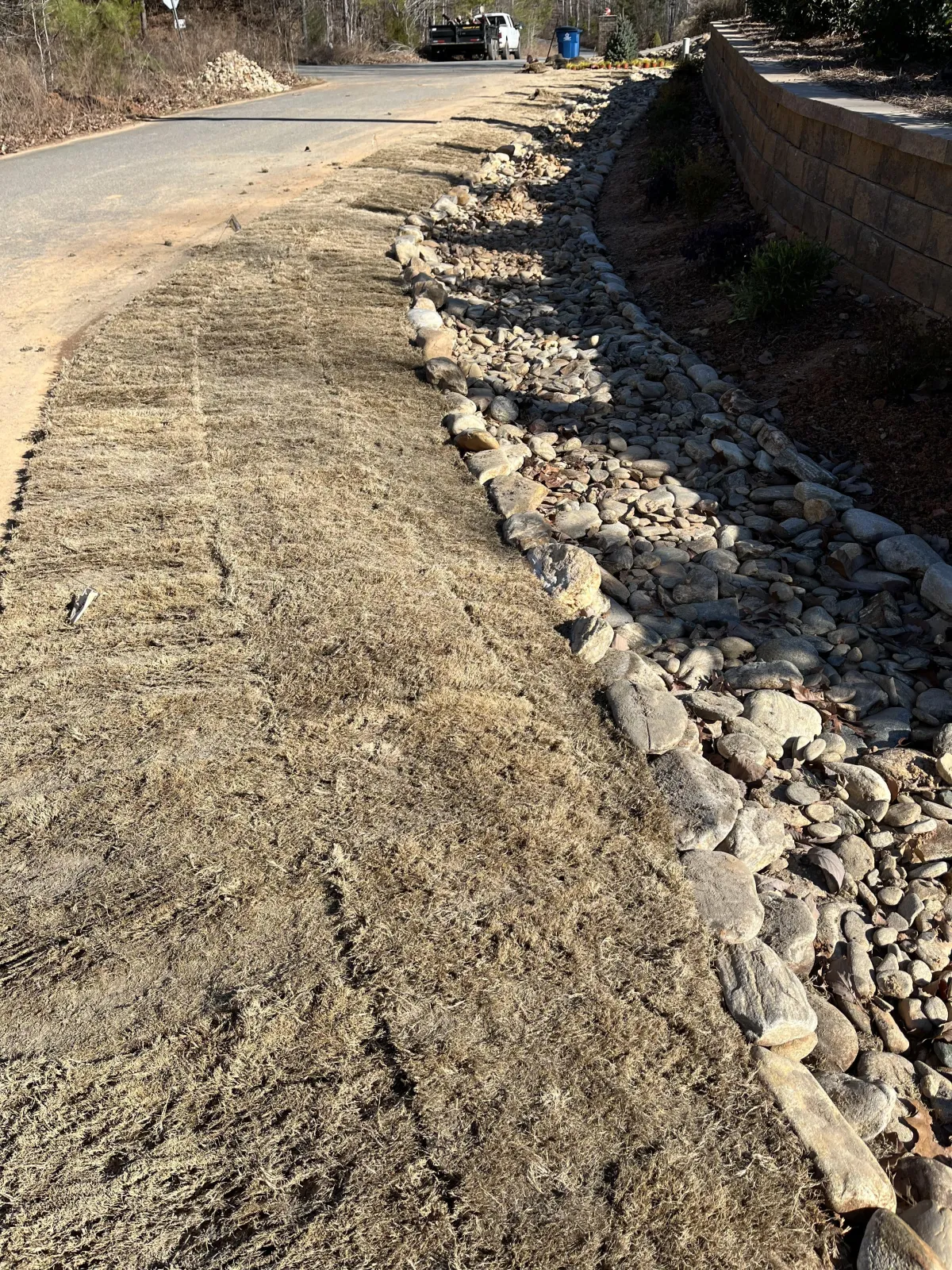
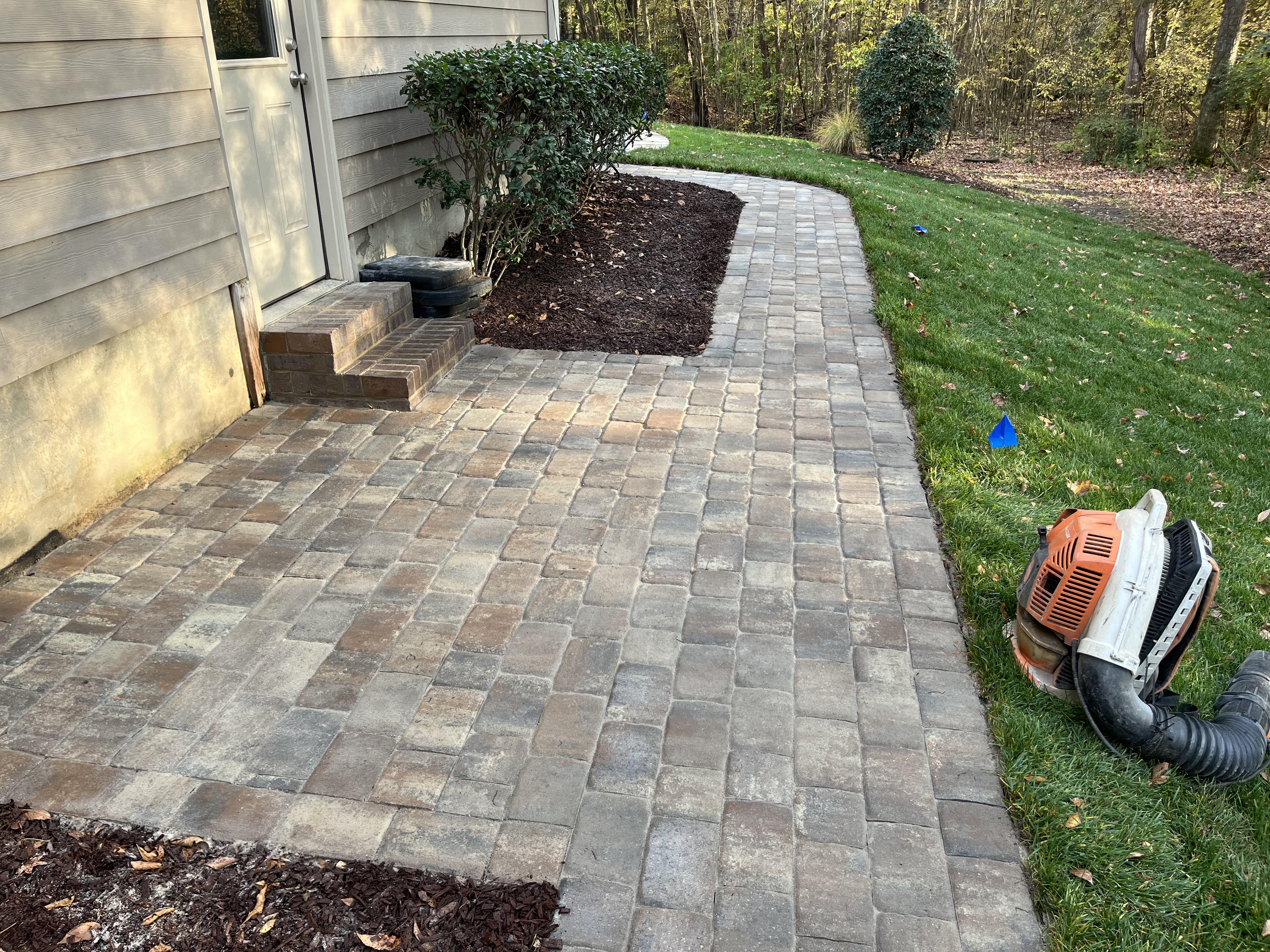
Drainage problems announce themselves long before water gets into a crawlspace. Most of the signs are things homeowners have stopped noticing because they have been there for years.
What you can see after rain
Water still standing more than a day after a storm. Soil should shed or absorb it well before that.
Soggy strips that squelch underfoot for days — usually water moving through the soil rather than sitting on it.
Mud washed onto paving, mulch moved out of beds, and small gullies forming on slopes. That is runoff with too much velocity and nowhere planned to go.
Silt fans at the bottom of a slope or against a wall.
What you can see anytime
Moss and algae in the lawn or on paving in areas that stay damp.
Grass thinning in one patch every year while the rest of the lawn is fine.
Shrubs declining in a single bed — yellowing, dropping leaves, dying back — usually roots sitting in water rather than a disease.
Mulch and soil built up against the foundation so the ground falls toward the house.
What the house tells you
Damp or musty crawlspace, efflorescence on foundation walls, or water marks in a basement.
Gutters overflowing at the same corner every storm, or downspouts discharging straight onto the ground at the wall.
Settlement cracks in a patio, walk or driveway where the base has been washing out.
Insects and mosquitoes concentrated around a persistently wet area.
What to do about it
Deal with roof water first — it is the largest single input and the cheapest to redirect.
Then look at grade: does the ground fall away from the house and toward an outlet?
Then decide whether the remaining problem is surface water or water in the soil, because they need different solutions.
Southern Style Turf & Design assesses the whole property, finds the actual source, and installs grading and drainage across the Lake Norman area. Free on-site estimate.
Frequently asked questions
How long should water stand after rain?
Puddles during a heavy storm are normal. Water still there a day later, or ground that stays soft for several days, indicates a problem.
Is a soggy lawn always a drainage problem?
Not always — over-irrigation and compaction cause the same symptom. That is why an assessment looks at the whole site rather than just the wet spot.
Can drainage problems damage my house?
Persistent water against a foundation contributes to damp crawlspaces, settlement and deterioration. It is worth addressing early.
Want this looked at on your property?
We give free, no-pressure on-site estimates across Denver, Mooresville, Cornelius, Davidson, Huntersville and Troutman.