When you're comparing landscapers or hardscape contractors, one question rarely makes the checklist: who will actually be on your property? Some companies sell the job and then hand the work to subcontractors you've never met. Others — like us — do the work with their own in-house crew. That difference shows up in the finished patio, the drainage system that either works or doesn't, and how problems get handled if something goes wrong. Here's what an in-house crew means in practice, and why it's worth asking about before you sign anything.
What 'in-house crew' actually means
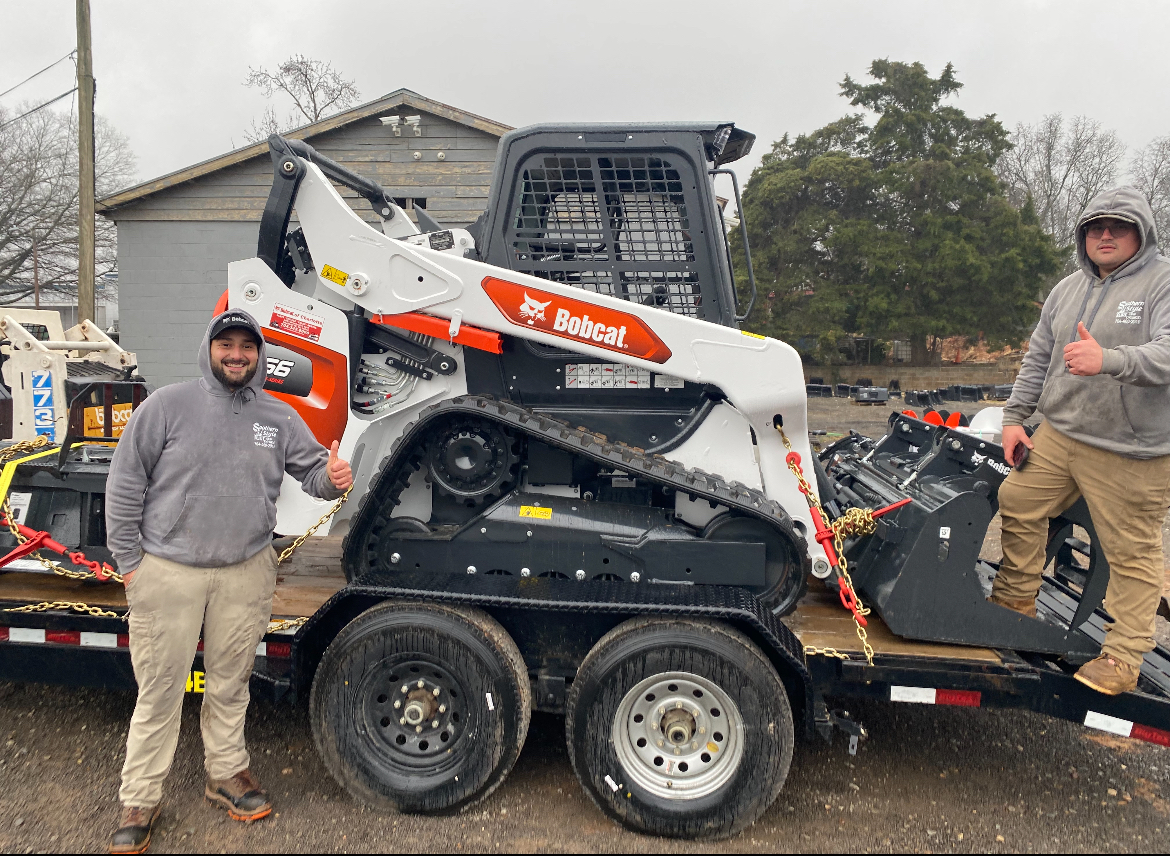
An in-house crew means the people who show up to dig your French drain, set your retaining wall base or lay your pavers work directly for the company you hired. They're trained by that company, supervised by that company, and answer to that company.
The alternative is subcontracting: the company you hired sells the job, then passes some or all of the work to an outside crew. You may never know who those workers are, what training they have, or whether they've ever built the thing you're paying for.
Both models exist across the Lake Norman area, and a subcontracted job isn't automatically a bad job. But the two models are not the same, and the differences matter most on technical work like drainage, retaining walls and grading — exactly the jobs where mistakes stay hidden until the first big storm.
Accountability: one company, one throat to choke
When the crew works for the company you hired, there's a single line of responsibility. If a drain outlet is placed wrong or a wall starts to lean, you call one number and the people who did the work come back and look at it.
With subcontractors, responsibility can blur. The company you paid may blame the crew; the crew may be gone, paid in full, and working somewhere else. Homeowners can end up in the middle of a dispute between two businesses over who owes the fix.
Our crew is entirely in-house — we don't subcontract our work out. The same team that walks your property at the estimate is connected to the team that does the work, so nothing gets lost between the salesman and the shovel.
Consistency: the details that decide whether the work lasts
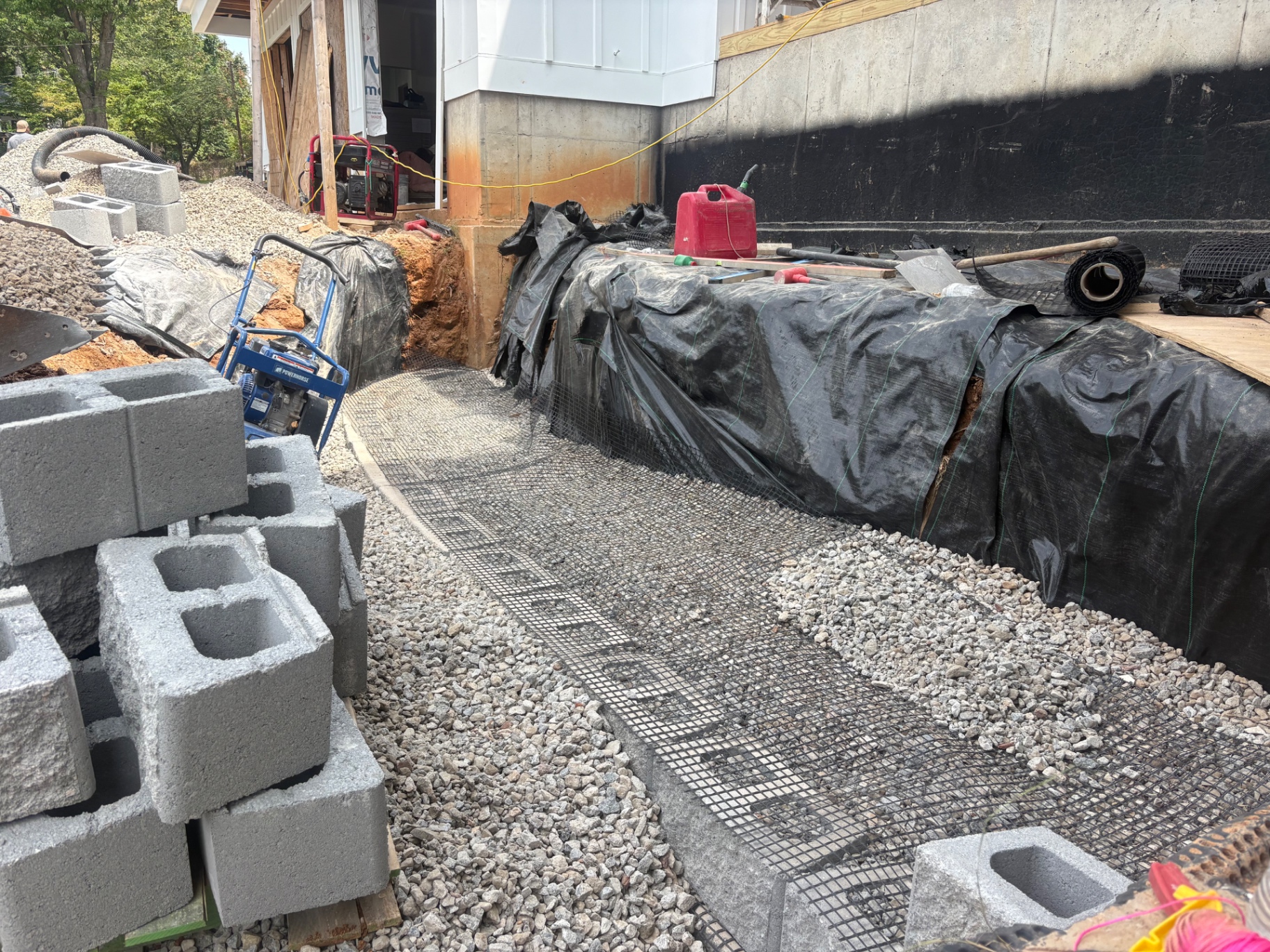
Drainage and wall work is full of details that don't show in the finished photo: trench depth into the clay layer, washed stone with filter fabric, a compacted base below grade, drainage stone and pipe behind every wall. These are the steps that determine whether the work is still performing in five years.
An in-house crew does these steps the same way on every job because they were trained to one standard and their work is checked against it. A rotating cast of subcontractors may each have their own habits — some good, some shortcuts — and the company that sold you the job may not be on site to know the difference.
Consistency also matters for the estimate itself. When the crew is in-house, the written quote reflects how that crew actually builds, line by line — not a guess at what a subcontractor will charge to do it.
Communication: fewer people between you and the work
On an in-house job, questions travel a short distance. You ask the crew or the owner, and the answer comes from someone who was standing in your yard that morning.
On a subcontracted job, your question goes to the company, the company relays it to the crew, and the answer comes back filtered — sometimes days later, sometimes never. Small misunderstandings about where a drain should outlet or which beds get protected can turn into expensive corrections.
We're a mobile service with no storefront, so communication is direct by design: you call 704-460-2019 and you reach the people responsible for your job, not a call center or a layer of project managers.
How to vet any contractor on this question
You don't have to take anyone's word for it. A few direct questions will tell you how a company is structured:
- Will your own employees do the work, or do you use subcontractors? Ask it plainly and listen to how directly it's answered.
- Who supervises the job site each day, and will that person be on my property or managing by phone?
- If something isn't right after the job, who comes back — your crew or whoever is available?
- Can I see proof of insurance, and does it cover the people who will actually be on site?
- Is the quote written with line items, so I can see what the crew is being asked to build?
Where this matters most around Lake Norman
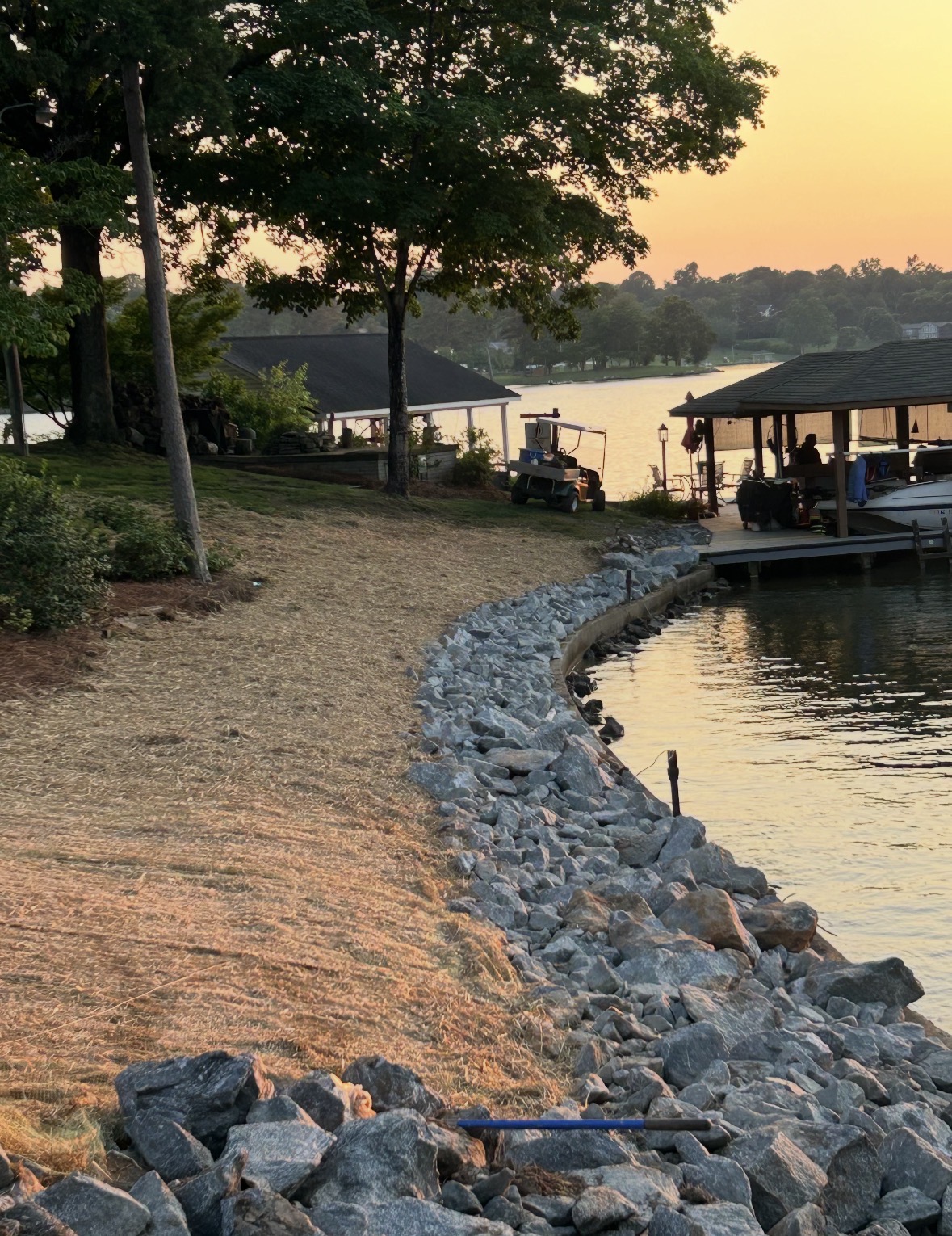
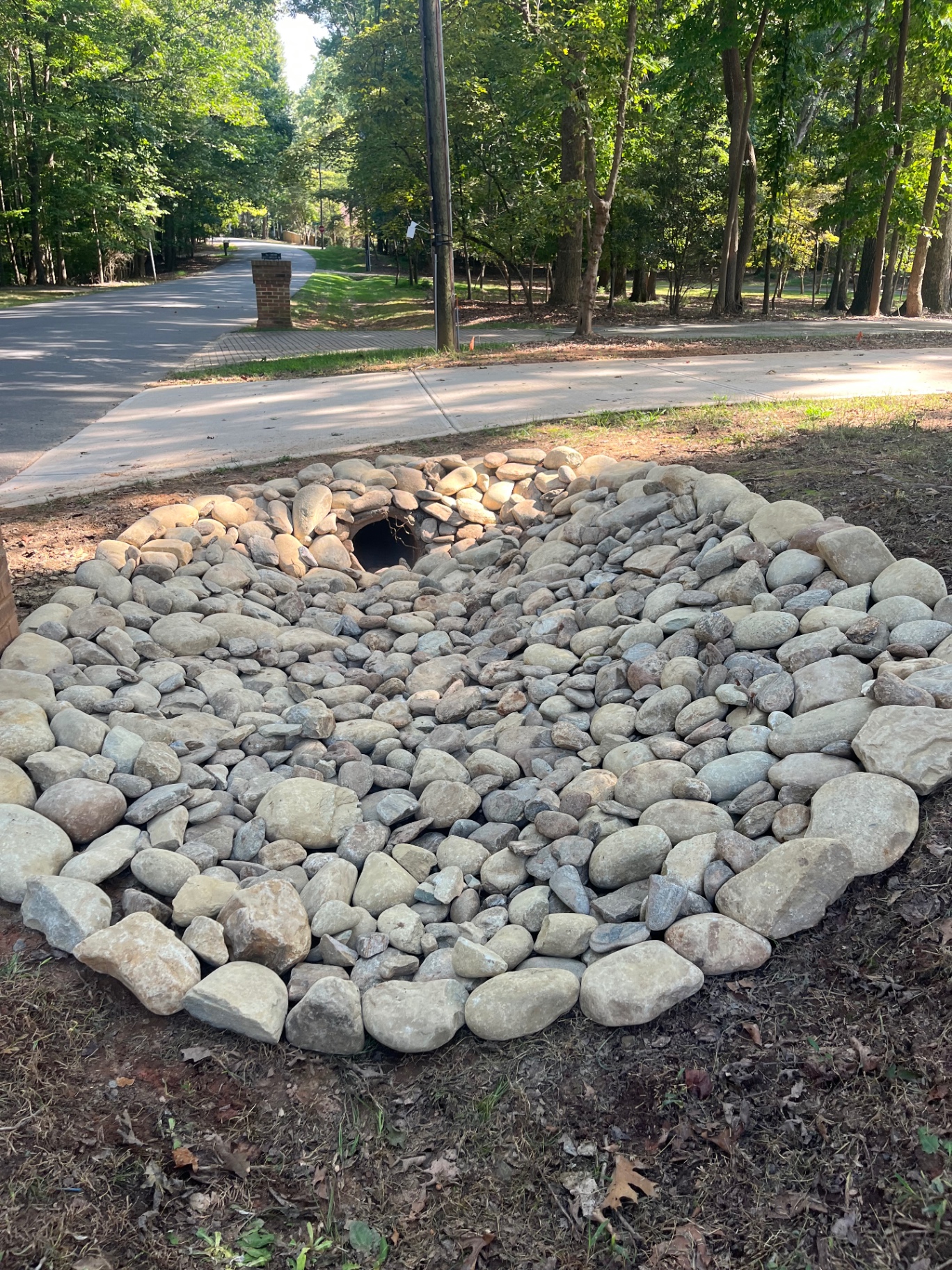
The in-house question matters on every job, but it matters most on the work that's hardest to inspect after the fact: French drains and grading on red clay, retaining walls with geogrid and drainage behind them, and shoreline-adjacent work where approvals and erosion control come into play.
These are exactly the jobs we do with our own crew across Denver, Mooresville, Cornelius, Davidson and the surrounding Lake Norman communities. If you'd like to talk through a project, estimates are free and there's no trip fee — call 704-460-2019 or request one online.
Frequently asked questions
Does Southern Style Turf use subcontractors?
No. Our work is done by our own in-house crew. The people who estimate your job are connected to the people who build it, and the same company answers for the work afterward.
Is a company that uses subcontractors always a bad choice?
Not automatically — but you should know before you sign. Ask who will physically do the work, who supervises them, and who comes back if something isn't right. Vague answers to those questions are a warning sign.
Why does crew structure matter more for drainage and retaining walls?
Because the critical parts of those jobs are buried or hidden behind the wall when the work is done. Trench depth, stone quality, base compaction and wall drainage can't be inspected from a photo — you have to trust the crew's standard, and that standard is easier to trust when one company trains and supervises the crew.
What should I ask a landscaper before hiring them?
Ask whether the crew is in-house or subcontracted, who supervises the site daily, whether they're insured, and whether the quote is written with line items. A reputable contractor will answer all four directly.
Want this looked at on your property?
We give free, no-pressure on-site estimates across Denver, Mooresville, Cornelius, Davidson, Huntersville and Troutman.