Two yards can look identical from the street and produce very different quotes for the same drainage fix or retaining wall. That's not arbitrary pricing — it's because the real cost drivers are underground and behind the wall, where you can't see them. This guide explains how a line-item quote for drainage or wall work is actually calculated, so when you compare estimates you know what each line is paying for. We don't publish fixed prices because every property is different — but the factors below are the same ones we walk through on every estimate, and a written quote should show them clearly.
Why there is no honest flat price for drainage or walls
Drainage and retaining wall work is excavation work, and excavation cost is set by what's in the ground and how hard it is to reach — two things nobody can price from a photo or a phone call.
A French drain across a flat, open side yard is a different job from the same drain run past a septic line, under a walkway and through tree roots. A two-foot garden wall on level ground is a different job from a four-foot wall holding back a slope above a patio. The materials list may look similar on paper while the labor, engineering and site work differ completely.
That's why reputable contractors quote drainage and wall work per property, in writing, after seeing the site — and why a quote with no line items is a warning sign, not a convenience.
The line items behind a drainage quote
A drainage quote is built from a handful of measurable factors. When you read an estimate, these are the lines that should be identifiable:
Trench length and depth. Pipe is priced by the run, and digging is priced by how much soil has to move. A drain that has to reach the dense clay layer costs more digging time than a shallow surface channel, but on Piedmont clay the deeper cut is often what makes the drain work at all.
Materials per foot. Washed stone with no fines, filter fabric, and solid or perforated pipe are separate material lines. Cheaper substitutes — sock-wrapped flex pipe, unwashed gravel — lower the quote and shorten the drain's life.
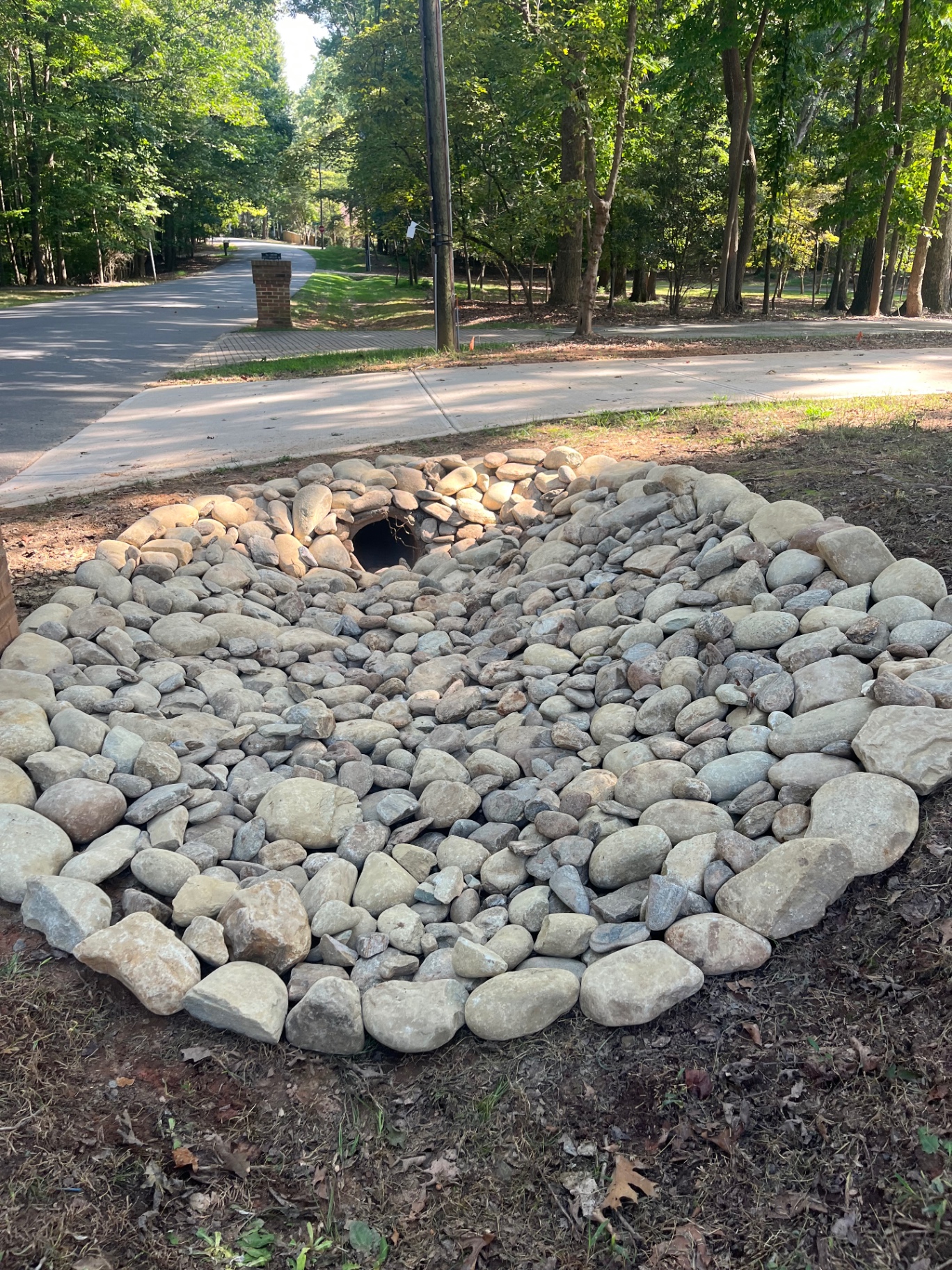
The outlet. Every drain has to end somewhere: daylighting on a slope, a catch basin tied into solid pipe, or a connection to an approved discharge point. The outlet run is often a significant share of the total footage, and it's the part cheap quotes leave vague.
Access and obstacles. Fenced backyards, narrow gates, established landscaping, irrigation lines, tree roots and buried utilities all change how the trench gets dug. Machine access keeps costs down; hand digging around obstacles adds labor.
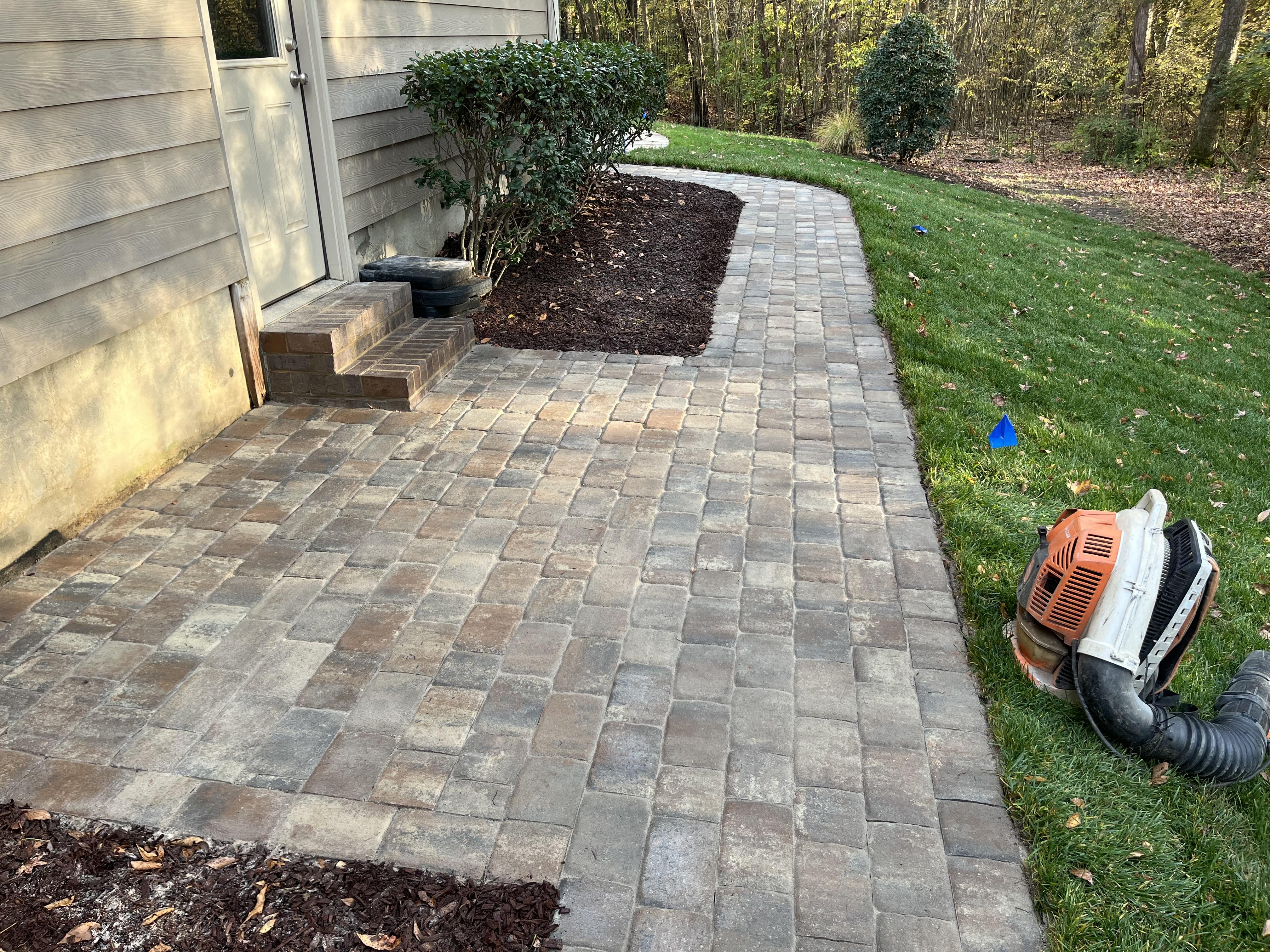
Restoration. Sod, seed, mulch and bed repair after the trench is closed should appear in the quote, not arrive as a surprise afterward.
The line items behind a retaining wall quote
Wall quotes follow the same logic — the visible face of the wall is often the smaller part of the job.
Wall height and length. Block and cap are priced by the face of the wall, so height drives material cost directly. Height also decides whether the wall needs engineered design or a permit — taller walls carry structural requirements that shorter ones don't, and that shows up in the quote.
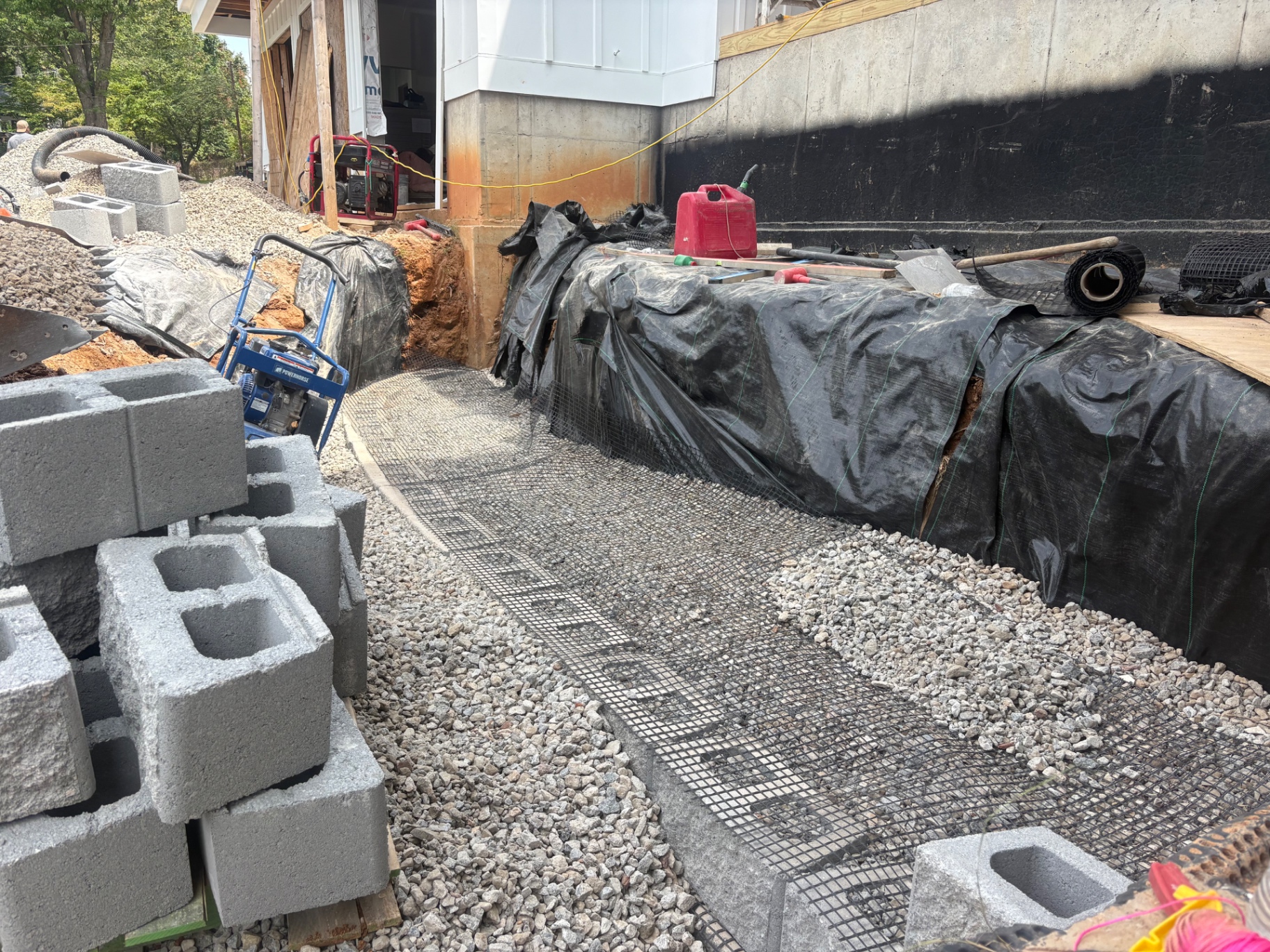
Excavation and base. Every wall sits on a compacted gravel base below grade. Taller walls need deeper, wider base, and sloped sites need the base stepped into the hill. This is invisible in the finished wall and essential to it standing.
Drainage behind the wall. Drainage stone, perforated pipe at the base of the wall and an outlet for that pipe are separate lines — and they're what keep water pressure from pushing the wall over. A wall quote with no drainage line is a wall built to fail.
Geogrid reinforcement. Taller walls and walls holding slopes or driveways need layers of geogrid tying the wall back into the hillside. The grid itself is cheap; the extra excavation and backfill to install it is not.
Access and spoil. Soil dug out for the base and backfill has to go somewhere. Hauling spoil off a tight lot, or moving material by hand where machines can't reach, is real labor that belongs in the quote.
Site factors that move either quote up or down
Beyond the work itself, a handful of property conditions affect both drainage and wall pricing:
- Slope of the work area — steep ground slows digging, requires benching, and complicates material handling
- Soil conditions — heavy red clay digs slower than loam, and rock where the trench or base needs to go changes the job entirely
- Water already present — a site that's actively wet may need pumping or drying before work can start
- Distance from the street — every foot between the truck and the work area is a foot materials and spoil travel by machine or by hand
- What's overhead and underground — utilities, irrigation, septic systems and tree roots all have to be worked around
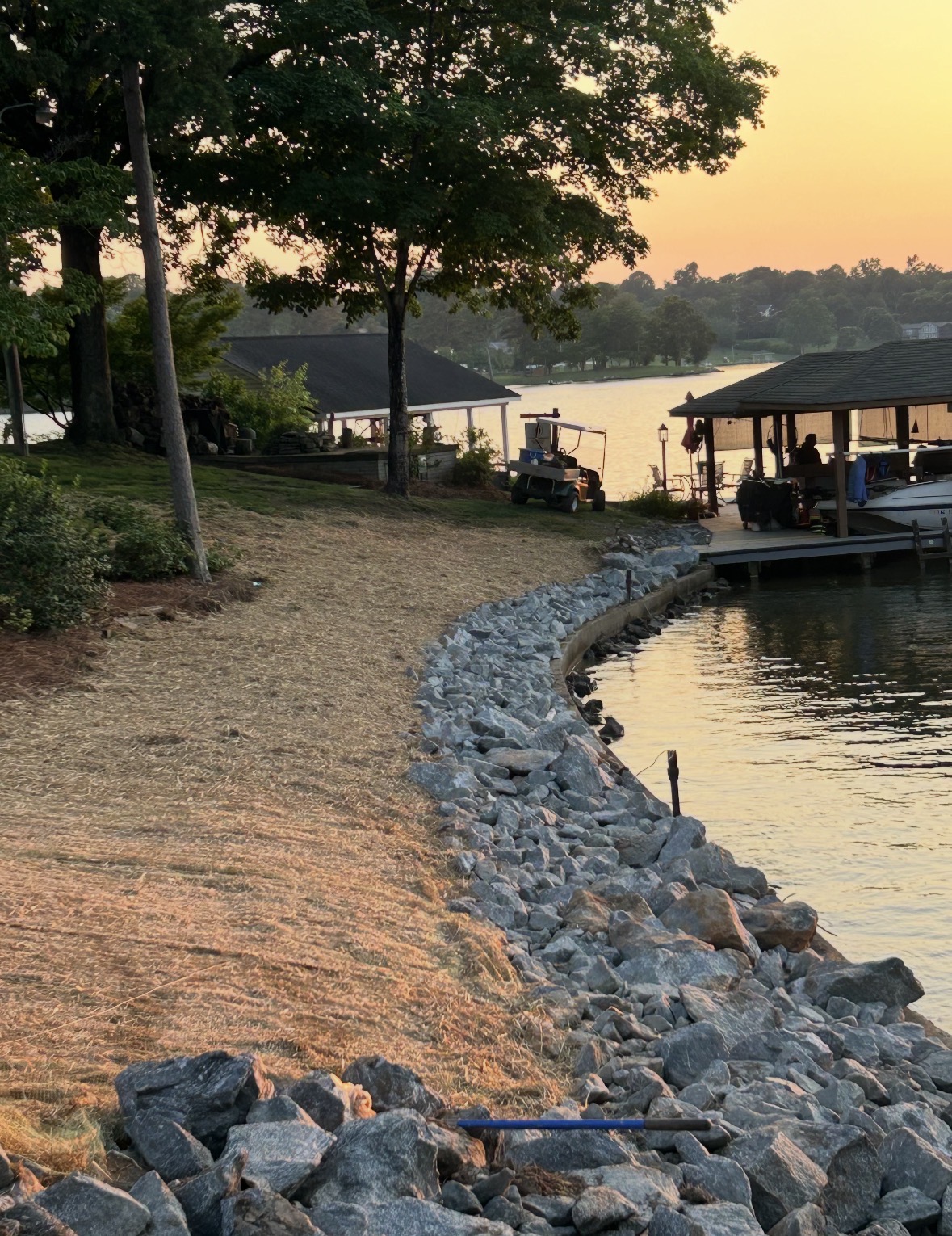
- Approvals — work near the Lake Norman shoreline may need approval from the lake's managing authority or the county, and taller walls may need permits; we confirm requirements before quoting that work
How to compare two quotes fairly
When two estimates for the same job are far apart, the difference is almost always in the line items, not the total. Compare them line by line:
Does each quote specify pipe type, stone type and filter fabric — or just say 'drain installed'? Does the wall quote include base depth, drainage stone, pipe and geogrid where the height calls for it? Is the outlet shown, with a real discharge point? Is restoration included?
The lowest number is frequently the quote with the most lines missing. A drain without fabric, or a wall without drainage behind it, costs less on paper and more when it has to be dug out and rebuilt.
A written, itemized quote is also your protection: it defines the scope before work starts, so 'that's extra' conversations happen before digging, not after.
How our estimate process works
Estimates are free and there's no trip fee. We visit the property, look at where the water goes or where the wall needs to stand, and talk through options — sometimes a grading fix does the job without a drain at all.
You get a written quote that shows the scope line by line before any work is scheduled. If something underground turns out different than expected once digging starts, we tell you before proceeding, not on the invoice.
If you're still figuring out what your drainage problem actually is, our free Drainage Helper tool can narrow it down before we visit. Ready to talk it through? Call 704-460-2019 or request an estimate online.
Helpful outside reference
For background on why hard surfaces send more water across a yard, see the EPA guidance on urban runoff.
Frequently asked questions
Why won't contractors give drainage or wall prices over the phone?
Because the cost drivers are underground and site-specific: soil type, slope, access, buried obstacles and where water can legally discharge. A phone quote is either a guess or a teaser number that grows later. A written quote after a site visit is the only honest number.
What should a written drainage or retaining wall quote include?
Line items for excavation, materials by type (pipe, stone, fabric, block, base, geogrid where needed), the drainage outlet or discharge point, and site restoration. If a quote is one line and a total, ask what's behind the number before signing.
Is the cheapest quote usually the best value?
Rarely for underground work. Low quotes usually omit filter fabric, proper stone, base depth or drainage behind a wall — the parts you can't see but that decide whether the work lasts. Compare line items, not totals.
Do you charge for estimates?
No. Estimates are free with no trip fee. We visit the property, assess the drainage or wall site, and provide a written, itemized quote before any work begins.
Want this looked at on your property?
We give free, no-pressure on-site estimates across Denver, Mooresville, Cornelius, Davidson, Huntersville and Troutman.