Retaining wall quotes vary more than almost any other landscape job, and the spread usually is not markup. It is what is behind the wall. Two quotes for the same visible face can describe completely different structures.
What actually drives the price
Five things move a retaining wall number more than anything else:
- Height — cost per square foot rises with height because the base and reinforcement grow.
- Wall type — segmental block, natural stone and poured concrete are different budgets.
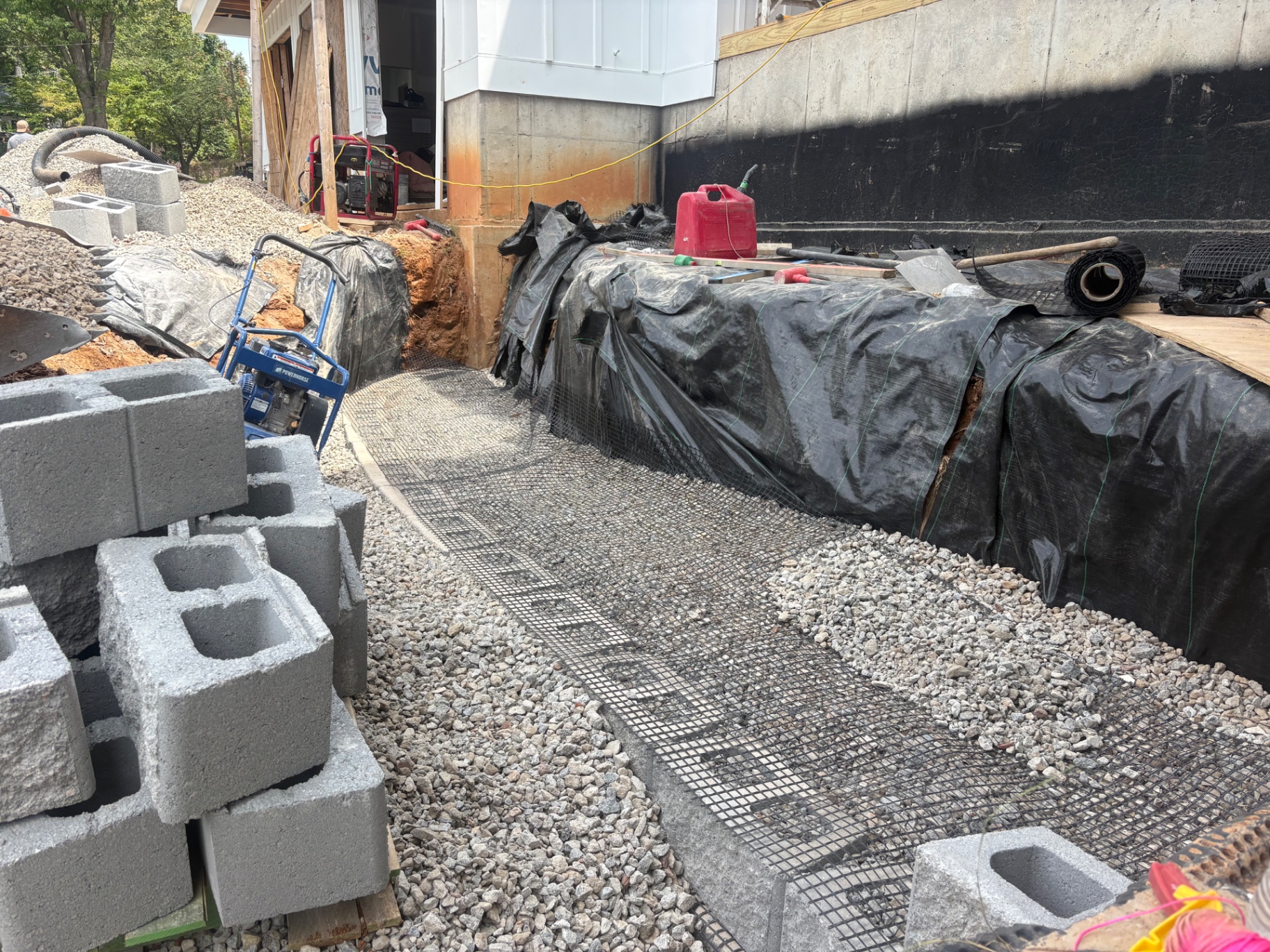
- Drainage — the gravel, pipe and fabric behind the wall that you never see.
- Access — whether a machine can reach the work or material has to be moved by hand.
- Permits and engineering — four feet is the height most often cited for a county permit around Lake Norman, while the 2024 NC Residential Code calls for an engineered design once unbalanced backfill passes five feet, or sooner for walls holding a driveway or structure.
Why the cheap quote is usually cheap
Most failed walls we are called to replace failed for the same reasons: no compacted base, no drainage stone, no drain pipe, and no geogrid reinforcement in a wall tall enough to need it. All four are invisible the day the job finishes, and all four decide whether the wall is standing in ten years.
How to compare quotes
Ask every contractor to write down the base depth and material, the width of the drainage stone, whether there is a perforated drain and where it discharges, whether geogrid is included and at what courses, and who is stamping the design if the wall is tall.
When those items are on paper, quotes get comparable fast — and gaps in a low bid become obvious.
Getting a real number
Wall pricing depends on site conditions we have to see: slope, soil, what the wall is holding, where water goes, and how we get equipment in. We give a written price after walking the property, not a per-foot guess over the phone.
Helpful outside reference
Design and installation guidance for segmental retaining walls comes from the National Concrete Masonry Association.
Frequently asked questions
When does a wall need to be engineered?
Section R404.4 of the 2024 NC Residential Code requires a registered design professional once unbalanced backfill exceeds five feet, and also for walls supporting a structure, crossing a property line, or terraced with more than five feet of cumulative relief within fifteen feet. A permit can be required earlier — four feet is the height usually cited locally, and in Lincoln County we confirm with Planning & Inspections before we build.
How long should a retaining wall last?
A properly based, drained and reinforced segmental block wall should last decades. Walls that lean or bulge within a few years almost always failed on drainage or base.
Can you repair a failing wall instead of replacing it?
Sometimes, if the base is sound and the problem is drainage. If the base failed, rebuilding is usually the cheaper long-term answer.
Want this looked at on your property?
We give free, no-pressure on-site estimates across Denver, Mooresville, Cornelius, Davidson, Huntersville and Troutman.