The clearest sign a drainage system has failed is water returning to a spot that used to stay dry. Other common indicators are an outlet that stays dry during heavy rain, standing water over a grate, a soggy stripe along the buried line, a settled trench across the lawn, and gurgling or overflow at a catch basin. Most of these point to sediment, a crushed section, a separated joint or a blocked outlet — not to a pipe that simply wore out.
Quick answer
Check the outlet first. During or right after a heavy rain, a working system discharges visibly. A dry outlet while the yard is holding water means the blockage is somewhere between the inlets and the discharge point.
Then check the inlets. Water standing above a grate that used to swallow it points to a blockage at or just past the basin.
Finally, walk the line. A soggy strip, a settled depression or unusually green grass following the pipe route suggests water is escaping into the trench rather than reaching the outlet.
Sign 1: the outlet does not flow
An outlet that stays dry while the yard is wet is the single most useful diagnostic. It means water is not making it through the system.
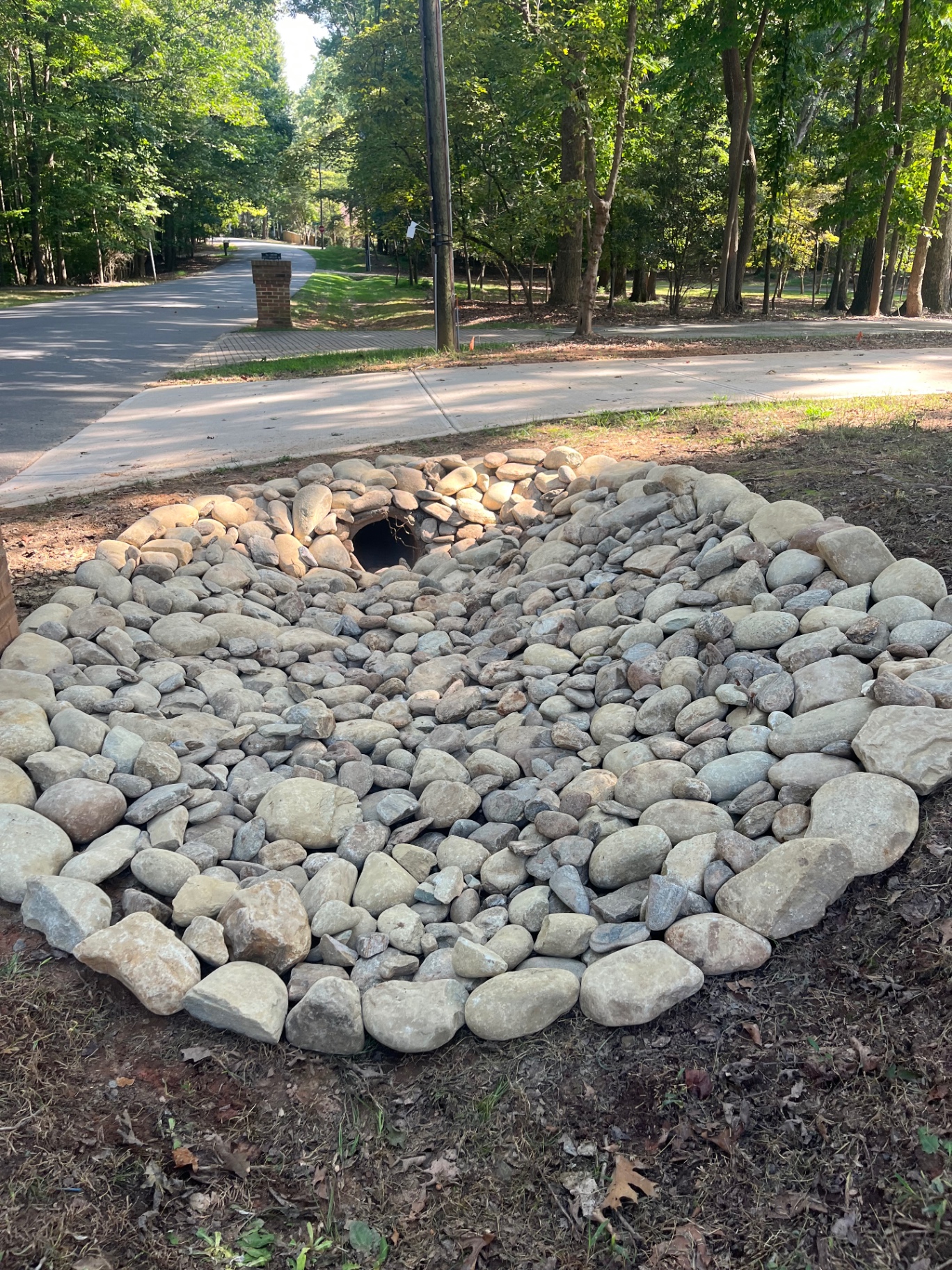
Before assuming a clog, confirm the outlet itself is not buried. Mulch, settled soil, leaf litter, a mowed-over pop-up emitter or grass grown across a daylight pipe will all close a discharge point. This is an easy and common find.
Animal nests and root mats also form at outlets because that is where light, moisture and access meet.
Sign 2: water stands over a grate or basin
A catch basin that fills and holds water rather than draining down is either full of sediment in its sump or blocked at its outlet pipe.
Basins are designed to trap some debris — that is partly the point — which means they need clearing. A basin nobody has opened in five years is often the whole problem.
Overflow around the edges of a channel drain in a driveway usually indicates the same condition, or a grate clogged with grit and leaves.
Sign 3: wet ground following the pipe route
A narrow soggy strip or a line of greener, faster-growing grass tracing the buried line means water is leaving the pipe underground. Likely causes are a separated coupling, a cracked or crushed section, or perforated pipe installed where solid pipe was needed.
A settled, trench-shaped depression across the lawn points to backfill that was never compacted, which can also mean the pipe inside has sagged into a belly that holds water.
Both conditions get worse over time because standing water in a sag collects sediment, and a leaking joint keeps washing soil into the pipe.
Sign 4: gradual decline rather than sudden failure
Sediment failures are slow. The yard clears a little more slowly each season until one ordinary storm produces standing water. Homeowners often describe this as the system 'suddenly' failing, when the buildup took years.
Systems most prone to this are those receiving grit from a driveway, those with ridged single-wall pipe, and those with no cleanouts and therefore no realistic way to flush the line.
A French drain in clay without proper washed stone and filter fabric declines the same way as fine particles fill the void space in the trench.
How failures are diagnosed
A proper diagnosis follows the water. It begins by identifying every inlet, locating the outlet, and observing the system during or immediately after rainfall when possible.
From there, cleanouts allow the line to be inspected and flushed, and a camera can locate a crushed section, a separated joint, root intrusion or a sag. Elevations can be checked to confirm the line still has fall.
Excavation should be the last step, targeted at a located defect, rather than the first step of guessing where to dig.
What causes these failures
Nearly every failed residential system we open shows one or more of these.
- Sediment accumulation, worst in ridged pipe and in systems with no cleanouts.
- Crushing from vehicle loads over shallow or under-rated pipe.
- Sags from ungraded trenches or settled backfill.
- Separated or unbanded couplings.
- Root intrusion through joints and perforations.
- A buried, blocked or overgrown outlet.
- Filter fabric omitted, letting clay fill the stone around a French drain.
- An original design with inadequate fall or an outlet that was never viable.
When to call a professional
Call when water is reaching the foundation or crawlspace, when a repeat repair has not held, when the system is under hardscape, or when you cannot find the outlet at all.
Ask for a diagnosis before a replacement quote. Replacing pipe without identifying why the original failed commonly reproduces the same result, and a system that failed from inadequate fall or a bad outlet will fail again with new pipe in the same trench.
Utility locating is required before excavation, and any new or rerouted discharge point needs to be chosen so water is released safely and lawfully.
Key takeaways
A quick checklist you can walk through yourself after the next storm.
- A dry outlet during heavy rain is the strongest sign of a blockage.
- Standing water over a grate usually means a full basin or a blocked outlet pipe.
- A soggy or settled stripe along the pipe route suggests a leak, crack or sag.
- Gradual decline over several seasons usually means sediment, not a sudden break.
- Diagnose the cause before replacing pipe, or expect the same failure to return.
Helpful outside reference
For background on why hard surfaces send more water across a yard, see the EPA guidance on urban runoff.
Frequently asked questions
How do I know if my French drain is clogged?
The usual signs are water standing above the drain, ground that stays saturated after rain the way it did before installation, and an outlet that does not flow during a storm. In clay soils, fine sediment filling the stone around the pipe is a common cause when washed stone and filter fabric were not used.
Can a clogged drain line be cleaned instead of replaced?
Often yes, particularly with smooth-bore pipe and accessible cleanouts, where cabling or jetting can restore flow. Crushed, sagging or separated sections cannot be corrected by cleaning and need a targeted repair.
Why is my drain outlet dry when the yard is flooded?
Water is not reaching the outlet. The most common reasons are a blockage in the line, a buried or overgrown discharge point, a crushed section, or a sag holding water. Checking whether the outlet itself is covered is the quickest first test.
How often should a drainage system be maintained?
Grates, basins and outlets benefit from clearing at least seasonally, and more often where leaves are heavy. Lines with cleanouts can be flushed if flow slows. Systems installed with no access point are the hardest to maintain, which is why cleanouts belong in the original design.
Does a failed drainage system mean the whole thing needs replacing?
Not necessarily. Many failures are local — one crushed crossing, one separated joint, one buried outlet, one silted basin. A diagnosis identifies whether the fault is a section or the original design, and only design failures generally require rebuilding the system.
Want this looked at on your property?
We give free, no-pressure on-site estimates across Denver, Mooresville, Cornelius, Davidson, Huntersville and Troutman.