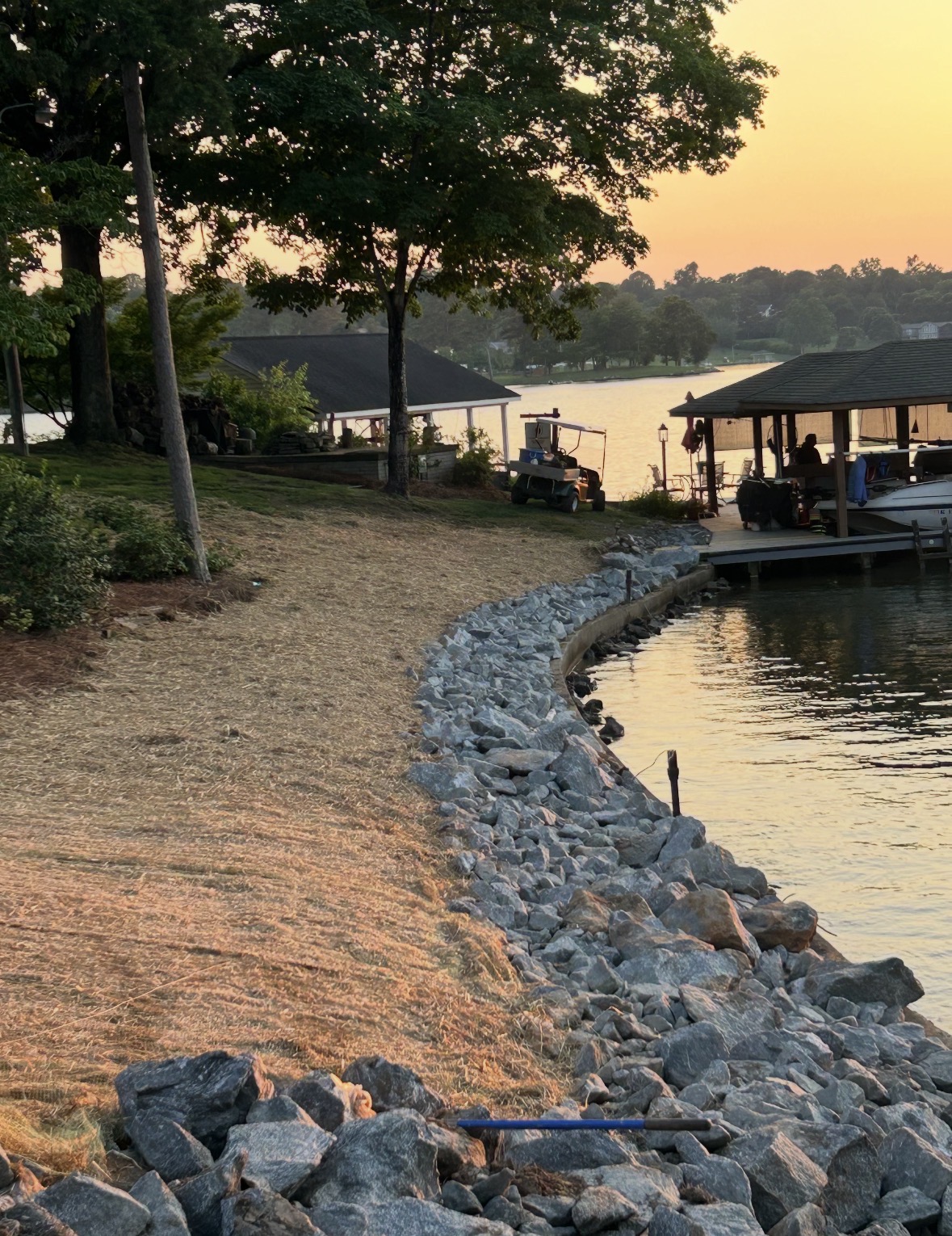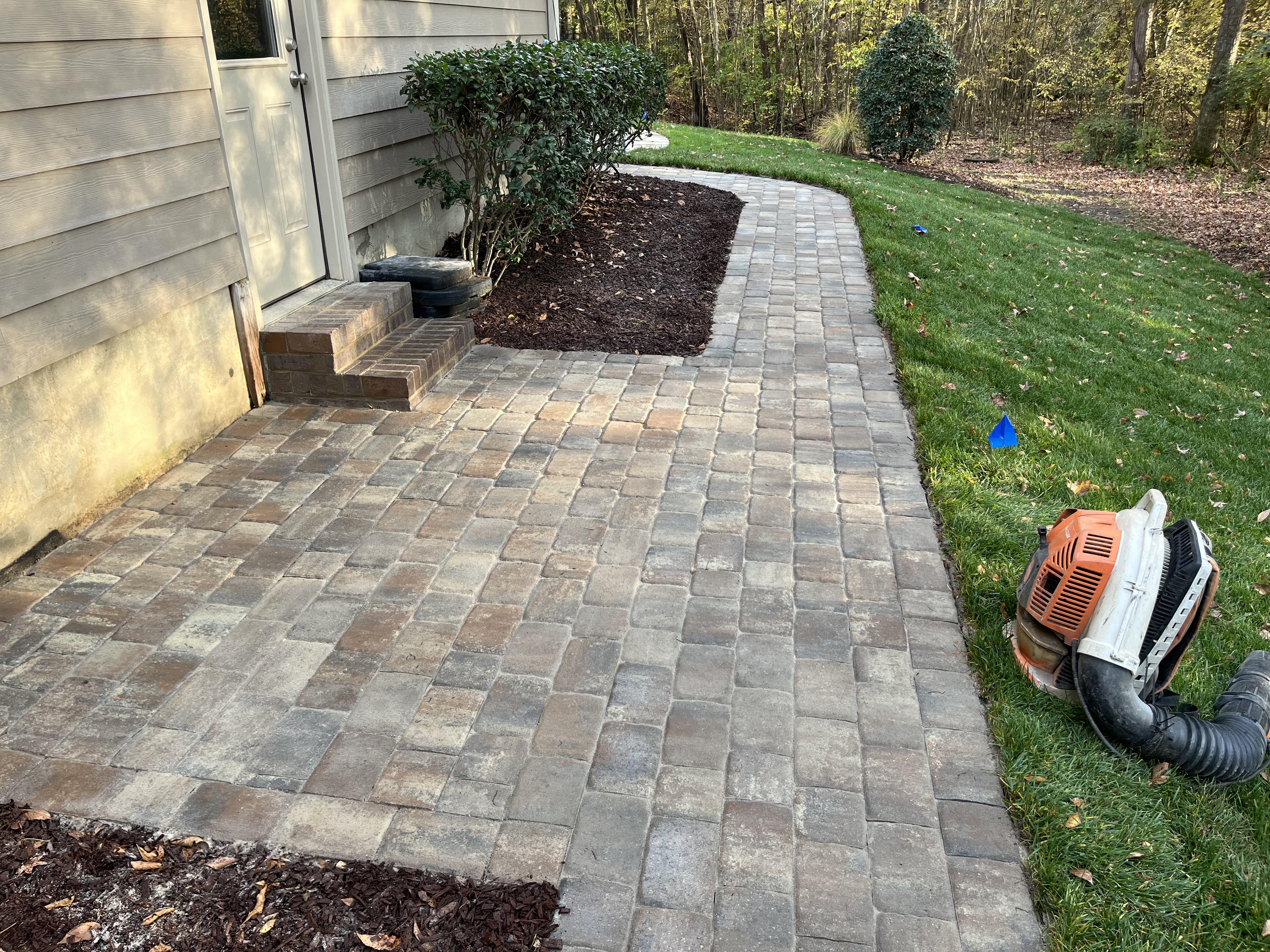
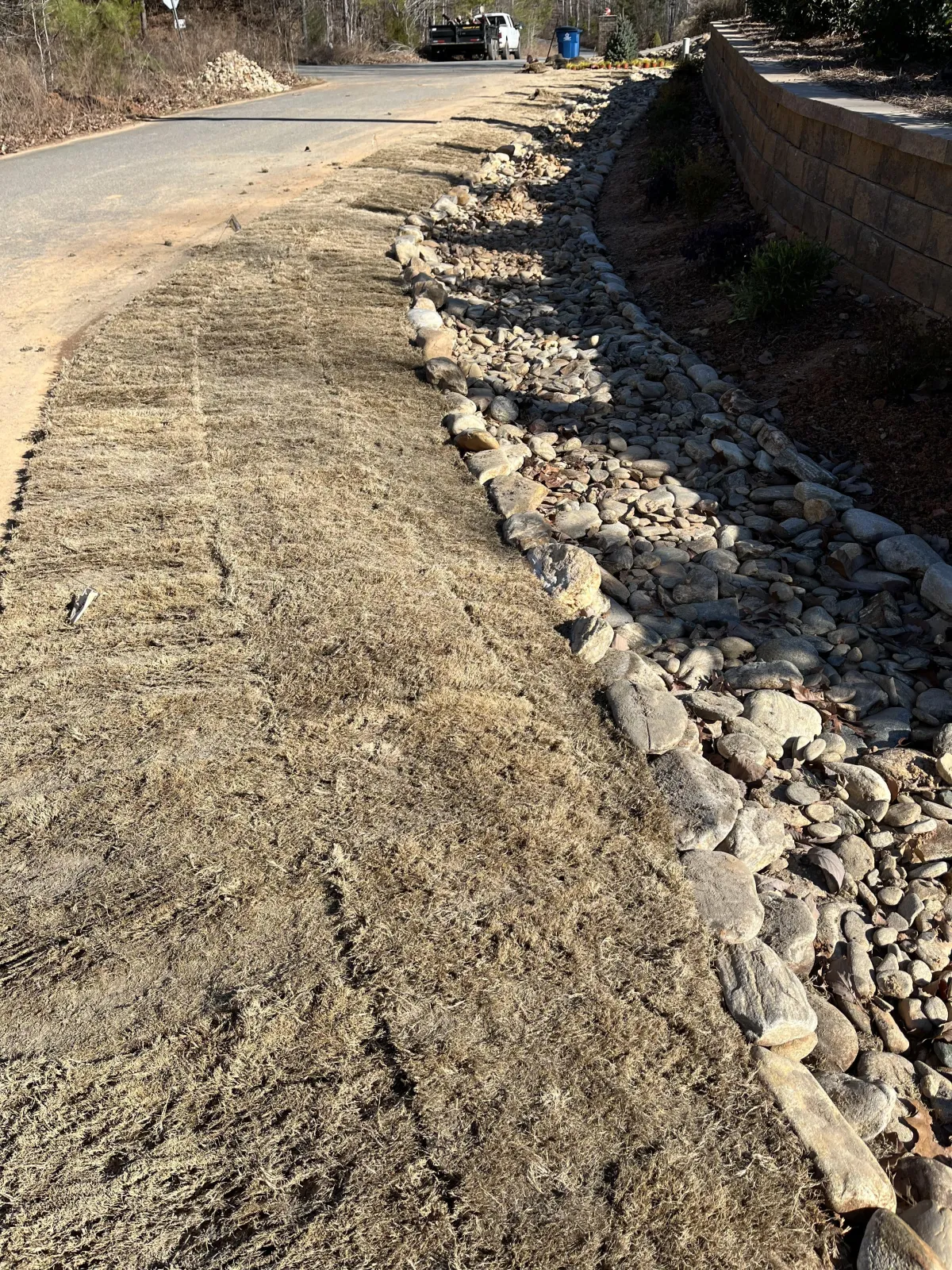
Damp crawlspaces are common across the Lake Norman area, and the cause is usually outside rather than underneath. Fixing the yard is what makes anything done inside last.
Where crawlspace water comes from
Roof water discharged at the foundation. Every downspout dumping at the wall puts a large volume of water directly into the backfill.
Ground sloping toward the house, or flat ground with mulch and soil built up against the foundation over the years.
Surface runoff from a slope above the house, arriving at the wall with nowhere to go.
A high water table or a seasonal spring in low areas near the lake — less common, but real.
Humid summer air condensing on cool surfaces, which is a ventilation problem rather than a drainage one.
Fix the outside first, in order
Gutters clear and sized, and every downspout piped to a proper outlet well away from the house.
Grade re-established so the ground falls away from the foundation for a reasonable distance.
Beds lowered where they have built up above the base of the siding or the vent line.
Intercept upslope runoff before it reaches the house with a swale or a drain across the slope.
This sequence resolves a large share of crawlspace moisture without touching the crawlspace.
Signs worth acting on
Musty smell in the house, particularly in summer.
Standing water, damp soil or water marks inside the crawlspace after storms.
Efflorescence or staining on foundation walls and piers.
Rust on ductwork and fasteners, cupping hardwood floors above, or persistent high indoor humidity.
Mosquitoes and pests concentrated near the foundation.
Where encapsulation fits
Vapour barriers, encapsulation and dehumidification address moisture already inside, and they are a legitimate part of many solutions.
They do not stop water entering from outside. Encapsulating a crawlspace that is still receiving roof water is treating a symptom.
The durable order is: exterior water management first, then interior moisture control.
Southern Style Turf & Design handles the exterior side — grading, downspout piping, swales and drainage — across the Lake Norman area, and will tell you plainly when the remaining issue is one for a crawlspace specialist.
Frequently asked questions
Can yard drainage fix a wet crawlspace?
Frequently, yes. Roof water and grading are the two largest sources of crawlspace water on most Lake Norman lots.
Should I encapsulate before fixing the yard?
Handle exterior water first. Encapsulation performs far better once water is no longer being delivered to the foundation.
How far should the ground fall away from the house?
Enough to move water clearly away from the backfill zone. A grading assessment on site is the way to establish what your lot needs.
Want this looked at on your property?
We give free, no-pressure on-site estimates across Denver, Mooresville, Cornelius, Davidson, Huntersville and Troutman.