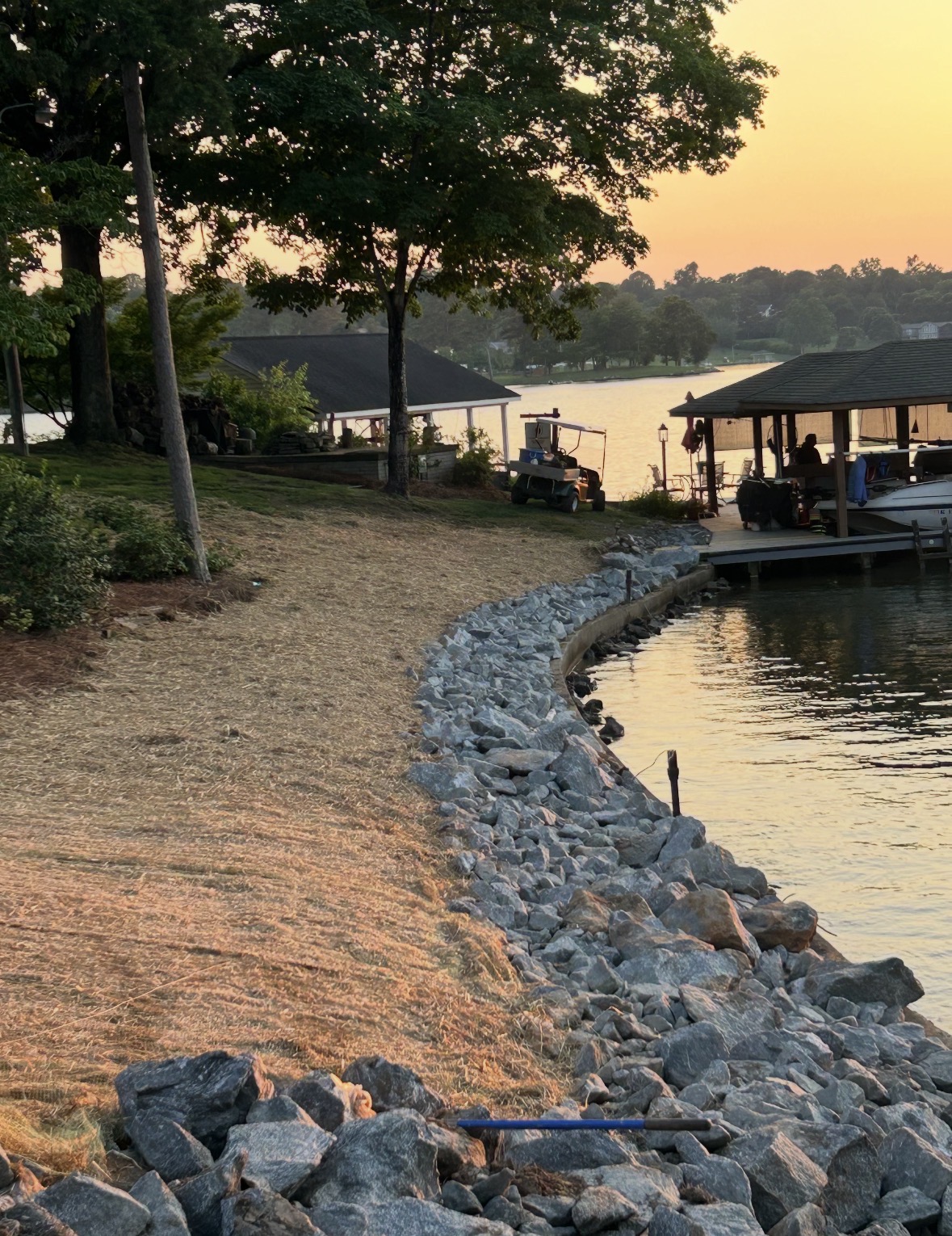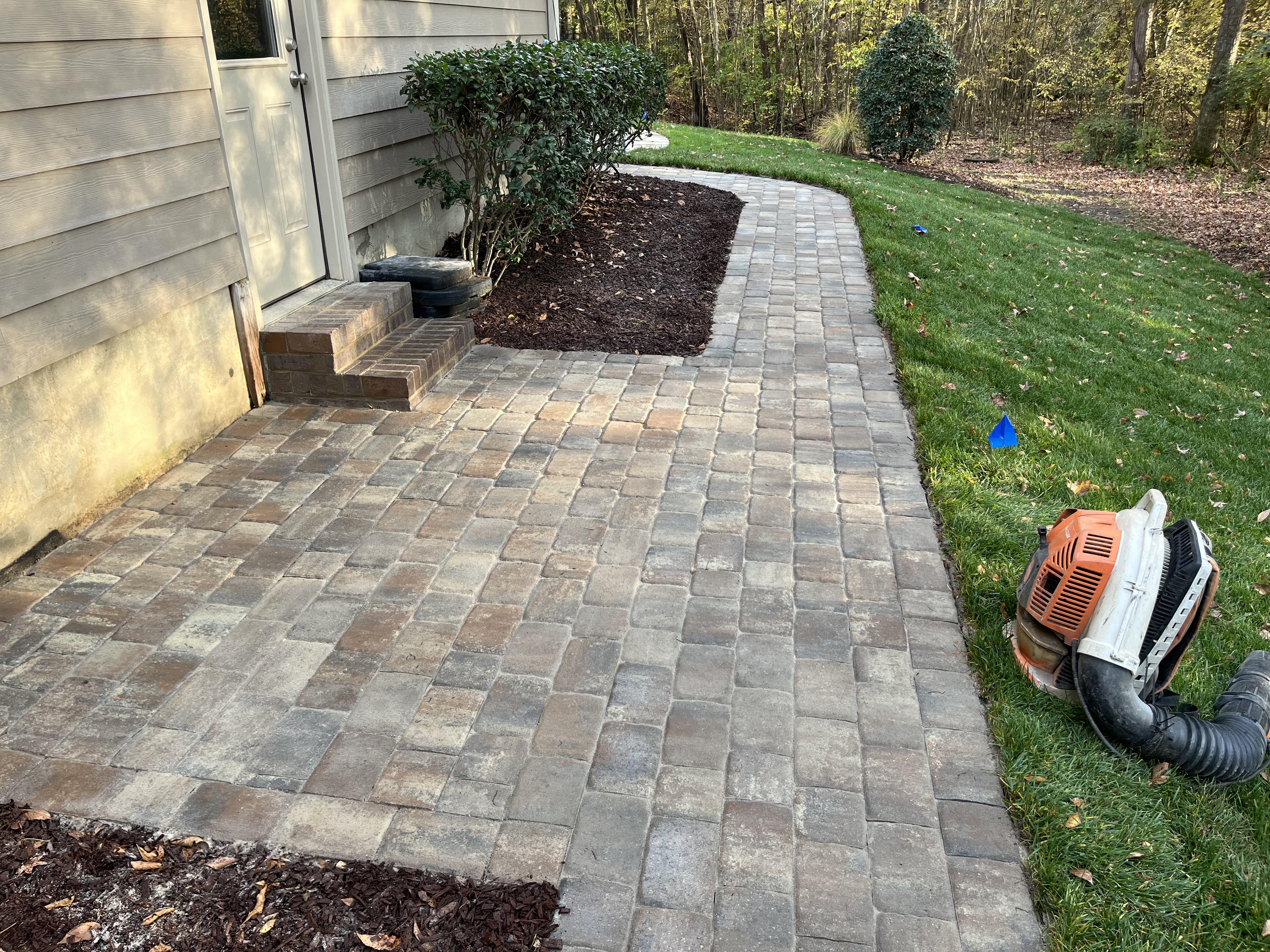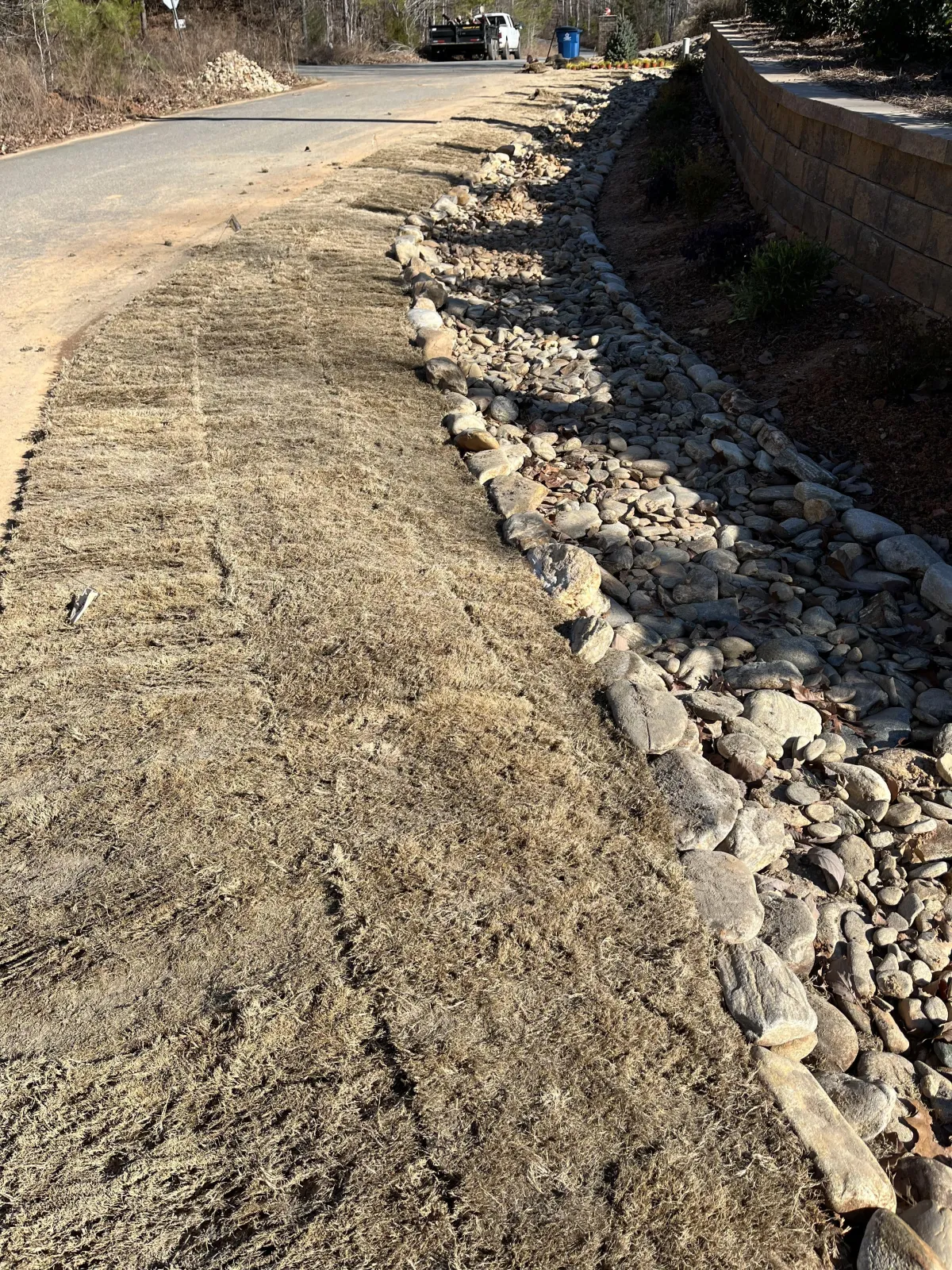
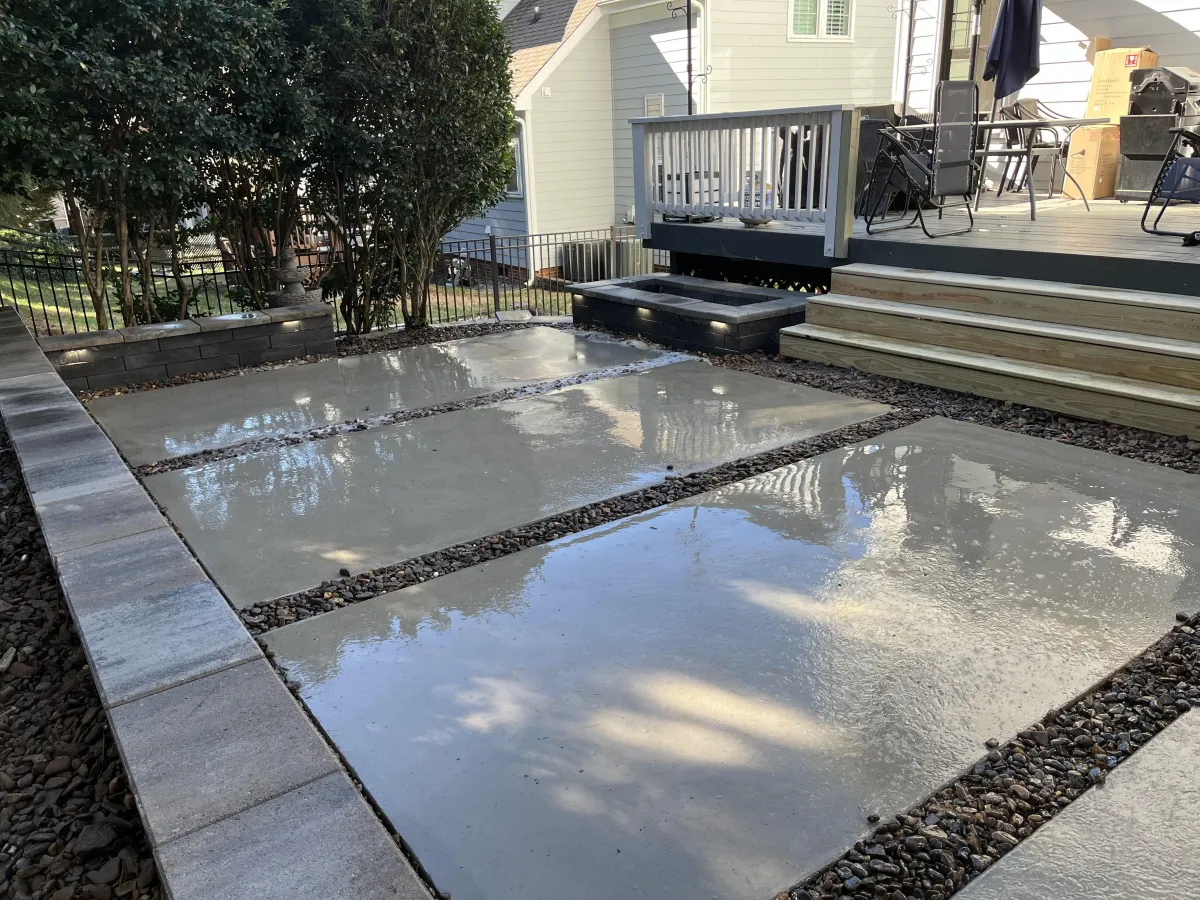
Grading is shaping the ground so water goes where you want it to and surfaces sit where they should. It is the least visible part of most landscape projects and the part that decides whether the visible parts survive.
Rough grading and finish grading
Rough grading moves the bulk of the material: cutting high areas, filling low ones, establishing the overall shape and the fall away from structures. This is machine work.
Finish grading refines the surface for what goes on top — sod, seed, beds, paving base. It is where small dips that would hold water get taken out.
A yard can be roughly right and still fail at finish grade, which is why a lawn can look flat and still hold puddles in the same three places after every storm.
How slope is set
Ground next to a house should fall away from the foundation over the first several feet. That single detail prevents more crawlspace and basement problems than anything else.
Across a lawn, the fall needs to be enough to move water without being steep enough to erode or make mowing awkward.
Everything else follows the outlet: water has to reach a low point that leads off the property or into an approved discharge. Grading with nowhere to send the water only relocates the puddle.
When grading is the whole fix
A low spot in a lawn that could drain if it were shaped. A bed built up against the house so mulch is above the siding line. A negative slope left by a builder who backfilled and never came back.
In these cases, cutting and shaping the ground is faster, cheaper and more permanent than installing pipe. We regularly quote regrading instead of a drain because the drain was not the problem.
Where grading cannot fix it — no fall available, water arriving from off-site, saturated soil — piped drainage takes over.
What grading work involves
Survey and shoot elevations to find where the fall actually is. Strip and stockpile topsoil so it can go back on top. Cut, fill and compact to shape. Respread topsoil, finish grade, then seed, sod or plant.
Material may need to come in or go out; access, tree protection and utility locates all affect what is possible.
Slopes too steep to hold get terraced or walled rather than simply graded and hoped for.
Southern Style Turf & Design provides grading and excavation across the Lake Norman area, including drainage correction, new construction repair and site preparation for hardscape and lawns.
Frequently asked questions
How do I know if my property is graded wrong?
Water standing after rain, soggy strips, mulch or soil washing onto paving, damp crawlspace, or ground that visibly falls toward the house rather than away from it.
Is grading cheaper than installing drainage?
Often, when there is somewhere for the water to go. Where there is not, drainage is needed regardless.
Will regrading ruin my lawn?
The worked area is disturbed and reseeded or resodded. Good crews strip and reuse the topsoil so the new lawn establishes properly.
Want this looked at on your property?
We give free, no-pressure on-site estimates across Denver, Mooresville, Cornelius, Davidson, Huntersville and Troutman.