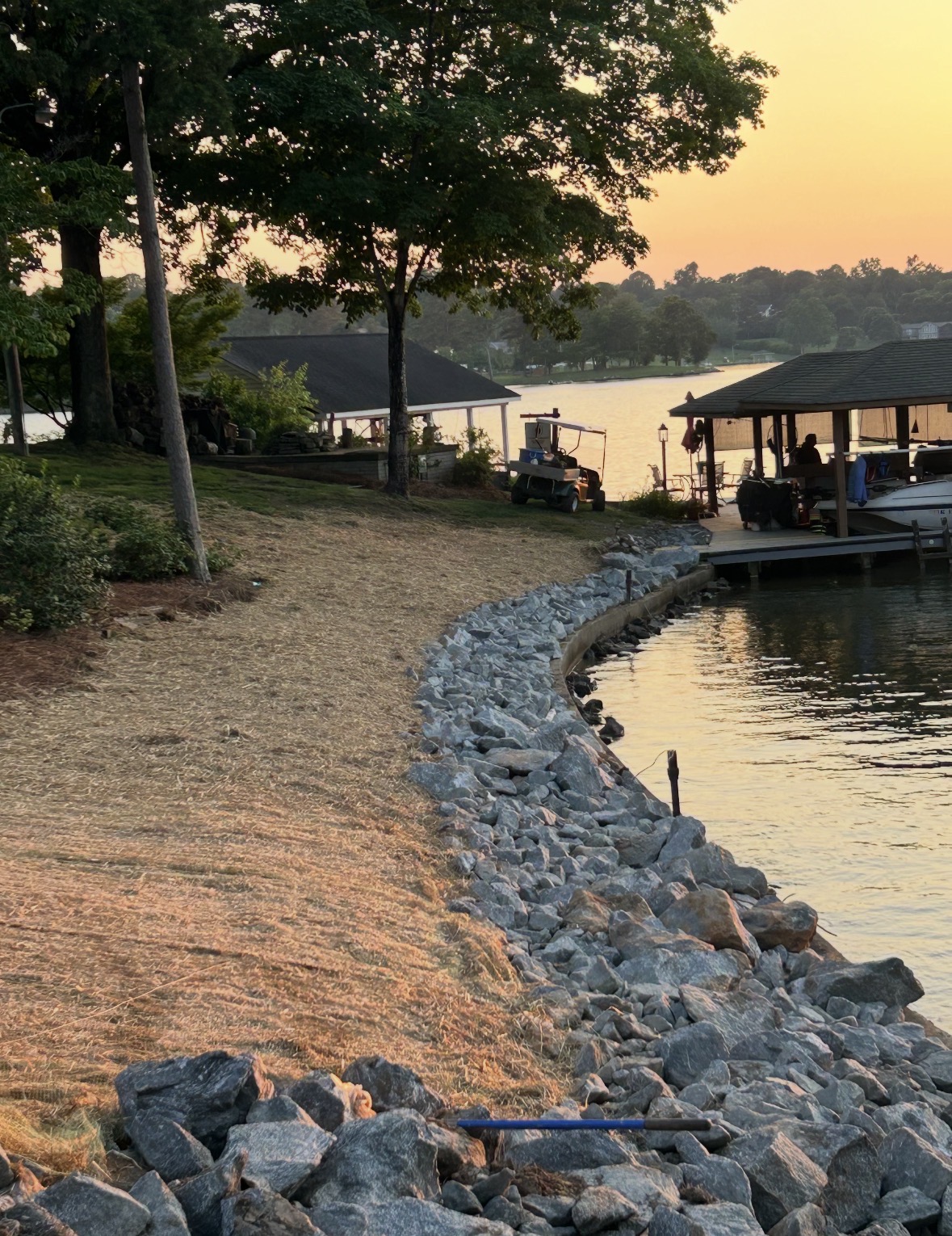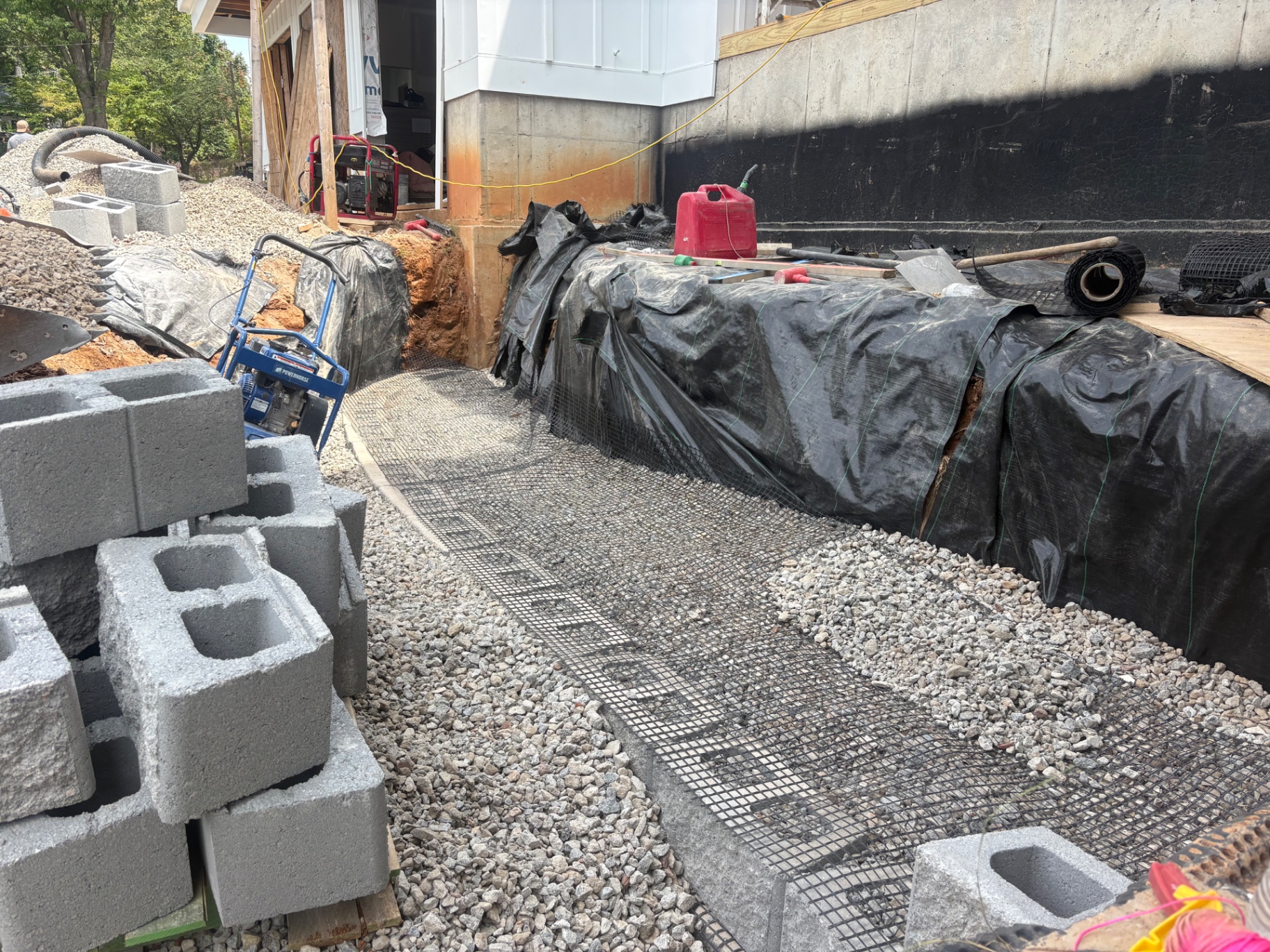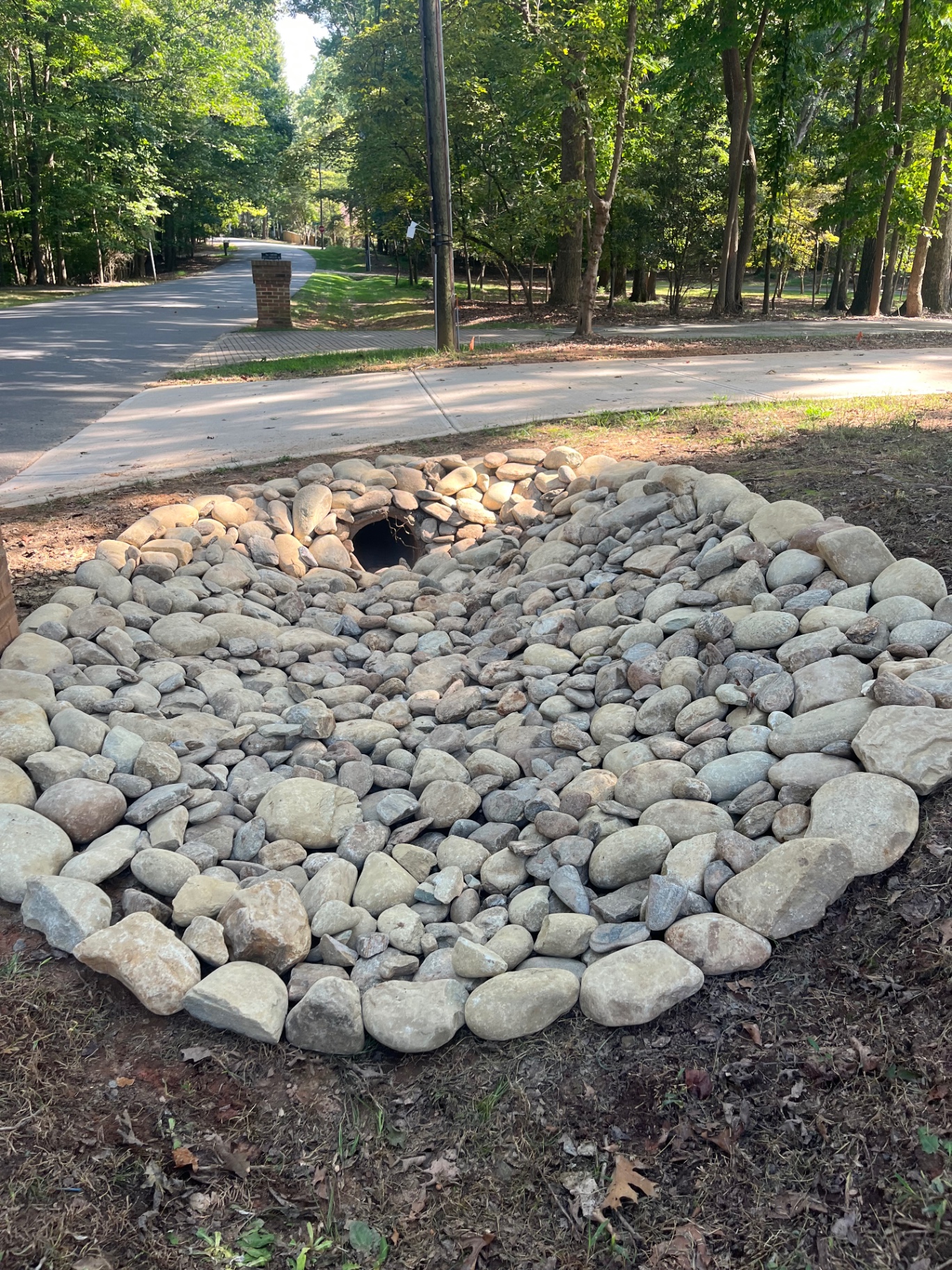
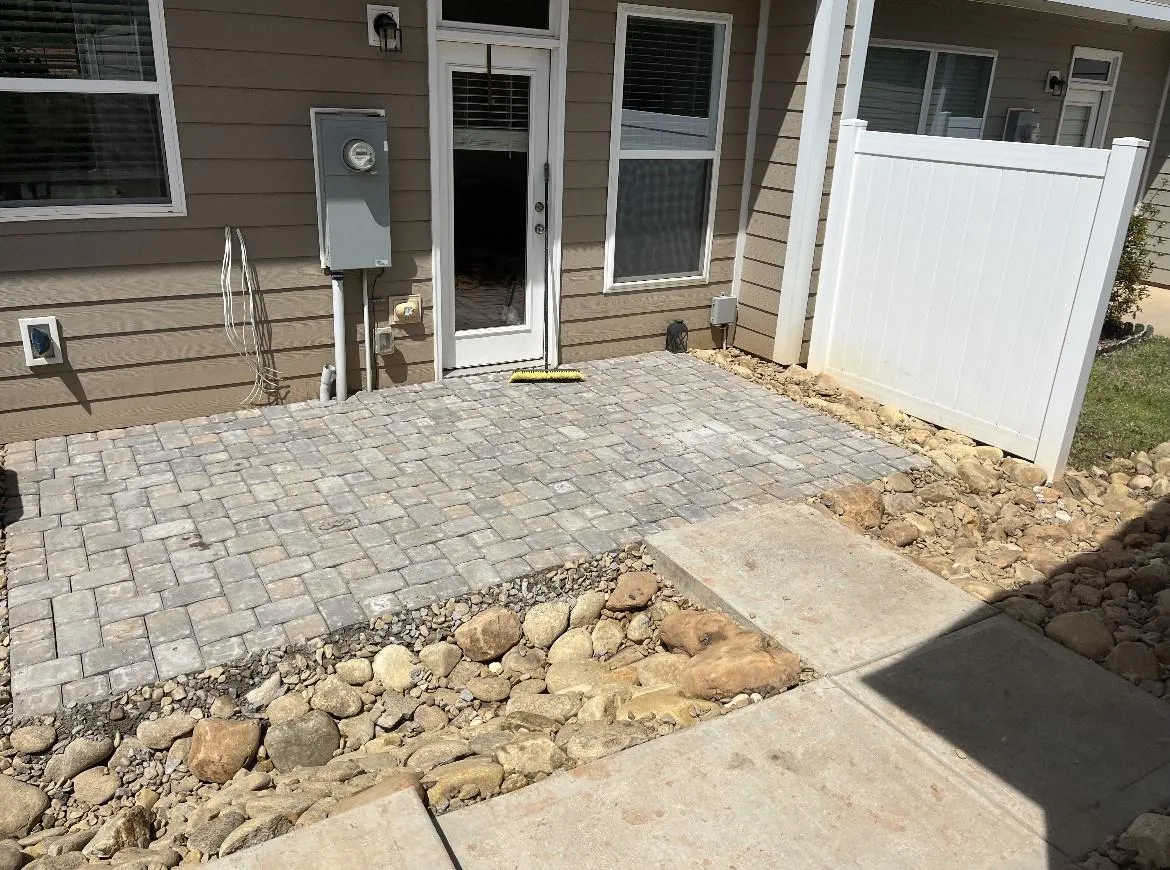
People use these words interchangeably when they mean two very different jobs. Grading changes where water goes. Leveling changes how the surface feels underfoot.
Grading: about slope
Grading reshapes the contour of the yard so water moves deliberately — away from the foundation, around the patio, into a swale, out to an outlet. It usually involves moving soil in quantity, often with equipment, and it is a drainage decision first and an appearance decision second.
Leveling: about surface
Leveling smooths a lawn that is already draining acceptably but is lumpy — old stump holes, mower ruts, settled trench lines, animal damage. It is generally topdressing and light soil work over an existing grade, not a change in slope.
Which one do you need?
If water stands, runs toward the house, or erodes a channel, you need grading. If water drains fine and the lawn is just uncomfortable to mow or walk, you need leveling. If the lawn is bumpy because water sits in the bumps, grading comes first and leveling is the finish step.
- Standing water after storms — grading
- Water running toward the foundation — grading
- Bumpy but dry lawn — leveling
- Settled trench lines over old utility work — leveling
What follows either job
Both disturb turf. Graded areas typically need seed or sod and a watering plan; leveled areas usually recover with topdressing and overseeding. Fall is the ideal window for fescue in our area.
Frequently asked questions
Can I level a lawn with topsoil myself?
Thin topdressing over minor bumps is a reasonable DIY. Anything more than about an inch at a time smothers grass.
Does grading require heavy equipment?
Usually. Moving meaningful volumes of soil accurately is a machine job, though small corrections can be done by hand.
How soon can I reseed after grading?
As soon as the finish grade is set and raked. Seeding immediately protects the new surface from erosion.
Want this looked at on your property?
We give free, no-pressure on-site estimates across Denver, Mooresville, Cornelius, Davidson, Huntersville and Troutman.