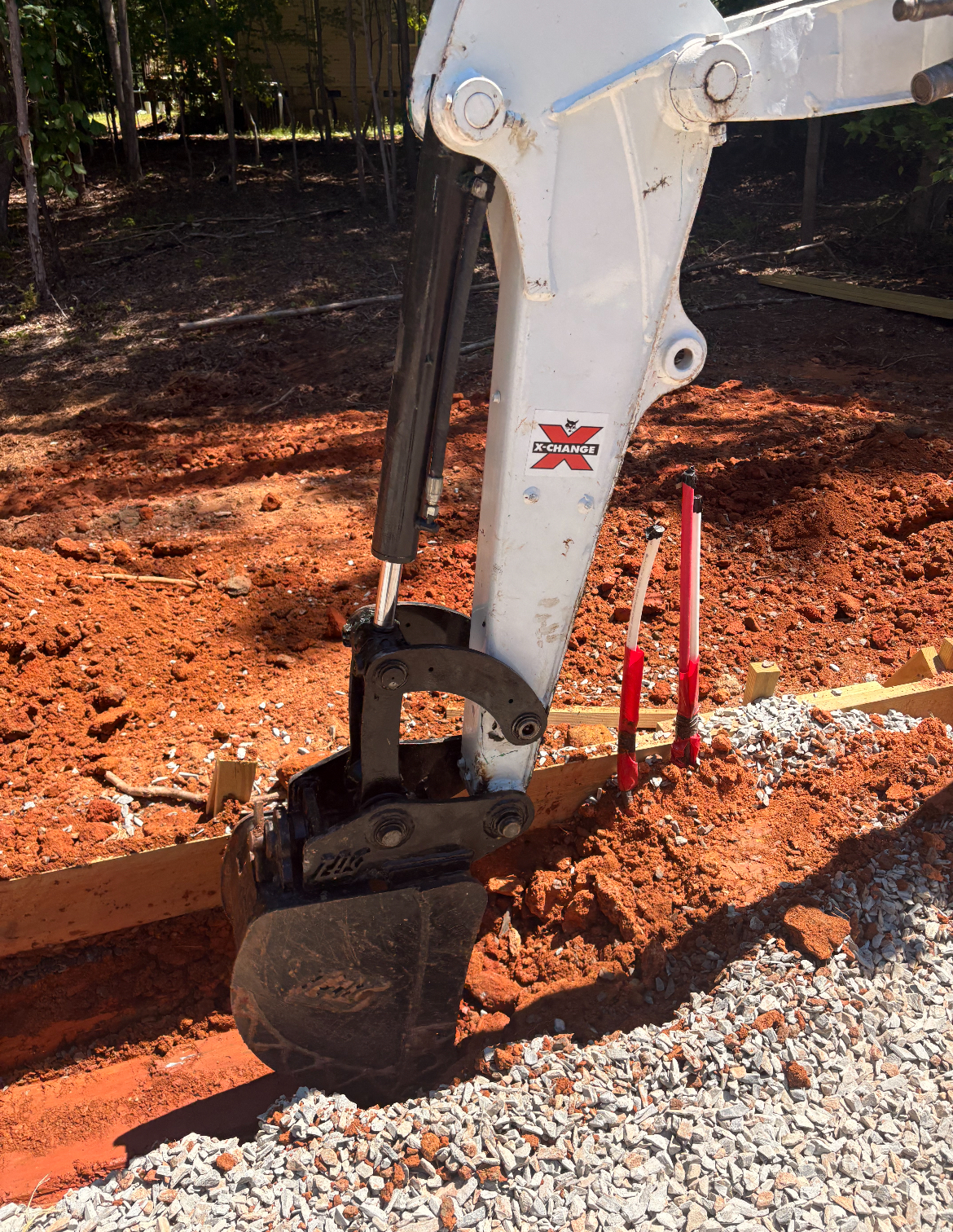
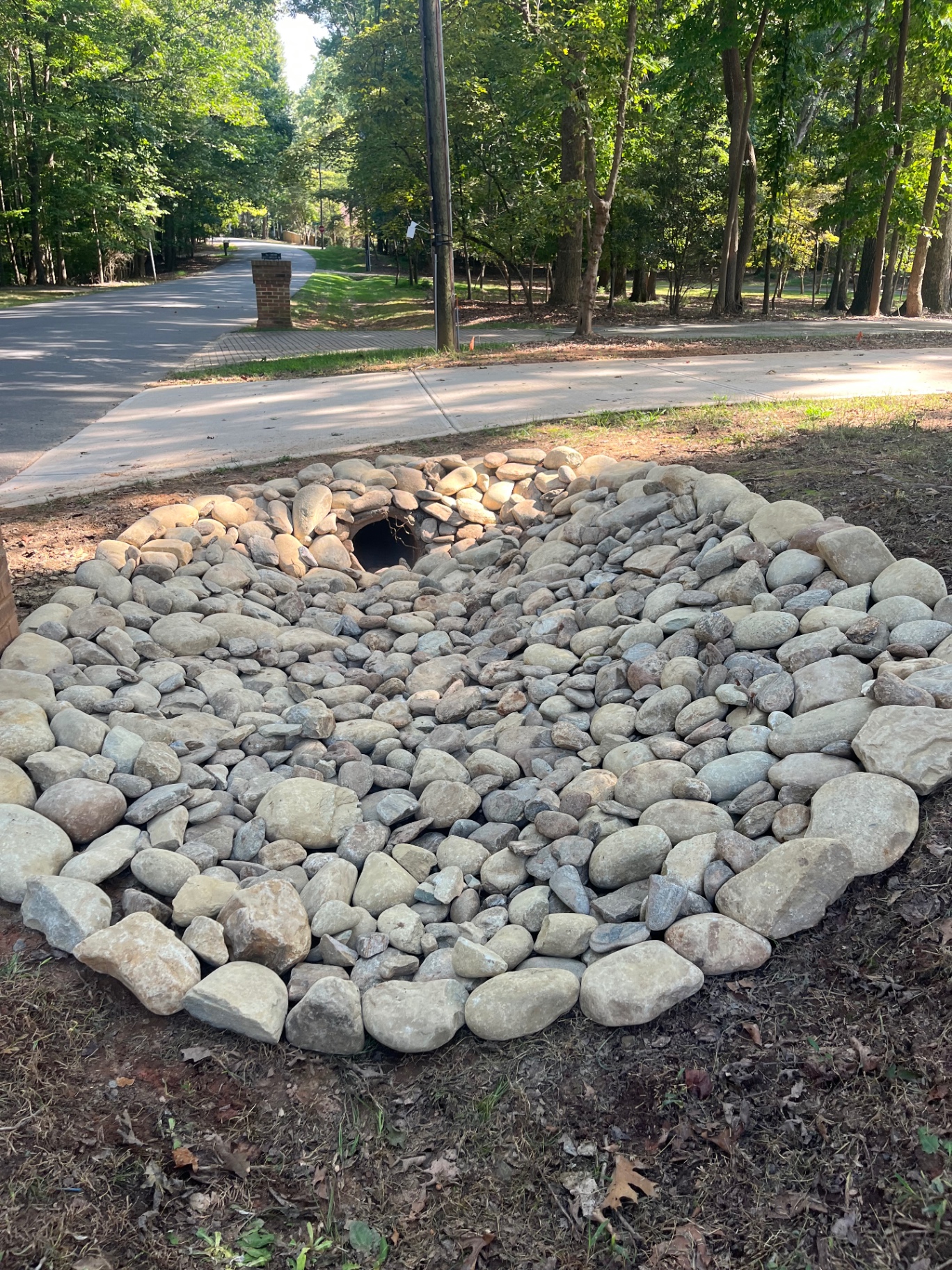
A driveway culvert has one job: keep the ditch moving under your driveway without washing out the crossing. When the pipe is undersized, set too high, or bedded in bare clay, the ditch backs up, the driveway edge erodes, and the pipe eventually crushes or clogs. We set culverts at the right depth, on a proper bed, with the cover and end treatment the site needs.
If any of these sound like your property, it's worth a free on-site look.
Pipe set under a new driveway or crossing, sized to the ditch and the water it carries.
Removing crushed, rusted or undersized pipe and resetting the crossing correctly.
Diameter matched to the ditch flow, in corrugated metal or HDPE as the site calls for.
Pipe bedded and backfilled in compacted material with enough cover to carry vehicle loads.
Flared ends, stone aprons or headwalls that keep the ends from eroding and silting shut.
Re-establishing the ditch line and grade so water reaches the pipe instead of ponding beside it.
Pipe capacity comes from area, and area grows fast with diameter. A 12-inch pipe carries about 0.79 square feet of water, a 15-inch pipe about 1.23 square feet — roughly 56% more — and an 18-inch pipe about 1.77 square feet, more than double the 12-inch. That is why one size up makes such a difference in a heavy summer storm.
In North Carolina, the choice is often made for you. The state's driveway pipe rule sets a minimum inside diameter of 15 inches (and a 20-foot minimum length) for driveway pipes in the ditch along state-maintained roads — see 19A NCAC 02D .0421, Installation of Driveway Pipe. Local governments follow suit: the City of Conover's driveway permit, here in Catawba County, requires no less than 15-inch diameter NCDOT-approved HDPE, reinforced concrete, or 16-gauge corrugated metal pipe — and notes the city can require a larger size where drainage conditions demand it (Conover driveway permit application).
So when is each size right? A 12-inch pipe suits small interior crossings on private property — a path or secondary crossing over a shallow swale with a small watershed — but it is below the 15-inch minimum for a driveway entrance on a state-maintained road. A 15-inch pipe is the standard residential driveway culvert: it meets the state and local minimums and handles a typical roadside ditch. An 18-inch or larger pipe is the call when the ditch drains a long run of road or several properties, when the ditch is deep and moves real volume in a storm, or when the county or NCDOT sizes it up during permitting.
The gauge we use on site is simple: measure the ditch depth and width, look at what drains into it uphill, and check what the road authority requires for your address. NCDOT's own Drainage Users Manual covers pipe materials, minimum cover over the pipe, and end treatments — the same standards we build to. If your driveway connects to a state-maintained road, the entrance itself is permitted under NCDOT's Policy on Street and Driveway Access, and we confirm the size and material they want before we order pipe.
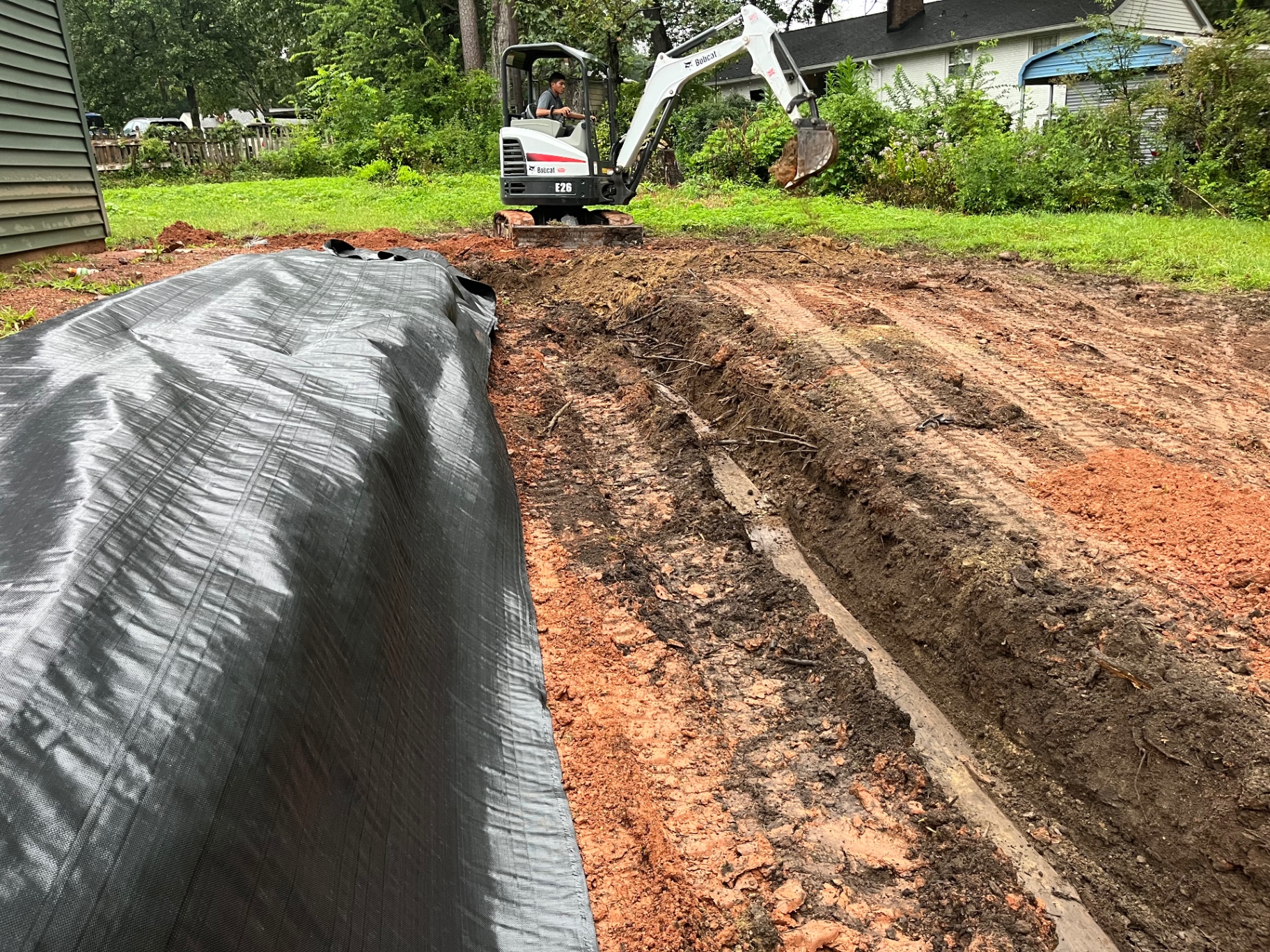
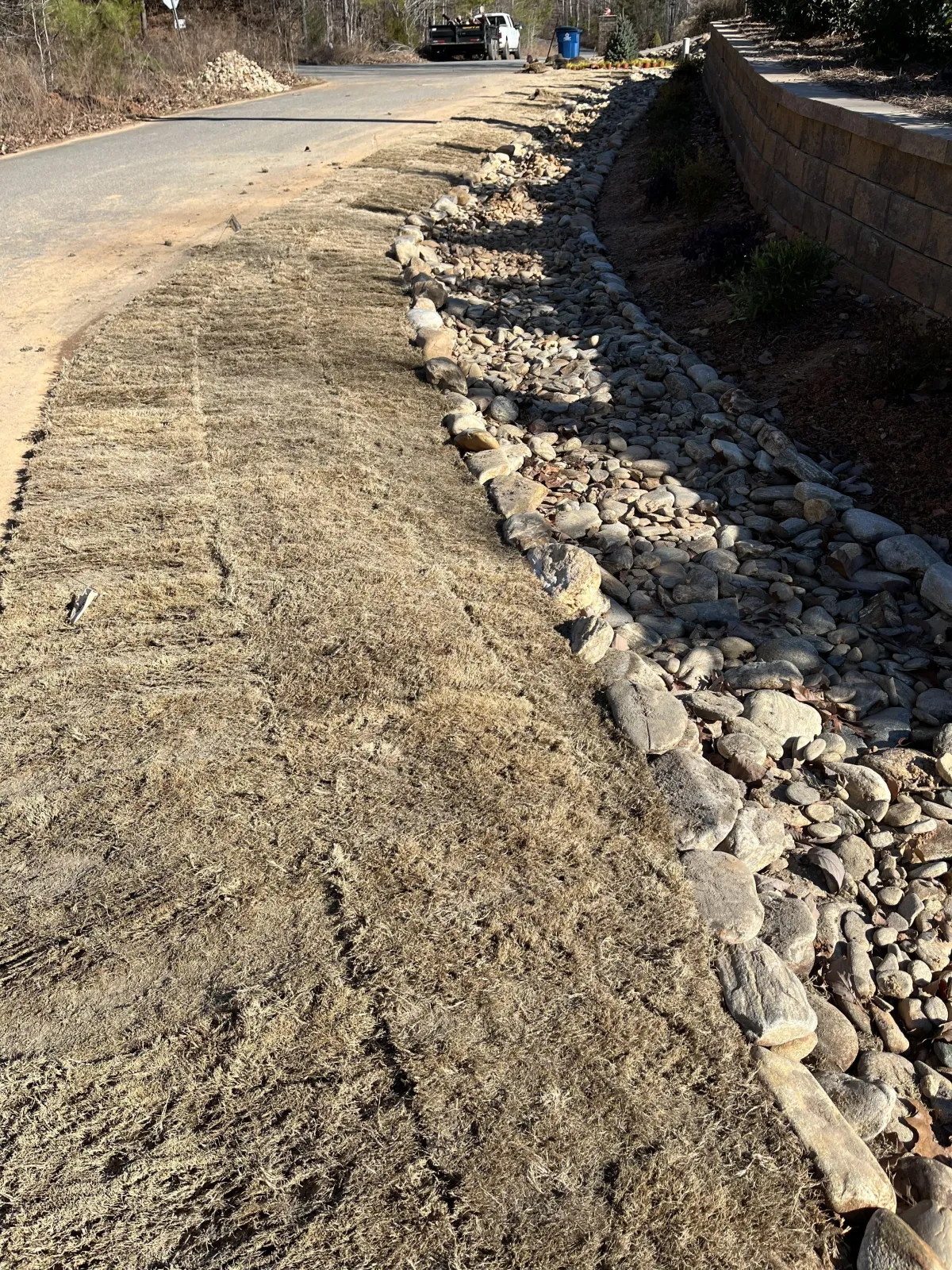
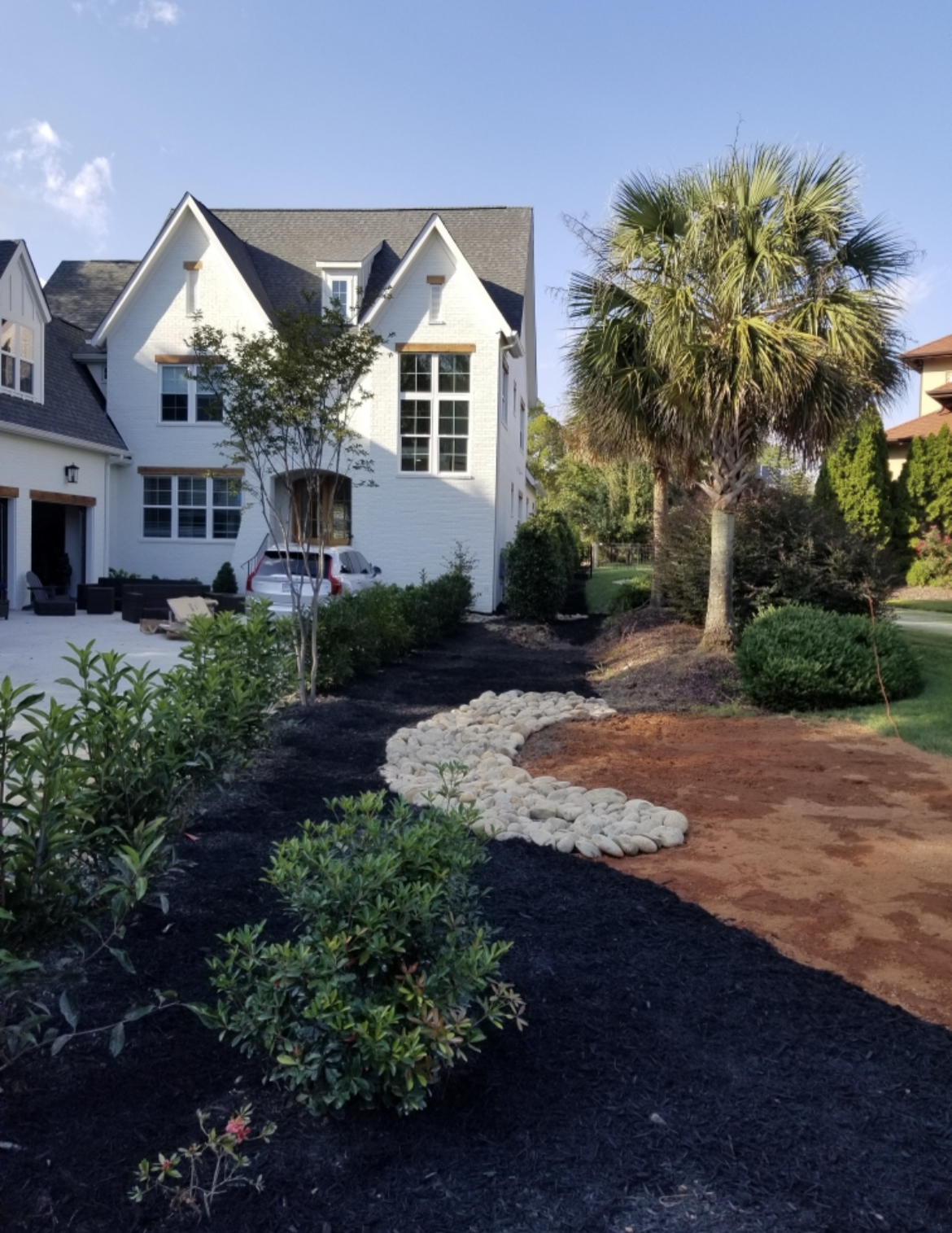
Our excavator trenching for a drainage pipe installation at a residential property.
Tell us what's happening on the property. We'll set a time to come out.
We walk the property, check grade and soil, and identify the real cause — not just the symptom.
Clear scope and pricing in writing before anything starts. No trip fee, no pressure.
In-house crew, no subcontractors. We clean up and walk the finished job with you.
Often yes — driveway connections onto public roads commonly require approval from the county or NCDOT, and they may specify the pipe size and material. We check the requirements for your road before work starts.
For a driveway on a state-maintained road, 15 inches is the legal minimum in North Carolina, and many local governments require the same. Larger ditches and watersheds call for 18 inches or more. We measure the ditch and check the requirements for your road before quoting.
Both are used around Lake Norman. Some road authorities specify one or the other; where the choice is ours, we recommend based on cover depth, traffic and budget.
Usually. The crossing itself has to come up, but we limit the excavation to the pipe run and restore the surface over it.
Completed projects with the problem, the build, and the result.
Straight answers from our crews on how this work is planned, built and maintained around Lake Norman.
Related work we handle across Denver, Mooresville, Cornelius, Davidson, Huntersville and Troutman, NC.
Free on-site estimate — no trip fee, no obligation. Mobile service throughout Lake Norman and surrounding communities; we come to your property.