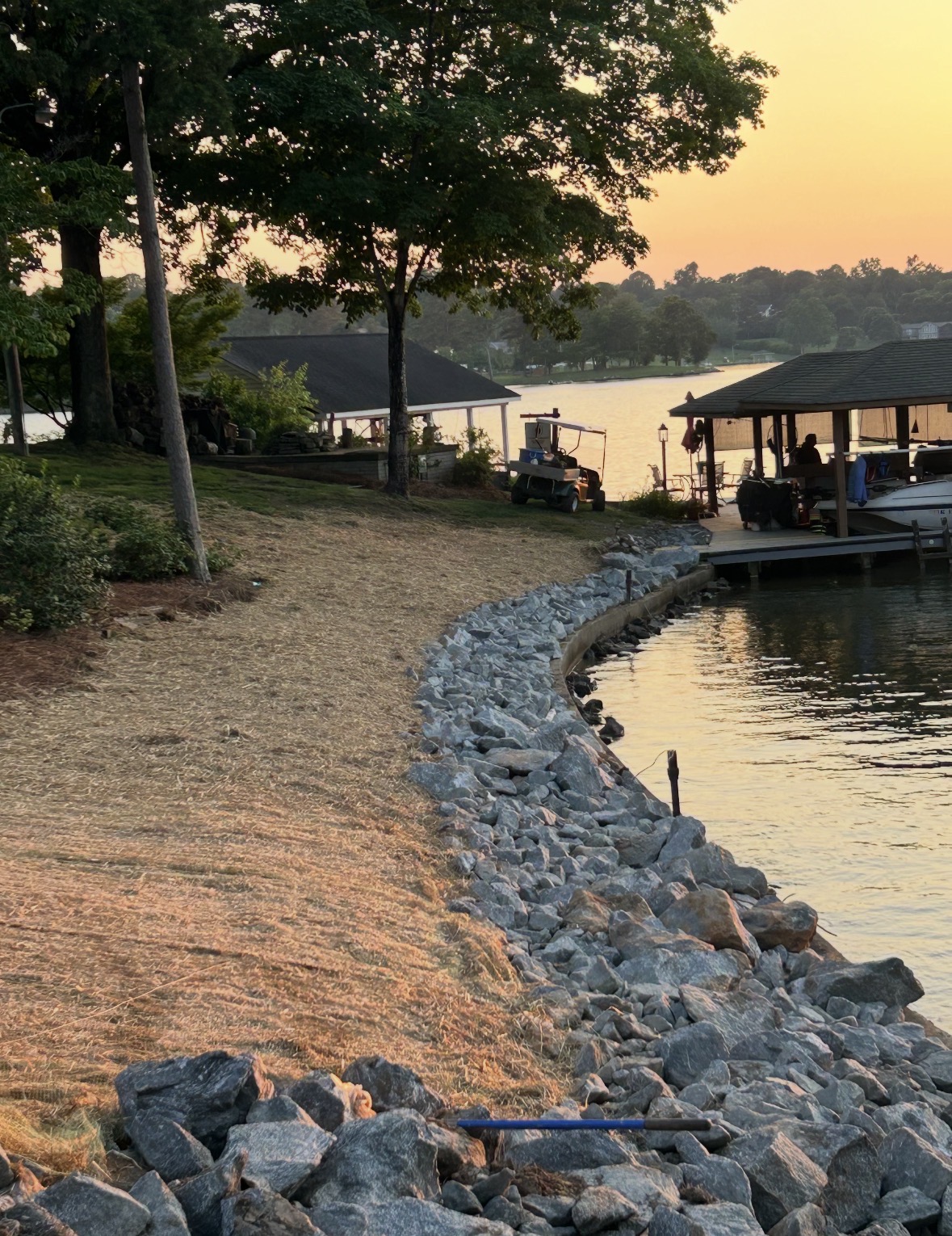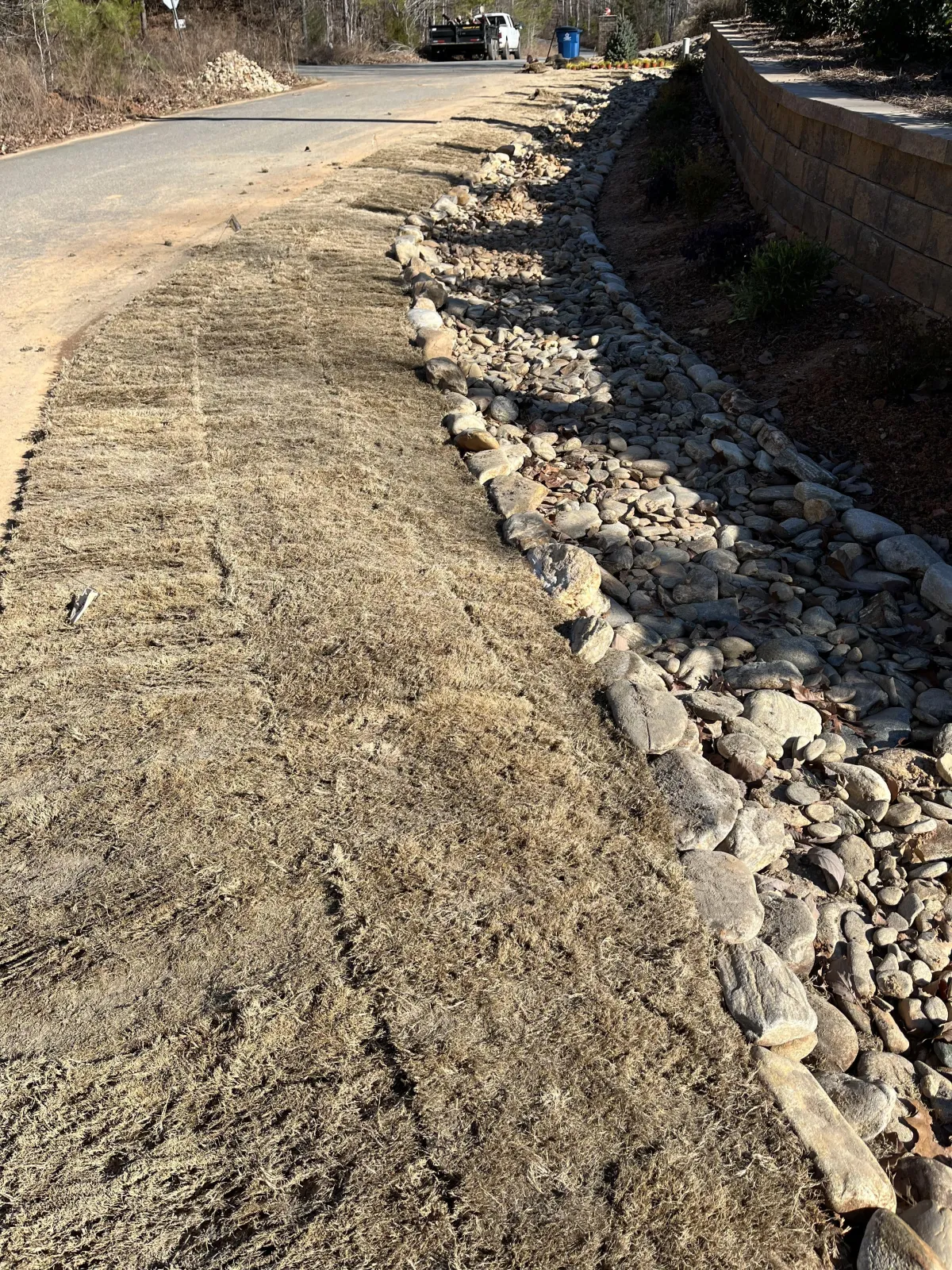
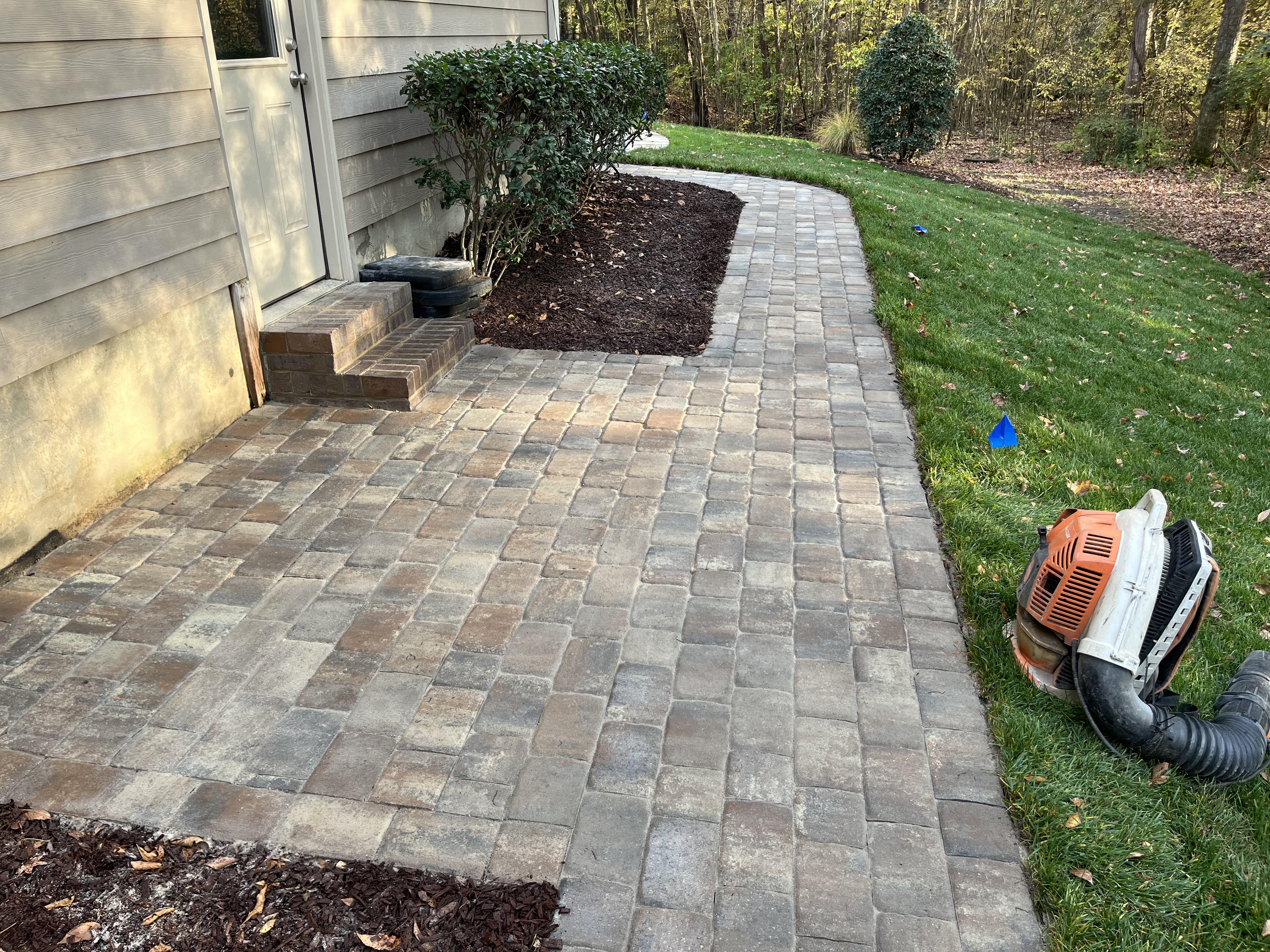
Nobody ever sees the base. It is also the only reason a patio is still flat in year ten, and it is where most of the corner-cutting in this trade happens.
What the base is doing
It spreads the load from the surface across the subgrade so no single point gets punched down.
It gives water somewhere to move so it is not sitting under the paving, freezing and lifting units.
It provides a rigid, uniform platform so the setting bed and pavers stay in plane.
Clay subgrade does none of these things on its own. It holds water, softens, and moves.
Excavation and depth
Excavation goes below the finished level by the paver thickness, the setting bed and the full base depth — deeper for driveways and vehicle areas than for a foot-traffic patio.
The excavation extends past the edge of the paving, not just to it, so the outer units and the edge restraint are sitting on base rather than on soil.
The subgrade itself gets compacted before any stone goes in. Soft spots get dug out and replaced, not bridged.
Aggregate, lifts and compaction
Graded crushed aggregate with fines is what compacts into a dense, interlocking layer. Clean washed stone does not lock up the same way for this purpose.
It goes in lifts and each lift is compacted before the next. A single thick pour of stone hit once on top leaves the bottom loose, and that is where settlement comes from.
Moisture content matters. Too dry and it will not compact; saturated and it pumps. Good crews adjust rather than push on.
Fall is built into the base, not corrected in the sand. The base should already have the finished slope.
Geotextile and drainage
A woven geotextile between clay subgrade and base separates the two. Without it, over years, stone works down into the clay and clay pumps up into the stone, and the base thins.
On sites with real water movement, a drain line at the low edge of the base gives it an outlet rather than letting the base act as a reservoir.
Behind any wall integrated into the work, drainage stone and pipe are separate and non-negotiable.
Southern Style Turf & Design builds patios, walkways and walls on properly excavated, compacted bases across the Lake Norman area — and we will show you the base before it is covered.
Frequently asked questions
How deep should a paver patio base be?
It depends on the subgrade and the loading. Foot-traffic patios on stable soil need less than vehicle areas or patios over soft clay; the installer should tell you the depth they are building to.
Can pavers be laid on sand alone?
They can be laid that way, and they settle, spread and rut. Sand is a setting bed, not a base.
How do I know the base was done right?
Ask to see the excavation and the compaction before paving starts, and ask what depth and what aggregate is being used. Reputable installers are happy to show it.
Want this looked at on your property?
We give free, no-pressure on-site estimates across Denver, Mooresville, Cornelius, Davidson, Huntersville and Troutman.