Landscape fabric has legitimate uses — and it's used incorrectly far more often than correctly. Here's the honest guide for Lake Norman homeowners.
What Landscape Fabric Actually Does
Landscape fabric is a woven or non-woven permeable barrier that allows water and air to pass through while blocking light — which suppresses weed seed germination. In the right application, it reduces weed pressure in areas where weed management is difficult or expensive.
Where It Works
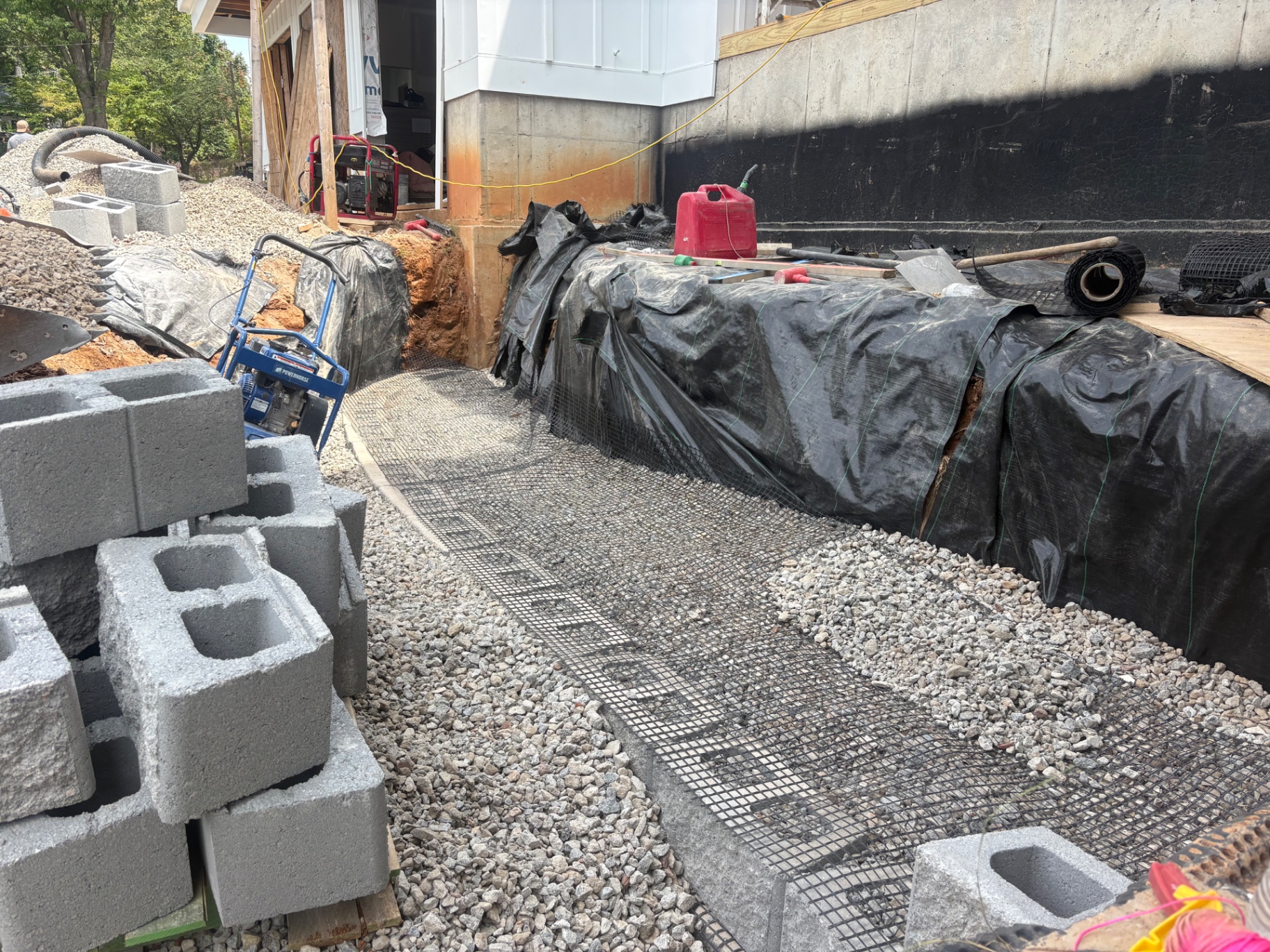
Under drainage aggregate. In French drains and catch basin installations, geotextile fabric wrapped around the drainage stone prevents fine soil particles from migrating into the aggregate and reducing drainage capacity over time. This is the application where landscape fabric genuinely earns its use — it extends the functional life of drainage systems significantly.
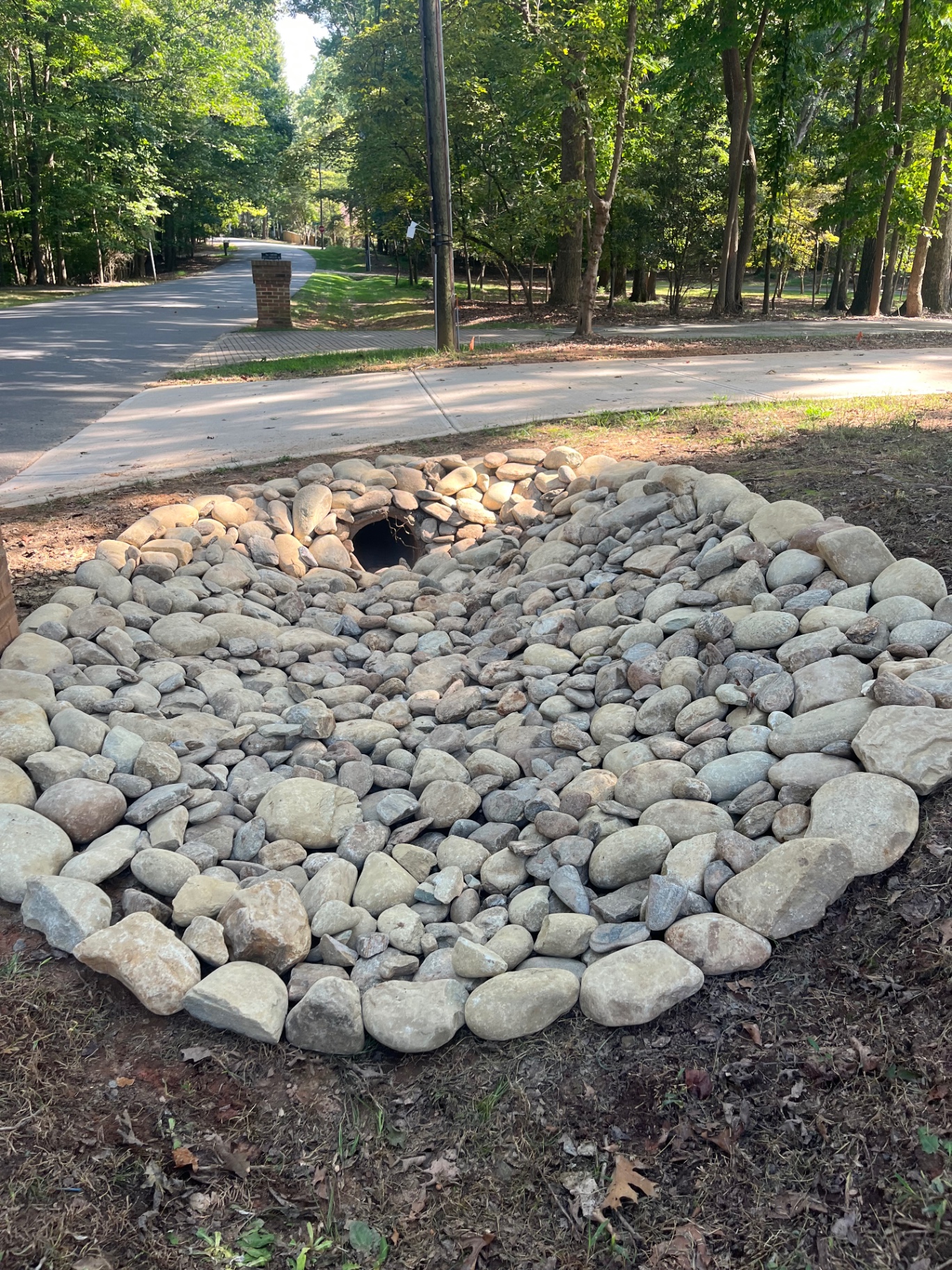
Under hardscape. Fabric under gravel pathways, stone mulch areas, or decorative aggregate reduces weed emergence from below and helps keep the aggregate from mixing into the native soil over time.
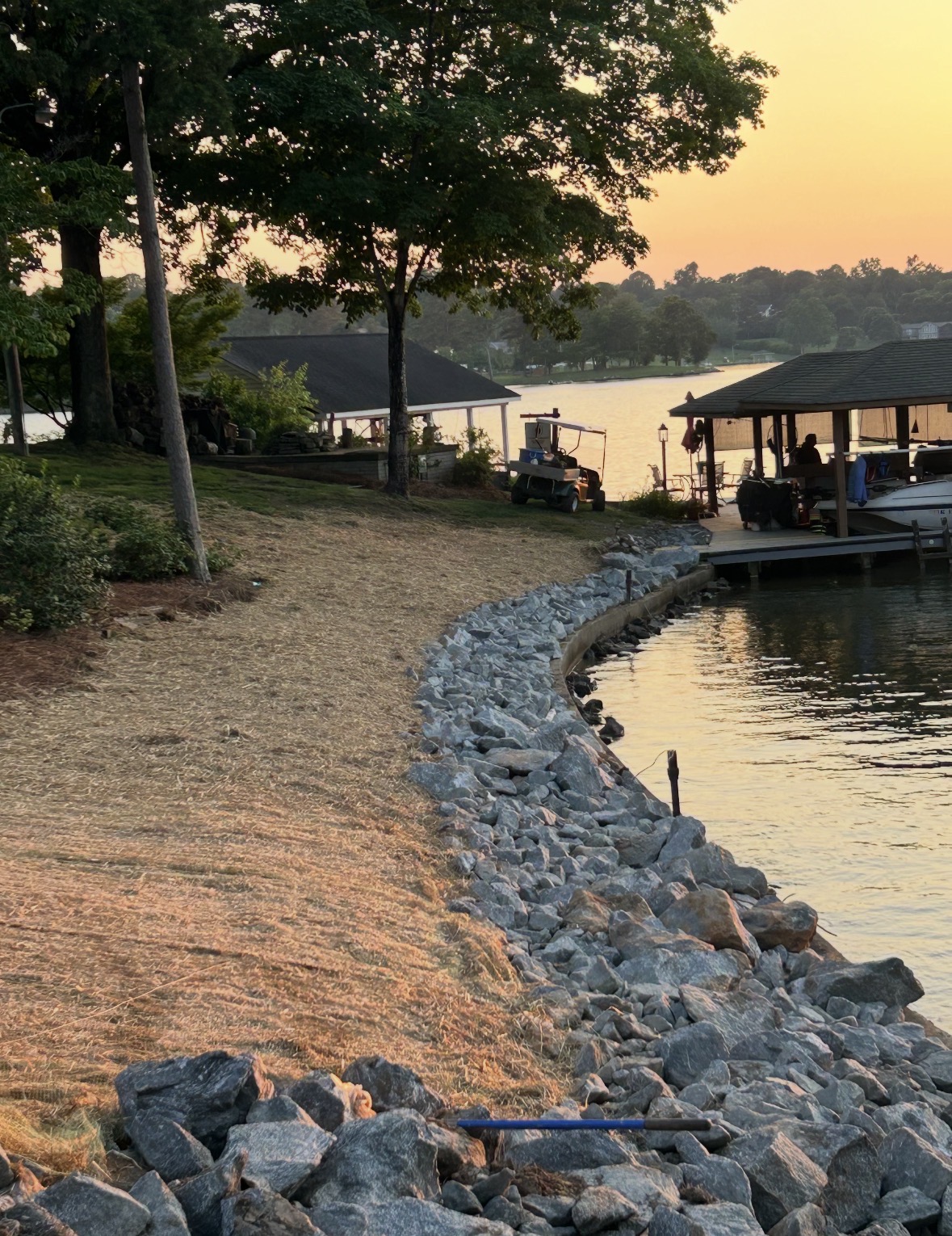
Under riprap and erosion control stone. Fabric under stone armoring on slopes prevents soil from washing out from between the stones during heavy rain events.
Where It Doesn't Work — And Makes Things Worse
Under mulch in planting beds. This is the most common misapplication. Landscape fabric under wood mulch initially suppresses weeds, but within 2–3 years, organic matter from decomposing mulch accumulates on top of the fabric and creates a perfectly viable weed germination medium. Roots from perennials and shrubs grow through the fabric, making it impossible to remove. The fabric also impedes the movement of water, compost, and nutrients into the soil where plant roots are growing.
The result is beds that look weed-free for a few years and then develop weeds that are rooted through the fabric and can't be removed without tearing up the entire bed — at which point the fabric needs to be removed, the roots cut, and the bed re-established.
For annual weed suppression in lawn areas. Perennial weed roots grow through and around the fabric; it doesn't address weed problems that are established below grade.
For planting beds in Lake Norman, well-applied mulch at 3 inches is more effective, less expensive long-term, and doesn't create the root entanglement problems that fabric under mulch inevitably causes.
Questions about planting bed establishment in Lake Norman? Free site visit — 704-460-2019.
Want this looked at on your property?
We give free, no-pressure on-site estimates across Denver, Mooresville, Cornelius, Davidson, Huntersville and Troutman.