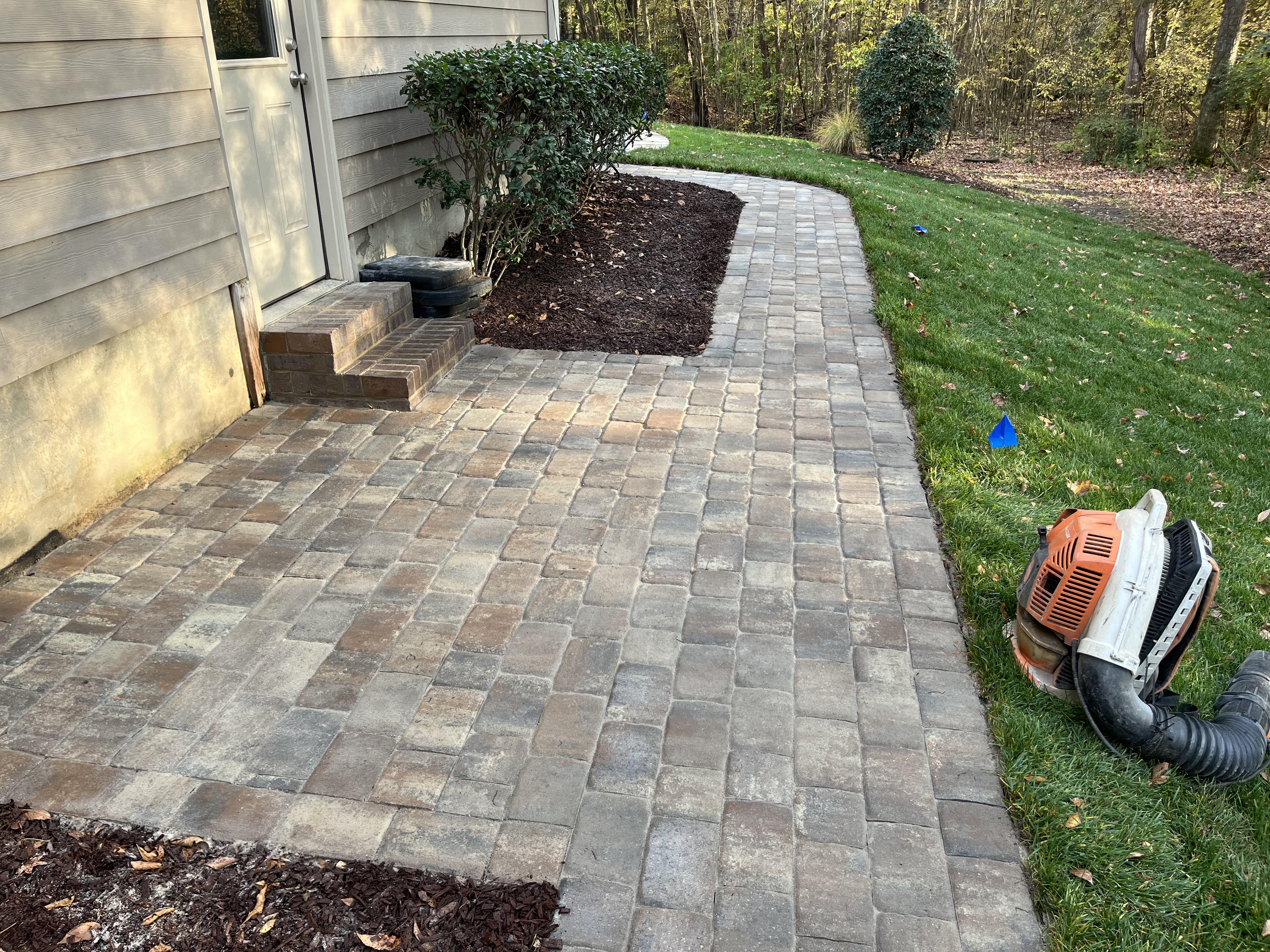
A paver patio is a surface laid on a structure, and the structure is entirely below ground. Excavation depth, compacted aggregate, a thin consistent bedding layer and edge restraint are what keep it flat. On Piedmont clay, the depth is the part that gets cut on a cheap quote, and it is the part that decides the outcome.
Excavation depth for clay subgrade
Excavation removes topsoil and any soft or organic material and continues down to firm, undisturbed subgrade. On clay that is often deeper than people expect, particularly on newer lots where the top layer is spread fill rather than native ground.
The total depth is the paver thickness, plus the bedding layer, plus the compacted aggregate base — and the base is thicker on clay than it would be on free-draining soil, and thicker again anywhere vehicles will drive.
Cutting the base thin is invisible on handover day and obvious three winters later. It is the single biggest difference between quotes.
Compacted aggregate, bedding layer and edge restraint
The aggregate base is crushed stone with fines, placed in lifts and compacted with a plate compactor each lift. Compacting one thick layer densifies the top and leaves the bottom loose, which is why lifts matter.
The base is also built to the finished slope of the patio, not level — the fall for drainage is created in the base, not by tilting the pavers.
The bedding layer is a thin, consistent layer of coarse sand screeded over the compacted base. Thin and consistent are both important: bedding sand is not a levelling medium, and using it to correct an uneven base guarantees settlement.
Edge restraint runs around the perimeter, spiked into the base, holding the outer pavers from creeping outward. Without it the edges spread, joints open, and the pattern loses its tightness from the outside in.
Geotextile and drainage
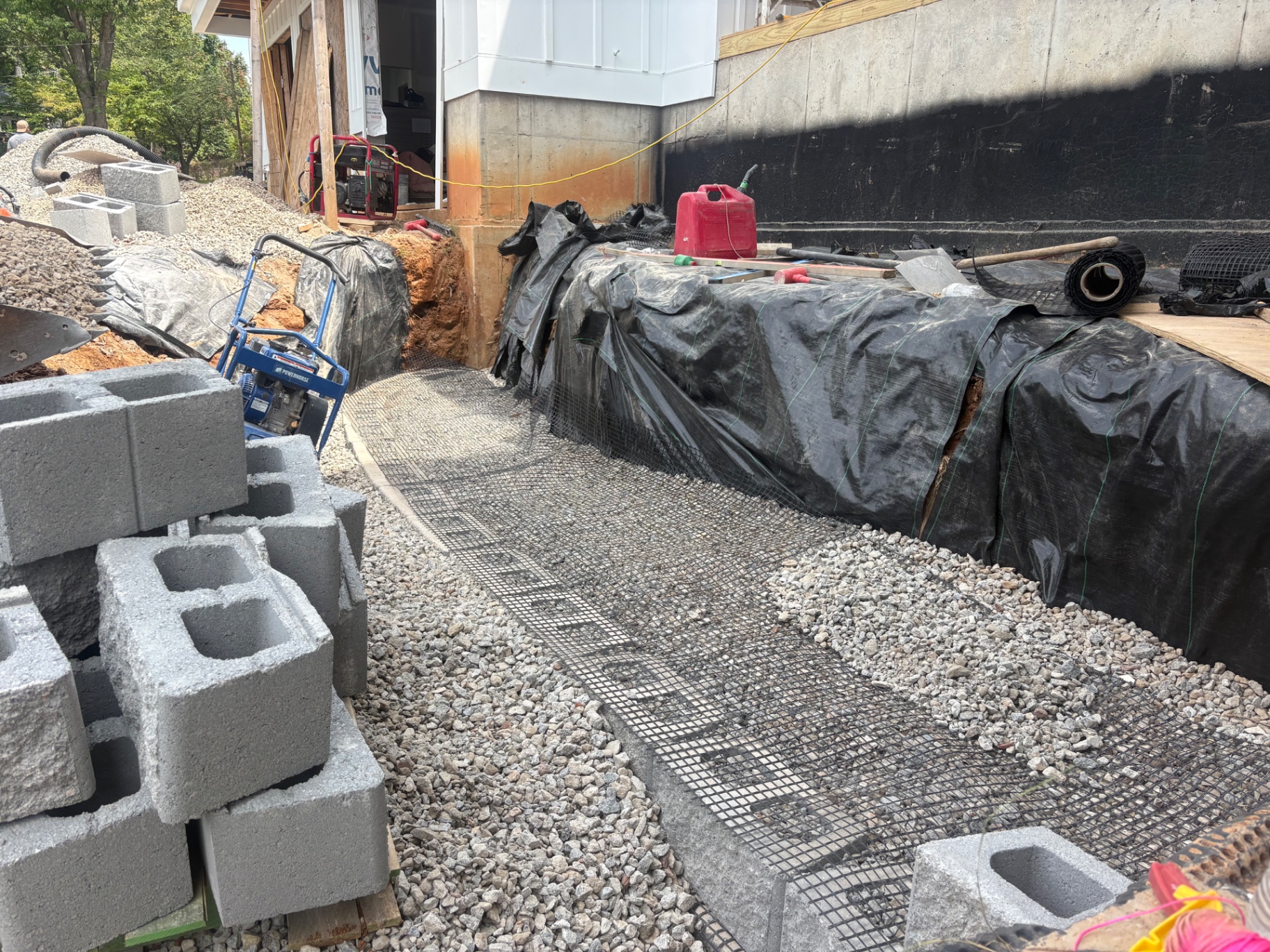
On clay, a geotextile separation fabric between the subgrade and the aggregate base keeps clay from working up into the stone and stone from punching down into the clay. It preserves the base you paid for.
Where a patio sits at the bottom of a slope or against a house, the base may also need a drain line to remove water travelling through it. Water moving under a base washes out fines, and that is what produces the sunken patch two years later.
The base drains to somewhere. Establishing where, before construction, is part of the design.
What gets skipped on a cheap quote
In rough order of frequency: base depth reduced, compaction done in one thick lift or skipped between lifts, geotextile omitted on clay, edge restraint left out or replaced with a strip of mortar, bedding sand used thick to hide an uneven base, and no allowance for where the base drains.
Every one of these is buried by the time the pavers go down. That is what makes patio quotes hard to compare on price alone.
Ask for the numbers: how deep is the excavation, what base thickness, in how many lifts, is fabric included, and what edge restraint is used. A contractor who builds properly answers without hesitating.
Why depth decides everything
Pavers do not fail. Bases fail, and the pavers follow them. Every sunken patio, every rocking paver, every open joint and spreading edge traces back to the structure underneath.
The good news is that a properly built base makes the patio effectively permanent, with joint sand top-ups as the only routine attention it needs.
Southern Style Turf & Design writes excavation depth, base thickness, fabric and edge restraint into every patio quote. Free on-site estimate across Lake Norman.
Helpful outside reference
Before anyone digs, NC811 utility marking is required, and the OSHA trenching and excavation safety page explains why trench work needs care.
Frequently asked questions
How deep should a paver patio base be?
Deep enough to reach firm undisturbed subgrade and to carry the compacted aggregate base, bedding layer and pavers — thicker on clay than on free-draining soil, and thicker again where vehicles drive.
Why is my paver patio sinking?
Almost always the base: too thin, compacted in one thick lift, built on soft fill, or with water running through it washing out the fines.
Do paver patios need edge restraint?
Yes. Without it the perimeter pavers creep outward, joints open and the pattern loosens from the edges in.
Is fabric needed under a patio base on clay?
It should be. Geotextile separation keeps clay from working up into the aggregate and the aggregate from punching down into the clay, preserving the base over time.
Want this looked at on your property?
We give free, no-pressure on-site estimates across Denver, Mooresville, Cornelius, Davidson, Huntersville and Troutman.