Edging is what keeps a walkway looking like a walkway in year five. It holds the paving together, keeps mulch and soil off it, and gives the eye a clean line.
Structural restraint versus decorative border
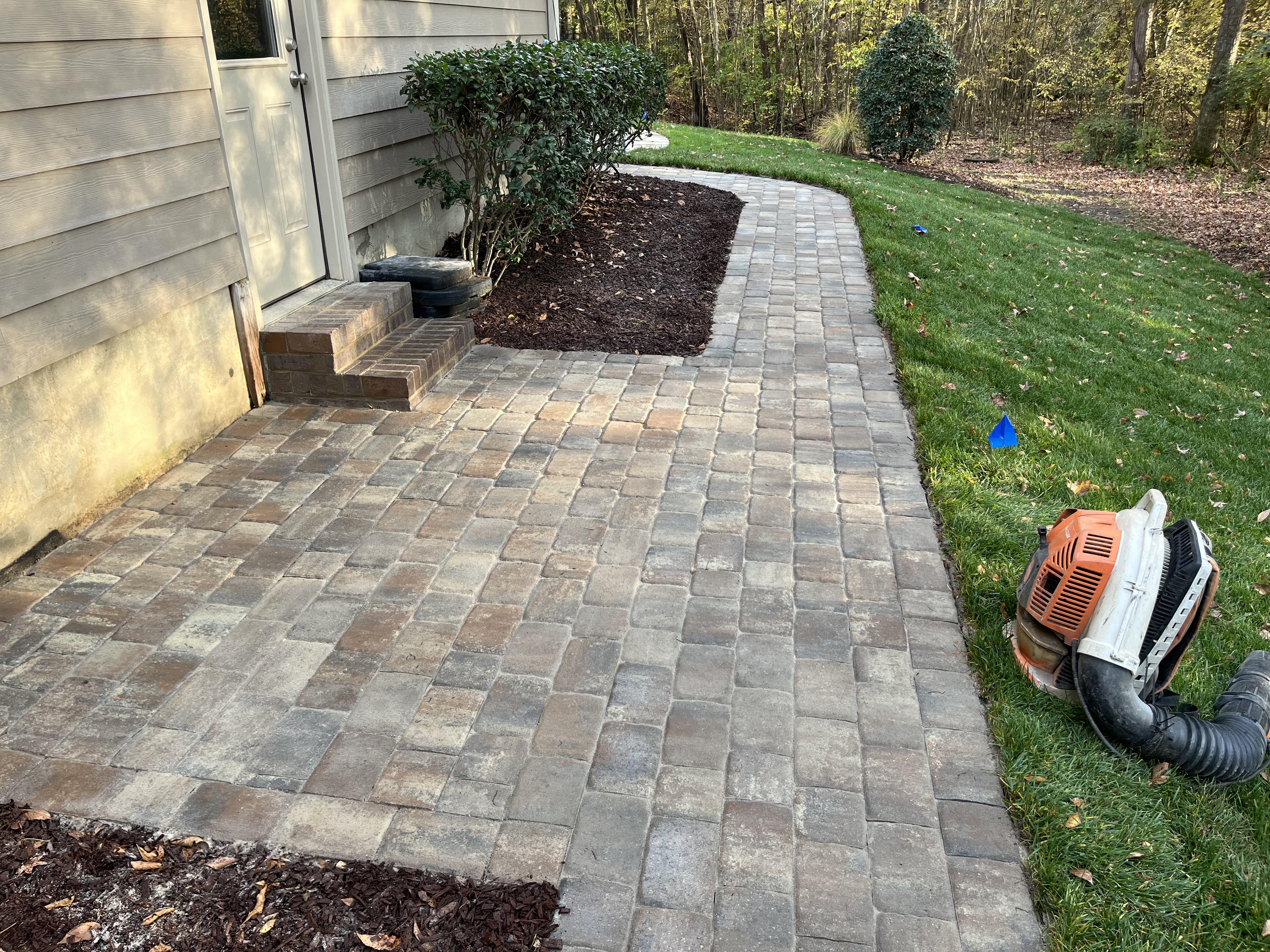
Paver walks need restraint — a buried edge that stops the outer units from creeping sideways. Without it, joints open from the outside in and the border wanders.
A decorative border, like a soldier course of contrasting pavers, is a separate idea. It frames the walk and gives the field pattern a clean line to cut into.
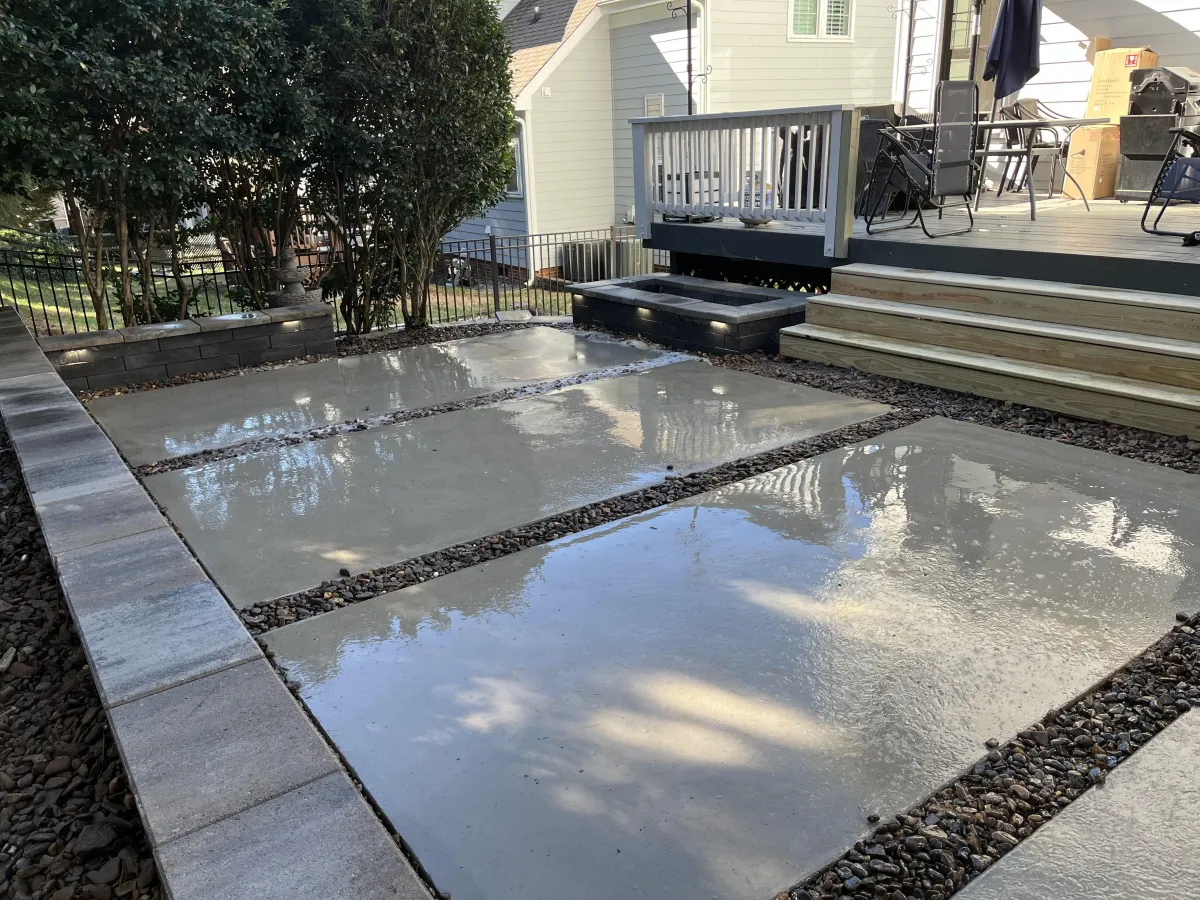
Concrete walks do not need restraint, but they still benefit from a border where they meet beds or lawn.
The common materials
Paver soldier course: the standard for paver walks. Same material, laid end to end, usually set on the same base with restraint behind it.
Steel and aluminium edging: thin, strong, nearly invisible, and excellent for lawn-to-bed and gravel path edges. Aluminium will not rust; steel is stiffer and heavier.
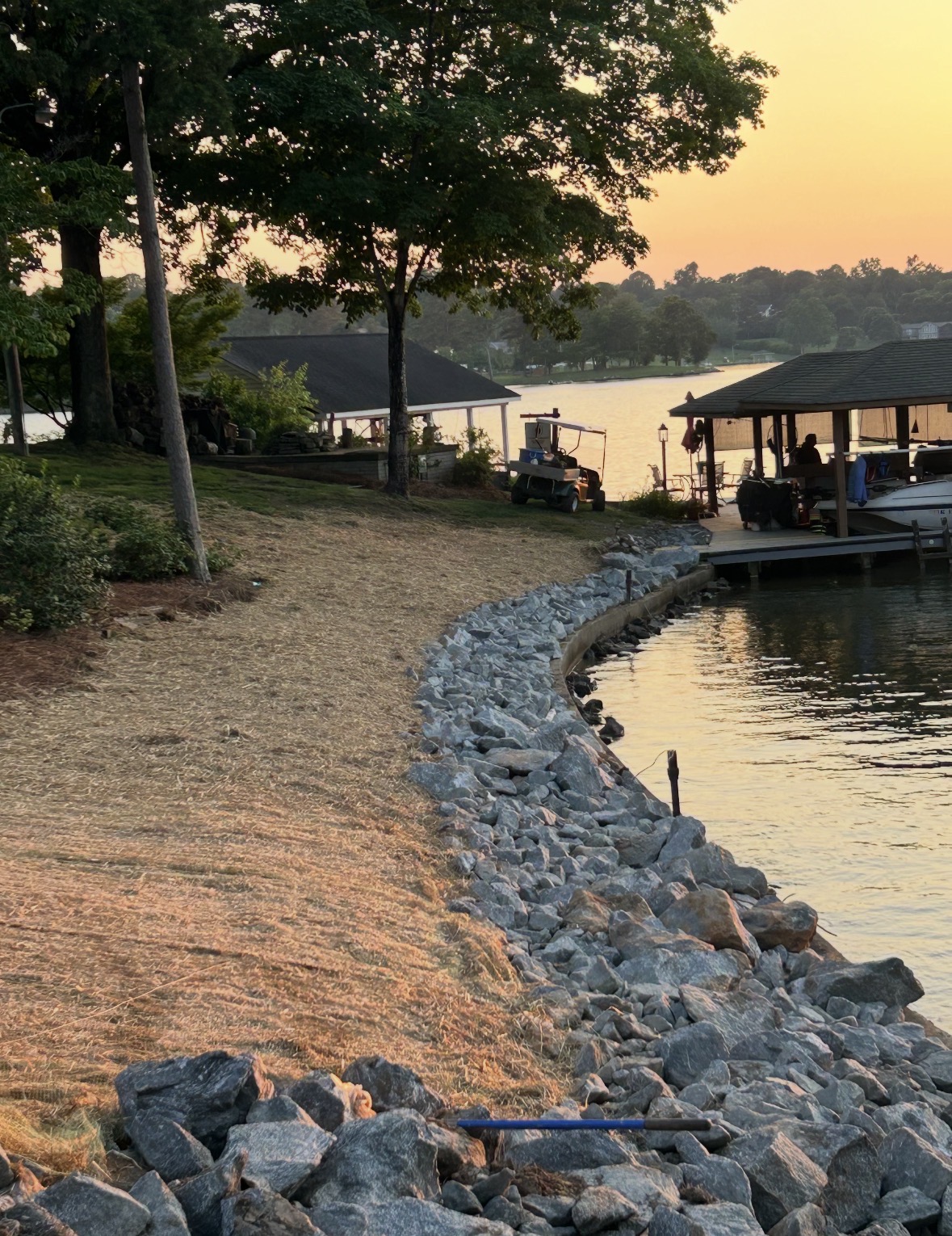
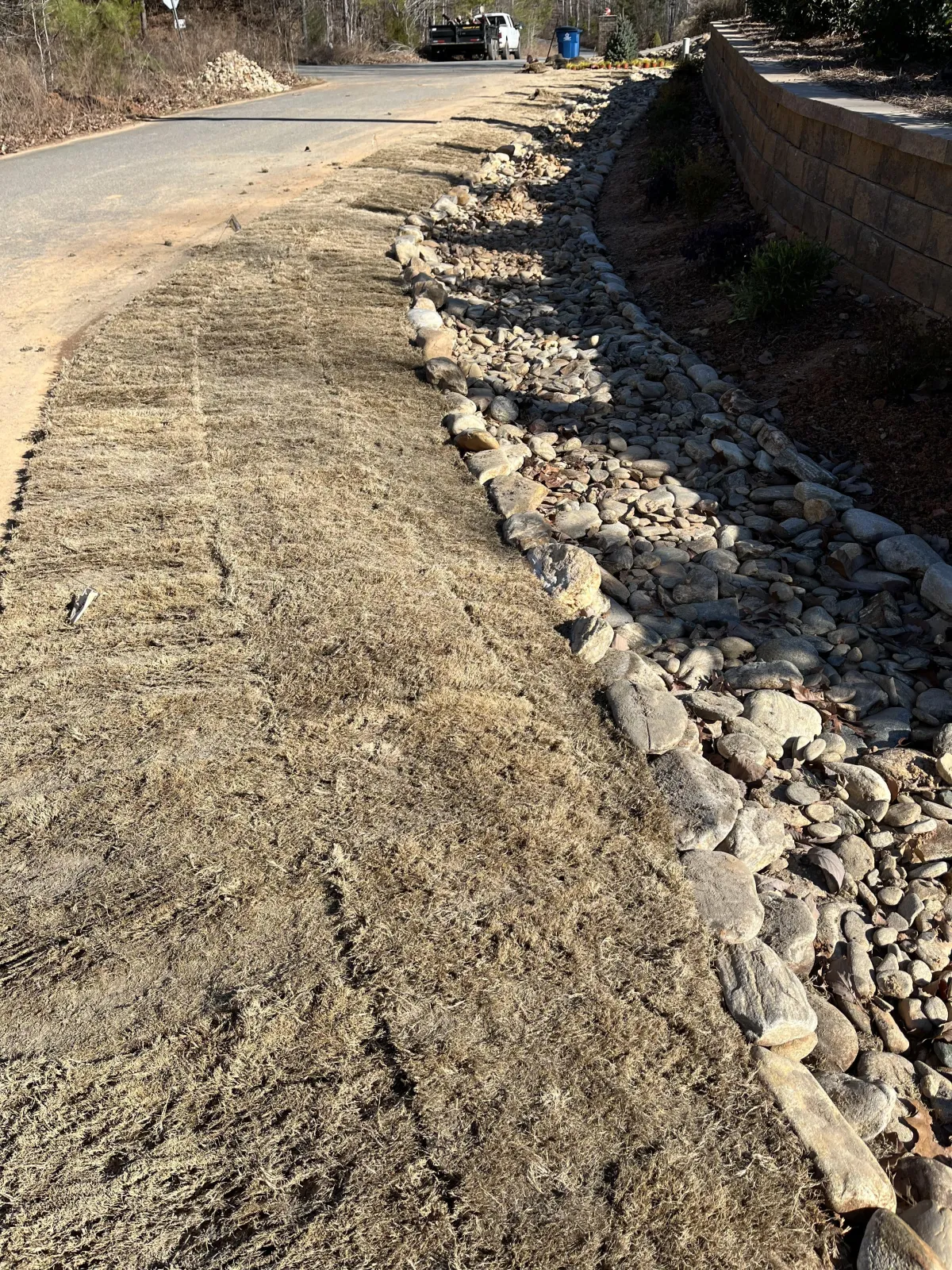
Natural stone: cobbles or setts give a traditional, informal edge and suit stone or brick houses.
Poured concrete curb: durable and continuous, best where a hard division is wanted against a lawn.
Plastic paver restraint: buried, spiked and unseen; a functional product rather than a decorative one.
Plastic roll edging sold at big-box stores is the one to avoid — it heaves, ripples and surfaces within a couple of seasons.
Matching the edge to the setting
Formal front entries: soldier course or stone, aligned crisply, mitred at corners.
Informal garden paths: steel or nothing at all, letting planting soften the edge.
Gravel and stepping-stone paths: steel or aluminium is close to essential, or the stone migrates into the lawn.
Against a lawn that gets mown: an edge you can run a mower wheel along saves a trimming pass every week.
Installation details that matter
Restraint sits on the compacted base, not on soil, and is spiked at proper intervals. Spiking into loose fill is the same as no restraint.
On curves, use materials that bend cleanly and cut relief where needed rather than forcing a straight product around a tight radius.
Backfill behind the edge so it is supported on both sides, and keep mulch below the top of the paving so it does not wash across.
Southern Style Turf & Design installs paver and concrete walkways with proper edge restraint and finished borders across the Lake Norman area.
Frequently asked questions
Do paver walkways really need edge restraint?
Yes. It is the difference between a walk that stays tight and one that spreads and loosens from the edges over a few seasons.
Is metal edging safe around a lawn?
Installed at the correct height with the top flush or just below grade, it is safe and mowable. Left standing proud, it is a hazard.
Can edging be added to an existing walk?
Often yes, by excavating a narrow trench along the edge and setting restraint on compacted stone. If the outer pavers have already shifted, they get reset at the same time.
Want this looked at on your property?
We give free, no-pressure on-site estimates across Denver, Mooresville, Cornelius, Davidson, Huntersville and Troutman.