A garden path is meant to slow you down and show you the yard. That makes it a different problem from a front walk, where the job is to get to the door efficiently.
Route it around what you want people to see
Paths that curve past a specimen tree, a bed or a water feature make a yard feel larger than paths that cut straight across it.
Give the path a destination — a bench, a fire pit, a gate, a view of the water. A path that ends nowhere never gets walked.
Follow the existing desire lines where they exist. If everyone already cuts the same corner, pave that corner.
Materials and what they suit
Stepping stones in lawn or groundcover: informal, inexpensive, and best where the route is occasional rather than daily. Set them flush so a mower passes over.
Gravel or crushed stone with metal edging: excellent drainage, pleasant sound underfoot, and easy to lay to a curve. Needs edging and a stable base, or it migrates.
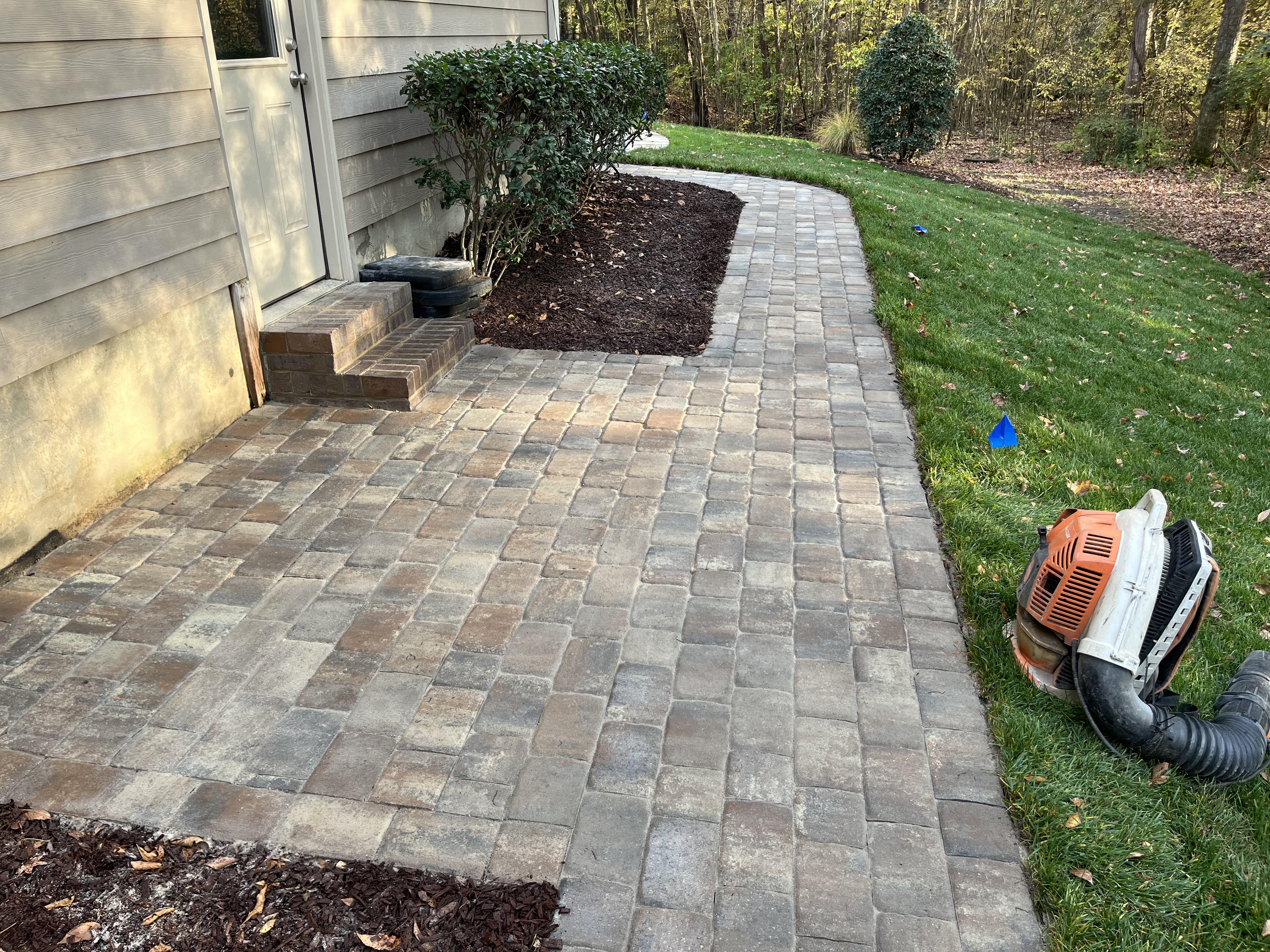
Pavers or natural stone set on base: the durable option for routes used daily and in all weather, including with a wheelbarrow.
Mulch paths: cheapest, softest, and fine through woodland areas, but they need topping up and they wash on any slope.
Width, spacing and comfort
A single-person garden path can be narrow; a path where two walk together needs closer to the width of a front walk. Choose deliberately rather than by default.
Space stepping stones to a natural stride, then walk it before setting them. Stones set by tape measure almost always feel wrong.
Keep the surface firm where anyone might carry something. Loose deep gravel is unpleasant with a wheelbarrow or a tray.
Drainage and maintenance
A path across a slope collects water above it unless there is somewhere for that water to go. On clay-heavy Lake Norman lots this shows up as a soggy strip along the uphill edge.
Crown or cross-slope the path slightly. On steeper ground, break the run with steps rather than making a slick ramp.
Keep organic debris off gravel and stone; the mulch layer that builds up from leaves is what lets weeds and moss establish.
Southern Style Turf & Design designs and installs walkways, garden paths, steps and the grading around them across Lake Norman.
Frequently asked questions
How far apart should stepping stones be?
At a comfortable stride for an average adult. Walk the route and mark where your feet land before setting anything.
Does a gravel path need a base?
Yes — a compacted sub-base and edging. Gravel spread on soil sinks in and spreads out within a season or two.
What is the lowest maintenance garden path?
Pavers or stone on a proper base with solid edging. Higher up-front effort, very little afterwards.
Want this looked at on your property?
We give free, no-pressure on-site estimates across Denver, Mooresville, Cornelius, Davidson, Huntersville and Troutman.