Put the fire pit where the smoke will not blow across the seating, well clear of the house, overhanging branches and anything combustible, and far enough from the patio edge that chairs can be pulled back. Wind direction is the detail that decides whether the fire pit gets used or quietly abandoned.
Clearances from structures, trees and seating
Generous clearance from the house, the garage, fencing, the shed and any overhang is non-negotiable, and local fire codes and HOA rules may set specific distances — check both before siting it.
Overhead matters as much as around. Nothing combustible should sit above the pit: no low branches, no pergola roof, no awning, no umbrella.
Seating wants to be close enough to feel the heat and far enough to be safe. As a starting point, leave enough space around the pit that chairs sit back from the edge with room for someone to walk behind them, then adjust to the pit's size and heat output.
Also consider what is underfoot: a fire pit on a wood deck is a different proposition entirely and needs a purpose-made protective base if it is allowed at all.
Wind direction and the mistake everyone makes
The mistake is siting the fire pit for the view and discovering the prevailing wind carries smoke straight into the seating.
Note which way the wind usually comes from on your lot — it is often shaped by the house and neighbouring buildings as much as by the region — and place the pit so the seating is not directly downwind of it in the usual case.
Also think about where the smoke goes beyond your seating: into the house through an open window, onto a neighbour's deck, or across the dining table. Any of those turns into a recurring annoyance.
Gas fire features sidestep the smoke question entirely, which is one of their main practical advantages.
Built-in vs portable on a paver surface
A built-in pit is a permanent structure — usually a block or stone ring with a steel insert — set on or into the patio. It looks resolved, it can be matched to the walls and paving, and it can be sized to the space. It is also permanent, so the placement decision is final.
A portable pit is flexible and cheap and lets you learn where the fire pit should actually be before committing. Many people find their portable pit ends up in a different spot than they first assumed, which is useful information.
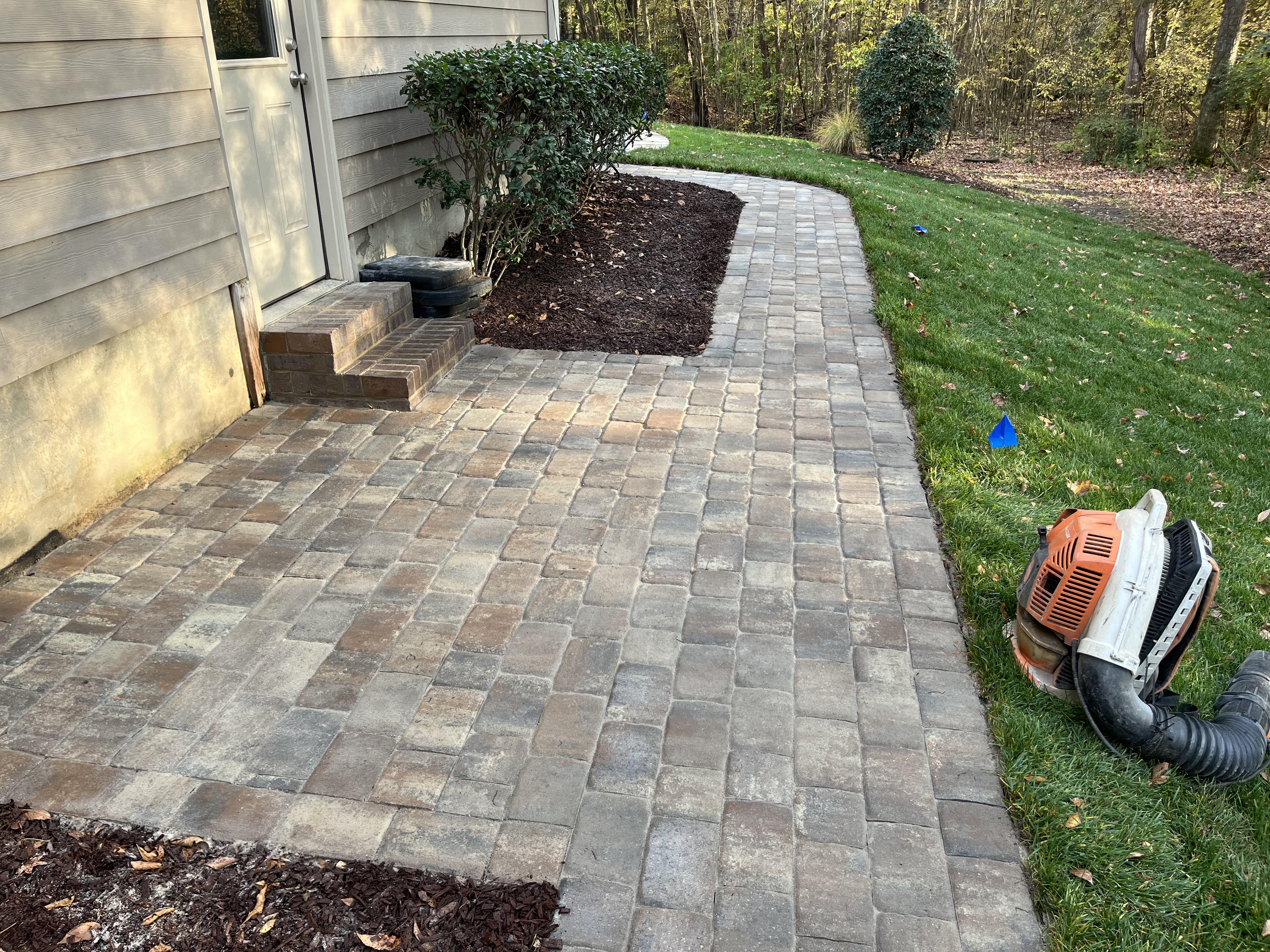
On pavers, either is fine provided the heat is managed. Direct sustained heat on paving can discolour or damage units, so a built-in pit uses a proper insert and fire-rated materials in the burn zone, and a portable pit sits on a heat shield or a stand rather than directly on the surface.
Wood or gas
Wood gives the fire people picture: the sound, the smell, the heat. It also gives smoke, sparks, ash to clear and wood to store, and it takes time to get going.
Gas lights instantly, produces no smoke or sparks, and turns off when the evening ends. It needs a gas line run — which has to happen before the patio is built if it is not to mean lifting paving — and it produces less heat than a good wood fire.
The decision is worth making early precisely because of that gas line. Even if you choose wood now, running a capped sleeve during construction preserves the option.
Practical siting checklist
Clear of the house, fences, sheds and overhanging branches. Nothing combustible overhead. Not directly upwind of the seating or the house. Room around it for chairs and a walking route. On a stable, non-combustible surface. Reachable from the dining area but slightly apart from it, so the two zones both work. And a hose or extinguisher within reach.
Southern Style Turf & Design builds fire pits, seating walls and patios together across Lake Norman, with gas lines and lighting run before the paving goes down. Free on-site estimate.
Frequently asked questions
How far should a fire pit be from the house?
Well clear of the house, fences, sheds and anything overhead, with the specific distance set by local fire code and any HOA rules — check both before siting it.
Which way should a fire pit face relative to wind?
Site it so the prevailing wind does not carry smoke into the seating, the house windows or a neighbour's space. This is the most common siting mistake.
Can you put a fire pit on a paver patio?
Yes, with heat managed properly — a built-in pit uses a steel insert and fire-rated materials in the burn zone, and a portable pit sits on a heat shield or stand rather than directly on the pavers.
Should I choose a wood or gas fire pit?
Wood for the atmosphere and heat, gas for instant, smokeless convenience. Gas needs a line run before the patio is built, so run a capped sleeve during construction even if you choose wood now.
Want this looked at on your property?
We give free, no-pressure on-site estimates across Denver, Mooresville, Cornelius, Davidson, Huntersville and Troutman.