A retaining wall is designed to hold soil, not water. When water collects behind a wall it adds pressure the wall was never built to resist, and that pressure is the leading cause of wall failure. The drainage system behind the wall — aggregate, pipe, filter fabric and an outlet — exists so that pressure never builds.
Hydrostatic pressure in plain terms
Water in soil behind a wall pushes outward. The deeper the water sits, the harder it pushes, and the force increases faster than most people expect as the water level rises.
Saturated soil is also much heavier than dry soil, so the wall is simultaneously holding more weight and being pushed by the water itself. On clay there is a third effect: clay swells as it takes on water, adding expansion pressure on top of everything else.
This is why walls fail after wet periods rather than during dry ones, and why a wall that stood for years can suddenly bulge in a wet winter.
Drainage aggregate: the zone behind the wall
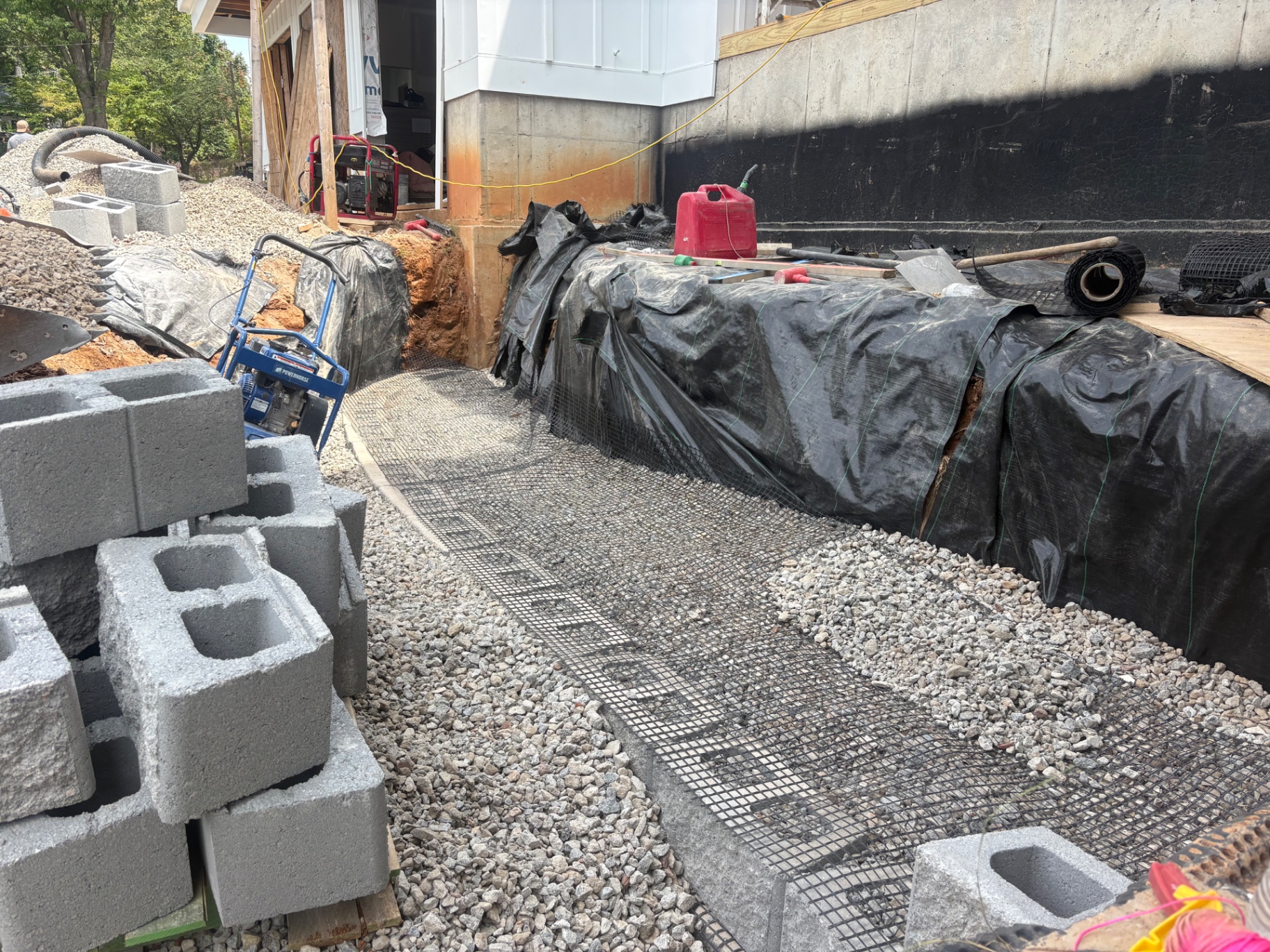
Directly behind the wall face sits a zone of clean, angular crushed stone rather than the soil that was excavated. Water reaching that zone drops straight through it instead of accumulating in the soil against the wall.
Clean is the operative word. Aggregate with fines in it, or aggregate that later becomes contaminated with soil, loses the void space that makes it work. This is not the place to reuse site material.
Angular stone is also important — it locks together and stays stable, where rounded gravel shifts.
The drain pipe and where the water is supposed to come out
At the base of the aggregate zone, behind the bottom course, runs a perforated pipe. Water arriving in the aggregate collects there and is carried along the wall to an outlet.
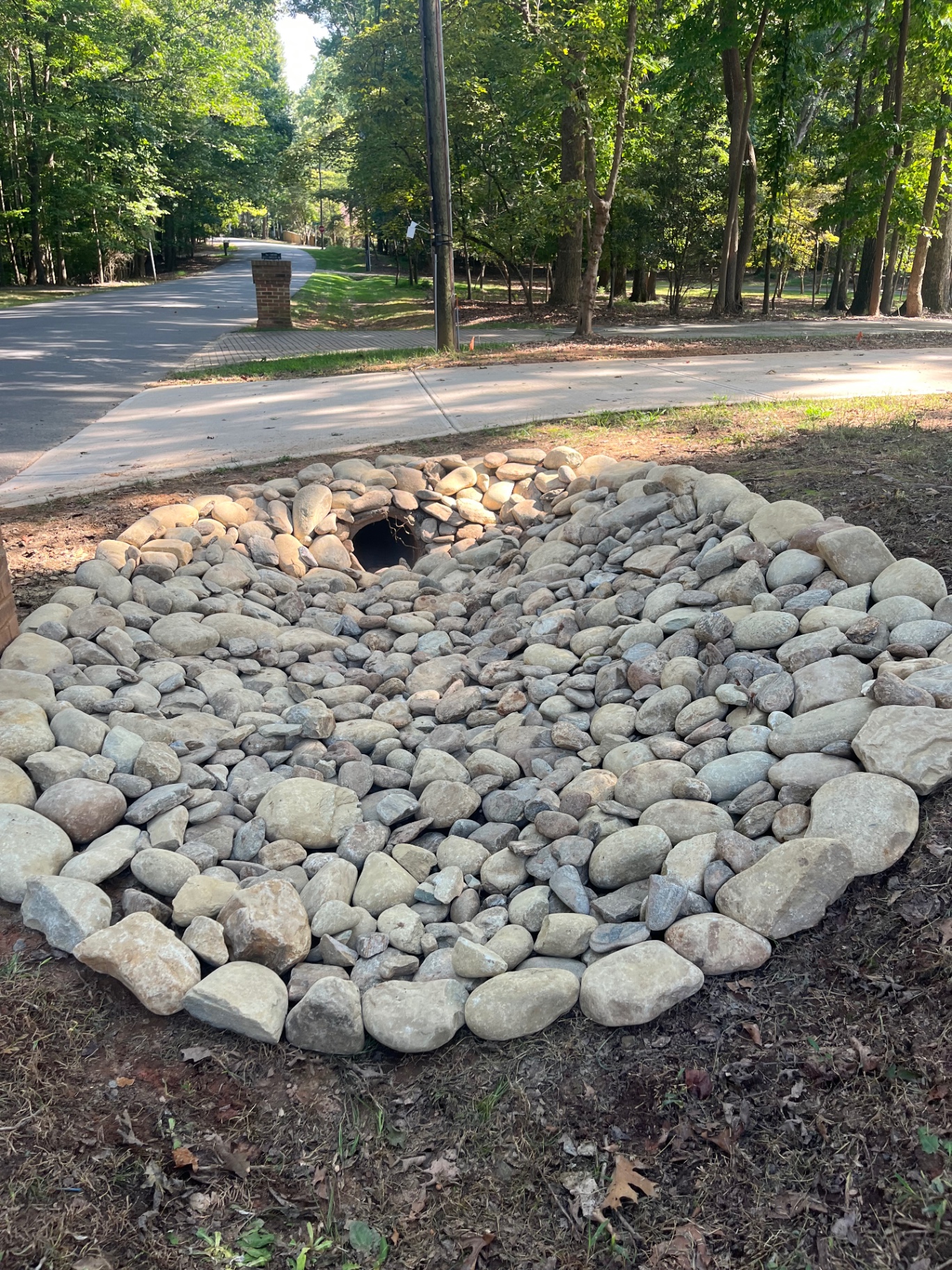
That outlet has to actually exist and actually be lower. It usually daylights at the end of the wall, or through the wall face at intervals, discharging somewhere the water can safely run off. A drain pipe with no outlet is just a buried pipe full of water.
This is the detail most often skipped on cheap wall builds, and it is invisible the day the wall is finished. It reveals itself two or three wet seasons later.
Filter fabric: the part that keeps it working
Filter fabric separates the drainage aggregate from the surrounding soil. Water passes through; soil fines do not.
Without it, fines migrate into the stone and fill the voids, exactly as they do in a French drain built without fabric. Once that happens the drainage zone stops draining, water accumulates, and the wall is back to resisting pressure it was not designed for.
On Piedmont clay, fabric is not a refinement. It is the difference between a system that works in year ten and one that quietly stopped in year three.
The water you deal with before it reaches the wall
Good wall drainage handles water in the soil behind it. It is not meant to handle a downspout discharging over the top of the wall or a slope funnelling surface runoff straight into the backfill zone.
On most sites the wall design includes surface work too: grading above the wall so runoff is directed away rather than over it, and downspouts piped clear of the backfill zone entirely. Reducing the water arriving is always cheaper than managing it once it is there.
Southern Style Turf & Design builds drainage into every wall as standard rather than as an upgrade line item. Free on-site estimate across Lake Norman.
Frequently asked questions
Why do retaining walls need drainage?
Water collecting behind a wall creates hydrostatic pressure the wall was not designed to resist, and saturated soil is heavier too. Drainage prevents the water from ever accumulating.
What goes behind a retaining wall?
Clean angular crushed stone as a drainage zone, a perforated pipe at its base running to a real outlet, and filter fabric separating the stone from the surrounding soil.
Where does retaining wall drainage discharge?
At a point lower than the pipe, usually daylighting at the end of the wall or through the face at intervals, somewhere the water can safely run off the property.
Can drainage be added to an existing wall?
Only by excavating the backfill, which is most of the cost of rebuilding it. That is why drainage is installed during construction rather than added later.
Want this looked at on your property?
We give free, no-pressure on-site estimates across Denver, Mooresville, Cornelius, Davidson, Huntersville and Troutman.