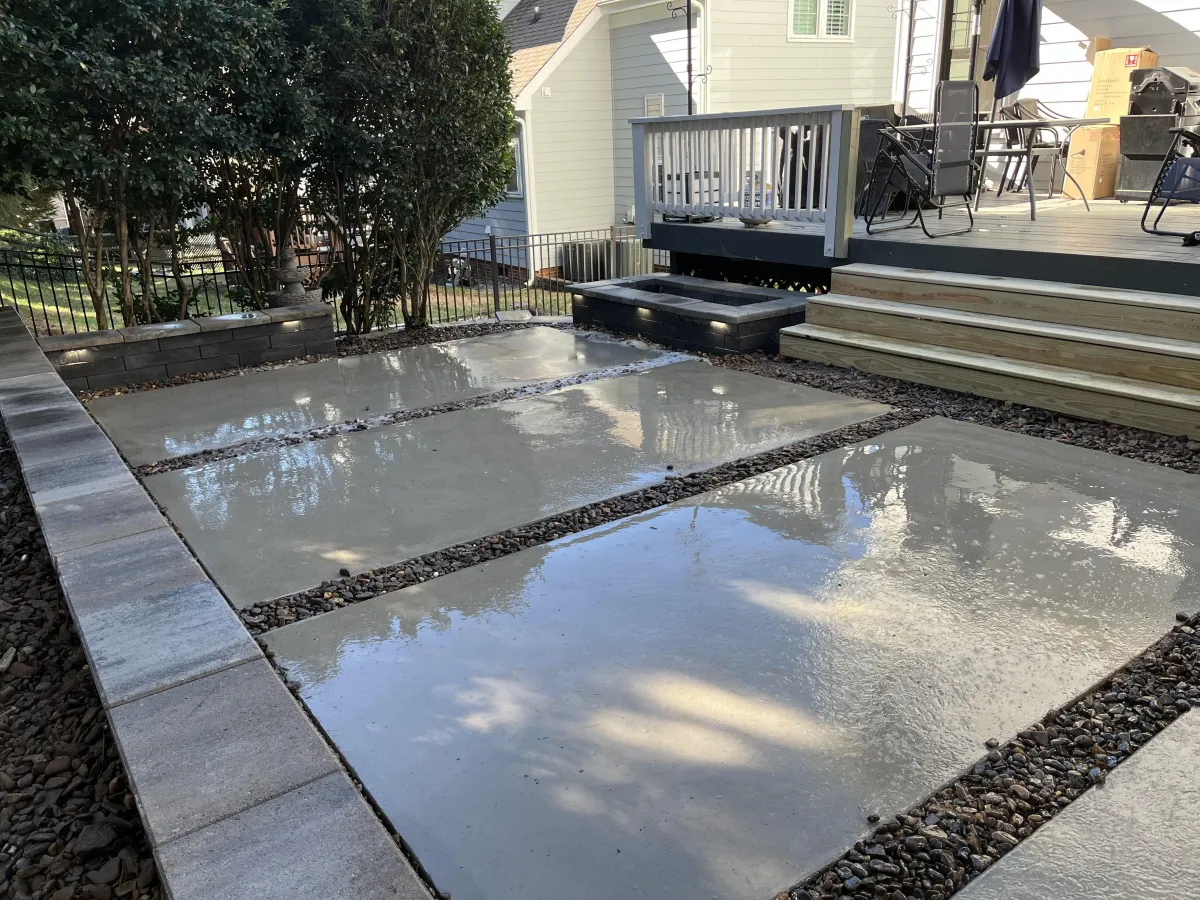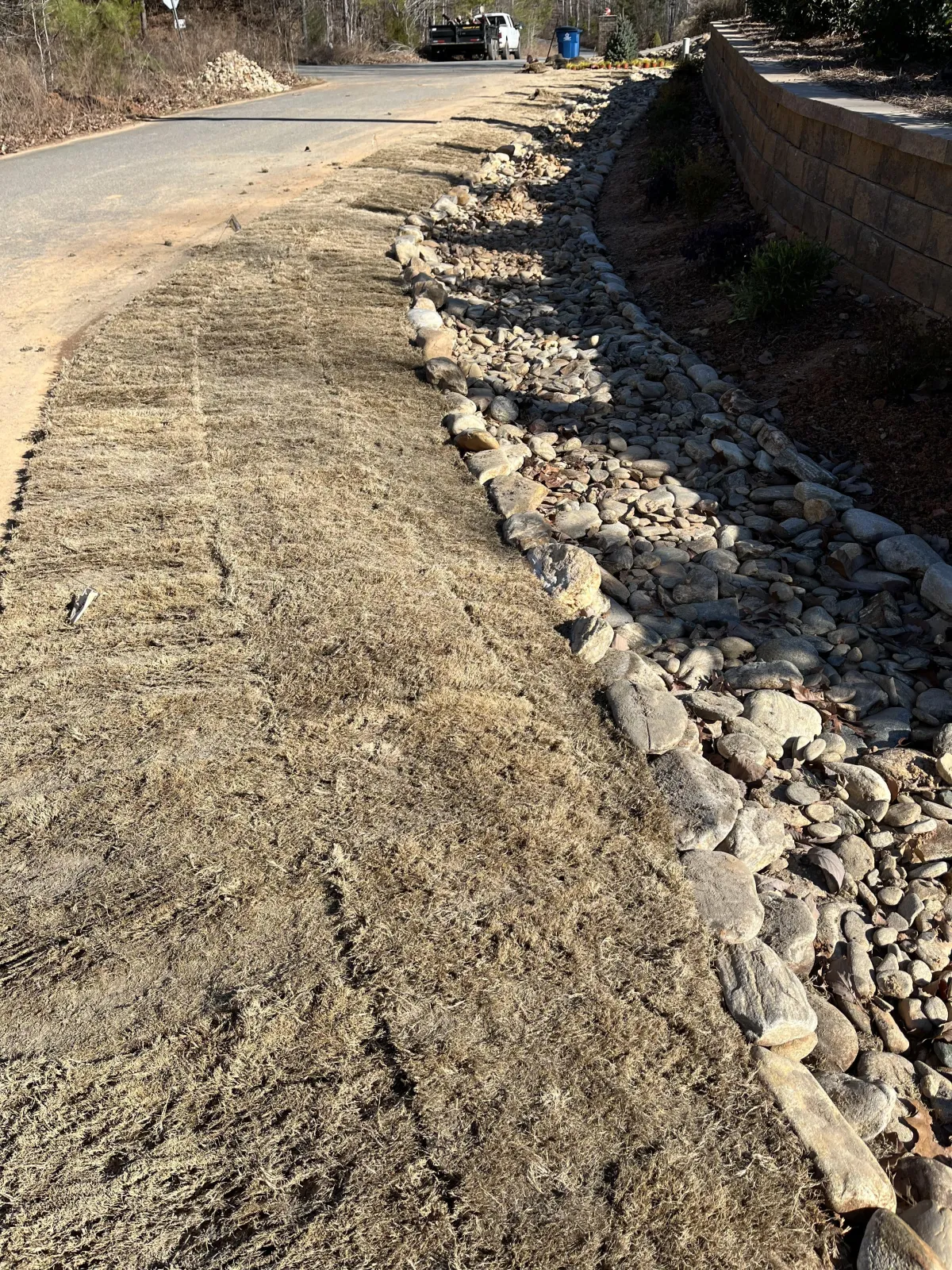
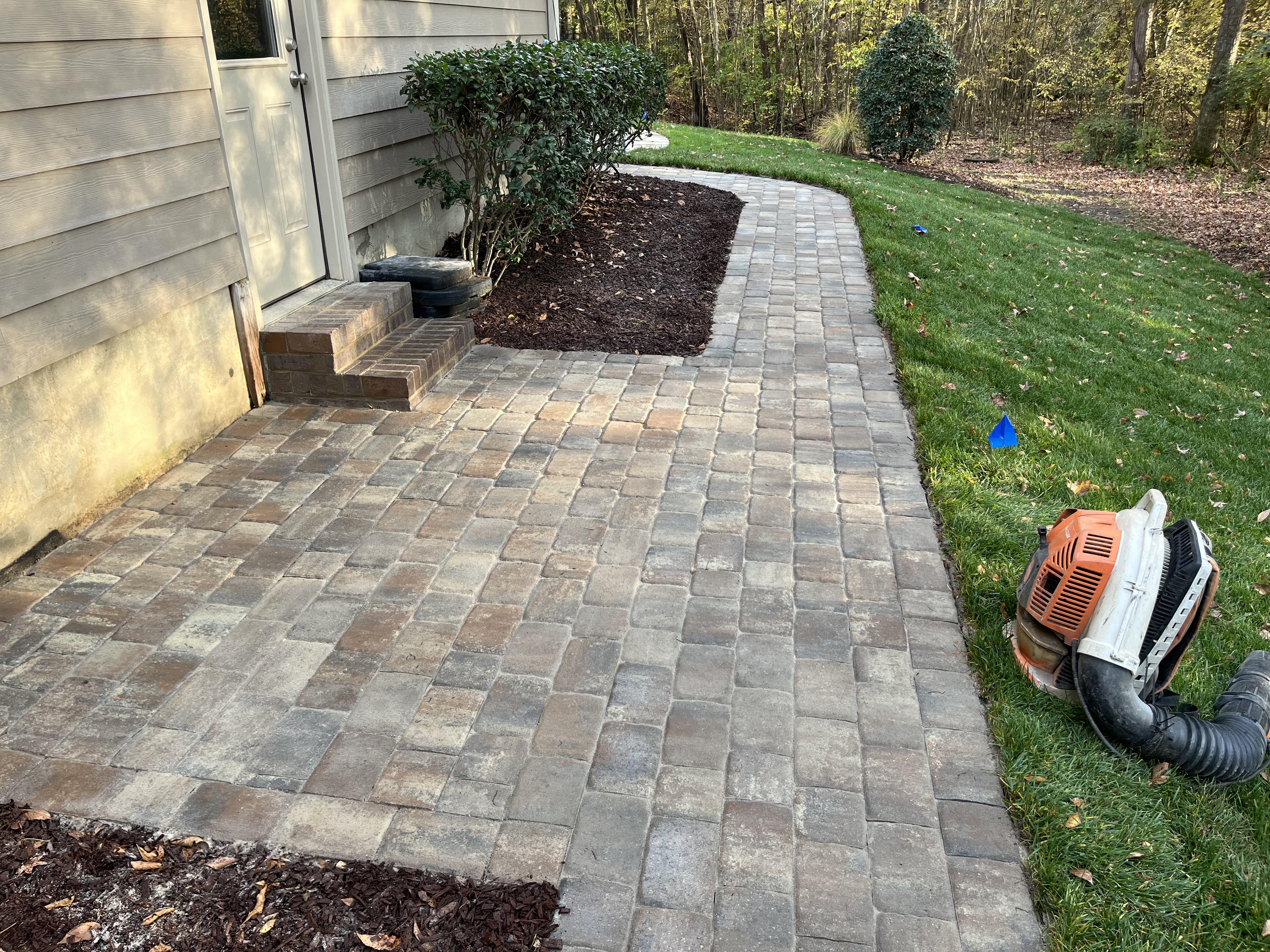
A properly built segmental block wall should outlast most of the rest of the landscape — decades of service with almost no attention. A timber wall will not. The difference between a wall that lasts and one that does not is rarely the material; it is the base, the drainage and the reinforcement, all of which are buried on the day the wall is finished.
Realistic lifespans by material
Segmental block: the longest-lived residential option. The units themselves are effectively permanent, so the wall's life is decided by the base and drainage behind it. Built correctly, it is measured in decades.
Natural stone: comparable, and often longer where the wall is modest in height and properly drained. Stone does not degrade; mortar and poor bedding do.
Poured concrete: very long-lived where designed and drained correctly, but less forgiving of ground movement — it cracks where a segmental wall flexes and reseats.
Timber: the shortest by a wide margin. Constant soil contact and Carolina humidity work against it, and the buried tiebacks fail on the same schedule as the visible face.
The three things that shorten them
Water. Drainage failure is the leading cause of wall failure, full stop. Water behind a wall builds pressure the wall was not designed for, and on clay it also swells the soil. A wall without an aggregate zone, a drain pipe, filter fabric and a real outlet is on a clock.
Base failure. A wall built on fill, on topsoil, or on aggregate that was not compacted in proper lifts settles unevenly. Everything above the base follows it out of line.
Overloading. A wall designed for a garden bank and then asked to support a driveway, a vehicle, a shed or a pool deck is carrying loads it was never sized for. Adding fill or a structure above an existing wall is a change of use, not a landscaping decision.
What a well-built wall needs from you
Almost nothing, which is the point. The short list:
- Keep the drainage outlet clear. Check it seasonally and clear mulch, leaf litter or soil wash from the mouth.
- Keep water off the top. Make sure grading above the wall directs runoff away rather than over the face, and that downspouts discharge clear of the backfill zone.
- Do not plant trees or large shrubs near the wall, above or below it.
- Do not add fill, structures or vehicle loads above the wall without asking whether it was designed for them.
- Look at it once a year. A wall that is still straight, with tight joints and level caps, is fine.
Early warning signs worth catching
Walls almost always signal before they fail. Bulging in the middle of the wall's height is a drainage problem. Leaning uniformly outward at the top is usually pressure or reinforcement. Dipping along the run is the base. Joints opening unevenly, caps sitting proud, or soil washing out between units are all worth a look.
Caught early, most of these are a section rebuild. Left alone, they become the whole wall.
Why buying on price shortens the clock
The three things that shorten a wall's life are the three things a low quote leaves out, and none of them are visible at handover. A wall that costs less because the excavation was shallow, the base thin and the drainage absent looks identical on day one to a wall built properly.
The difference shows in year three to five, which is long after the cheaper contractor is unreachable.
Southern Style Turf & Design writes base depth, drainage and reinforcement into the quote so you can see what you are buying. Free on-site estimate across Lake Norman.
Frequently asked questions
How long does a retaining wall last?
A properly built and drained segmental block or stone wall lasts decades. Timber is far shorter-lived because it stays in contact with damp soil and its buried tiebacks rot with the face.
What makes a retaining wall fail early?
Water behind the wall, an inadequate or uncompacted base, and loads the wall was never designed to carry — such as fill, a structure or vehicle traffic added above it later.
What maintenance does a retaining wall need?
Keep the drainage outlet clear, keep surface water and downspouts off the top, avoid planting trees near it, and look it over once a year for bulging, leaning or dipping.
Can I add fill or build above an existing wall?
Not without checking. Extra fill, a shed, a driveway or a pool deck above a wall changes the load it carries, and walls fail from being asked to do more than they were designed for.
Want this looked at on your property?
We give free, no-pressure on-site estimates across Denver, Mooresville, Cornelius, Davidson, Huntersville and Troutman.