Segmental block is the default for residential retaining walls in this region, and for good reason: it is engineered for the job, it accommodates curves and height, and it can be reinforced with geogrid where loads require it. Natural stone and timber both have their place, but they are chosen for appearance or budget rather than performance.
Segmental block: the default, and why
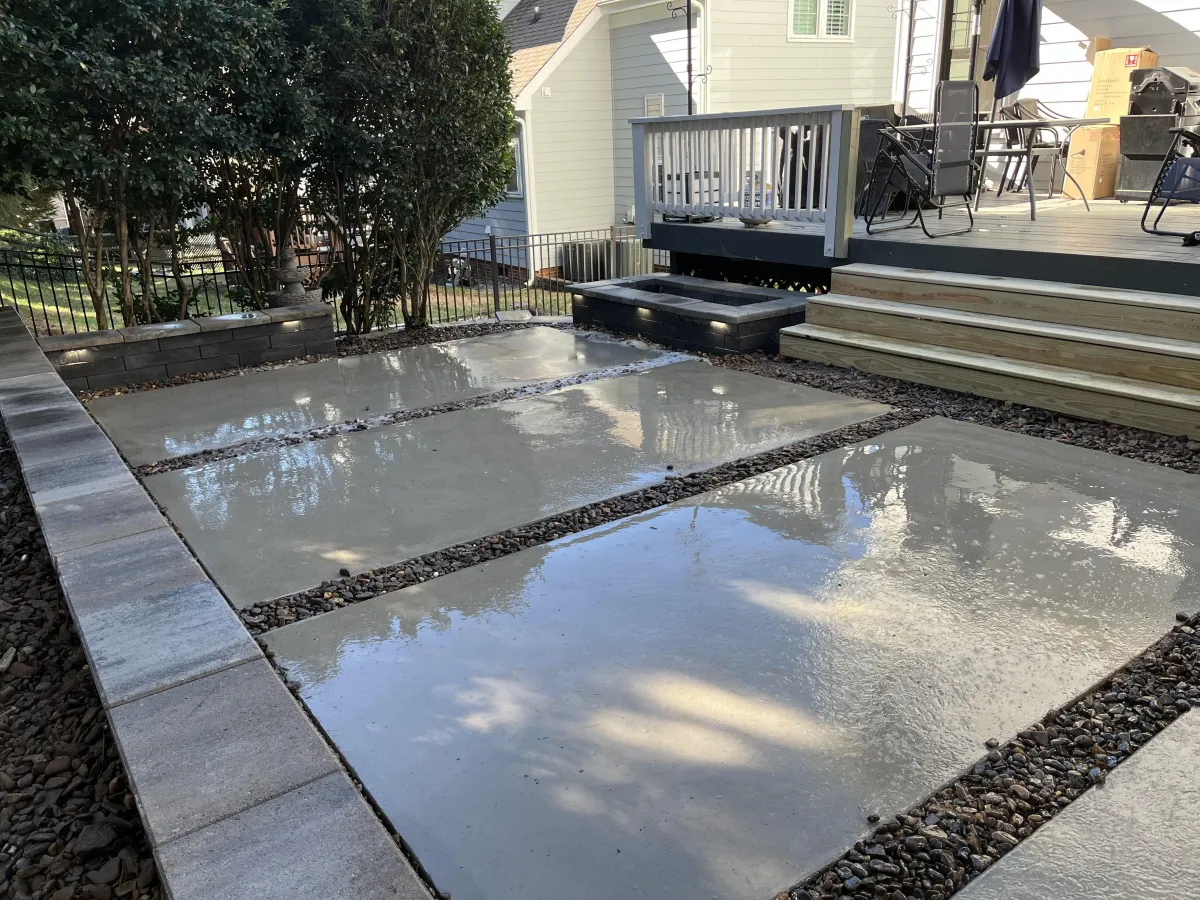
Segmental retaining wall block is manufactured specifically to build walls. The units interlock or pin together, they set back slightly with each course so the wall leans into the slope, and the systems have published design tables so a wall of a given height and load can be built to a known standard.
Practically, that means predictable results. It curves easily, it accepts geogrid reinforcement for taller walls, caps and steps are made to match, and replacement units are available years later if something is damaged.
The aesthetic range is wider than people assume — tumbled faces, split faces, multiple sizes in one blend, several colour families. It will not be mistaken for hand-laid fieldstone, but it does not look like a parking structure either.
Natural stone and what it costs you in labour
Natural stone is the best-looking option and the most expensive to build. Every piece is a different shape, so the wall is assembled by judgement rather than by system, and the time involved is the dominant cost — not the stone itself.
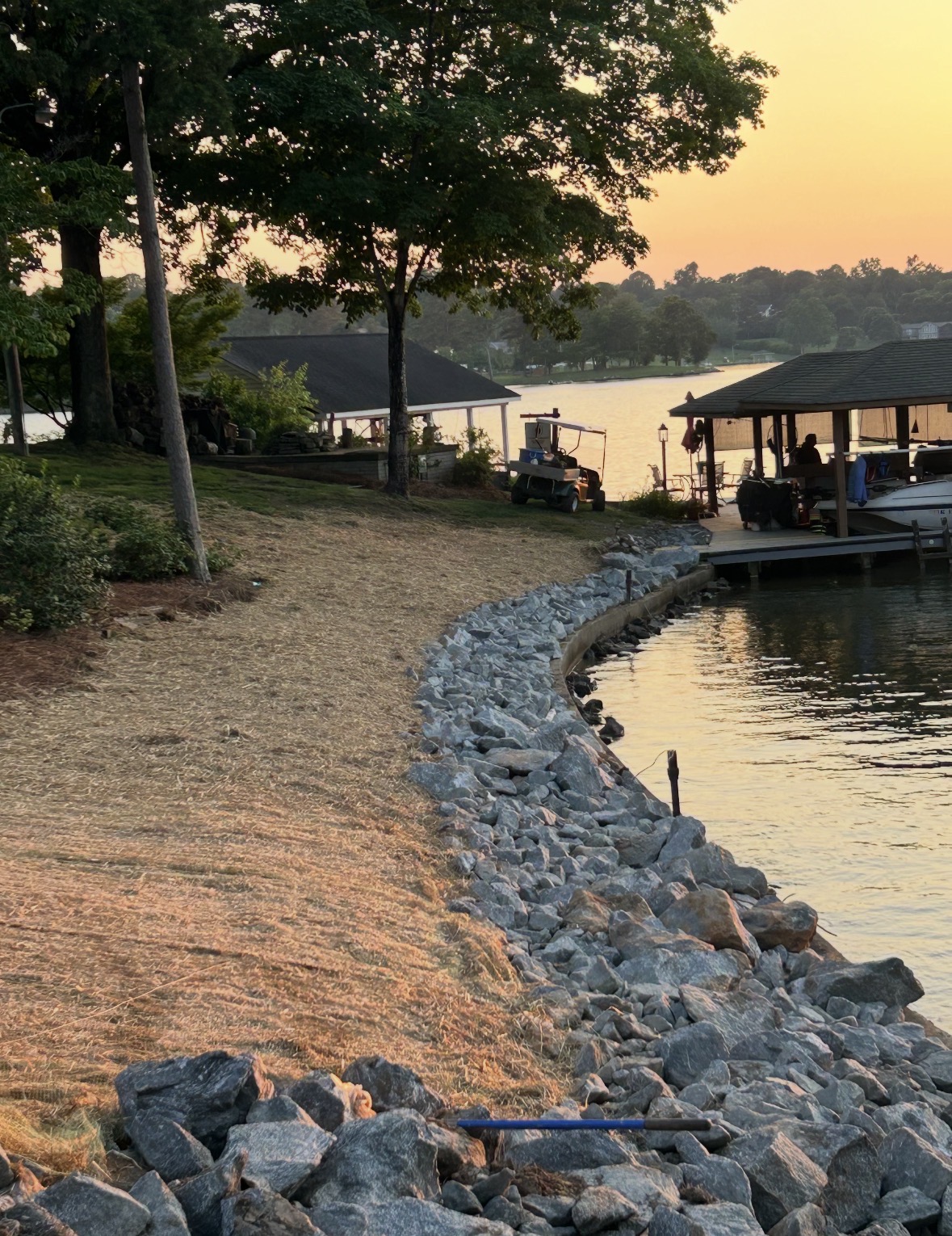
Dry-stacked stone walls work well at modest heights where they are essentially holding a bank rather than resisting significant load. Above that, stone is often used as a facing over a structural core, which gets you the appearance with engineered performance behind it.
It suits older properties, natural settings and anywhere the wall is a focal point. It is a poor choice for a long utility wall at the back of a lot.
Why timber walls have a shorter clock than people expect
Treated timber walls are quick to build and cheap up front, which is why they are common on older properties around Lake Norman. They are also the only option here with a definite expiry date.
Timber in contact with soil stays damp, and damp wood in a humid Southern climate decays. The tiebacks holding the wall into the bank — the part you cannot see — rot at the same rate as the face, and when they go the wall leans out as a unit rather than failing gradually.
If you have inherited a timber wall, the useful check is the base course and the tiebacks rather than the visible face. A wall that looks tired at the top may be fine; a wall that is leaning is telling you the tiebacks have gone.
Poured concrete and boulders, briefly
Poured concrete walls are strong and appropriate for structural situations, particularly where a wall supports a structure or has to resist significant load in a narrow footprint. They need engineering, forms and access, and they are unforgiving of ground movement — a poured wall cracks where a segmental wall would flex.
Boulder walls suit informal, natural settings and larger properties with access for the equipment to place them. They look substantial and they need space; at the back of a tight subdivision lot they are usually impractical.
The part that matters more than material
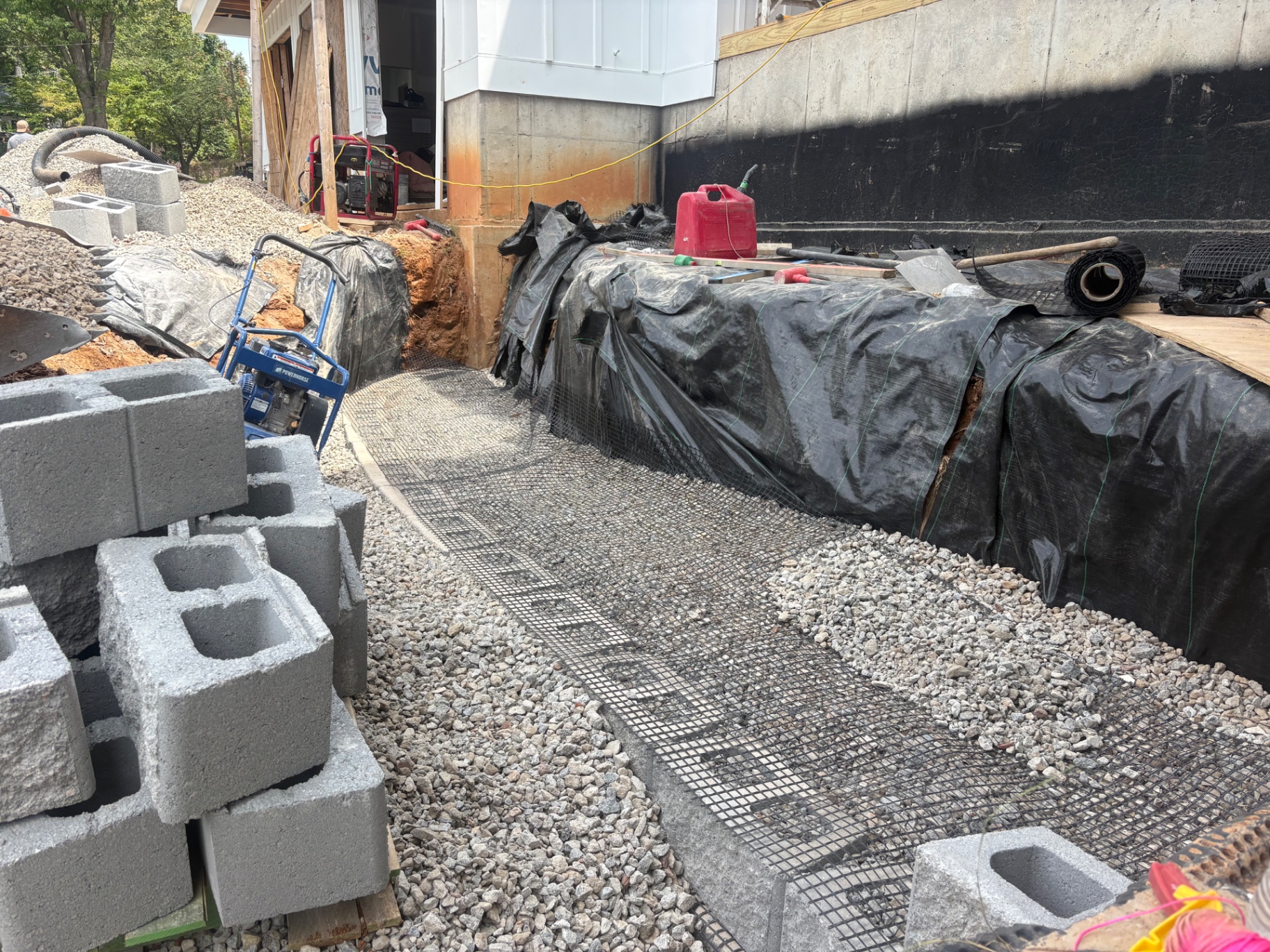
Whichever material you choose, the wall's life is decided by what is behind and beneath it: excavation to stable soil, a properly compacted base, drainage aggregate with a pipe and filter fabric, and geogrid where the height requires it.
A stone wall with no drainage fails. A block wall on a poor base fails. The material is the part you see; the system is the part that lasts.
Southern Style Turf & Design builds segmental block, structural and natural stone walls across Lake Norman, with drainage built into every one. Free on-site estimate, written quote.
Helpful outside reference
Design and installation guidance for segmental retaining walls comes from the National Concrete Masonry Association.
Frequently asked questions
What is the best material for a retaining wall?
Segmental block for most residential walls — it is engineered for the purpose, curves easily and accepts geogrid reinforcement. Natural stone looks best and costs most in labour; timber is cheapest and shortest-lived.
How long do timber retaining walls last?
Far less than block or stone. Timber in soil contact stays damp and decays, and the buried tiebacks rot at the same rate as the visible face, which is why old timber walls lean out as a unit.
Is natural stone worth the extra cost?
Where the wall is a focal point, often yes. The cost is labour rather than material, because every piece is fitted individually. For a utility wall at the back of a lot it is hard to justify.
Does the material determine how long the wall lasts?
Less than the base and drainage do. A stone wall with no drainage will fail before a block wall built properly on compacted aggregate with a drain line behind it.
Want this looked at on your property?
We give free, no-pressure on-site estimates across Denver, Mooresville, Cornelius, Davidson, Huntersville and Troutman.