Read the shape of the failure first. Bulging in the middle of the wall's height means water pressure. Leaning outward from the top means the wall lacks the reinforcement or embedment it needs. Dipping along the run means the base has settled. Each points to a different cause, and the cause decides whether a repair is possible at all.
Bulging, leaning and cracking: what each one means
Bulging — the wall belling outward part way up its height, straight at the top and bottom — is hydrostatic pressure. Water is accumulating behind the wall because the drainage zone is absent, clogged or has no outlet.
Leaning — the whole wall tipping outward, worst at the top — is usually insufficient setback, missing geogrid on a wall tall enough to need it, or a base course not buried deep enough to resist the push at the toe.
Dipping or sagging along the run, with joints opening unevenly, is base settlement. Something under the wall has consolidated or washed out.
Cracked units and stepped cracking in a poured or mortared wall usually indicate movement rather than material failure — the wall is being pushed and cannot flex.
Soil or fines washing out between block faces means the filter fabric behind the wall has failed or was never there, and the backfill is migrating through.
When a section can be rebuilt
A localised failure in an otherwise sound wall is often a section rebuild: take the wall down within that stretch, correct the base or the drainage, and rebuild with the same units.
That works when the rest of the wall is straight and level, when the base under the sound sections is intact, and when there is a drainage system to repair rather than one to create from nothing.
It is also the right call when the damage is clearly caused by something external and fixable — a downspout discharging behind the wall, a failed pipe, a washed-out toe.
When it has to come down
Replacement is the honest answer when the wall has no drainage system at all, when the base was never adequate, when a timber wall's tiebacks have rotted, or when the wall is tall enough to have needed engineering it never received.
It is also the answer when movement is widespread rather than local. A wall leaning along its whole length is not going to be corrected in sections.
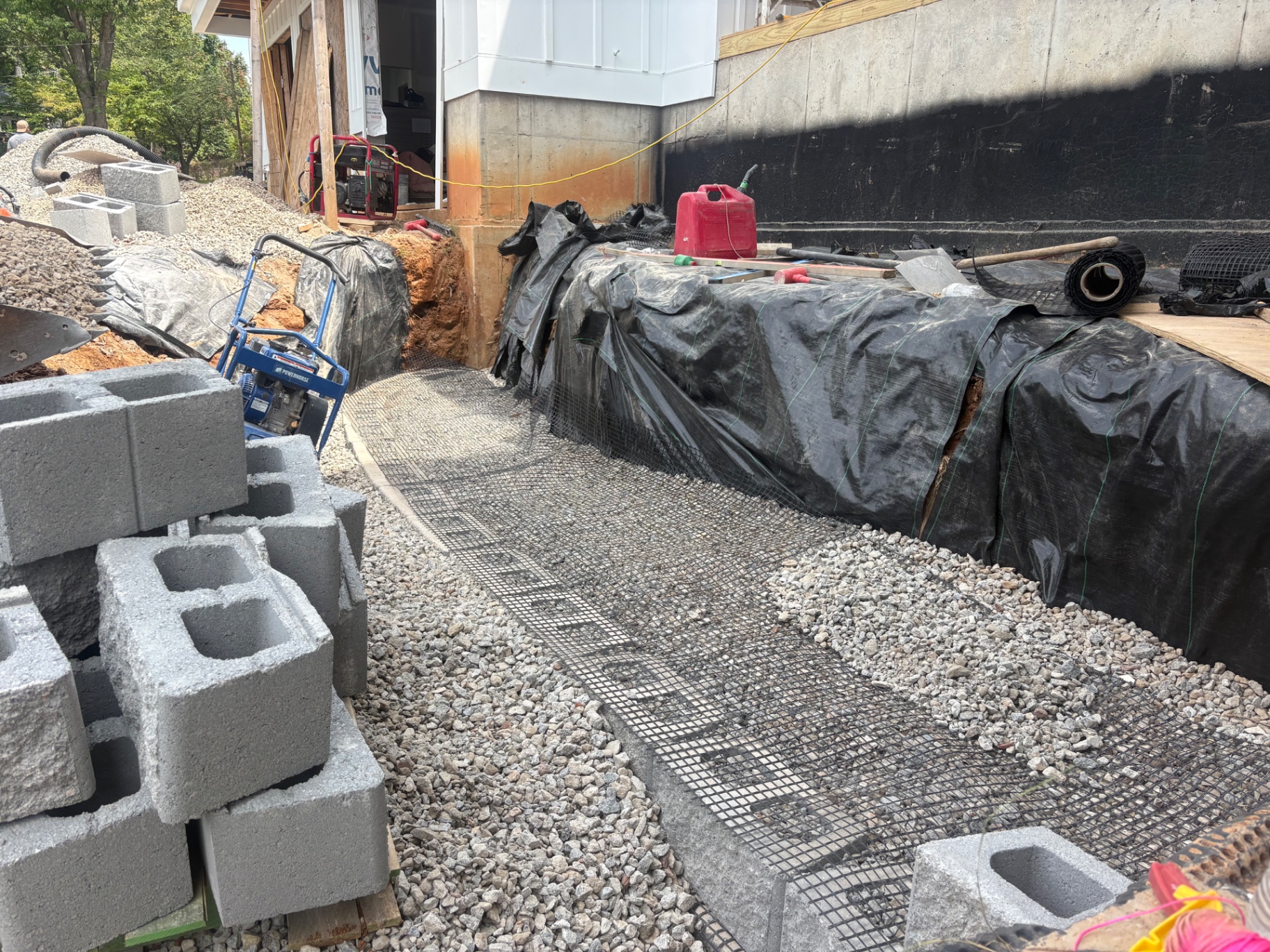
The uncomfortable version of this conversation: a wall built without base preparation or drainage cannot be brought up to standard from the front. Both are behind and beneath it, and reaching them means dismantling the wall.
Why patching a drainage failure never holds
Resetting the bulged courses and re-laying the caps makes the wall look correct again. Nothing about the water has changed, so the pressure returns with the next wet season and the wall bulges again — often faster, because the backfill has already been disturbed.
The same applies to face repairs on a wall that is washing fines through its joints. The fabric is behind the wall; the joints are the symptom.
If a contractor proposes a cosmetic fix for a wall that is bulging, ask what is being done about the water. If the answer is nothing, you are buying a delay.
What to do now
Take photographs and note the date, then check the same view in a few months. Movement that is progressing needs attention sooner than movement that stopped years ago.
In the meantime, remove the cheap contributors: redirect any downspout discharging near or above the wall, clear the drainage outlet if there is one, and keep vehicles and stored material off the ground above the wall.
If the wall supports a driveway, a structure or anything whose failure would be dangerous, get it looked at now rather than after the next wet spell.
Southern Style Turf & Design assesses failing walls across Lake Norman and gives a straight answer on repair versus replacement. Free on-site estimate, written quote.
Helpful outside reference
Design and installation guidance for segmental retaining walls comes from the National Concrete Masonry Association.
Frequently asked questions
Should I repair or replace a failing retaining wall?
Repair a localised failure in a wall that is otherwise straight, level and drained. Replace when there is no drainage system, no adequate base, rotted timber tiebacks, or movement along the whole length.
What does a bulging retaining wall mean?
Water pressure. The drainage behind the wall is missing, clogged or has no outlet, so water accumulates and pushes the wall outward part way up its height.
Why is my retaining wall leaning?
Usually insufficient reinforcement for its height, too little setback, or a base course not buried deep enough to resist pressure at the toe.
Can a wall be repaired without fixing the drainage?
It can be made to look right, but the water is unchanged, so the same failure returns — often sooner, because the backfill has been disturbed.
Want this looked at on your property?
We give free, no-pressure on-site estimates across Denver, Mooresville, Cornelius, Davidson, Huntersville and Troutman.