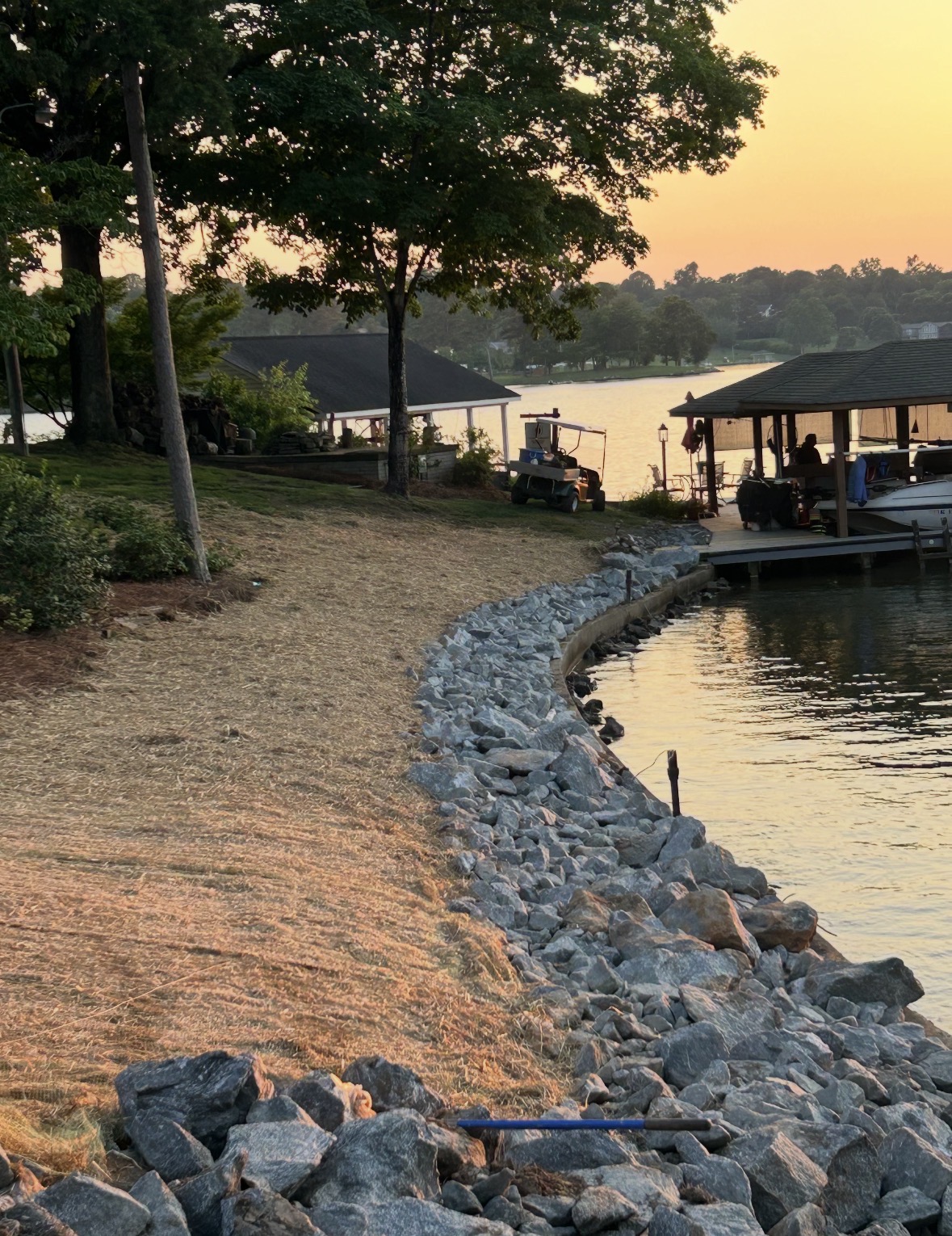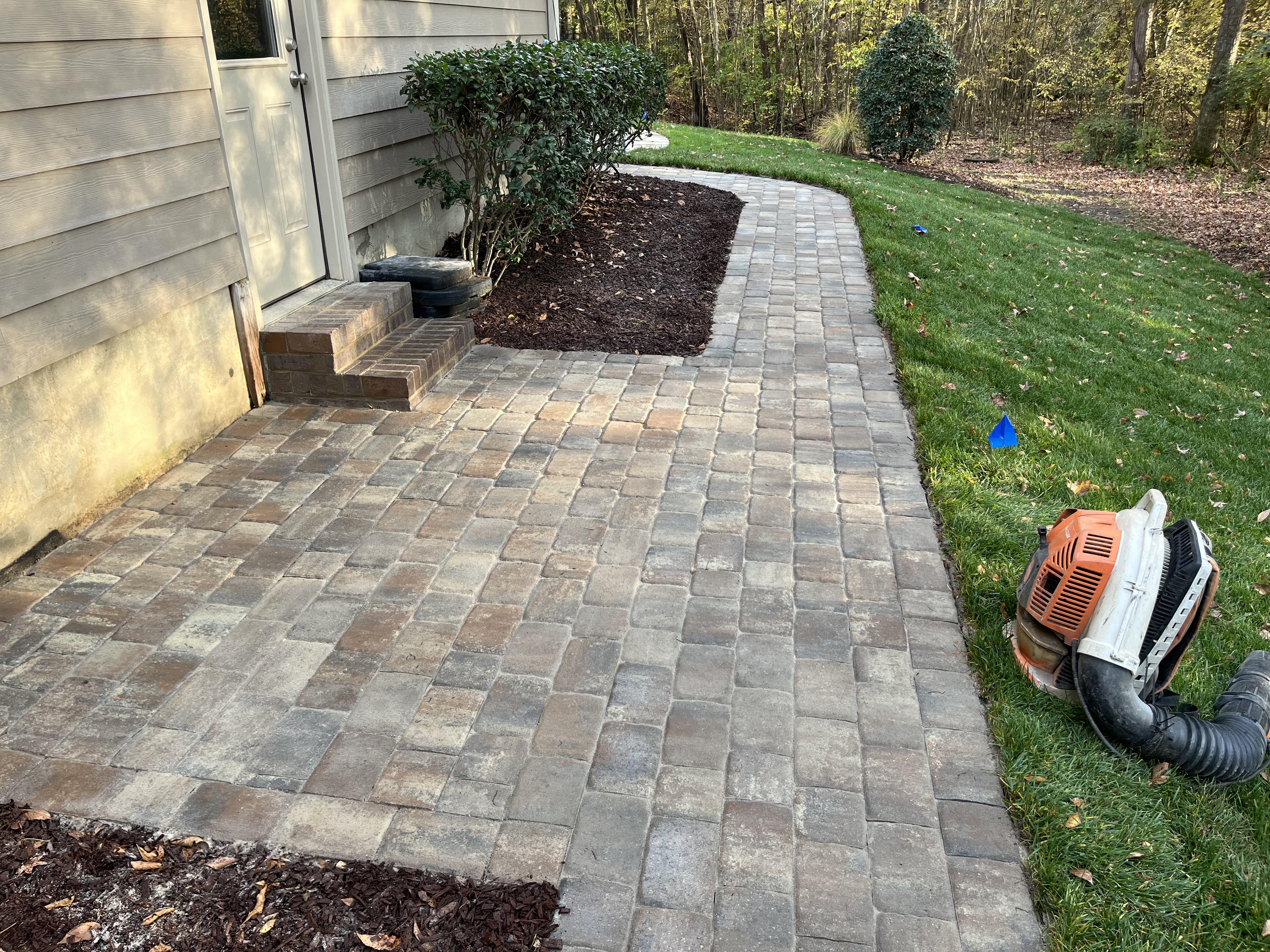
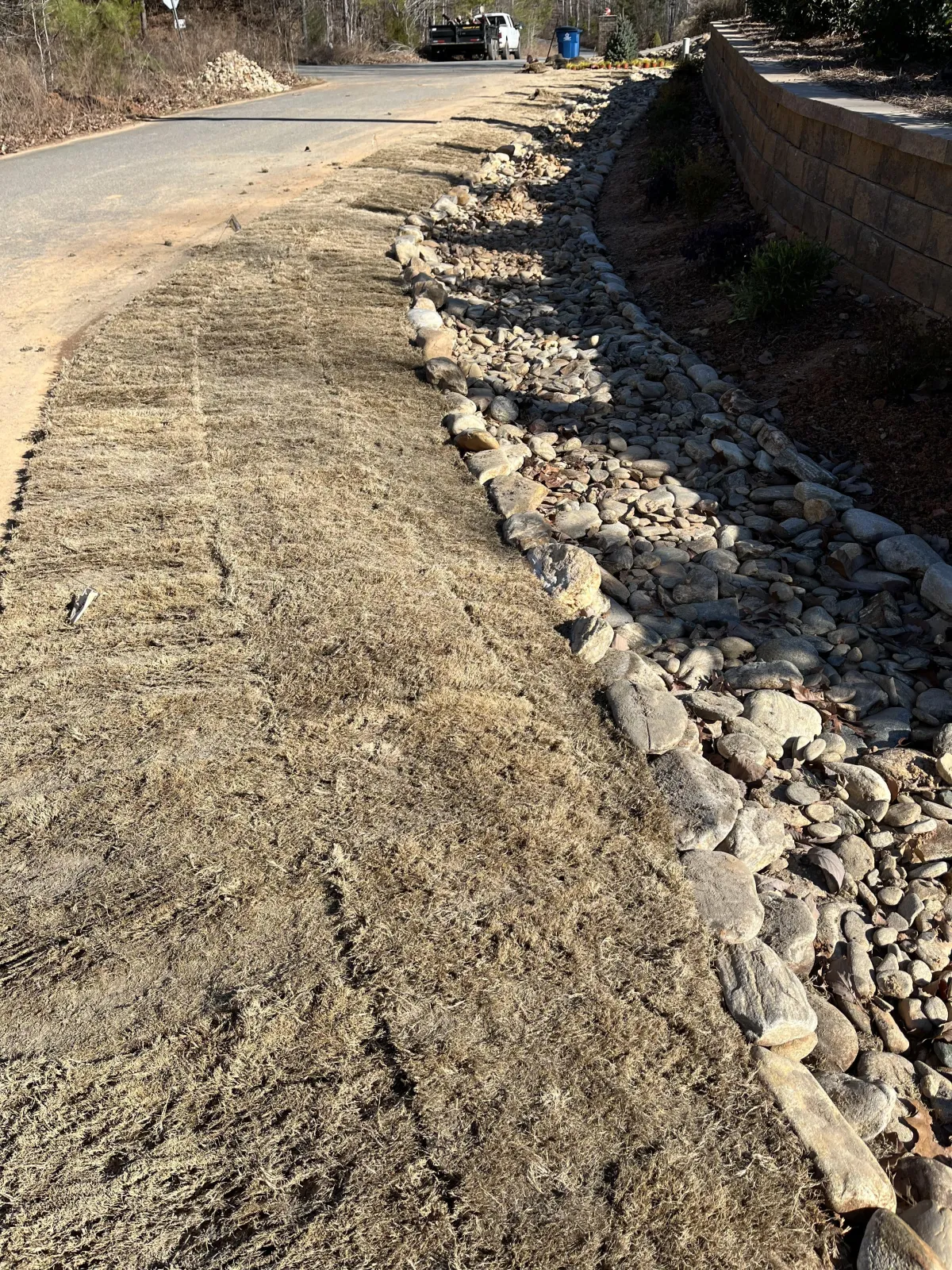
The strip between the house and the property line is the most neglected part of most yards, and often the wettest. It has particular problems and particular solutions.
Why side yards stay wet
They are narrow, so two roof planes and two downspouts often drain into a small area.
They are shaded by the house for much of the day, so soil dries slowly and grass never establishes properly.
They frequently have little fall along their length, and neighbouring lots may drain into them.
Air movement is poor between two structures, which keeps everything damp longer.
Bare, compacted soil and thin grass then make the surface hold water instead of absorbing it.
Drainage in a tight space
Start with roof water: pipe both downspouts underground through the side yard to a real outlet at the front or back.
A shallow swale down the centre works where there is enough width and fall to shape one.
Where there is not, a French drain along the length collects and carries water out to a lower point.
A catch basin at a low spot, tied into the same line, deals with any remaining ponding.
Excavation access is the practical constraint — narrow side yards often mean hand digging or a compact machine, which affects cost.
Stop trying to grow lawn there
Grass in deep shade on damp compacted soil is a losing fight, and thin grass makes drainage worse.
A gravel or stepping stone path down the middle gives clean access and lets water through.
Mulch or a shade-tolerant groundcover on either side covers the soil and holds it in place.
Where the space is used for bins, tools or equipment access, surface it deliberately for that purpose.
Keeping it from becoming a problem again
Keep soil and mulch below the siding line and away from the foundation — narrow side yards are where grade creeps up over the years.
Clear leaves, which collect in side yards and block drain grates.
Prune shrubs back from the wall to let air move.
Southern Style Turf & Design solves narrow side-yard drainage across Mooresville, Denver, Cornelius, Davidson, Huntersville and Troutman, including underground downspout lines and French drains in tight access.
Frequently asked questions
Why is my side yard always muddy?
Usually a combination of roof water discharging there, deep shade, compacted soil and little fall along the length.
Can I put a French drain in a narrow side yard?
Yes, and it is often the best option. Access limits the equipment that can be used, which affects the cost.
What should I do with a side yard where grass won't grow?
Stop fighting it. A stone or gravel path with mulch and shade-tolerant groundcover on either side works far better.
Want this looked at on your property?
We give free, no-pressure on-site estimates across Denver, Mooresville, Cornelius, Davidson, Huntersville and Troutman.