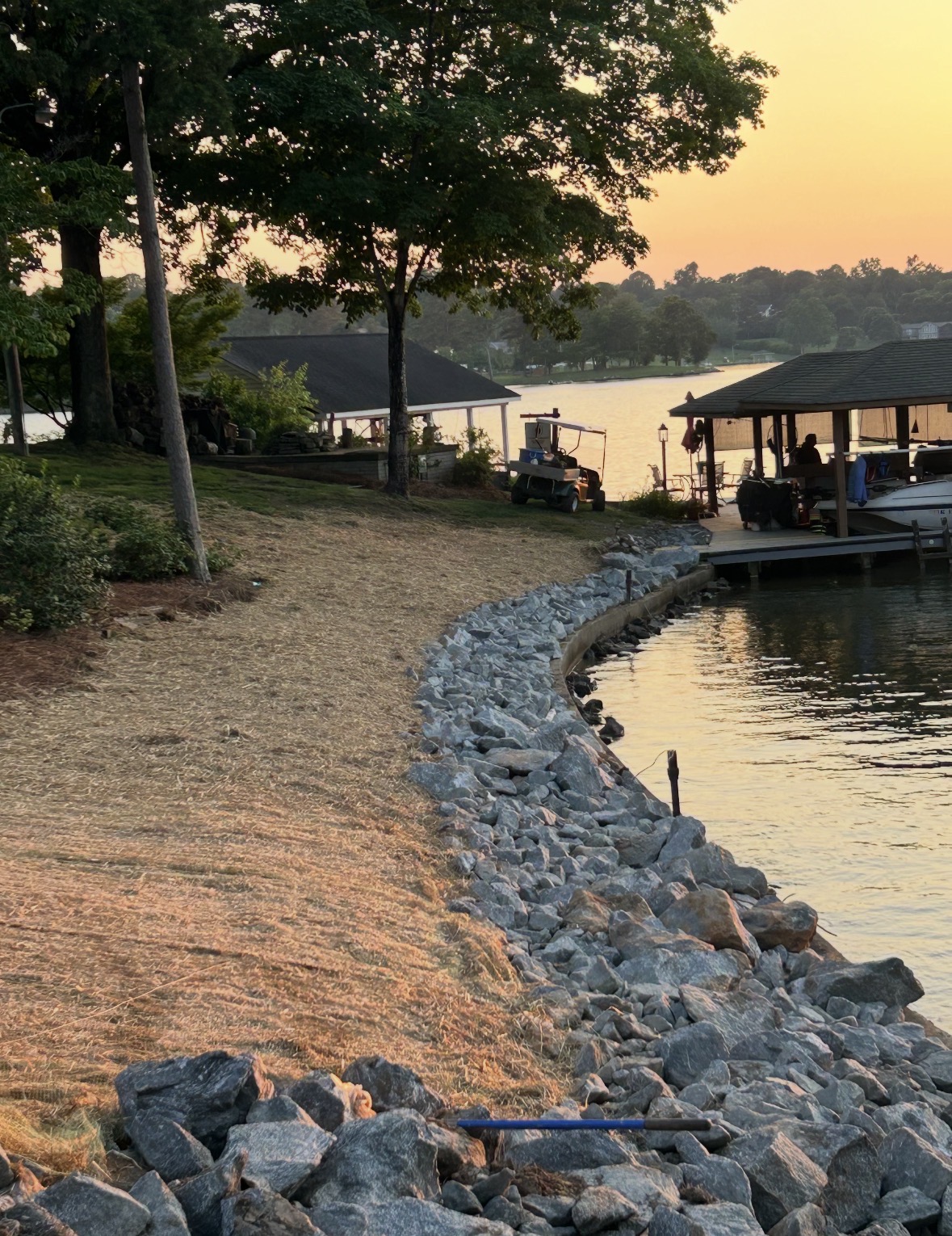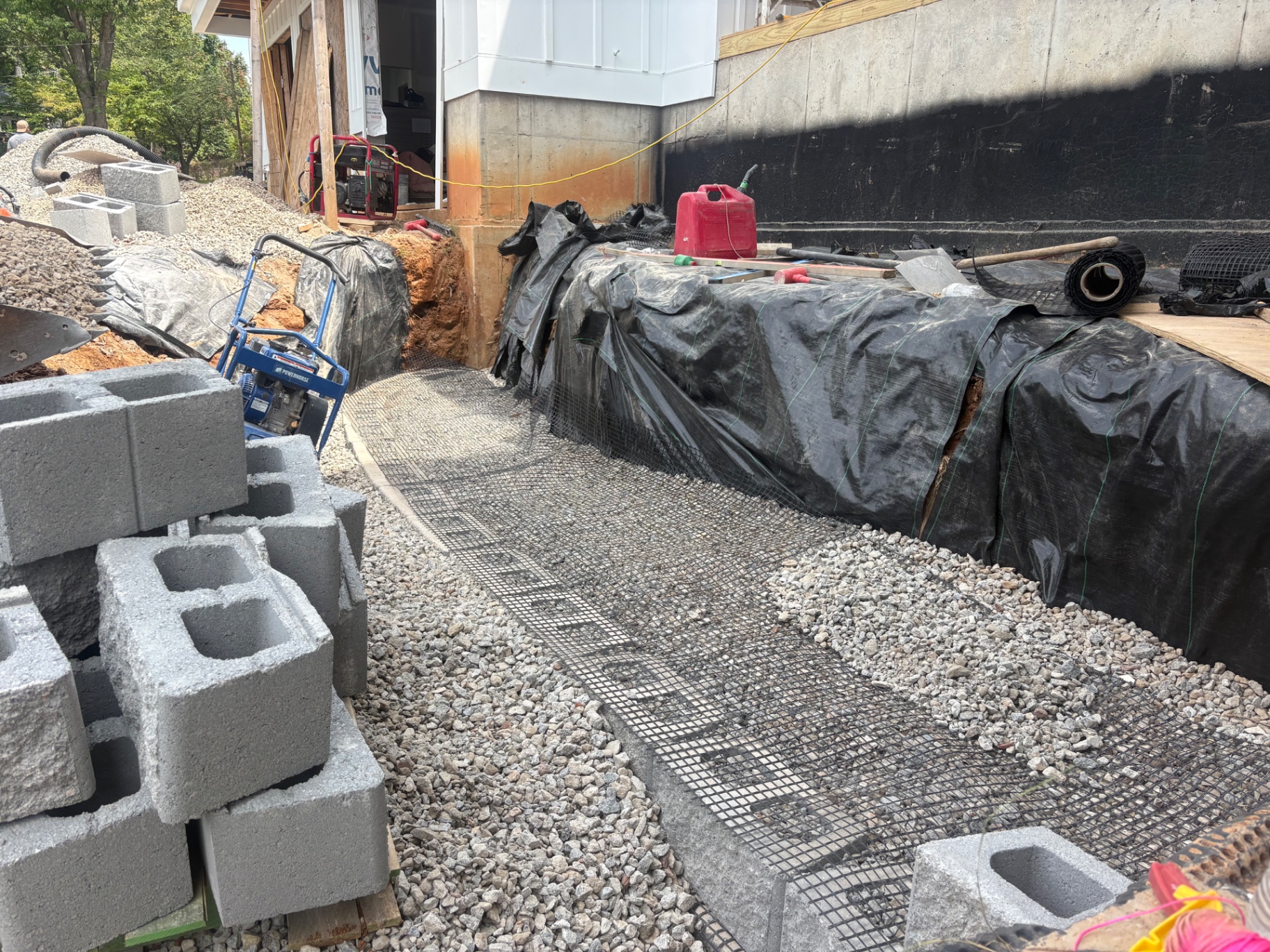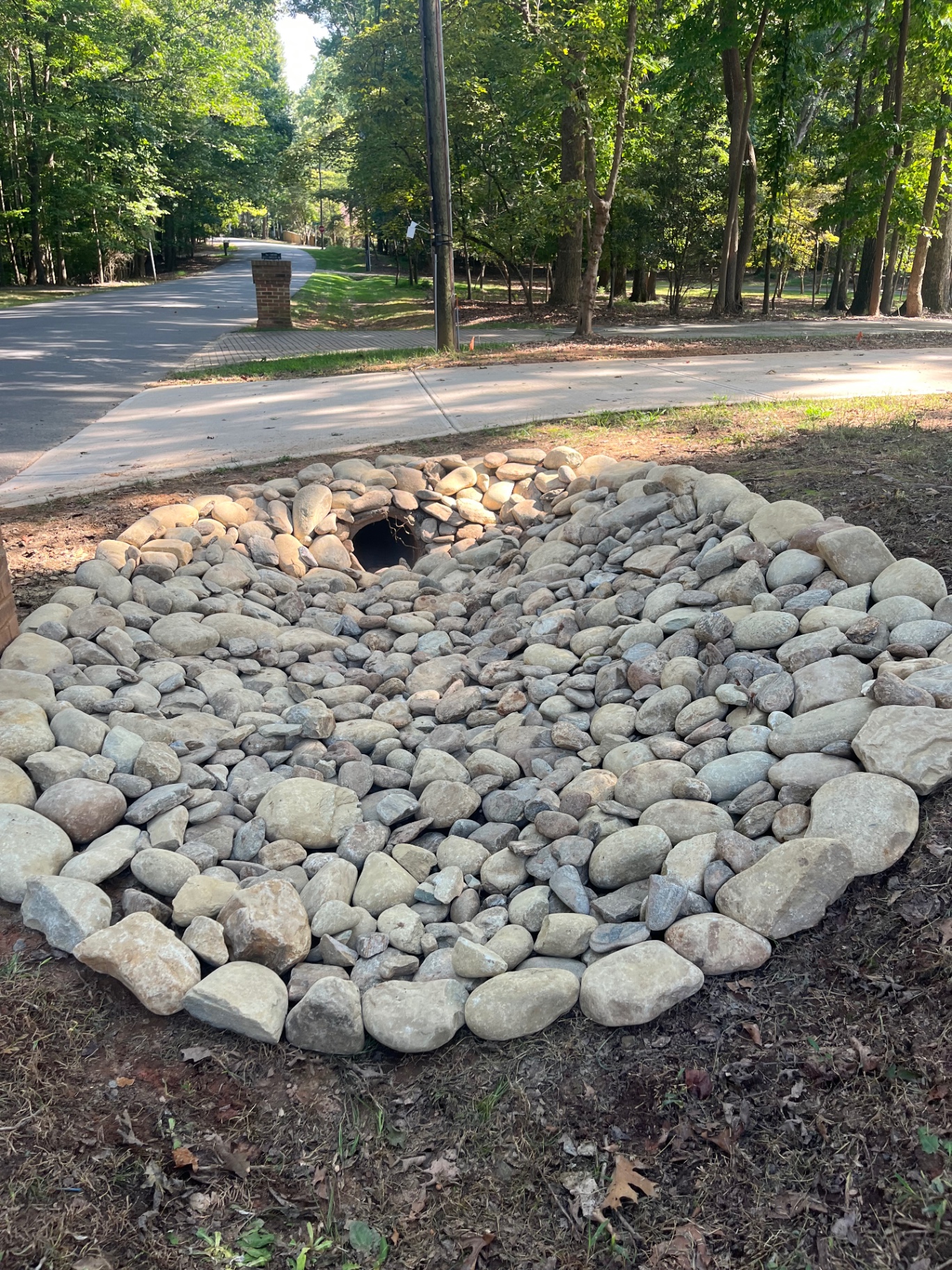
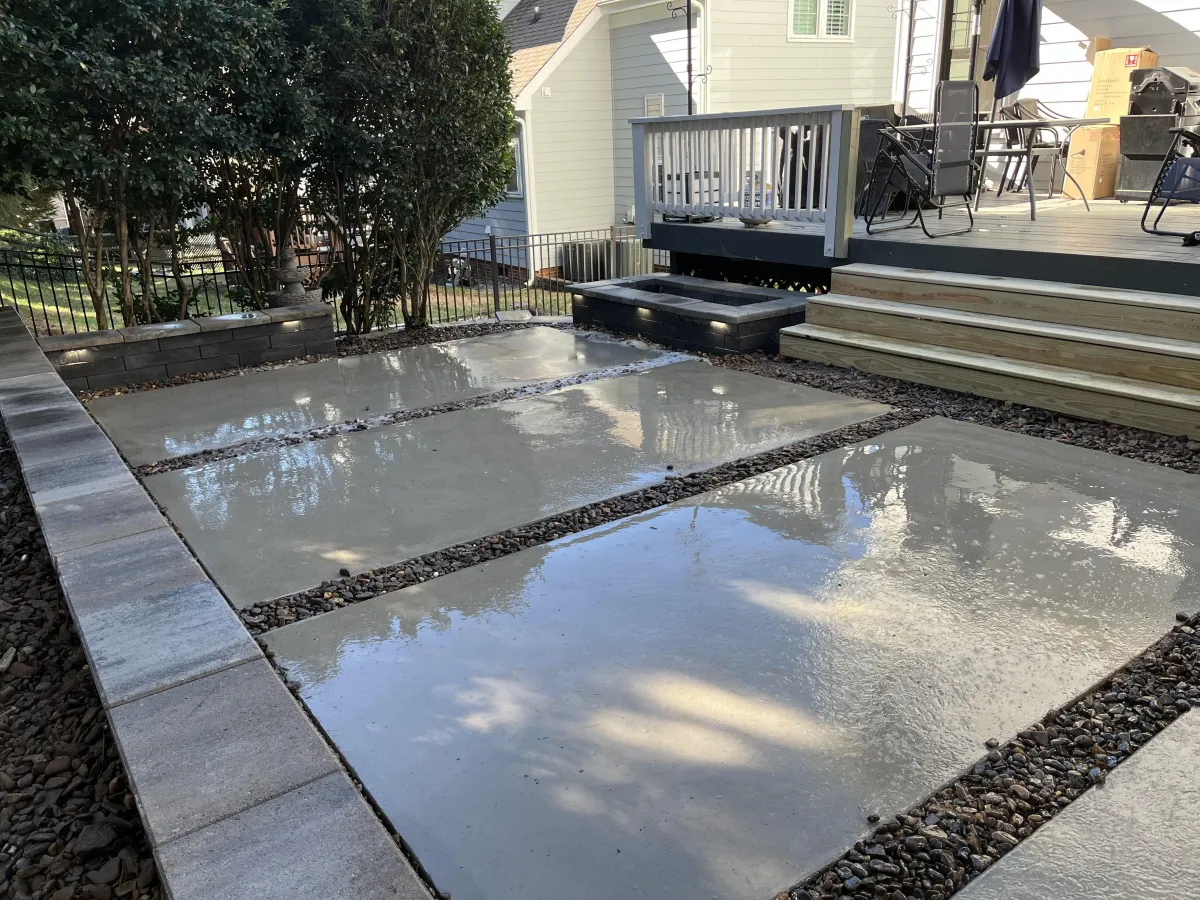
There is no universal depth. The depth of a French drain is set by two things: what you are trying to intercept, and how much fall you have to the outlet.
Typical depths by purpose
A surface-water drain catching runoff in a lawn may only need 12 to 18 inches. A drain intercepting subsurface water moving down a slope usually runs 18 to 24 inches. A footing or perimeter drain protecting a foundation goes deeper, down near the footing elevation.
Slope decides the rest
A French drain needs continuous fall to its outlet — roughly a 1 percent grade, or about an inch of drop every 8 to 10 feet. On a long run that adds up, so the trench gets progressively deeper as it travels. The start depth is often dictated by working backwards from the outlet.
If the outlet is higher than the low end of the trench, the drain will hold water instead of shedding it. That is why we shoot elevations before we dig anything.
Trench build-up that matters
Depth alone does not make it work. A drain that lasts includes:
- Filter fabric lining the trench, lapped over the top of the stone.
- Clean washed drainage stone — not screenings, not crusher run.
- Perforated pipe, holes down, bedded in stone not soil.
- Continuous fall to an outlet that daylights or ties to an approved discharge.
Common mistakes on Lake Norman lots
Digging deeper than the outlet allows, wrapping only the pipe in a sock instead of lining the trench, and using fine stone that clogs. On tight clay, an unlined trench silts in fast and the homeowner assumes French drains just do not work here.
Helpful outside reference
For background on why hard surfaces send more water across a yard, see the EPA guidance on urban runoff.
Frequently asked questions
Can a French drain be too deep?
Yes. If it drops below the elevation of your outlet, water collects in the trench with no way out.
Does the pipe go holes up or holes down?
Holes down. Water enters from below through the stone bed, which lets the drain start working before water rises to pipe level.
How wide should the trench be?
Commonly 12 to 18 inches for a residential drain, wide enough to bed the pipe with stone on all sides.
Want this looked at on your property?
We give free, no-pressure on-site estimates across Denver, Mooresville, Cornelius, Davidson, Huntersville and Troutman.