Piedmont winters are mild enough that a well-planned outdoor space is usable on a great many days between November and March. Most spaces are not planned for it.
Sun and wind first
Winter sun sits low and to the south. A space that is shaded in summer by the house may get good winter sun on the other side of the yard — and vice versa.
Cold air moves downhill and collects in low areas. A terrace partway up a slope is usually more comfortable than the bottom of the yard.
Blocking the prevailing winter wind matters more than adding heat. A wall, a fireplace, an evergreen screen or a solid section of pergola makes a real difference.
Deciduous trees do this well by accident: shade in summer, sun through bare branches in winter.
Heat that actually gets used
A fireplace reflects heat forward and shelters from wind, which is why it extends the season more than an open pit.
Gas fire features get used on a cold Tuesday evening; wood ones tend to be reserved for occasions.
Overhead radiant heaters under a covered area heat people rather than air and work well in the cold.
Anything under cover needs the clearances and installation the manufacturer specifies — this is not a place to improvise.
Surfaces, drainage and safety
Shaded paving stays damp in winter and grows algae, which is slippery. Choose a surface with texture and keep debris cleared.
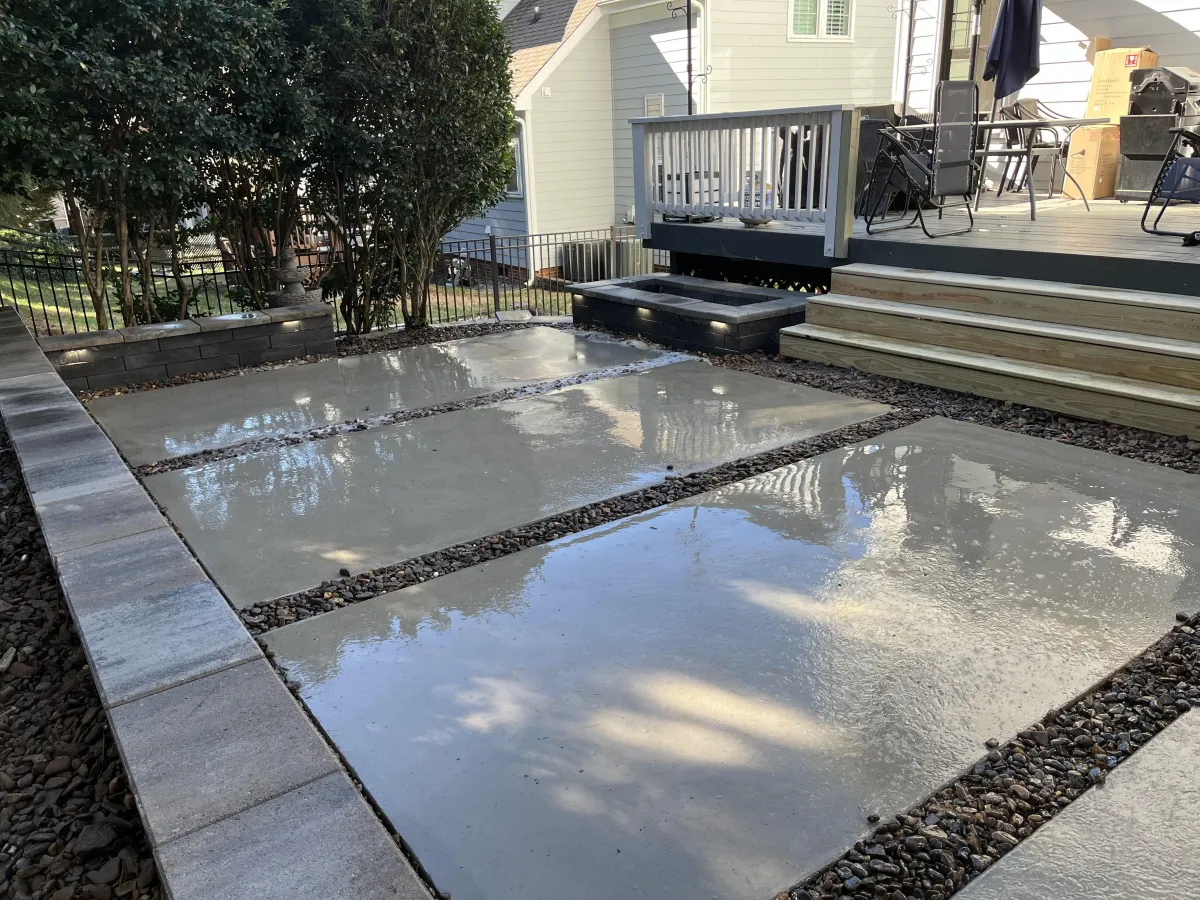
Good drainage matters more in winter than summer — standing water on a patio in January is both unusable and a freeze risk.
Use sand rather than de-icing salt on newer concrete.
Lighting is essential: it is dark by five in December, and an unlit patio simply does not get used.
Something to look at
A yard planted only for summer looks bare from December. Evergreen structure, bark, berries and grasses left standing give the view substance.
Position the fire feature so it is visible from inside — the space earns its keep even on nights nobody goes out.
Keep a covered dry spot for firewood and cushions.
Southern Style Turf & Design designs outdoor living spaces around Lake Norman for year-round use, including shelter, lighting, fire features and winter planting structure.
Frequently asked questions
Is an outdoor space usable in a Lake Norman winter?
On many days, yes. Wind shelter, a heat source, good lighting and winter sun exposure are what make the difference.
What matters most for winter comfort?
Blocking wind. It changes perceived temperature more than any heater does.
Do patio heaters work outdoors in the open?
Radiant heaters work best under cover or in sheltered corners. In open wind they lose most of their effect.
Want this looked at on your property?
We give free, no-pressure on-site estimates across Denver, Mooresville, Cornelius, Davidson, Huntersville and Troutman.