Most homeowners who ask about retaining walls actually want one of two things: a slope that stops eroding, or usable ground that is easier to live with. A wall is one way to get there — often the right way — but it is not the only tool. Regrading, drainage improvements, deep-rooted planting, erosion-control matting, boulders, and terracing all solve real slope problems, and on the right lot they cost less and ask less of the property than a structure. The honest version of this conversation cuts both ways: alternatives are not a loophole around engineering. Steep slopes, structural loads, foundation concerns, and serious erosion still call for a properly designed wall, and sometimes a permitted, engineered one. This guide walks through each alternative, where it works in the Lake Norman area, and the point where a wall becomes the right answer.
Regrading: reshape the slope instead of holding it
The most direct alternative to a retaining wall is to make the slope gentler. Soil is cut from the top of the grade, placed at the bottom, and the whole face is laid back to an angle that holds itself, drains, and can be mown.
Regrading works when three conditions line up: there is horizontal room to spread the slope out, nothing at the top of the bank would be undermined by cutting into it, and the total height change is modest. On lots where those conditions hold, regrading is usually the better long-term answer — there is no structure, no drainage system behind it, and nothing built into the ground to eventually lean, bulge, or fail.
It also pairs naturally with the rest of the yard. A laid-back slope can carry sod, planting beds, or a walkway where a wall would have created an abrupt edge and a maintenance item for life.
Fix the water first: drainage instead of structure
A surprising share of wall requests are really drainage requests. Much slope erosion is caused by concentrated water arriving at the top of the bank — a downspout pointed at it, a driveway edge shedding sheet flow, a neighbouring lot discharging onto yours. The slope below looks like the problem; the water is the problem.
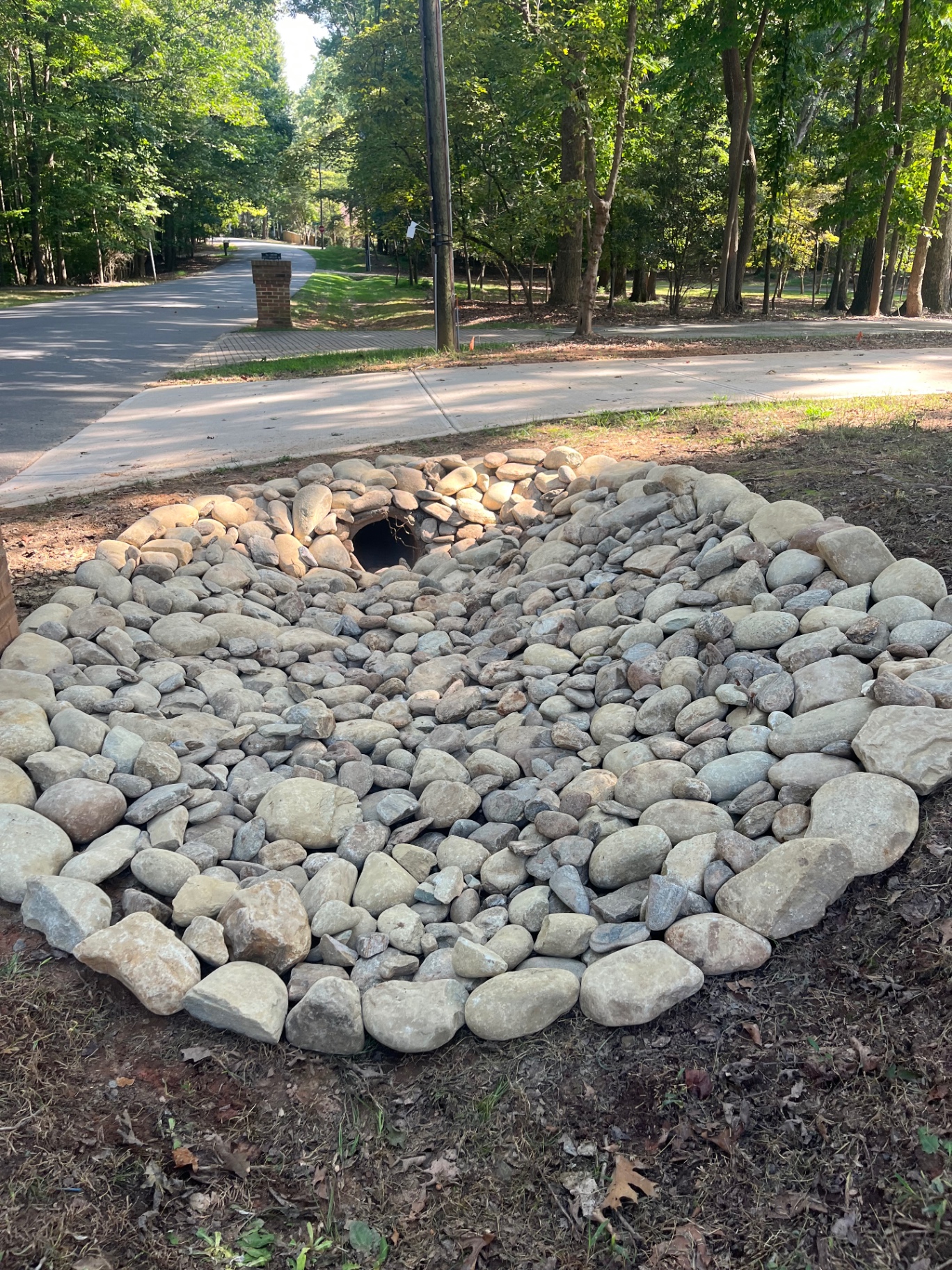
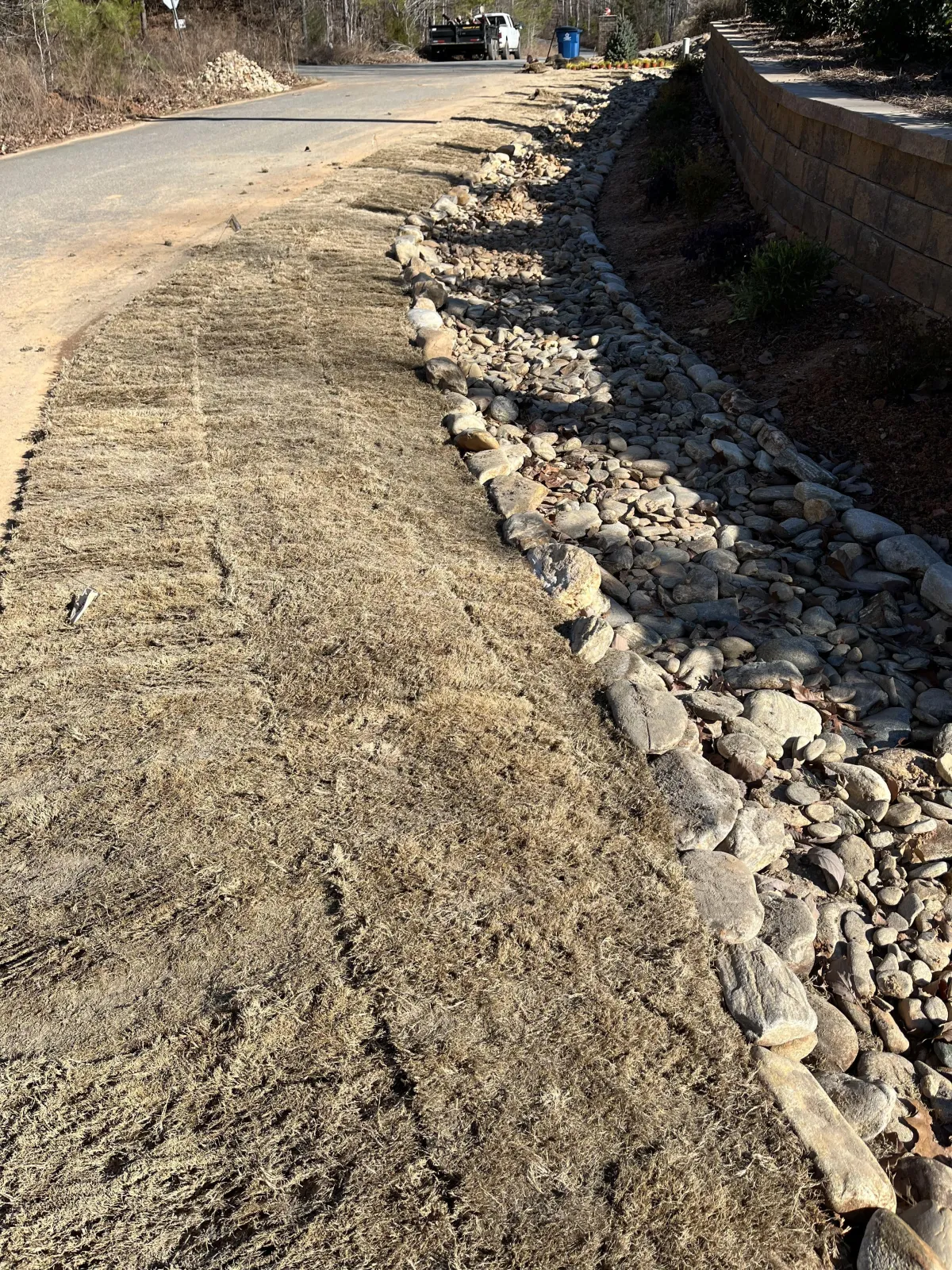
Intercepting that water and routing it to a controlled outlet is often the cheapest intervention on this list. A swale or curtain drain across the top of a slope catches runoff before it pours over the face, and the slope below frequently stabilizes with nothing further. Extending downspouts and tying roof water into a buried line keeps that volume out of the yard entirely.
Where a wall is still genuinely needed, reducing the water first still pays off: the wall handles less flow, and everything behind and below it stays drier.
Planting and erosion-control matting
Deep-rooted planting stabilizes the surface of a slope permanently. Native grasses, junipers, spreading groundcovers, and shrubs knit the top layers of soil together and slow the water crossing the face. Over a few seasons a planted bank sheds runoff gently instead of rilling.
Erosion-control matting protects the surface while that planting establishes. Biodegradable blankets pinned over seeded soil stop the first season of heavy rain from undoing the work, then break down and disappear beneath the growth.
Both tools address surface erosion. Neither addresses mass movement — a slope sliding as a body is not stopped by roots, and planting a moving slope is a way of losing the plants along with the soil. Knowing which problem you have is the whole decision.
Boulders and planted banks
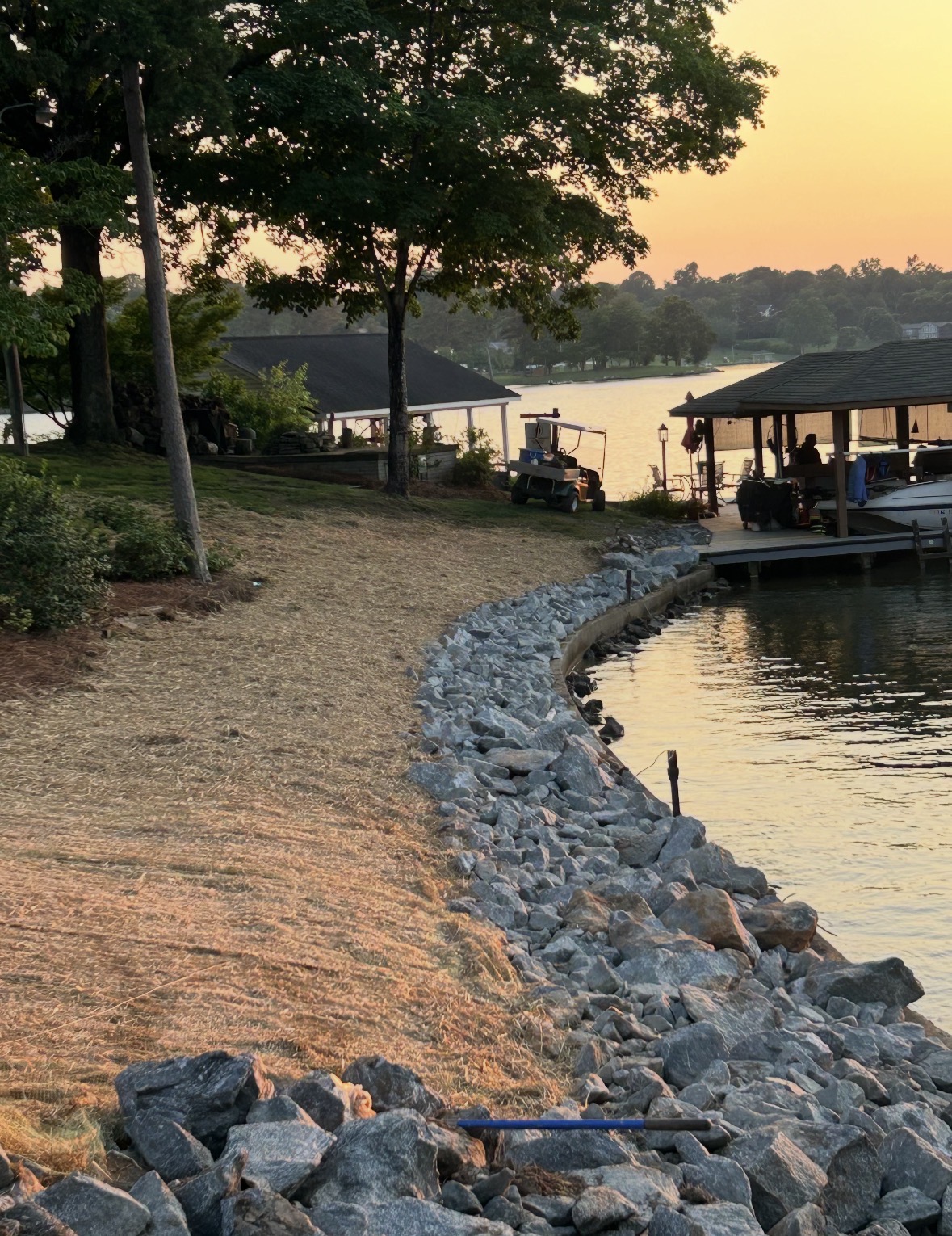
Boulder placement suits informal settings and gentle banks. Large stones set into a slope break up the length of the face, slow water, and create planting pockets — and unlike a block wall, they look at home next to a lake lot or a naturalized backyard.
Low boulder terraces and planted banks can hold a modest grade change while reading as landscape rather than construction. They are not a substitute for an engineered wall, and nobody should sell them as one, but on a small bank they do genuinely useful work.
The honest limit is height. As soon as the grade being held at any one point becomes significant, boulders become a retaining wall without the base, drainage, and reinforcement a wall would have.
Terracing: several small grades instead of one big wall
Terracing breaks a tall slope into a series of shorter, stepped grades — each one low enough to hold with planting, boulders, or a small wall. Between the terraces you gain flat, usable beds, which is often what the homeowner wanted all along.
Terracing is a real alternative, but it is not automatically unregulated. Stacked or terraced walls that create more than about five feet of cumulative grade relief within fifteen feet can trigger the same engineering review a single tall wall would, and taller terraces still need proper base, drainage, and construction behind each level.
Done well — one or two shallow terraces holding planted beds on a stable slope — it is one of the nicest ways to handle a Lake Norman backyard grade change. Done carelessly, it is several small walls failing independently.
Matching the alternative to your slope
The right alternative depends less on the plant or material and more on what your slope is actually doing. The table below matches the situations we see most around Lake Norman to the approach that usually fits.
| Your situation | Usually the better fit | Why it works | What it will not do |
|---|---|---|---|
| Gentle slope you just want easier to mow | Regrading | No structure to maintain — the laid-back grade holds itself | Needs horizontal room and nothing built at the top |
| Water pouring over the top of the bank | Swale or curtain drain plus downspout extensions | Removes the cause; the slope below often stabilizes on its own | Will not fix a face that is already unstable |
| Surface rills and washed-out mulch | Deep-rooted planting with erosion-control matting | Roots knit the surface while matting protects it through establishment | Will not stop mass movement |
| Short grade change at a patio or walkway edge | Boulders or a low planted terrace | Holds a small grade and looks like landscape, not construction | Not an engineered structure |
| Long slope where you want usable level space | Terracing with planted beds or low walls | Breaks one big drop into manageable, useful steps | Cumulative relief can still call for engineering review |
| Slope that is moving, bulging, or supporting a structure | A retaining wall designed for the load | Only a properly built structure stops mass movement | Alternatives only delay the fix — and often cost more twice |
Common mistakes homeowners make with wall alternatives
Alternatives fail for predictable reasons. The most common ones we run into on estimates around Lake Norman:
- Planting a slope that is already moving — the plants and the soil leave together.
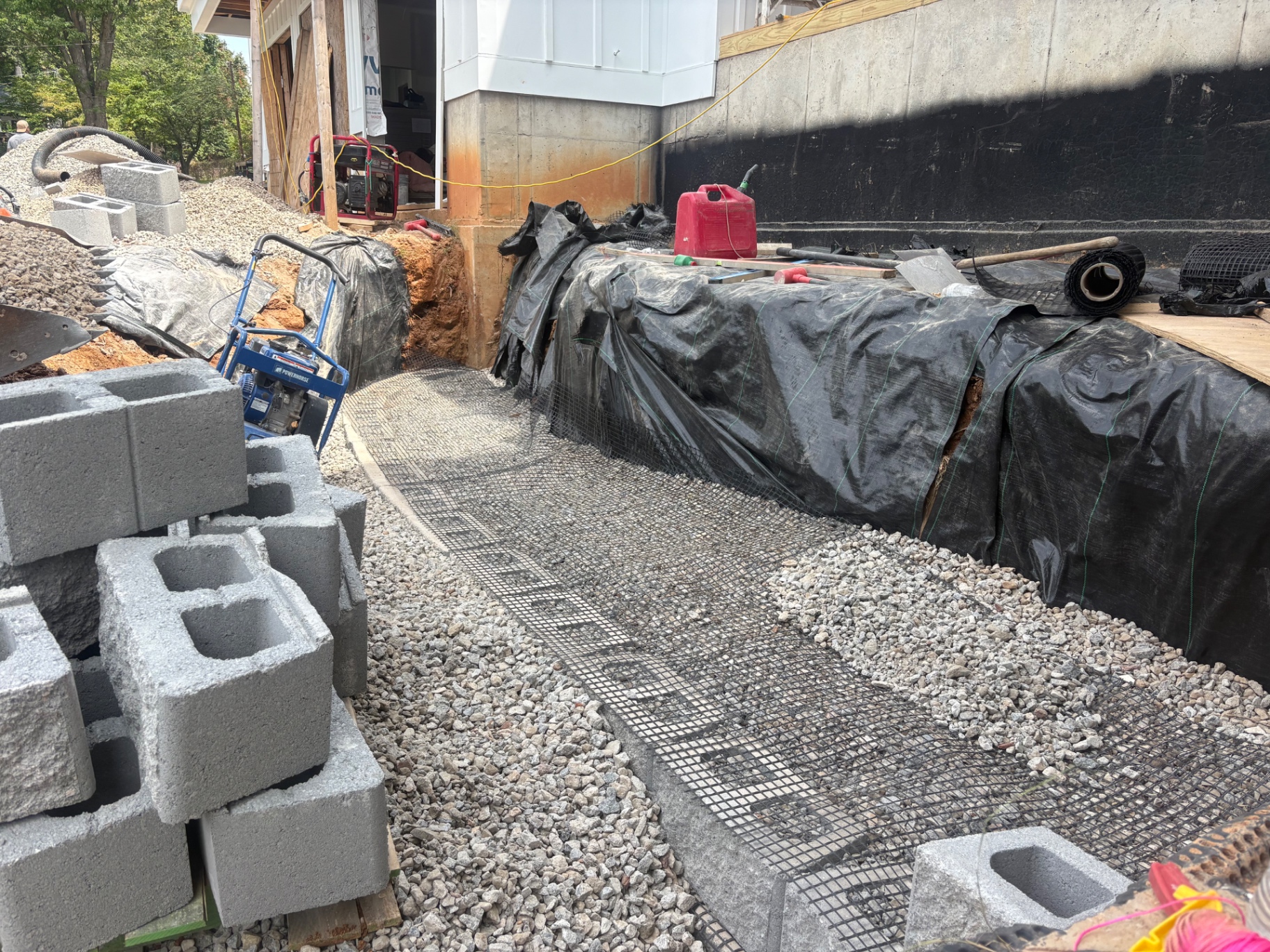
- Terracing with landscape blocks in stacked rows, without base preparation or drainage behind each level.
- Cutting into the top of a bank to regrade, undermining a patio, pool deck, or the neighbour's lot line.
- Diverting water off the slope and onto a neighbour's property or back toward the house — solving your erosion by creating a dispute or a foundation problem.
- Repeating planting-and-matting cycles on a slope that was always going to need a wall; two rounds of fixes usually cost more than the structure would have.
Lake Norman conditions that shape the choice
Local soil is the first filter. Most lots around Mooresville, Cornelius, Davidson, Huntersville, Denver, and Troutman sit on dense Piedmont clay that sheds water rather than absorbing it. That makes the drainage-first approach unusually effective here — intercepting runoff at the top of a slope does most of the work — and it also means slopes holding water stay wet, heavy, and more likely to move.
Lake lots add their own considerations. Shorelines, cove banks, and steep short lots limit how far a slope can be laid back, and some communities have HOA and municipal stormwater rules about altering grades or discharge points. On lakefront property, work near the shoreline can carry additional review, so it is worth confirming before any grade is cut.
In practice, the lots where every alternative works well tend to be interior suburban lots with a modest backyard grade and room to spare. The lots where alternatives fall short tend to be steep lakefront banks and narrow infill lots — which is exactly why the next section matters.
When a retaining wall is still the right answer
Alternatives stop being the sensible choice in specific, recognizable situations: the slope is moving as a mass; a driveway, pool, shed, or the house itself sits above or below it; a foundation is threatened by the grade; there is not enough horizontal room to lay the slope back; or you need genuinely level usable ground rather than a gentler slope.
Height and load are what turn this into an engineering question rather than a landscaping preference. Under the 2024 North Carolina Residential Code, a wall generally needs an engineered design when the unbalanced backfill exceeds five feet, when it supports a structure, when it crosses a property line, or when terraced walls create more than five feet of relief within fifteen feet — and counties commonly require a permit for walls at around four feet even before that. These thresholds are triggers to confirm with your county, not a loophole to build just under.
If you are seeing a leaning, bulging, or cracked wall rather than choosing between a wall and an alternative, the decision has already been made — the question becomes repair versus rebuild.
When to call a professional
A stable backyard slope with a modest grade change and no structures in play is a reasonable DIY-or-hire-either-way project: regrade, plant, mulch, and monitor.
Bring in a professional before you spend money when any of these are true: the slope shows scarps, bulges, or leaning trees; water is reaching your foundation or a neighbour's; the bank is taller than a few feet; anything is built above or below it; or you are weighing the cost of a wall and want an honest opinion about whether one is actually needed.
Southern Style Turf & Design will tell you when a slope does not need a wall — regrading, drainage, and erosion control are services we provide too, and we would rather solve the problem once than sell you a structure you will resent. Free on-site estimates across Lake Norman.
Key takeaways
- Regrading, water diversion, planting with matting, boulders, and terracing are legitimate alternatives to a retaining wall — on stable slopes with modest height changes.
- Drainage improvements are the best first step on almost any slope, because concentrated water is the most common cause of erosion around Lake Norman.
- Planting and matting stop surface erosion only; they cannot stop a slope that is moving as a body.
- Terracing works, but tall or closely stacked terraces can trigger the same engineering requirements as one big wall.
- Steep slopes, structural loads, foundation concerns, large elevation changes, and active erosion still require a properly designed retaining wall — sometimes engineered and permitted.
- An honest contractor should be able to tell you which situation you are in before quoting either option.
Frequently asked questions
What are the best alternatives to retaining walls?
Regrading the slope to a gentler angle, diverting water before it reaches the bank, deep-rooted planting with erosion-control matting, boulder placement, and terracing. Which one fits depends on the slope's height, stability, and what sits above or below it.
Can regrading replace a retaining wall?
Often, yes. Where there is horizontal room to lay the slope back, nothing at the top would be undermined, and the height change is modest, regrading is usually the better long-term answer — there is no structure to maintain or fail. Narrow lots and steep banks usually cannot be regraded enough.
Will planting and erosion matting stabilize a slope?
They stabilize the surface, not the mass. Deep-rooted plants and matting stop rills, washed-out mulch, and sheet erosion very effectively, but a slope sliding as a body needs a structure — planting it just loses the plants along with the soil.
Are terraces cheaper than one big retaining wall?
One or two shallow terraces holding planted beds are usually cheaper and better looking than a tall wall. But as terraces get taller or stack closely together, each level needs base, drainage, and reinforcement, and the total can approach — or exceed — the cost of a single properly built wall.
When can I not avoid a retaining wall?
When the slope is moving as a mass, when a structure or driveway sits above or below it, when a foundation is threatened, when the lot is too narrow to regrade, or when you need genuinely level ground. Walls over certain heights also need engineered design and permitting regardless of preference.
Want this looked at on your property?
We give free, no-pressure on-site estimates across Denver, Mooresville, Cornelius, Davidson, Huntersville and Troutman.