Dog owners have a specific version of the drainage problem: a yard that is not flooding, exactly, but never dries out along the fence line, at the gate, and wherever the dog runs the same path every day.
Why dog yards turn to mud
Two things happen at once. Repeated traffic compacts the soil so water infiltrates more slowly, and the turf wears thin so there is nothing left holding the surface together.
Our Piedmont clay makes both worse. Compacted clay drinks water very slowly, so even a moderate rain leaves standing water on a well-used path for days.
Fence lines and gates concentrate traffic into narrow strips, which is why the damage shows up there first. Our article on compacted soil and lawn health explains the underlying mechanism.
Fix the water before the surface
If roof water, a neighboring slope, or a low spot with no outlet is feeding the area, no surface will stay dry. Start by watching the yard during a real storm and identifying where the water arrives and where it stalls.
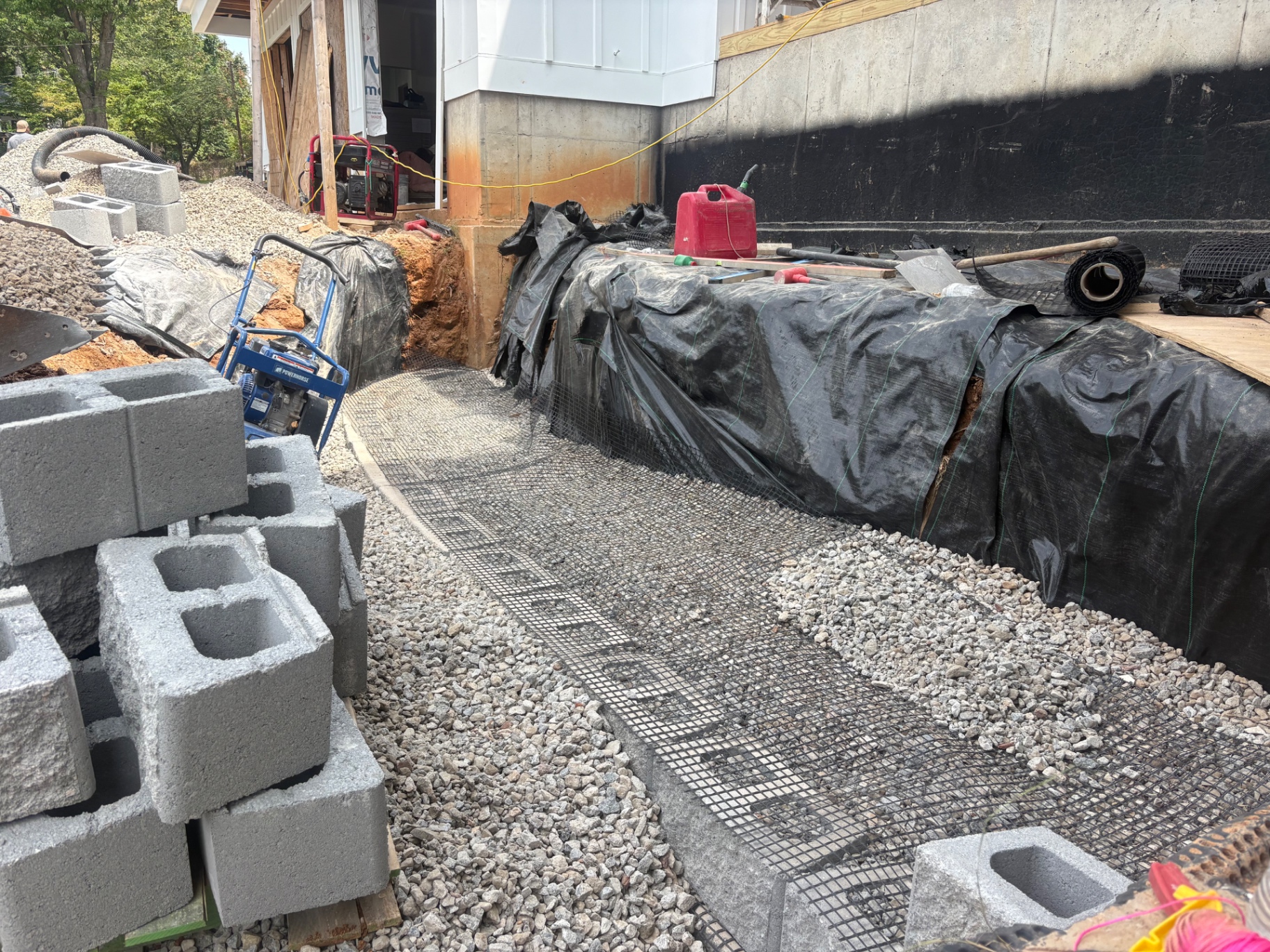
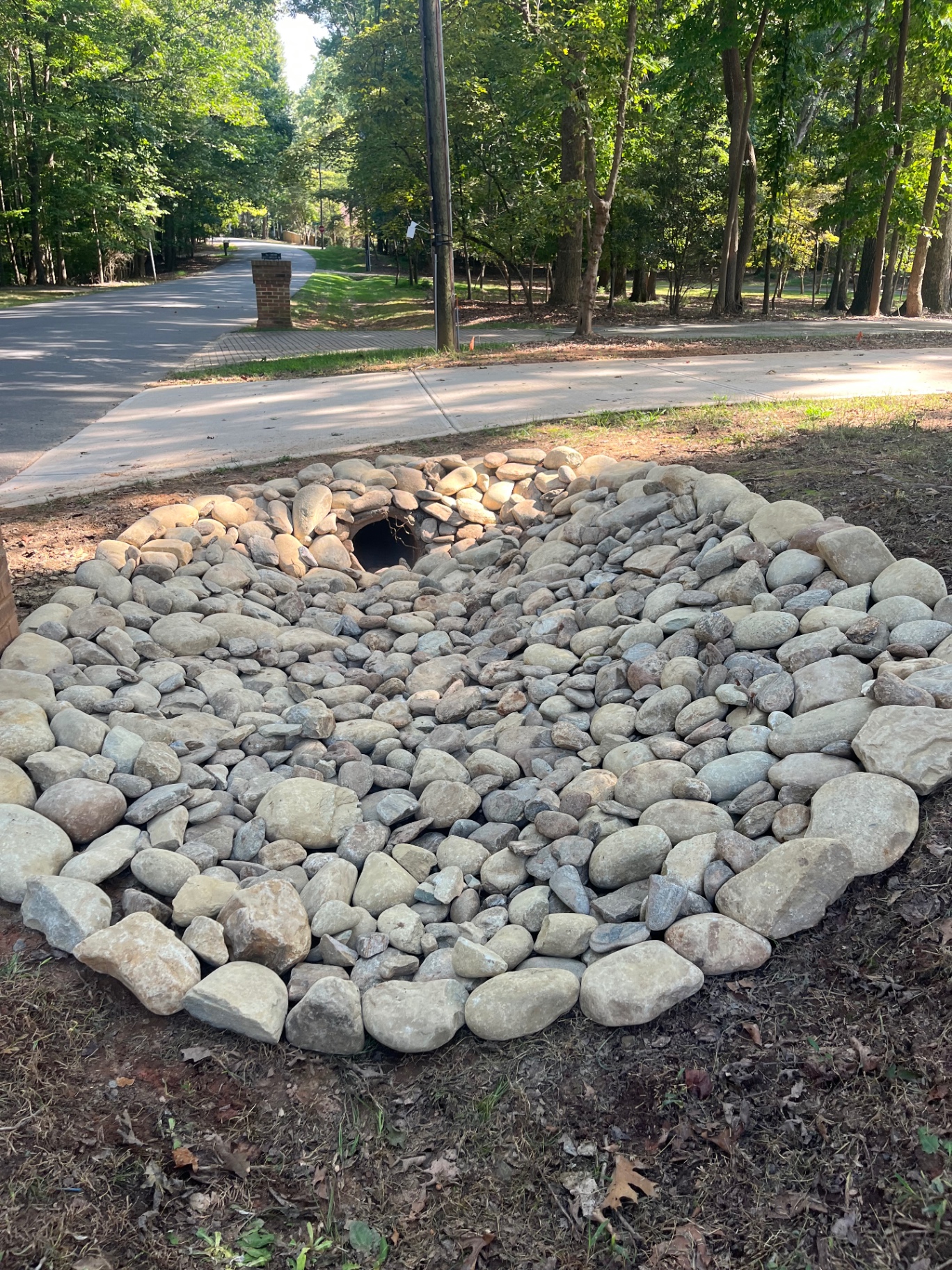
The usual first moves are extending downspouts past the dog's area, intercepting slope runoff with a swale or drain, and giving any low spot a real outlet.
Only after the water has somewhere to go does it make sense to spend money on the surface.
Surfaces that hold up to dogs
Different parts of the yard can get different treatments, which usually beats trying to make the whole lawn dog-proof.
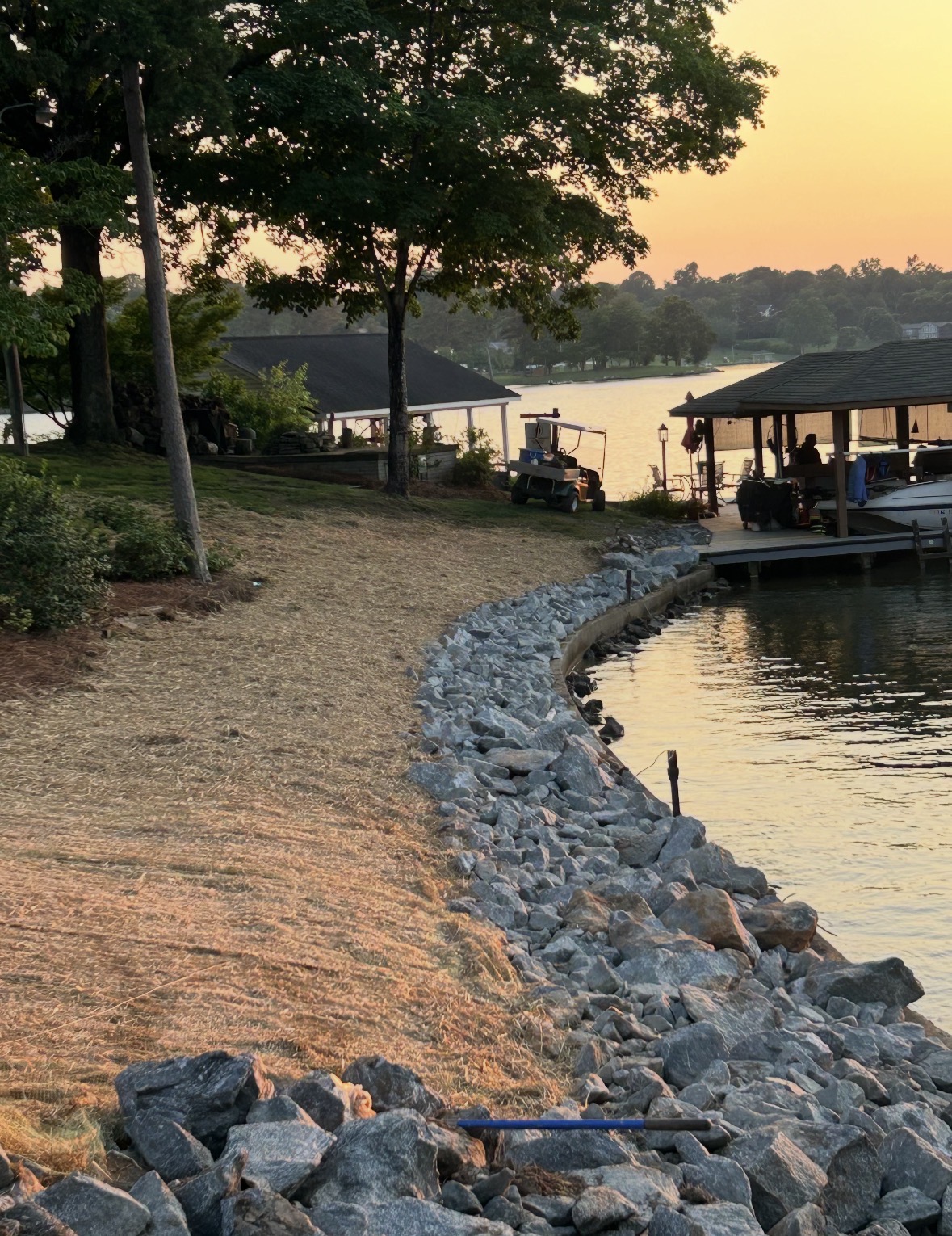
- A gravel or stone run along the fence line where the patrol path already is — drains fast, stays clean, no mud tracked inside.
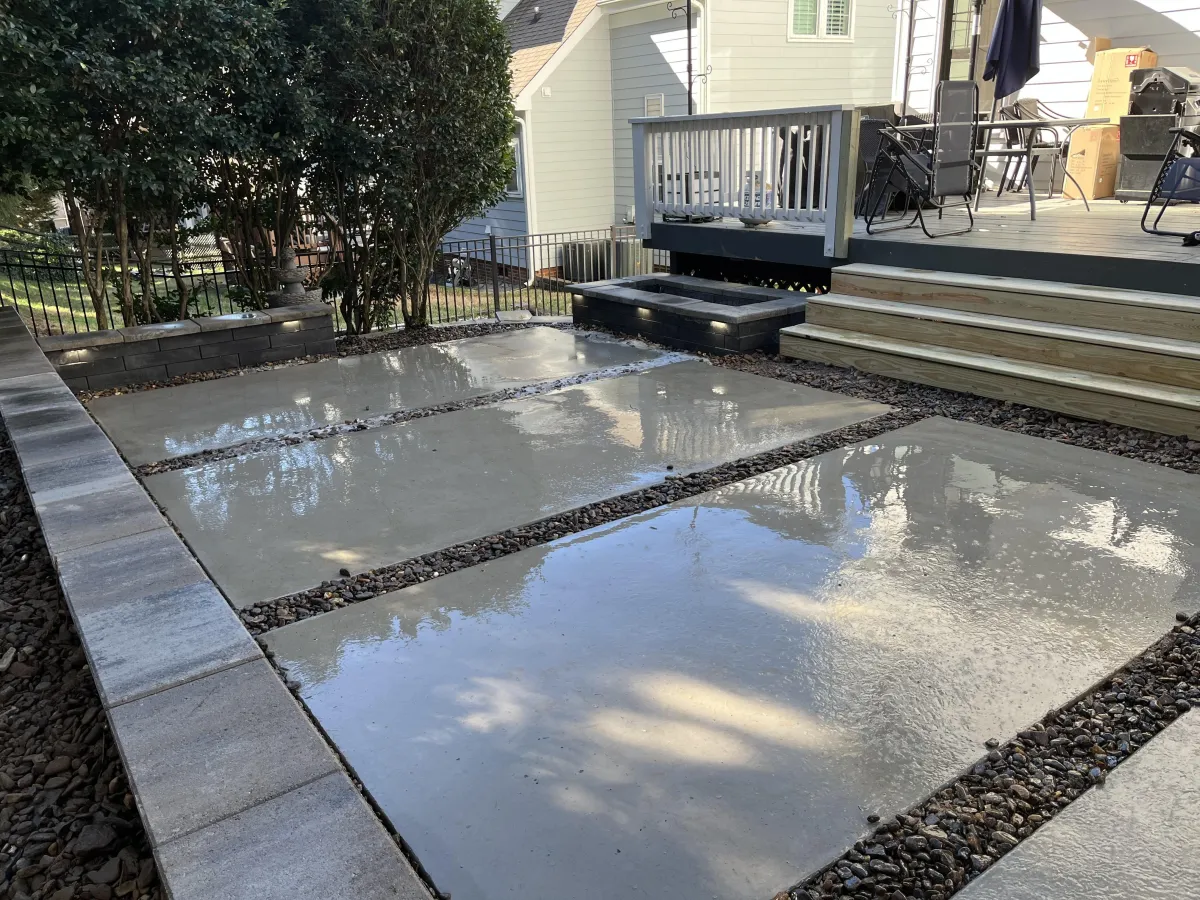
- Pavers or stepping stones at the gate and back door, the two spots that always fail first.
- Mulch paths under trees where turf was never going to survive anyway.
- Artificial turf for a defined potty or play area, which needs a permeable base under it to work.
- Warm-season turf in the open lawn, which recovers from traffic faster than fescue during the growing season.
Helping the lawn recover
Where you want turf to survive, relieving compaction is the first step — aeration opens the soil so water and roots can get in, and topdressing with compost improves the structure of clay over time.
Rotating where the dog spends time, even temporarily fencing a recovering strip, does more than any product.
Realistically, a single dog on a small yard will always keep some worn paths. Designing around those paths is more successful than fighting them.
Keeping it practical
Choose materials your dog will not eat or track indoors — fine mulch and small pea gravel are less ideal for some dogs than larger, rounded stone.
Make sure any drainage outlet is somewhere the dog is not digging, and keep grates secure where paws can reach them.
Southern Style Turf & Design fixes the drainage and grading behind muddy backyards around Lake Norman and builds the paths and pads that keep them usable year round.
Frequently asked questions
Will gravel fix a muddy dog area?
Only if the water has somewhere to go. Gravel over saturated clay with no drainage becomes gravel sitting in mud. Fix the drainage first, then add the surface.
Is artificial turf a good idea for dogs?
It can work well for a defined area when it is installed over a properly draining base, with rinsing as part of routine maintenance. Over compacted soil with no base, it holds odor and water.
Why is the mud always worst at the gate?
That is where traffic concentrates. Every trip in and out crosses the same few square feet, compacting the soil and wearing the turf away faster than it can recover.
Want this looked at on your property?
We give free, no-pressure on-site estimates across Denver, Mooresville, Cornelius, Davidson, Huntersville and Troutman.