Size the patio around the furniture and the walking room, not around a number that sounds reasonable. Almost nobody regrets building a patio slightly too large; a great many people regret one that turned out too small the first time they pulled a chair back and hit the edge.
Space a dining set actually needs, with chairs pulled out
Start from the table, then add the chair zone. A chair pulled back far enough for someone to stand up needs roughly three feet behind the table edge, and someone walking behind a seated guest needs about another foot and a half on top of that.
So a dining area is the table footprint plus around four and a half feet on every side you want to use. For a six-seat rectangular table that is a considerably larger square of paving than most people picture.
Do this on the ground before you commit. Set the actual furniture out on the lawn, pull the chairs back, walk around it, and mark the outline with paint or a hose. It takes twenty minutes and it prevents the single most common regret.
Lounge and fire pit zones
Seating around a fire pit needs clearance in front of the seats and room to walk behind them. Chairs pulled close enough to be sociable, plus a walking route around the outside, plus the pit itself and its own clearance, adds up quickly.
A lounge grouping — sofa, chairs, low table — needs enough space between pieces that people can pass, and enough space around the group that it does not feel pressed to the patio edge.
The general rule for both: leave a comfortable margin between the outermost furniture and the edge of the paving. Furniture at the very edge feels precarious and makes the patio feel smaller than it is.
Traffic paths people forget to leave room for
Every patio has routes crossing it, and if the furniture sits on one of them the space stops working.
- The door to the table. The most-used route, and the one that should never require squeezing past a chair.
- The grill to the table. Somebody carries hot food along this line.
- The patio to the lawn, and to the gate or the side path.
- Around the outside of seated guests, so people are not climbing over each other.
- Door swings, on French doors and sliders, which need clear space to open.
Why undersized patios are the most common regret
Two things drive it. Patios look enormous when they are marked out on a bare lawn and merely adequate once furniture is on them. And the last few feet of a patio are the cheapest part of the project — the mobilisation, excavation setup, base equipment and crew are already there.
Extending later is possible, but it costs more per square foot than building it right initially, and matching pavers to a surface that has already weathered is never perfect.
The practical advice: decide the size with the furniture on the ground, then add a little.
When bigger is not better
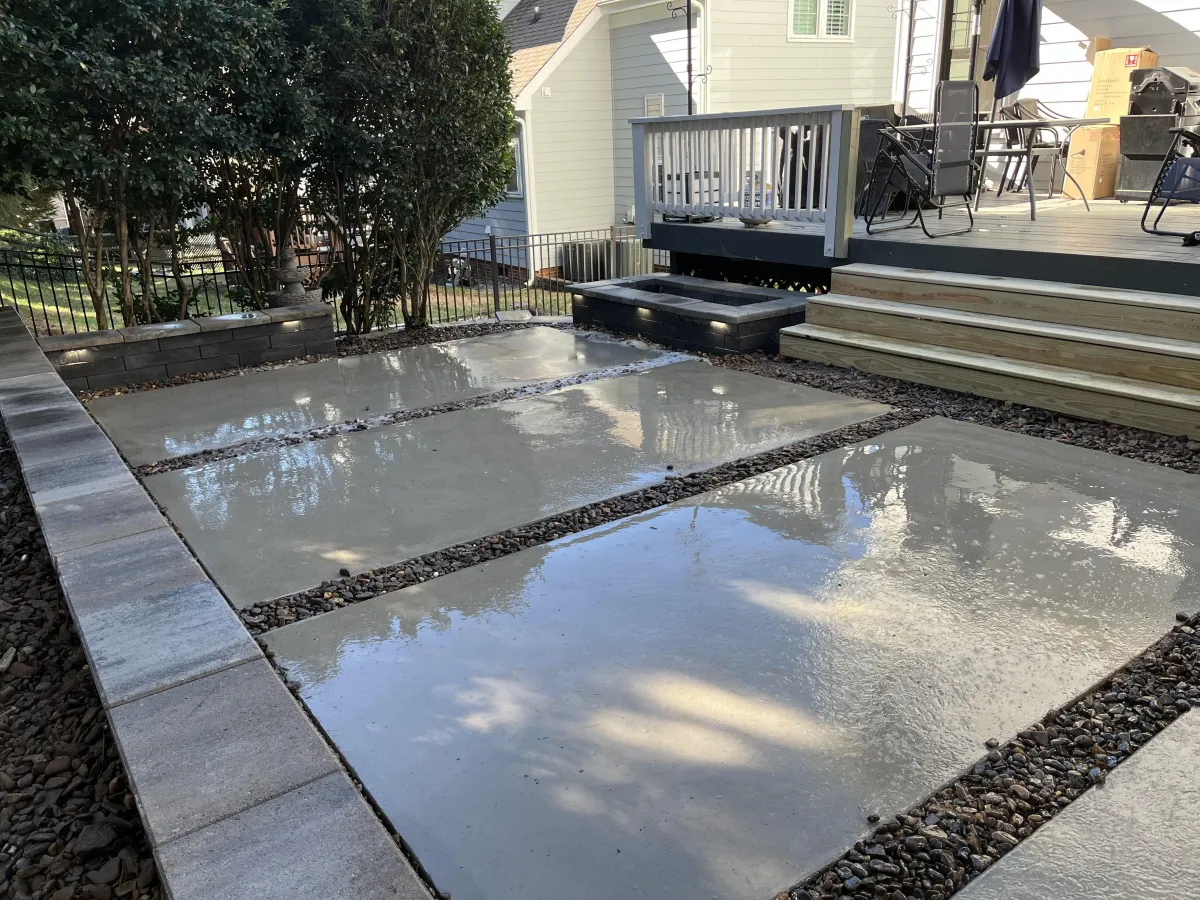
A patio that overwhelms a small yard leaves no lawn, no planting and nowhere for water to go. Proportion matters, and so does drainage — every square foot of paving is a square foot that sheds water somewhere.
On smaller lots, the better move is often a well-sized patio plus a separate small landing or path rather than one large expanse.
Southern Style Turf & Design lays out patios on site with you before quoting, furniture footprint included. Free on-site estimate across Lake Norman.
Frequently asked questions
How big should a patio be for a dining table?
The table footprint plus roughly four and a half feet on each side you use — about three feet for a chair pulled back and another foot and a half for someone to walk behind it.
How do I work out the right patio size?
Set the actual furniture out on the lawn, pull the chairs back, walk the routes you would use, and mark the outline with a hose or spray paint before anything is quoted.
What is the most common patio mistake?
Building it too small. Patios look large on bare lawn and small once furniture is on them, and the last few feet are the cheapest part of the job.
Can a patio be too big?
Yes — on a small lot it leaves no lawn or planting and sheds more water into a yard that may not have anywhere to put it. Proportion and drainage both matter.
Want this looked at on your property?
We give free, no-pressure on-site estimates across Denver, Mooresville, Cornelius, Davidson, Huntersville and Troutman.