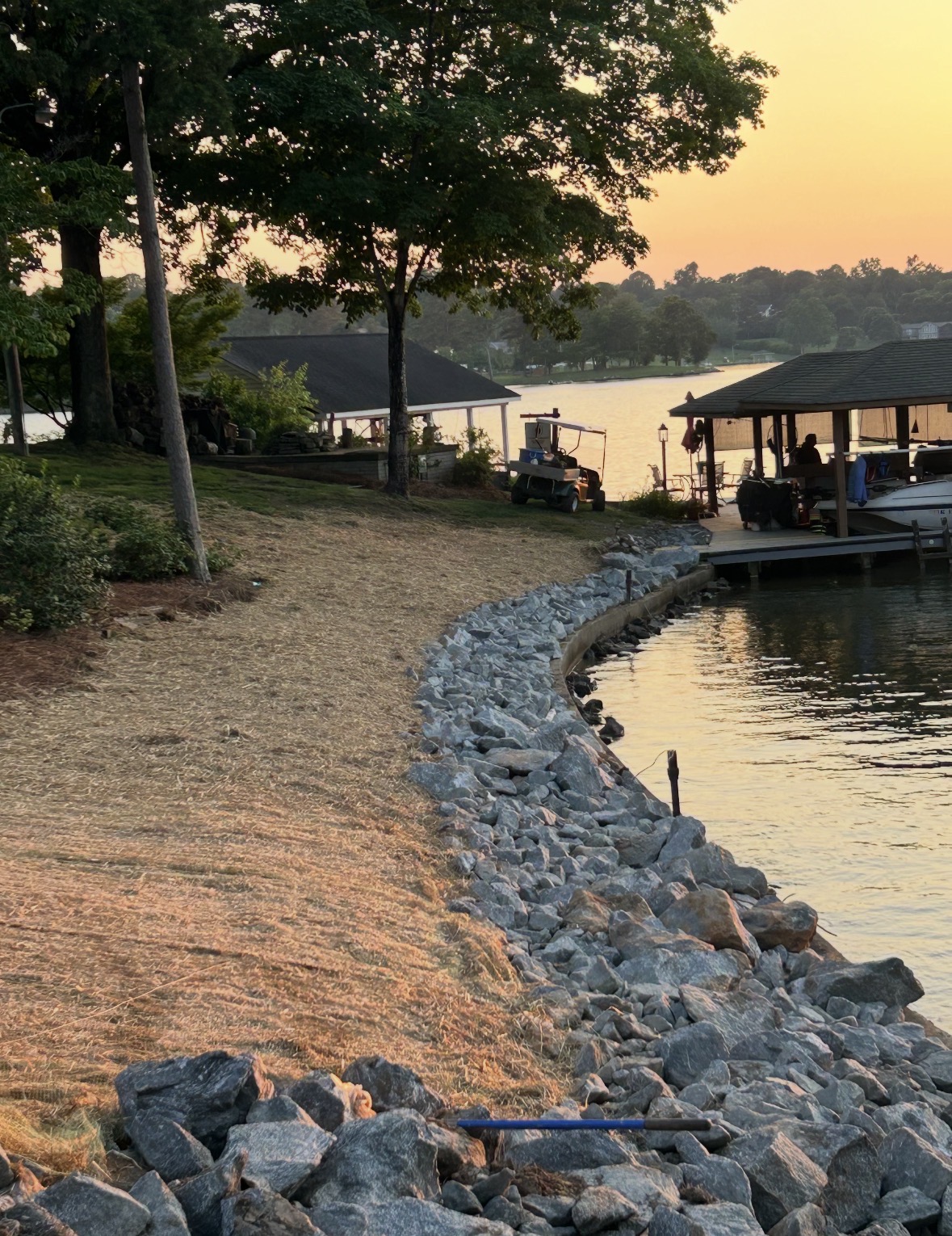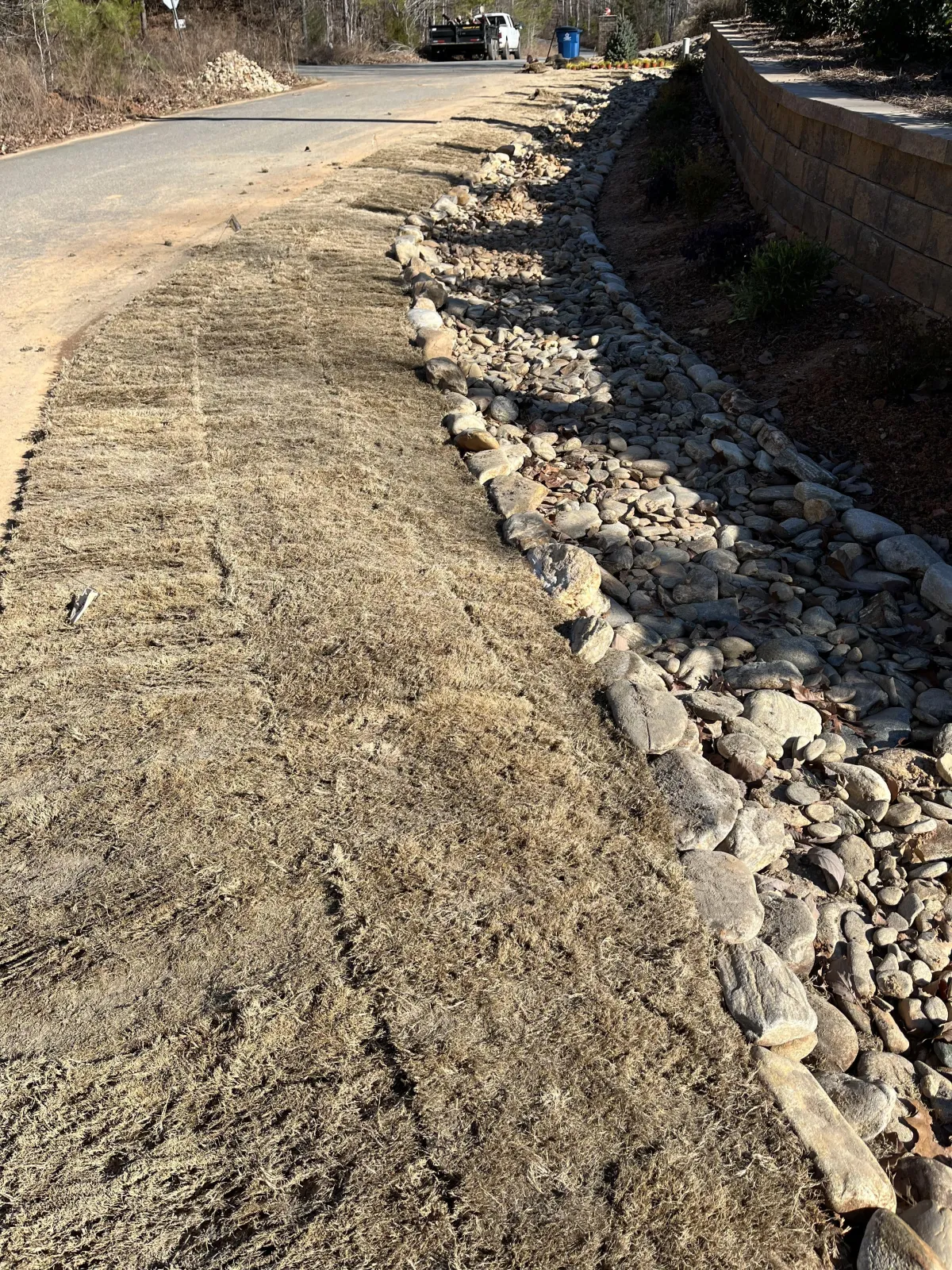
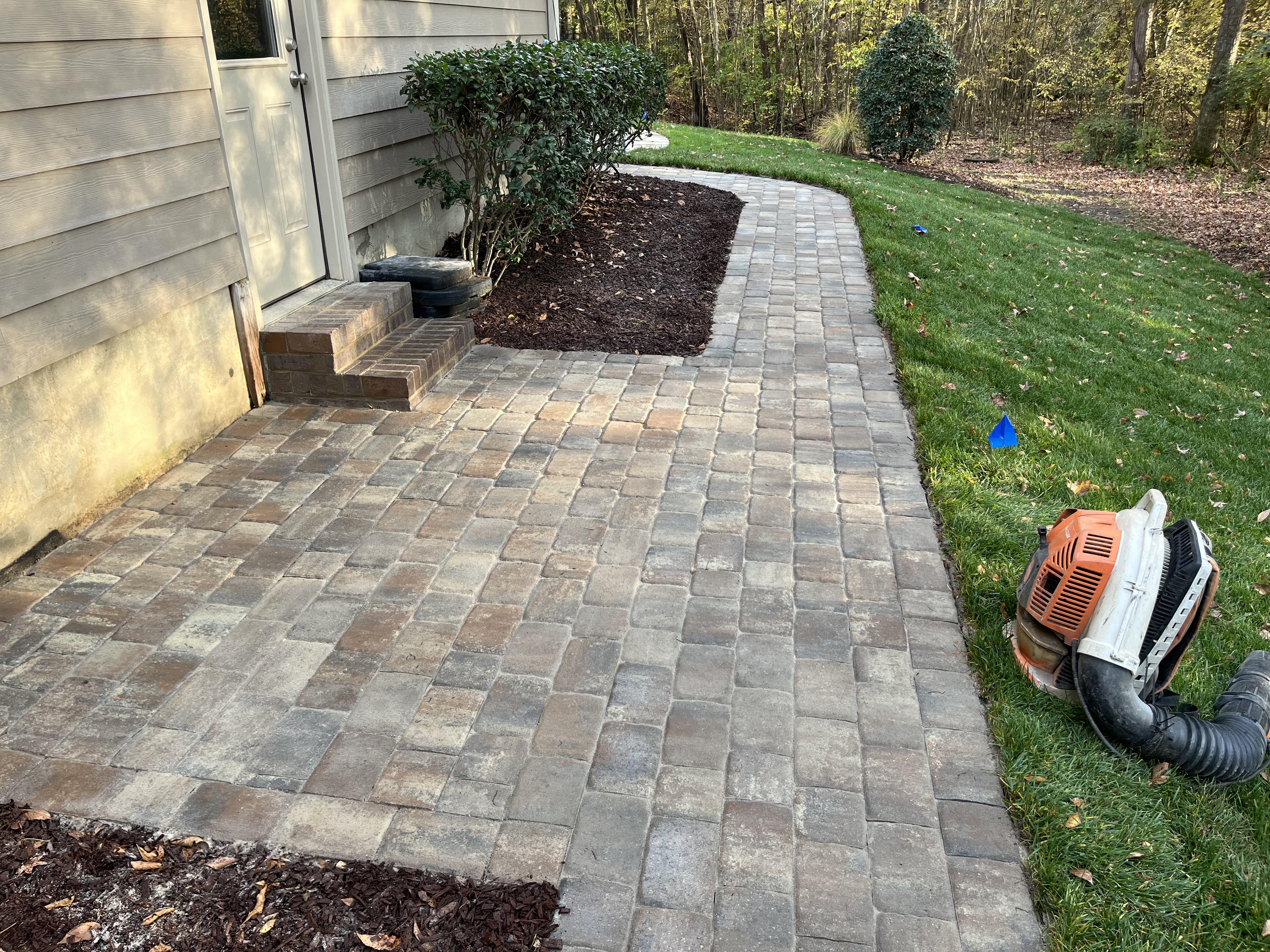
Gravel is the cheapest hard surface you can put in a yard, and in the right spot it looks better than paving. In the wrong spot it is a permanent nuisance.
Cost and installation
Gravel needs the same excavation, geotextile and compacted base as paving, then angular gravel instead of pavers on top.
Material and labour are much lower, so a gravel area is typically a fraction of the cost of the same area paved.
It goes in quickly and can be adjusted or expanded easily.
Skipping the base and fabric is what produces gravel sunk into mud within a year.
Living on it
Chairs rock and wobble on loose gravel, and dining tables never sit quite level. Angular decomposed-granite type material compacts far better than rounded pea gravel, which behaves like ball bearings.
It is hard work for wheels: strollers, wheelbarrows, wheelchairs and grill carts.
It tracks into the house and into the lawn, and it does not love bare feet.
It drains freely, stays cooler than dark paving and looks relaxed and informal under trees.
Maintenance and edges
Gravel needs a firm edge on every side — steel, stone or timber — or it migrates into beds and lawn permanently.
Expect to rake it level periodically and top it up every few years.
Weeds germinate in the dust that accumulates between stones over time; fabric underneath slows this but does not stop it.
Leaves are harder to clear from gravel than from paving — a real consideration on wooded Lake Norman lots.
Where each one belongs
Gravel: a secondary seating area under trees, a fire pit surround, a path through a garden, a utility area, a spot you may change later.
Pavers: the main patio off the house, dining areas, anywhere with furniture, anywhere wheels go, anywhere you want a permanent finished surface.
Many yards do best with both — paved where it counts, gravel for the informal areas, which stretches the budget considerably.
Southern Style Turf & Design installs both paved and gravel areas across the Lake Norman area, with the base and edging done properly either way.
Frequently asked questions
Is a gravel patio a good long-term surface?
For informal and secondary areas, yes, with a proper base and edging. For a main dining and furniture area, paving is far more comfortable.
What gravel works best underfoot?
Angular material that locks together and compacts. Rounded pea gravel stays loose and is unpleasant to walk on.
Can gravel be converted to pavers later?
Yes, and if the base was built properly it becomes a much easier conversion.
Want this looked at on your property?
We give free, no-pressure on-site estimates across Denver, Mooresville, Cornelius, Davidson, Huntersville and Troutman.