A retaining wall build is noisier and messier in the middle than most homeowners expect, and tidier at the end than they fear. Knowing the sequence helps, because the two most disruptive days come early and the site looks worst just before it starts looking finished.
Before we arrive
Utilities are located — 811 for public services, and we mark irrigation, low-voltage lighting cable, invisible fence and septic lines with your help, because those are not covered by the public locate.
Access is planned. We work out how machinery reaches the work area, where materials are stockpiled, and where excavated soil goes. On tight lots this conversation determines a lot about how the job runs.
Anything in the way is moved or protected: furniture, planters, and any planting worth saving, which can often be lifted and heeled in for the duration.
Site access, equipment and what happens to your lawn
A skid steer or mini excavator does the excavation and moves material. Both leave tracks on turf, particularly if the ground is soft, and the route between the material pile and the wall takes the heaviest wear.
We protect what we can and restore the rest at the end, but it is honest to say that the lawn along the access route will need attention afterward. That restoration is written into the quote so it is not a surprise.
Deliveries of block and aggregate arrive by truck and need somewhere to sit. A driveway is the usual answer, and it is protected before material is placed on it.
Day-by-day sequence on a typical wall
The pattern below is a small to mid-sized residential wall. Larger or engineered walls extend the middle stages rather than adding new ones.
- Day one: layout, excavation of the wall line, and removal of unsuitable material down to stable soil. This is the loudest and dirtiest day, and the site looks alarming by the end of it.
- Day two: base aggregate placed and compacted in lifts, levelled precisely. Slow, quiet, and the most important day of the build.
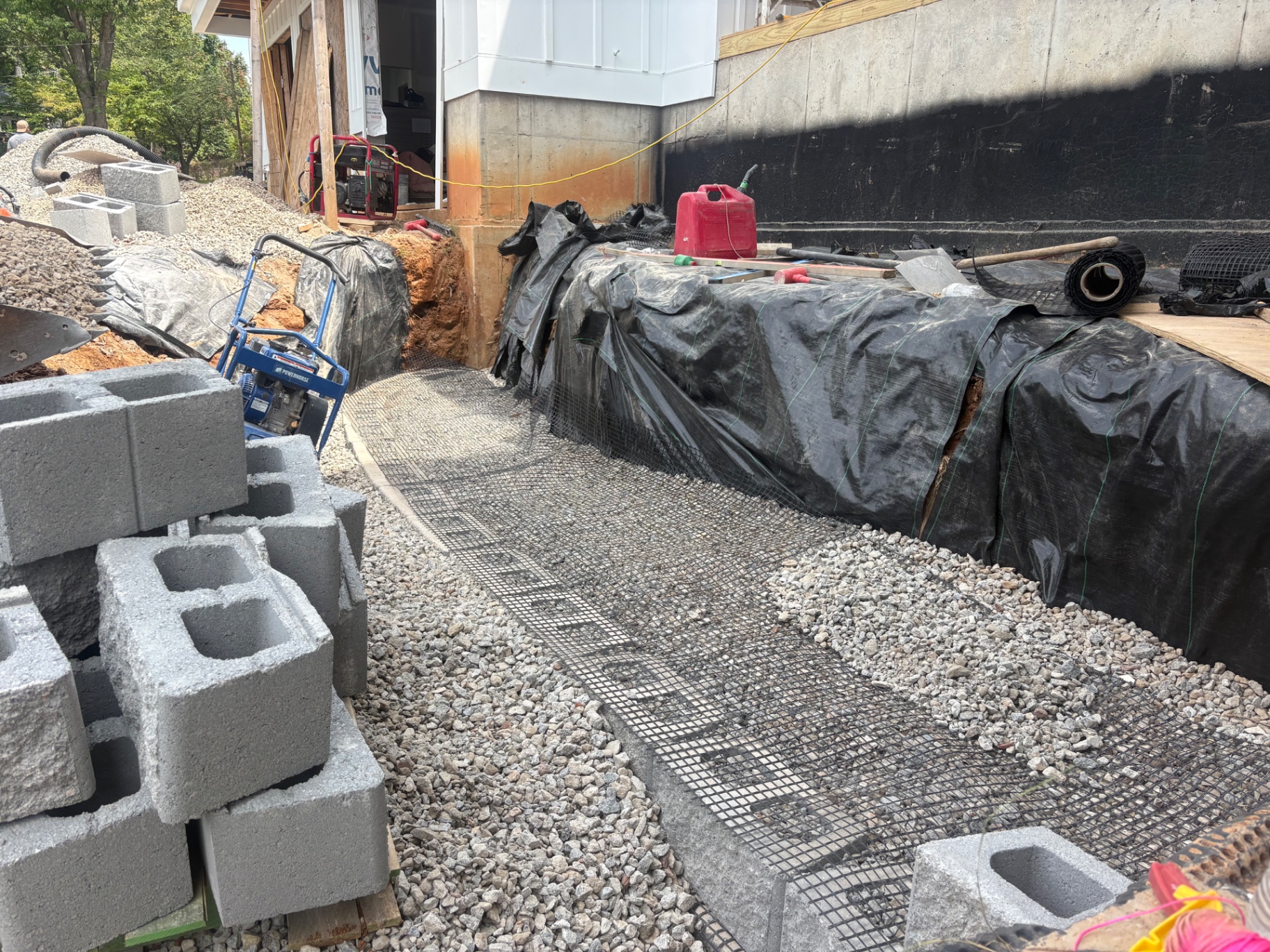
- Day three onward: block laid course by course, with drainage aggregate, filter fabric and the drain pipe installed behind as the wall rises, and geogrid layers placed where the design requires them. Backfill is compacted in lifts as the wall goes up, not dumped at the end.
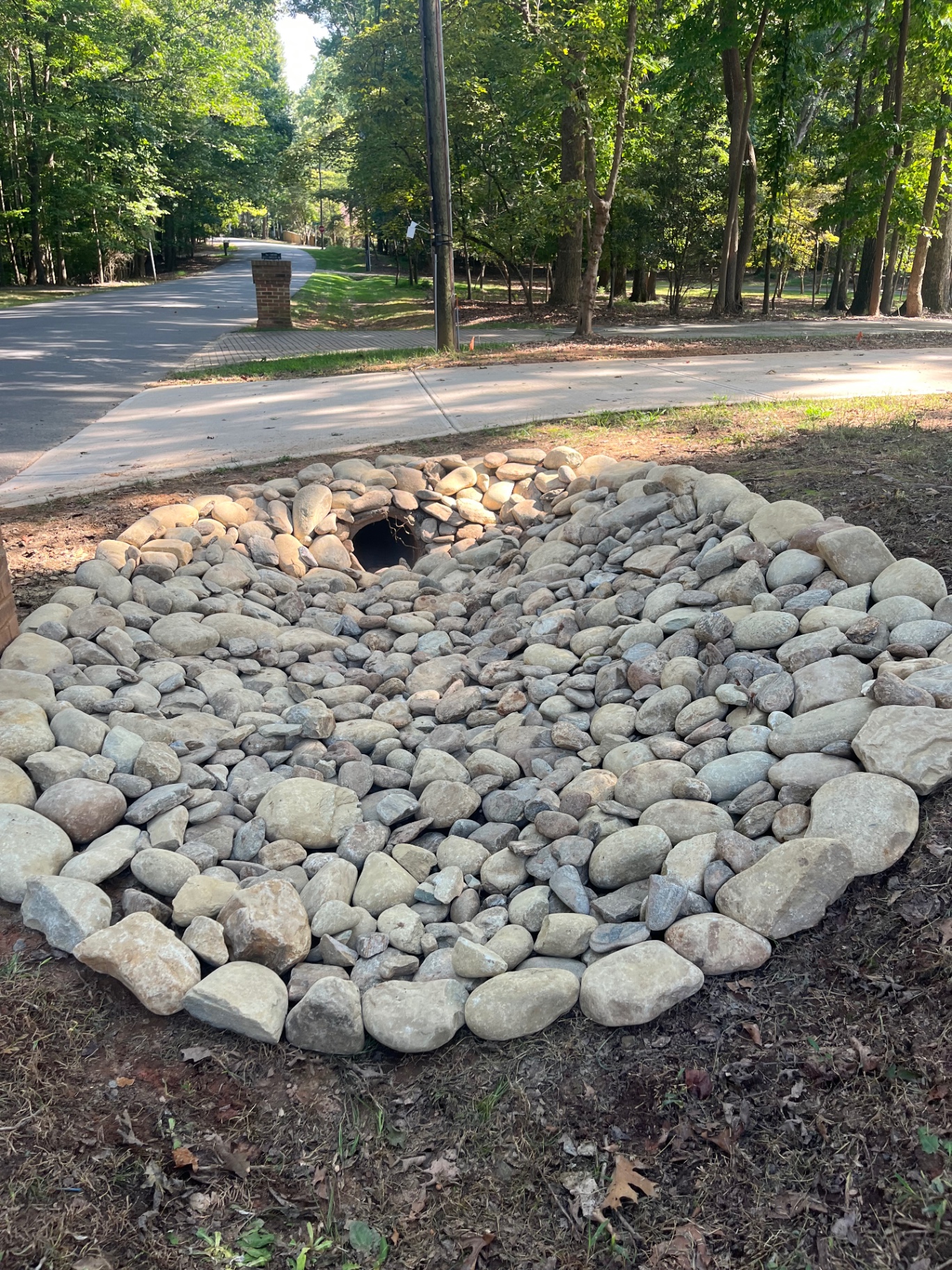
- Toward the end: caps adhered, steps completed, lighting cable run, and the drainage outlet finished and daylighted.
- Final day: backfill topped up and graded, spoil removed, site cleaned, turf or planting restored, and a walk-through with you.
Weather, and why we sometimes stop
Rain does not just slow the work; on clay it changes the result. Compacting saturated material does not achieve density, and backfill placed wet consolidates later and takes the wall with it.
So we stop when the ground is too wet, and we would rather add two days than build on material that will settle. If a build pauses for weather, that is why.
Restoration and what the site looks like at handover
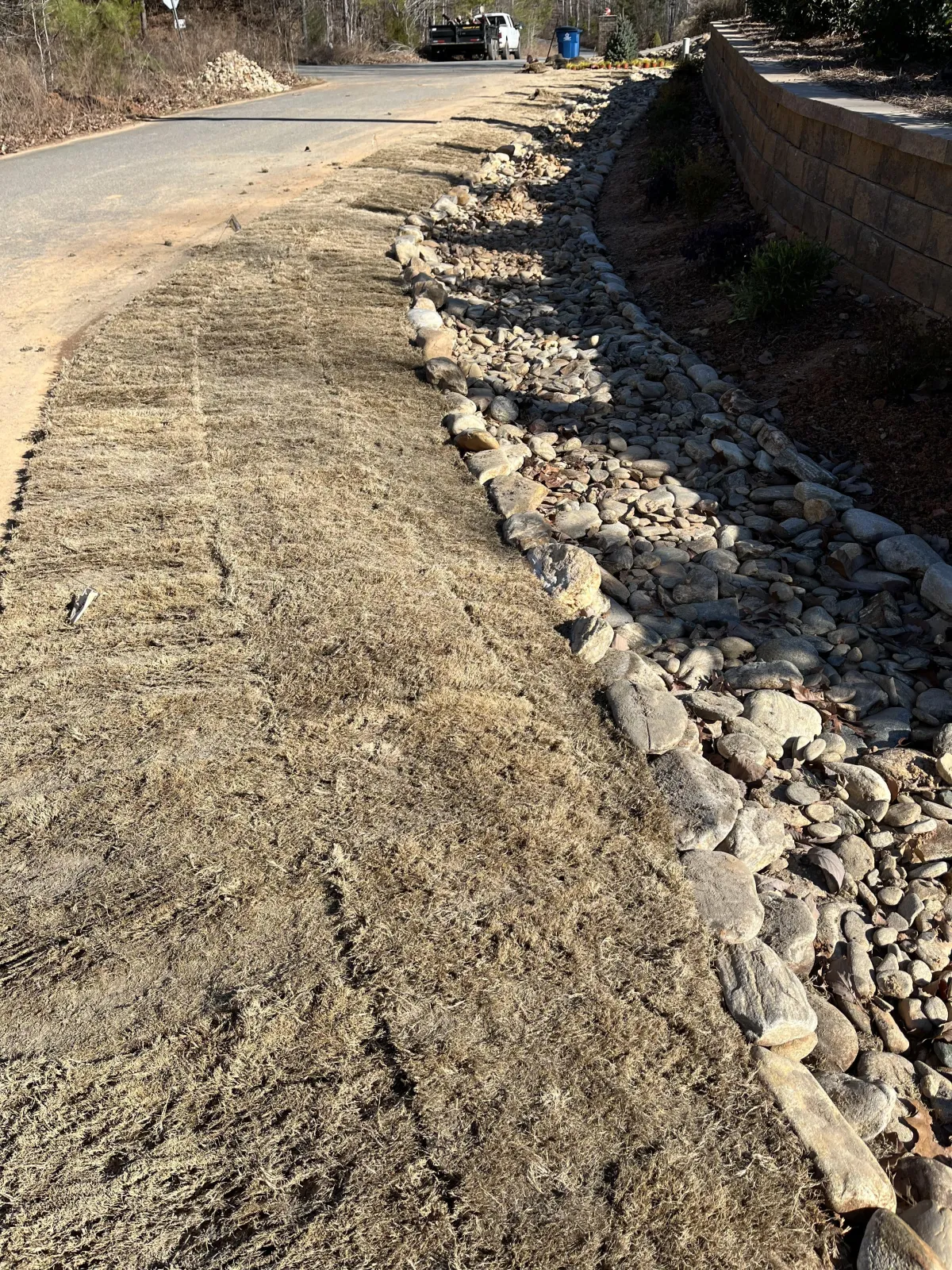
At handover the wall is complete with caps set, the backfill is graded and topped, the drainage outlet is visible and clear, spoil and surplus material are gone, and disturbed turf is sodded or seeded per the quote.
Freshly seeded areas will need watering, and newly graded backfill will settle slightly over the first few months — a small amount of topping up in the first season is normal and expected, not a defect.
We walk the finished wall with you, show you the outlet, and explain the small amount of upkeep it needs.
Southern Style Turf & Design builds retaining walls across Denver, Huntersville, Cornelius, Davidson, Mooresville and Troutman. Free on-site estimate, written quote, insured in NC.
Frequently asked questions
How long does it take to build a retaining wall?
A small to mid-sized residential wall typically runs several days: excavation, base preparation, then courses laid with drainage and backfill compacted as the wall rises. Weather and access are the usual variables.
Will building a retaining wall damage my lawn?
The access route and work area take machinery traffic and will need restoration, which is included in the quote as sod or seed. Planting in the way can often be lifted and replanted.
What happens to the excavated soil?
Some is reused where suitable for backfill away from the drainage zone; the rest is removed from site. The quote should state which.
Is settling after the build normal?
A small amount of settlement in freshly graded backfill over the first season is normal and easily topped up. Movement in the wall itself is not.
Want this looked at on your property?
We give free, no-pressure on-site estimates across Denver, Mooresville, Cornelius, Davidson, Huntersville and Troutman.