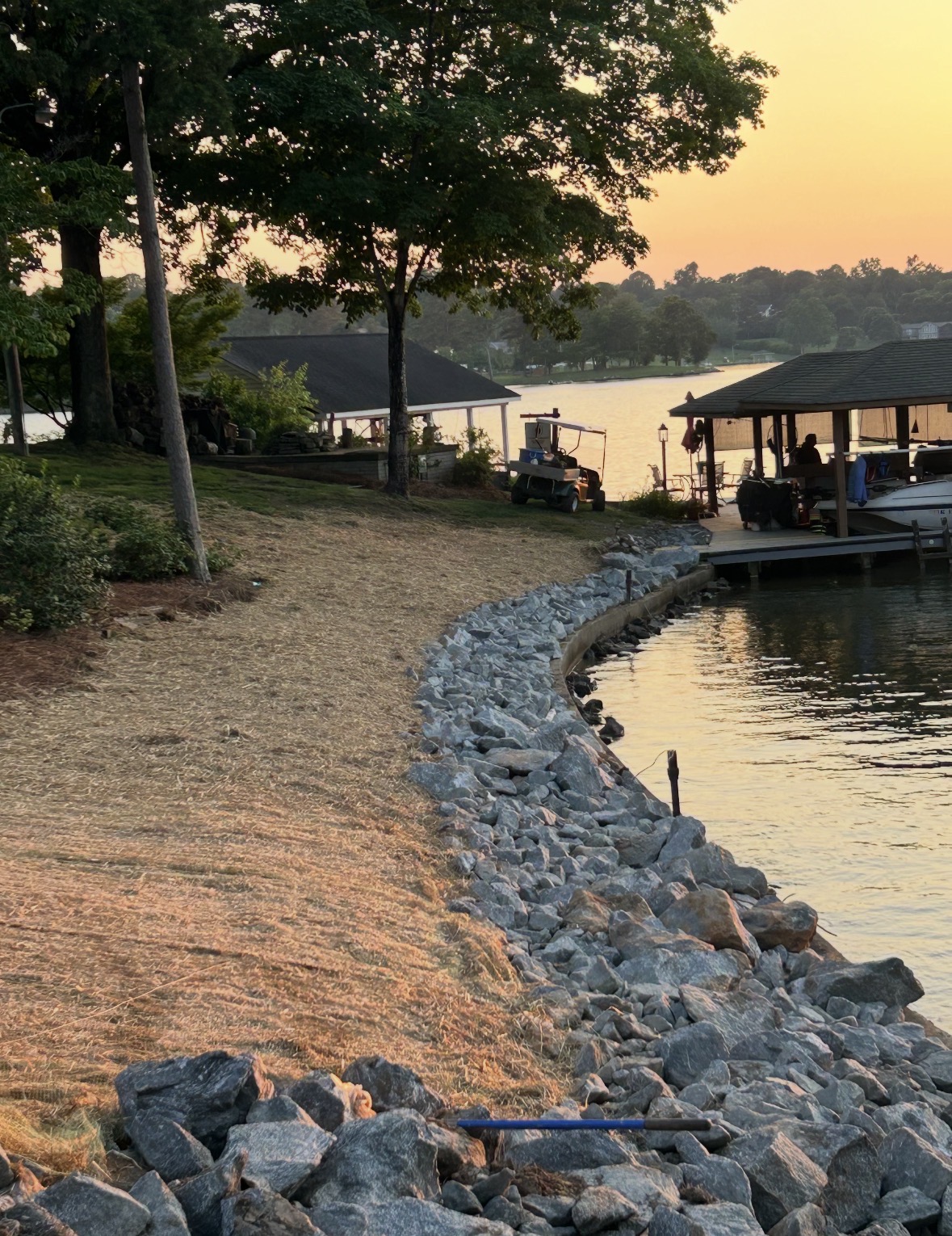
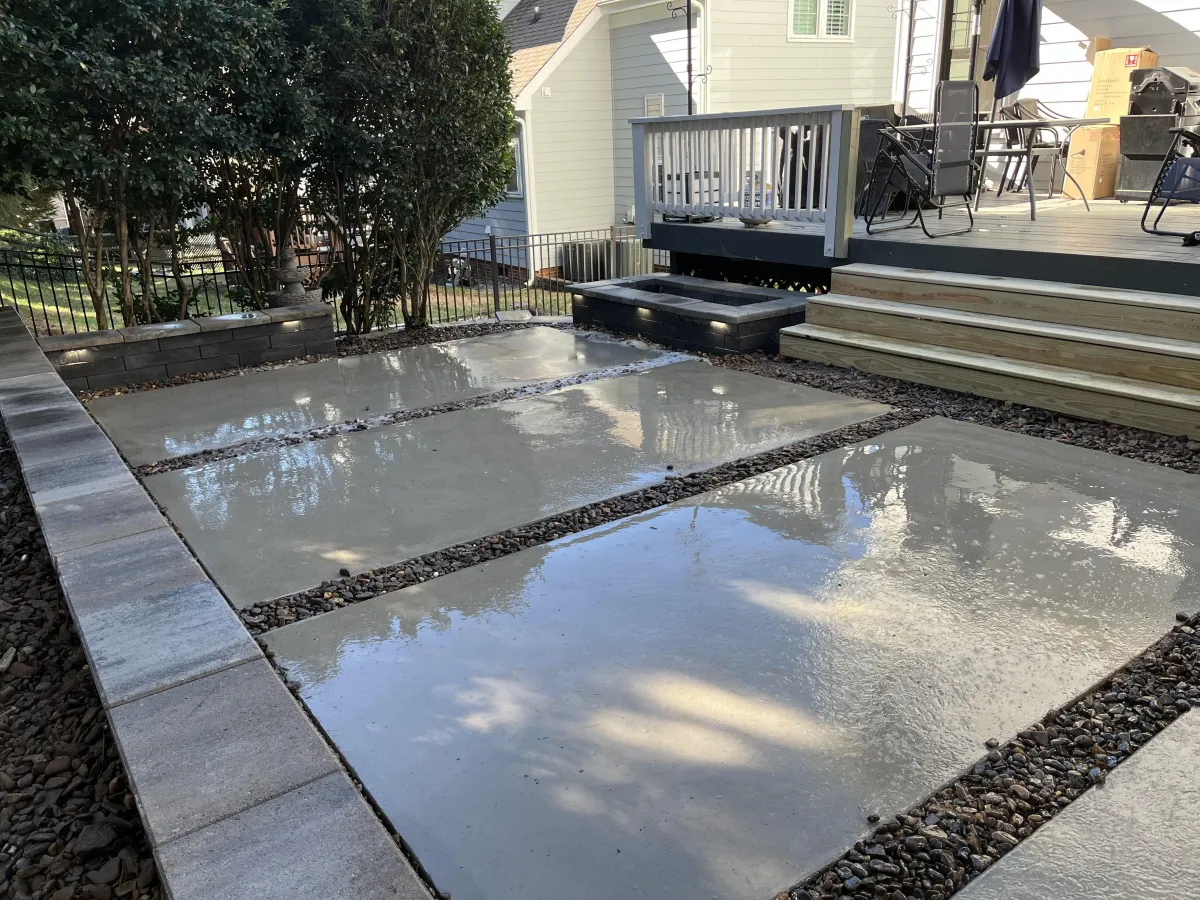
A retaining wall near a property line is more than a fence question, because a wall occupies space underground as well as above it. Setbacks, easements and drainage all have to be checked locally before design, and the rules differ between Lincoln, Iredell and Mecklenburg counties and the towns within them. We do not publish thresholds here, because an out-of-date figure is worse than none.
The wall is wider than it looks
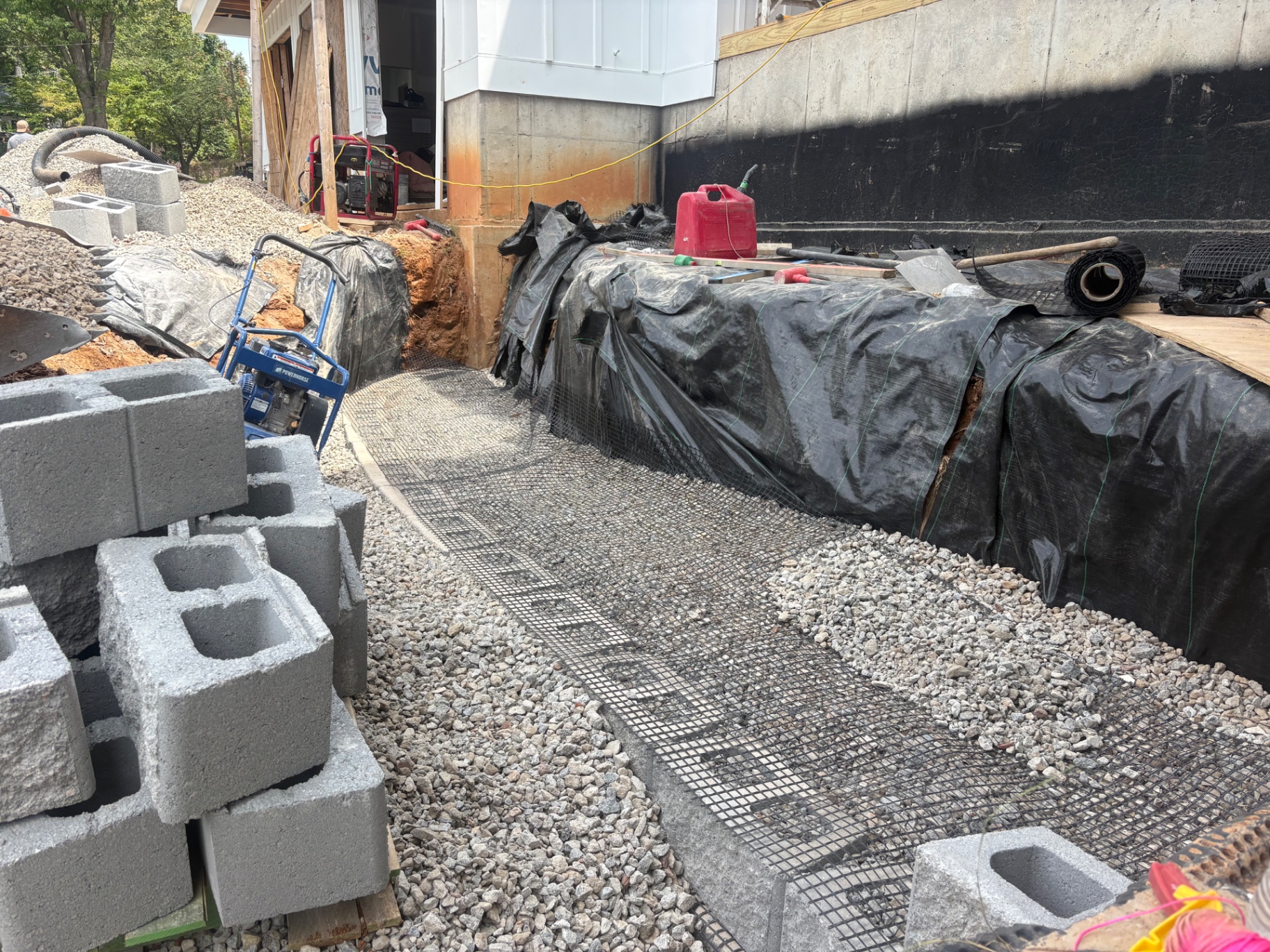
A retaining wall is not just the face. Behind it sits a zone of drainage aggregate and a pipe. Beneath it sits an excavated and compacted base wider than the block. Where geogrid is used, layers of reinforcement extend back into the soil a substantial distance — often further than the wall is tall.
That matters at a boundary because geogrid cannot cross onto a neighbour's land, and the excavation to install it cannot either. On a tight lot this is frequently the constraint that determines the design, more than any setback rule.
The practical consequence: a tall reinforced wall may not be buildable close to a line, and a shorter wall or a terraced arrangement becomes the answer.
Setbacks and easements
Setback requirements for structures are set locally, and whether a retaining wall counts as a structure — and at what height — varies by jurisdiction. The only reliable answer comes from your town or county planning office for your specific parcel.
Easements are separate and often more restrictive. Utility easements, drainage easements and access easements typically run along boundaries and rear lines, and building a permanent structure inside one is usually prohibited. If a utility later needs access, anything in the easement can be removed at the owner's cost.
Your plat drawing shows the easements on your lot. Read it before designing anything near a line.
Walls that affect a neighbour's drainage
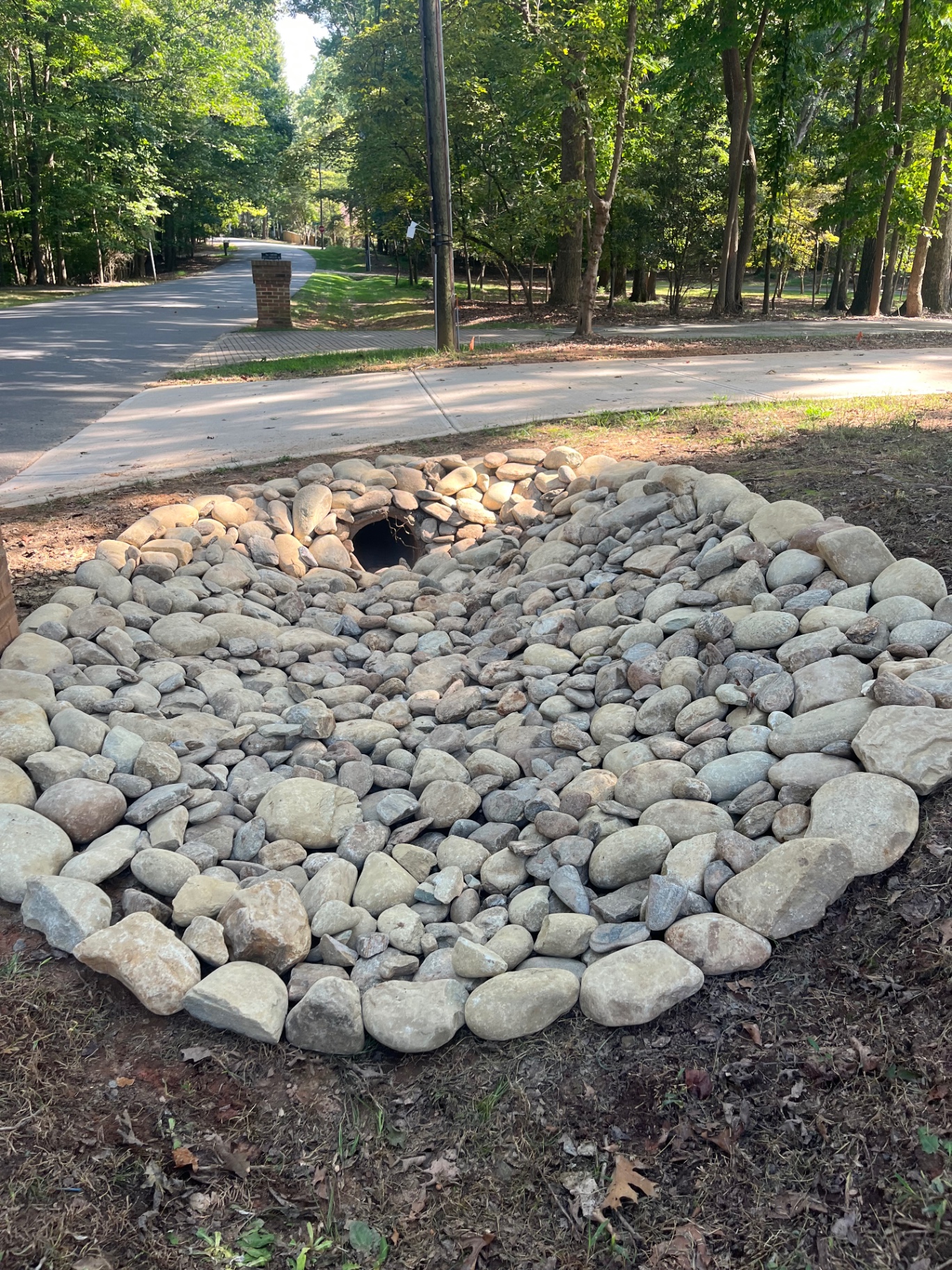
A retaining wall changes where water goes. It can block a flow path that previously crossed the boundary, or concentrate discharge at a point that used to receive water spread out.
Both create problems. Blocking flow pushes water back onto the uphill property. Concentrating it dumps volume onto the downhill one. In a subdivision this often means interfering with a graded swale that the whole street depends on.
The drainage outlet behind the wall needs a destination that does not create a problem next door, and that destination has to be identified before construction rather than discovered afterward.
Conversations worth having before construction starts
Talk to the neighbour early, even where you have no obligation to. Wall construction means machinery, noise, and often a request for access from their side to build the face.
- Confirm the boundary. A survey removes the argument entirely, and it is cheap compared to moving a wall.
- Explain the drainage plan and where the outlet discharges.
- Agree access, if any is needed from their property, in writing.
- Check whether an existing wall or bank is theirs, jointly owned, or on the line — inherited walls are frequently not where people assume.
- Submit to the HOA if there is one, before the build is scheduled.
One note on scope
We are a landscape and hardscape contractor, not a surveyor or an attorney. On boundary questions we work from a survey and from what the local authority confirms — and where a project genuinely turns on a legal question, we will say so rather than guess.
Southern Style Turf & Design builds retaining walls across Lake Norman and confirms local requirements as part of the estimate. Free on-site estimate, written quote before work starts.
Helpful outside reference
North Carolina's adopted building codes are published on the NC Office of State Fire Marshal building codes page; your county permit office applies them locally.
Frequently asked questions
How close to a property line can a retaining wall be built?
It depends on local setback rules, on easements shown on your plat, and on how far the wall's base and any geogrid reinforcement extend back into the soil. Your town or county planning office gives the definitive answer for your parcel.
Can I build a retaining wall in an easement?
Usually not. Utility, drainage and access easements typically prohibit permanent structures, and anything inside one can be removed at the owner's cost if access is needed.
Do I need my neighbour's permission for a retaining wall?
Not for work entirely on your own land within the rules, but you do need their agreement for any access from their side, and you cannot redirect or concentrate water onto their property in a way that creates a problem.
How far back does geogrid extend behind a wall?
Often further than the wall is tall, which is why a reinforced wall may not be buildable close to a boundary and a shorter or terraced design becomes the practical option.
Want this looked at on your property?
We give free, no-pressure on-site estimates across Denver, Mooresville, Cornelius, Davidson, Huntersville and Troutman.