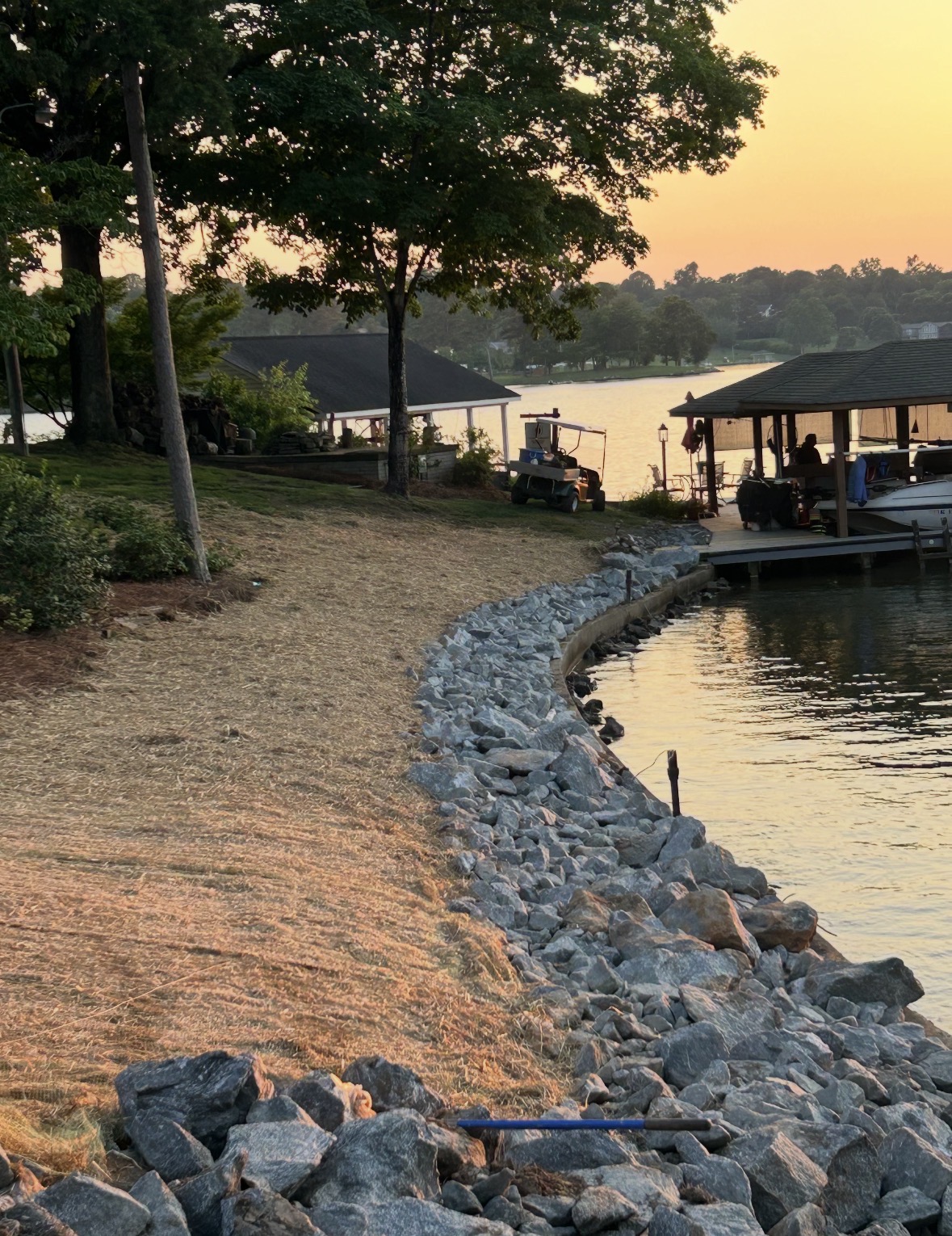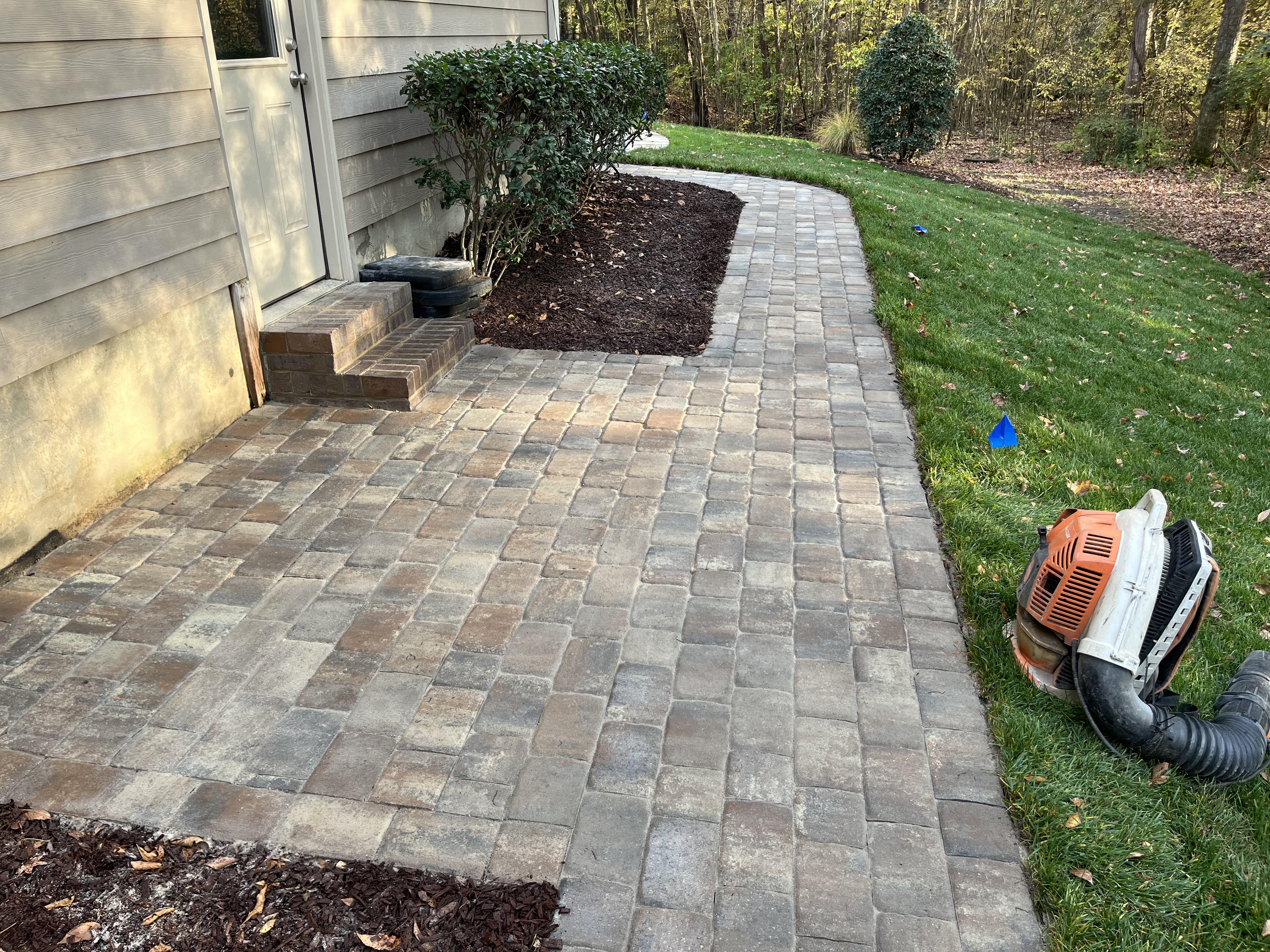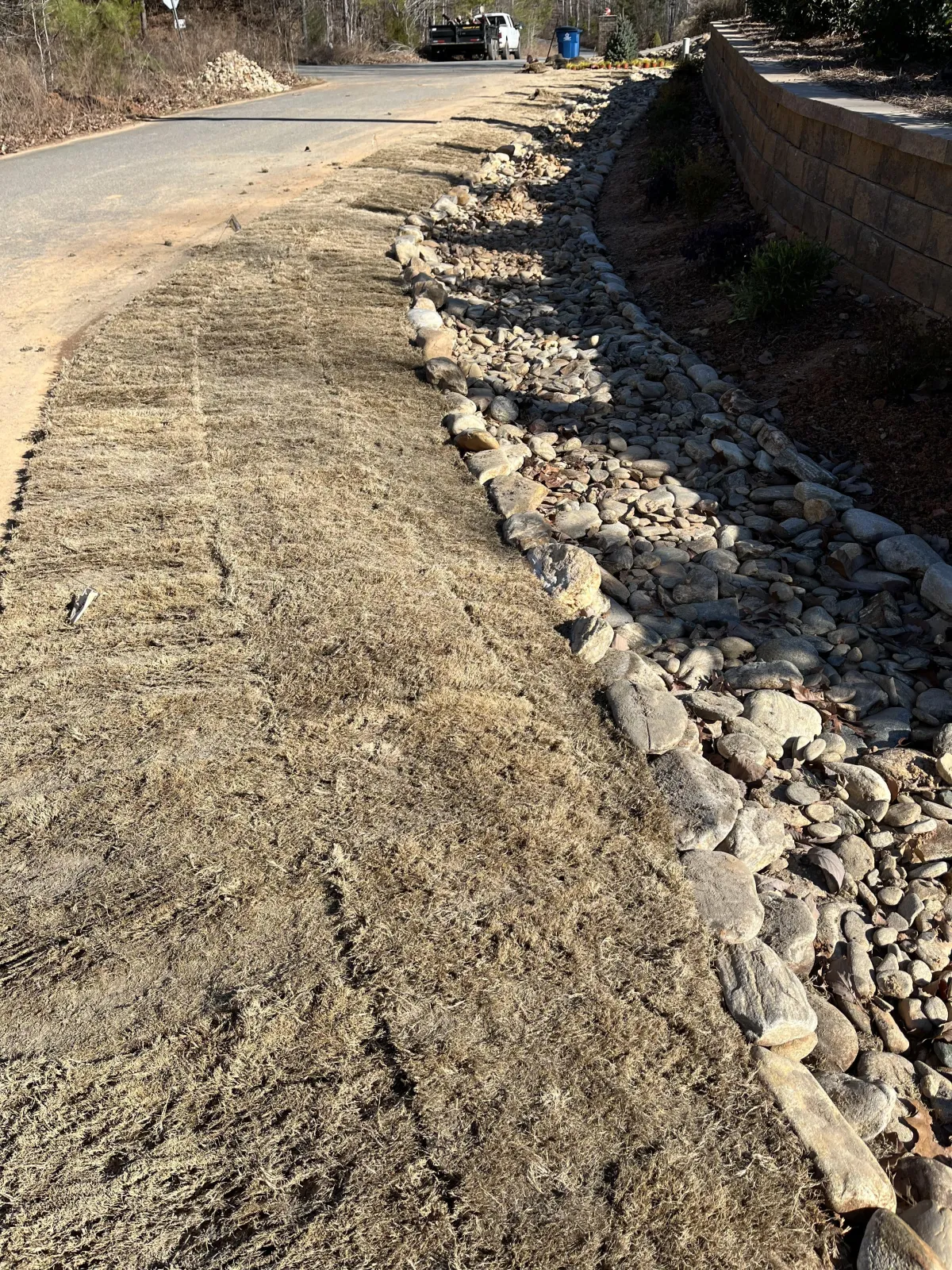
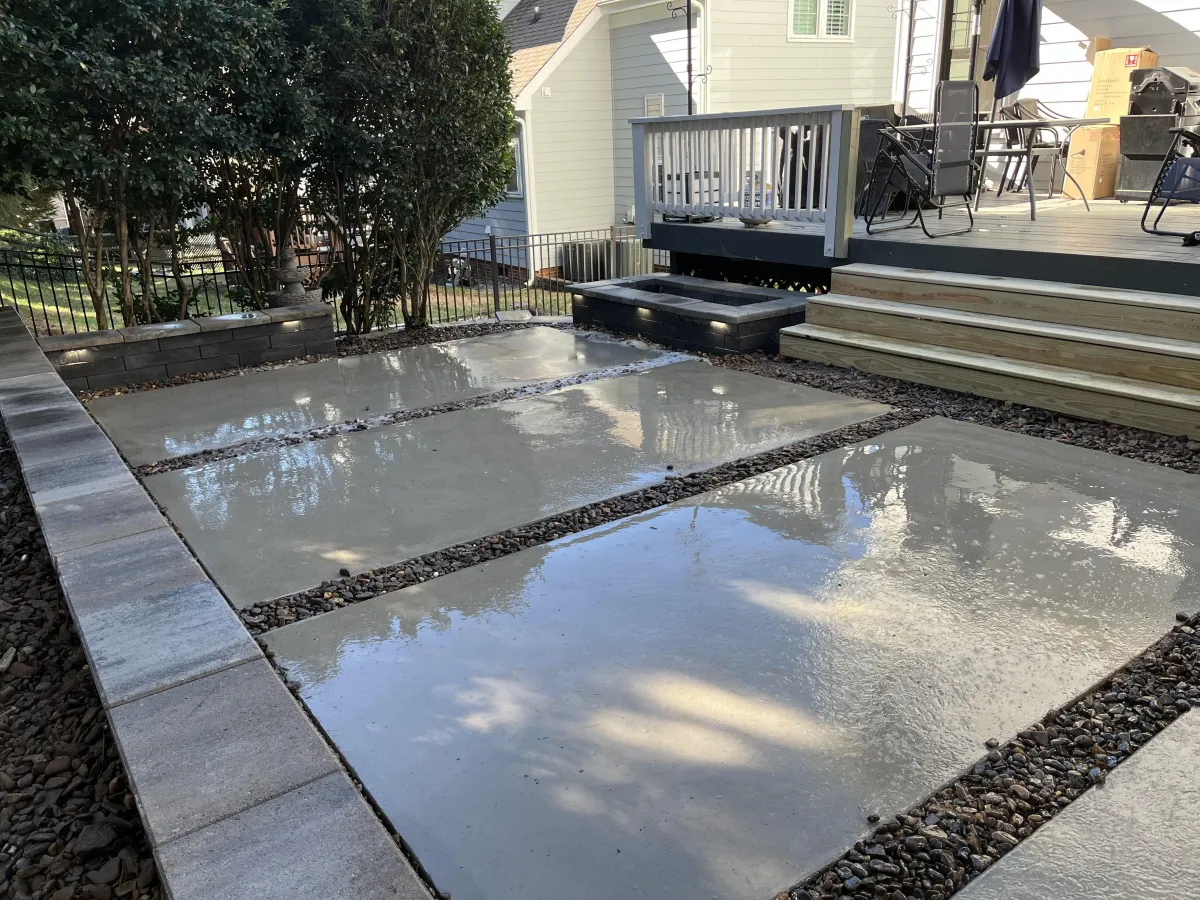
Overgrown beds are rarely a planting problem — they are usually the right plants in the wrong places, twenty years on. Renovation is mostly editing.
Decide what stays
Keep healthy mature trees and any specimen worth the space. They are irreplaceable in the short term.
Remove anything outgrowing its position permanently. A shrub that needs shearing twice a year to fit is the wrong shrub.
Remove anything dead, diseased, or crowding a keeper.
Be ruthless about foundation planting swallowing windows — that is the most common Lake Norman bed problem we see.
Clear properly, not cosmetically
Cut back and dig out roots, don't just top growth. Woody roots left behind resprout.
Remove invasive vines and runners completely; a piece left in the soil regrows.
Take out old, degraded landscape fabric. It is usually clogged with soil and roots and doing more harm than good.
Haul out accumulated mulch that has built the bed level up above the surrounding grade or against the foundation.
Fix what caused the problems
Check drainage. A bed that stays wet has been killing plants for years and will keep doing it.
Amend the soil across the whole bed, not hole by hole. Years of compaction and root competition leave clay in poor shape.
Re-establish grade so the bed falls away from the house.
Add or repair drip irrigation while the bed is open — it is never easier than now.
Replant and edge for the long term
Choose plants for mature size, not for how they look in the pot. Nearly every overgrown bed started as a bed that looked sparse.
Layer: structure evergreens, then flowering shrubs, then perennials and groundcover.
Cut a clean, defined edge — spade edge, steel or stone. Definition does more for a bed's appearance than any plant.
Mulch to the right depth and keep it off stems.
Southern Style Turf & Design renovates tired and overgrown beds across the Lake Norman area, from clearing through soil, drainage, planting and mulch.
Frequently asked questions
Can overgrown shrubs be pruned back instead of removed?
Some species regenerate well from hard renewal pruning; others never look right again. It also does not solve a shrub that is simply too large for the spot.
When is the best time to renovate beds?
Fall is ideal in the Piedmont — cool air, warm soil and low transplant stress. Late winter also works for clearing and structural work.
Should I start completely from scratch?
Rarely. Keeping a few mature anchors makes the renovated bed look established immediately.
Want this looked at on your property?
We give free, no-pressure on-site estimates across Denver, Mooresville, Cornelius, Davidson, Huntersville and Troutman.