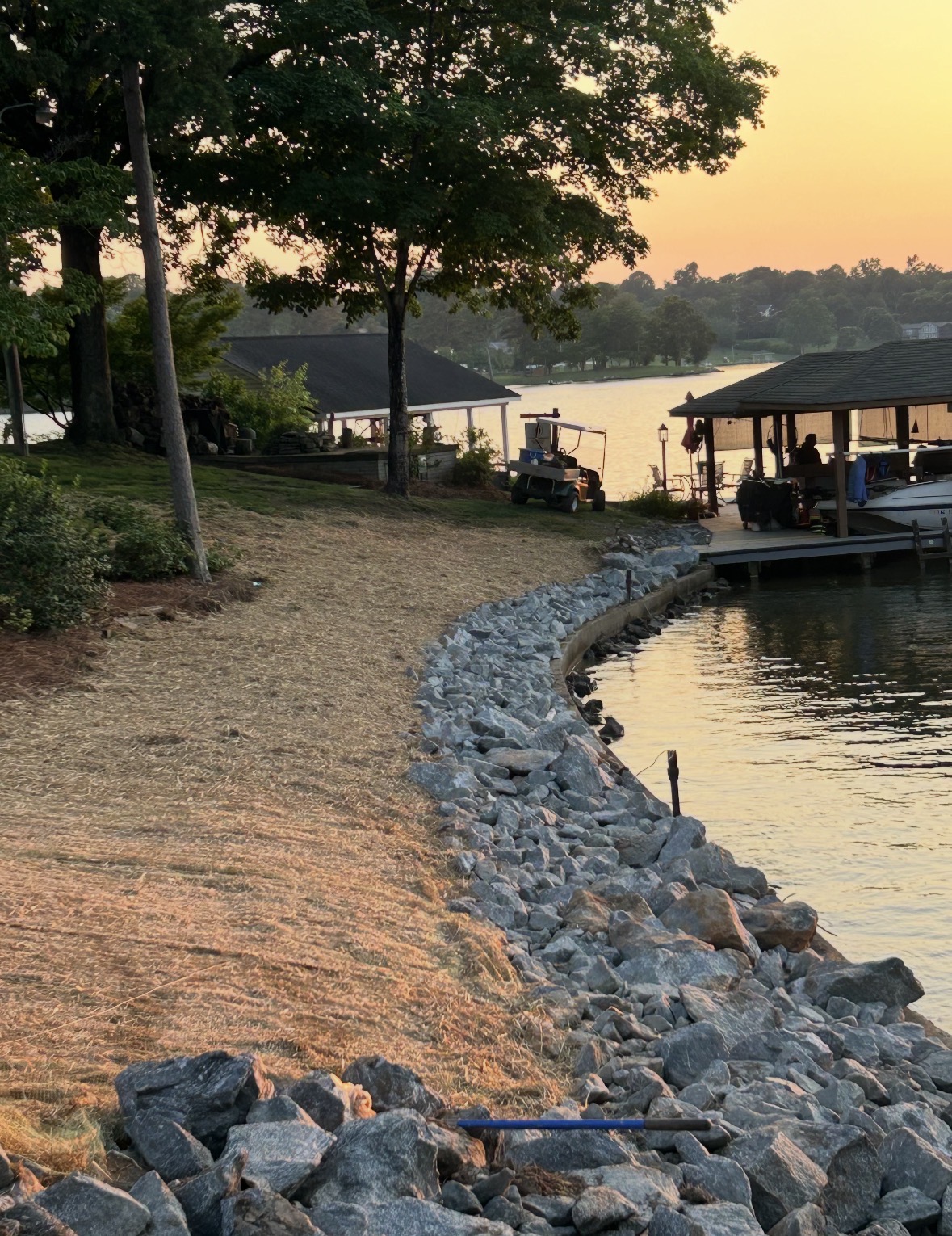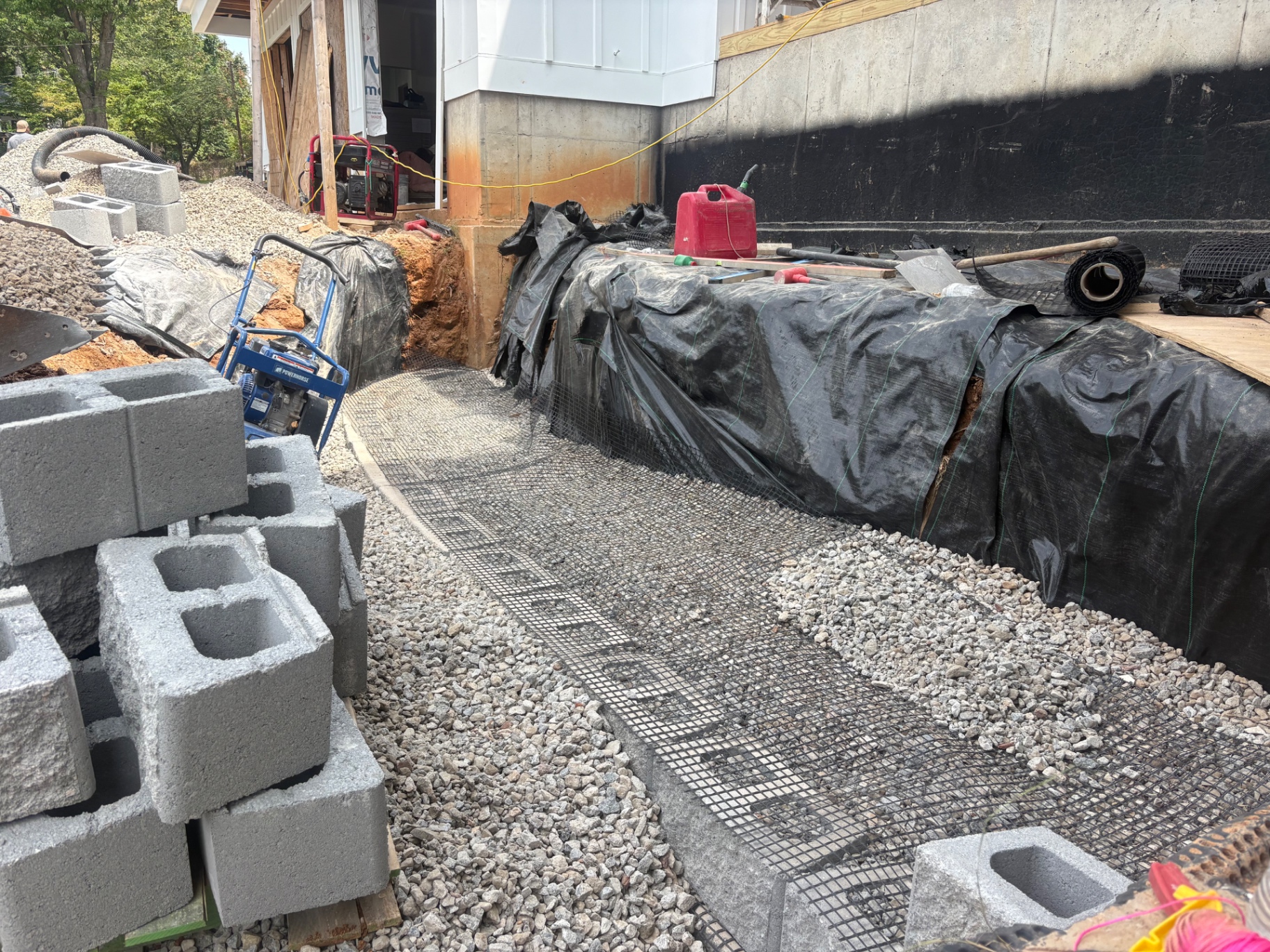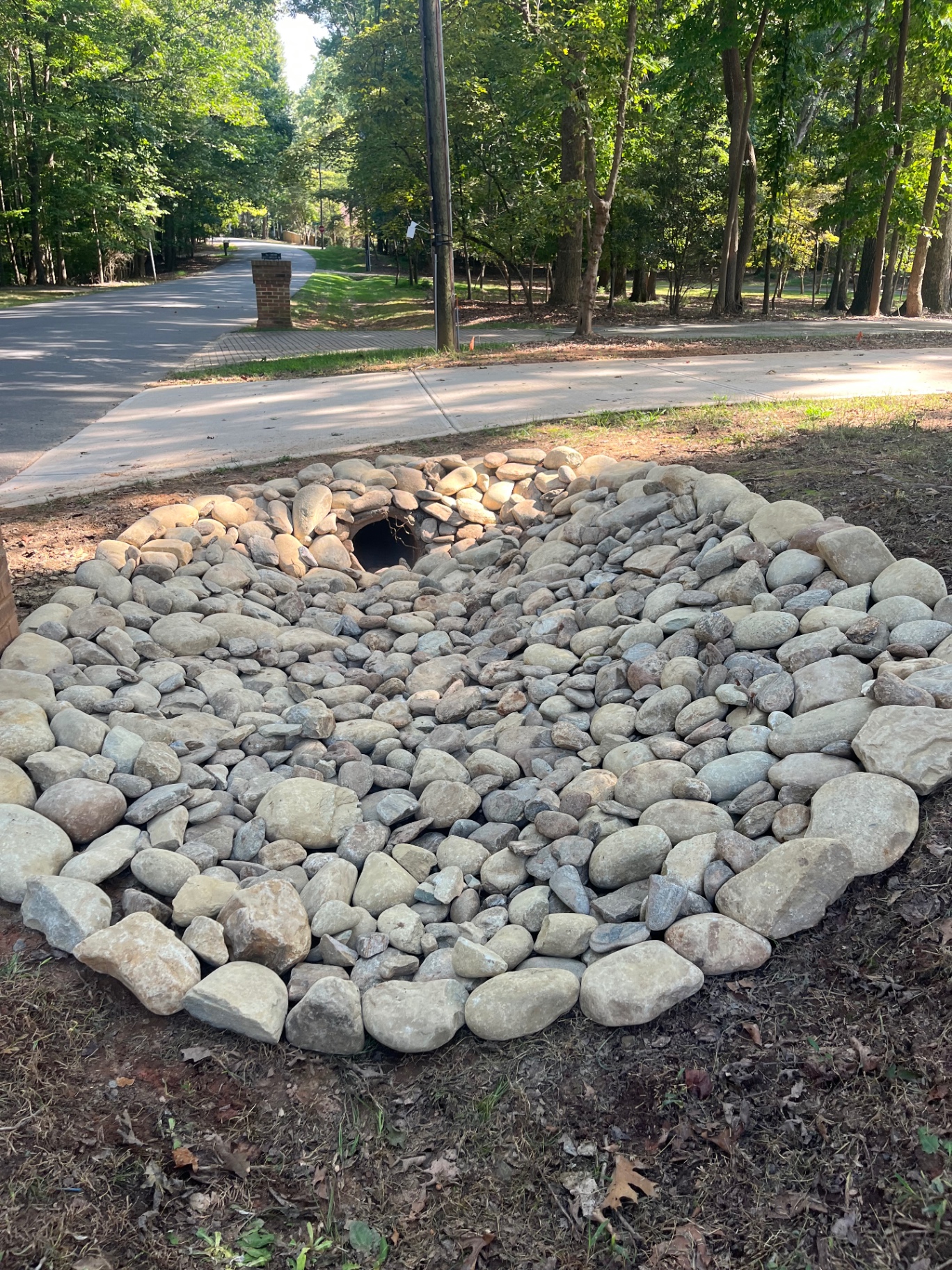
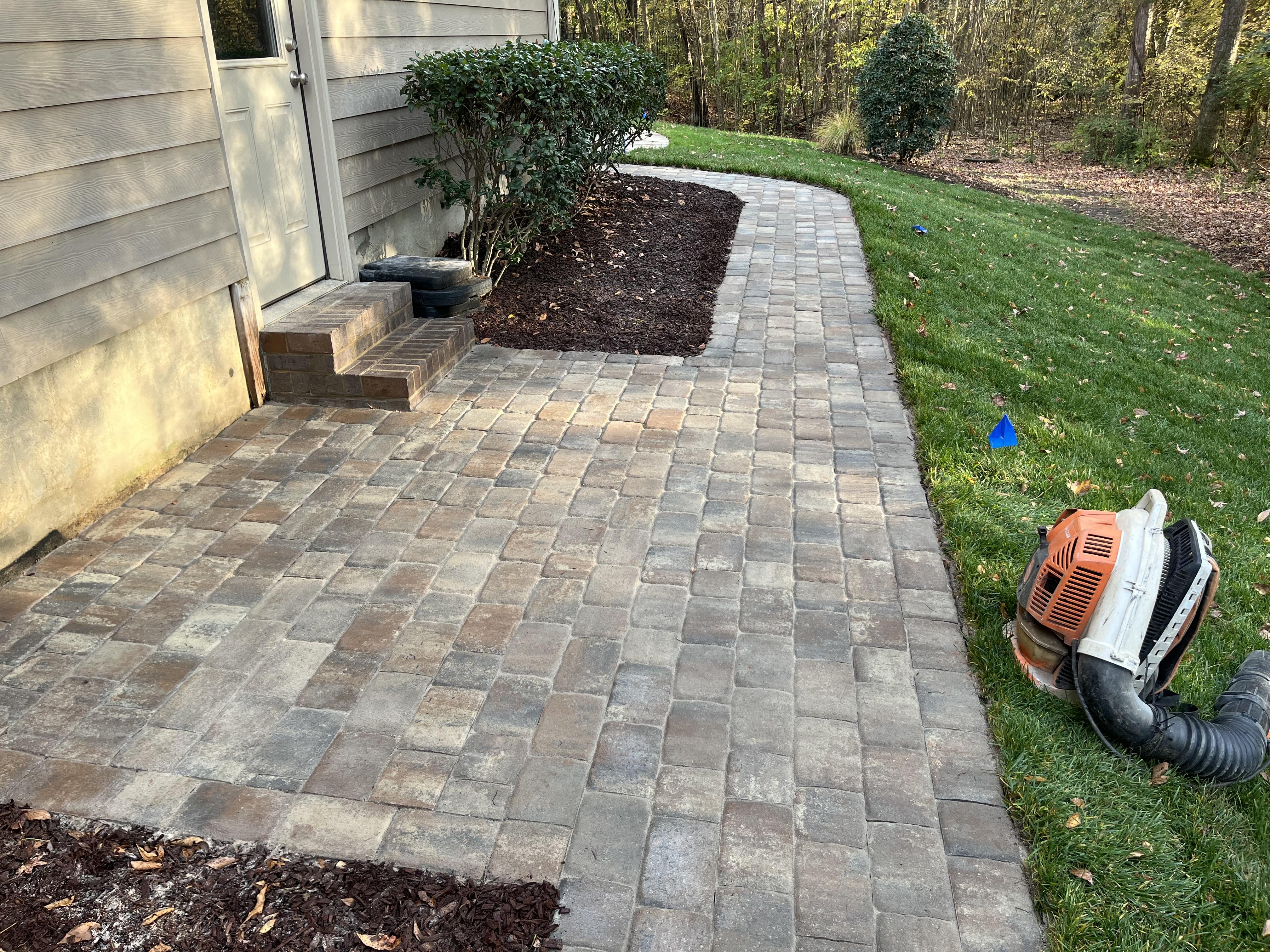
Raising a bed is one of the simplest ways to beat bad soil. Instead of fighting compacted clay that holds water around plant roots, you build the growing zone above it.
The problem raised beds solve
Most plant failures in Piedmont clay come down to drainage at the root zone. Roots need air as well as water, and saturated clay provides very little of the former.
Raising the soil level even six to twelve inches lifts roots above the water table that forms in heavy soil after storms, which is often the whole difference between a shrub that struggles and one that thrives.
It also gives you control over the soil itself, since you are building a mix rather than trying to transform what is already there.
Raised beds versus berms
A raised bed has a defined edge — timber, block, stone, or steel. A berm is a mounded, free-form rise with graded sides and no hard edge.
Berms look more natural in an open lawn and mow cleanly at the edges. Framed beds give crisper lines near the house, terraces, and vegetable areas, and hold soil better on a slope.
For ornamental planting, a low berm is often the more attractive answer. For growing food or working at a comfortable height, a framed bed wins.
Building one that lasts
A raised bed is still sitting on your soil, so what happens underneath matters.
- Loosen the existing soil before filling, so there is no hard interface roots and water cannot cross.
- Skip plastic sheeting under the bed — it traps water exactly where you do not want it.
- Use a soil mix with structure: quality topsoil blended with compost, not pure compost or pure bagged soil.
- Keep soil level a couple of inches below the top edge so mulch and water stay in.
- Build the wall material for the height — timbers for low beds, segmental block or stone once the height and soil pressure increase.
- Make sure water leaving the bed has somewhere to go rather than pooling against the frame.
Where raised beds are the wrong answer
They do not fix a yard-wide drainage problem. Raising one bed in an area where water collects just puts an island in a pond, and the surrounding lawn stays as wet as ever.
Against a foundation, raising soil can bring grade too close to siding or weep holes. That is a place to be conservative and keep grade falling away from the house.
And on a real slope, a raised bed is effectively a retaining wall — it needs to be built like one, with drainage behind it, once the height gets meaningful.
Planting and upkeep
Raised soil dries faster than surrounding ground, so plan on more attentive watering the first season, especially in the smaller, framed beds.
Mulch matters more here for the same reason — it holds moisture in soil that has more exposed surface area.
Southern Style Turf & Design builds raised beds, berms, and planting areas around Lake Norman with the soil work and drainage handled as part of the installation.
Frequently asked questions
How tall should a raised planting bed be?
Six to twelve inches solves most drainage and soil problems for shrubs and perennials. Anything much taller starts behaving like a retaining wall and should be built accordingly.
Do I need to remove the grass underneath?
Either remove it or smother it with cardboard before filling. Loosening the soil below the bed matters more than what you do with the turf.
Will a raised bed fix a soggy yard?
It fixes the root zone in that bed. If water collects across the yard, you still need a drainage solution or the bed simply sits in a wet area.
Want this looked at on your property?
We give free, no-pressure on-site estimates across Denver, Mooresville, Cornelius, Davidson, Huntersville and Troutman.