Rain barrels get recommended for two different reasons — saving water for the garden and reducing runoff — and they are much better at the first than the second.
The math on a typical roof
A one-inch rain on a two-thousand-square-foot roof produces well over a thousand gallons. A standard rain barrel holds about fifty.
That is not an argument against barrels; it is an argument for being clear about what they do. One barrel captures the first minutes of a storm from one downspout and then overflows.
If your goal is keeping stormwater away from the foundation, the barrel is a small piece of a larger answer.
Where barrels genuinely help
They are useful for what they were built for: free, unchlorinated water on hand for beds, containers, and new plantings between rains.
They also take the first flush off a downspout that dumps right at the foundation, which reduces the constant soaking of that one corner during light rain.
During dry stretches, water stored from the last storm is genuinely convenient for establishing new plants, which need consistent moisture their first season.
The overflow is the important part
Every barrel fills, and what happens next decides whether it helped or hurt. An overflow that spills at the base of the barrel puts concentrated water right against the house — the exact problem the barrel was supposed to reduce.
Install barrels with these details handled:
- An overflow outlet piped away from the foundation, not left to spill at the base.
- A solid, level pad so a full barrel — which weighs several hundred pounds — cannot tip.
- A screened inlet to keep debris and mosquitoes out.
- A drain or spigot positioned so you can actually empty it before a forecast storm.
- Winter drainage, since a full barrel can crack in a hard freeze.
When you need real downspout drainage instead
If water is entering a crawlspace, pooling along the foundation, or eroding a bed every storm, the fix is getting the roof water out to a proper discharge point — not storing a fraction of it.
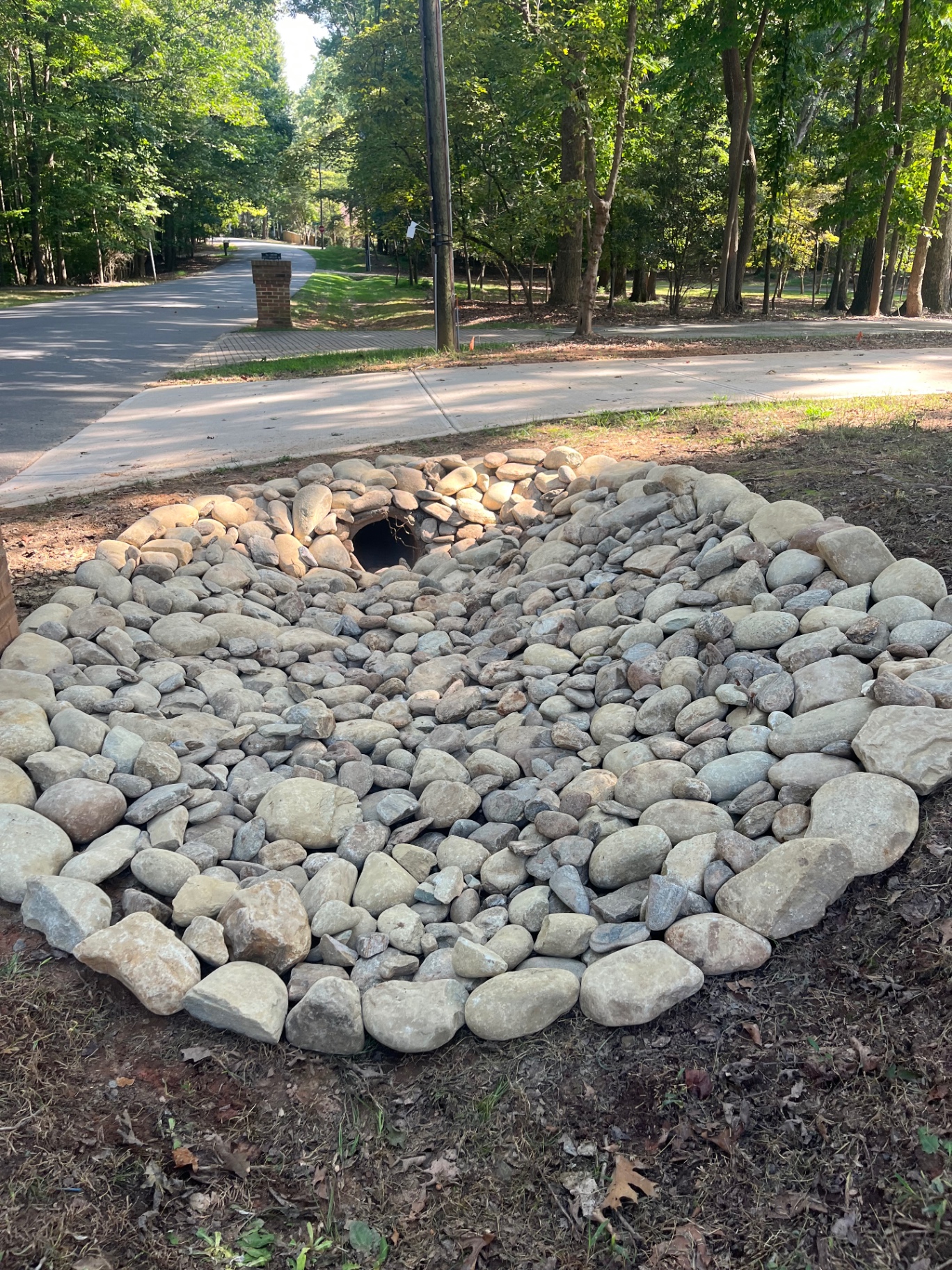
That usually means underground downspout extensions running to a daylight outlet or emitter well away from the house. Barrels can sit inline with that system, but the pipe is what does the work.
For larger properties, a cistern with meaningful capacity is a different conversation, with pumps, filtration, and a real footprint to plan for.
A better runoff strategy
If reducing runoff is the actual goal, the higher-leverage moves are soil and surface: improving infiltration in compacted areas, using a rain garden to hold and soak a volume of water, and choosing permeable surfaces where they fit.
Those handle hundreds or thousands of gallons rather than fifty, and they keep working while you are away.
Southern Style Turf & Design designs downspout drainage and stormwater solutions for Lake Norman properties, and will say plainly when a barrel is a nice extra rather than a fix.
Helpful outside reference
If you want to slow roof water down instead of only piping it away, EPA's guide to rain gardens is a useful starting point.
Frequently asked questions
Will a rain barrel fix water pooling near my foundation?
Not on its own. It captures a small share of a storm and then overflows. Piping the downspout to a proper outlet away from the house is the actual fix.
Do rain barrels breed mosquitoes?
Only if they are left open. A sealed lid and screened inlet prevent it, and emptying the barrel between rains helps.
Are rain barrels allowed by HOAs?
Many associations allow them with placement or screening conditions. Check your covenants before installing one in a visible location.
Want this looked at on your property?
We give free, no-pressure on-site estimates across Denver, Mooresville, Cornelius, Davidson, Huntersville and Troutman.