A rain garden is a planted depression that collects stormwater runoff and allows it to absorb into the ground over 24–48 hours. Here's when they work on Lake Norman properties.
What a Rain Garden Is
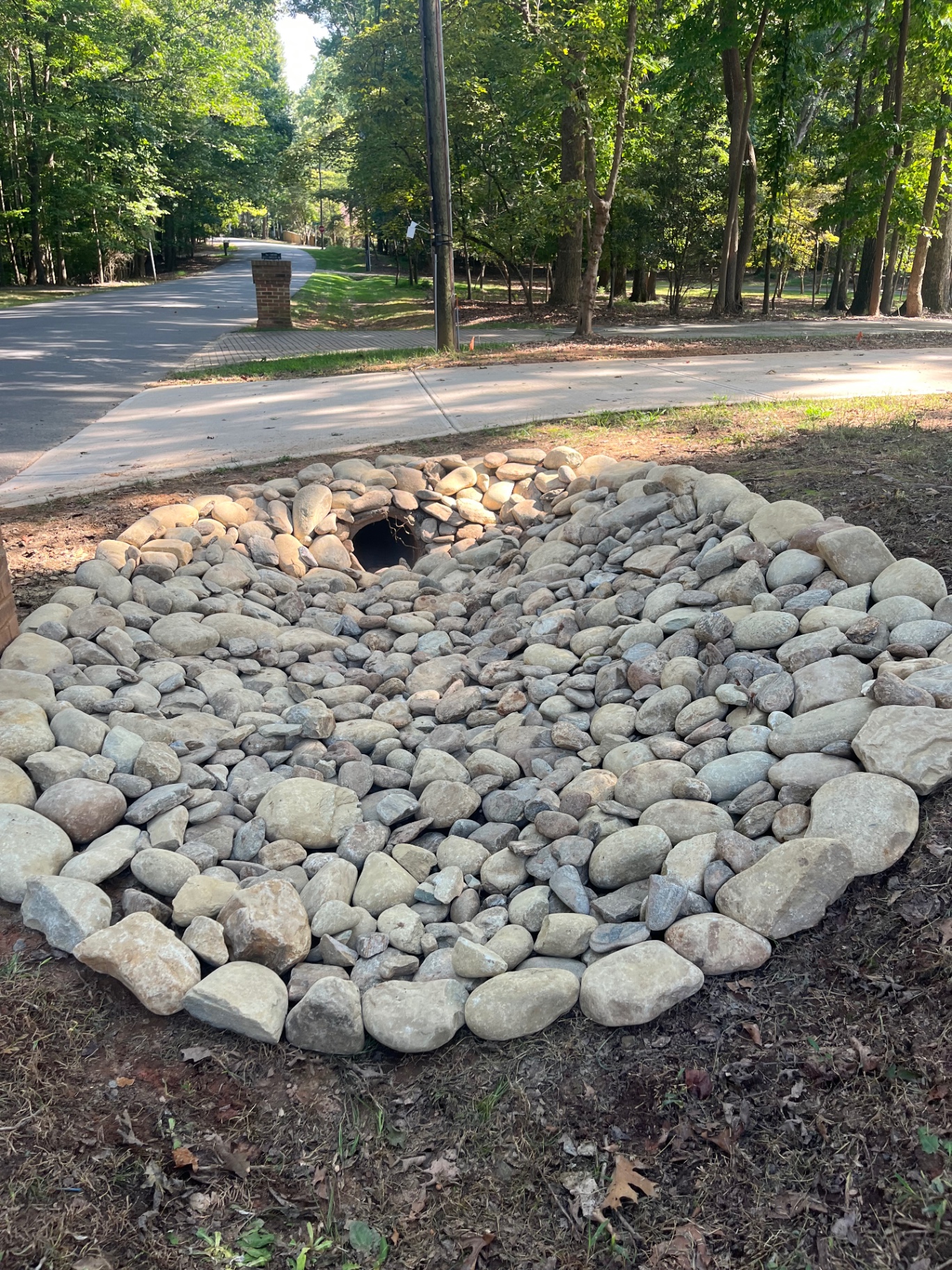
A rain garden is a shallow, depressed planting area designed to collect and temporarily hold stormwater runoff from roofs, driveways, and lawn areas, then allow that water to infiltrate into the soil over 24–48 hours. It's planted with native and adapted plants that tolerate both temporary flooding and dry periods — which describes the actual cycle the rain garden experiences.
Why They Work (And Where They Don't)
Rain gardens work on soils with adequate permeability — typically sites where a 12-inch-deep percolation test shows water draining within 24–48 hours. In Lake Norman's heavy clay soils, which in many locations have very slow permeability, a traditional rain garden may not drain fast enough to cycle properly between rain events. A clay soil rain garden that holds water for 72+ hours becomes a mosquito breeding site and a wet, anaerobic zone that kills plants rather than supporting them.
Before designing a rain garden on a Lake Norman property, a simple percolation test — dig 12 inches, fill with water, observe drainage rate — is worth doing. If the water drains within 24 hours, a rain garden is feasible. If it takes longer, the basin needs to be connected to overflow drainage infrastructure, or an alternative approach (French drain, catch basin to daylight) is more appropriate.
When They're Worth It
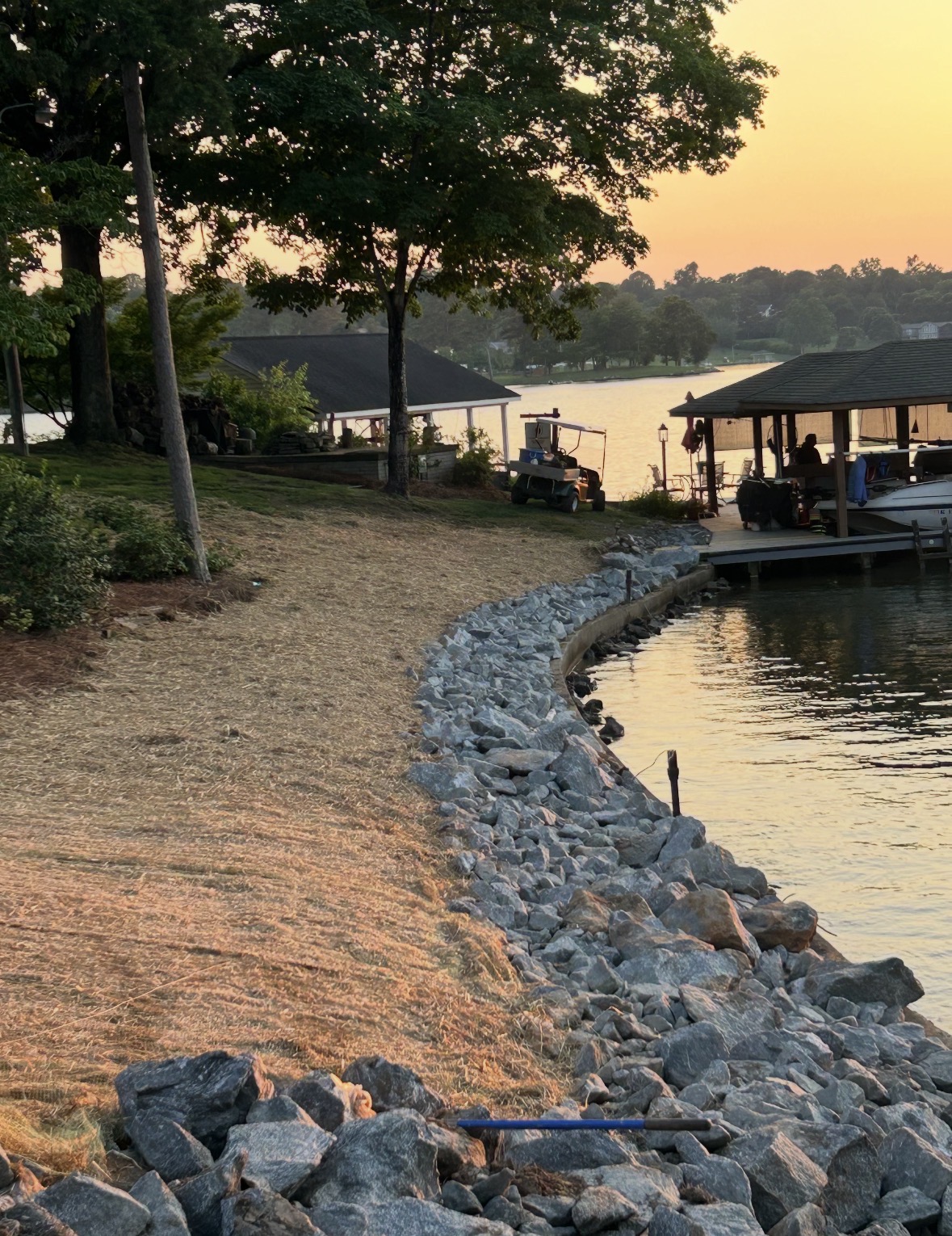
Rain gardens make the most sense on Lake Norman properties where: the soil has adequate permeability, there's a specific runoff source (a downspout, a paved area) that needs to be managed, and there's space for a properly sized basin at a lower elevation than the runoff source. They also make sense near the shoreline buffer zone where they provide approved vegetation and can help manage runoff in environmentally sensitive areas.
A rain garden should be sized to handle the runoff from a 1-inch rain event from its contributing drainage area. For a 1,000 sq ft roof draining to one downspout, that's roughly 600 gallons — which requires a rain garden of 150–200 sq ft with 6 inches of storage depth, depending on infiltration rate.
Free drainage consultation throughout Lake Norman — 704-460-2019.
Helpful outside reference
If you want to slow roof water down instead of only piping it away, EPA's guide to rain gardens is a useful starting point.
Want this looked at on your property?
We give free, no-pressure on-site estimates across Denver, Mooresville, Cornelius, Davidson, Huntersville and Troutman.