The front walk is the first thing a visitor uses and one of the first things a buyer judges. Improving it is mostly about proportion and finish rather than expense.
Scale it to the house
A two-storey house with a wide entry needs a wide walk. A narrow ribbon of concrete in front of a big elevation always looks like an afterthought.
The landing at the door matters as much as the run. Space for two people to stand, plus a delivery box or a planter, changes how the entry feels immediately.
If steps are involved, consistent riser heights and generous treads are worth more than any decorative material.
Material choices that read well
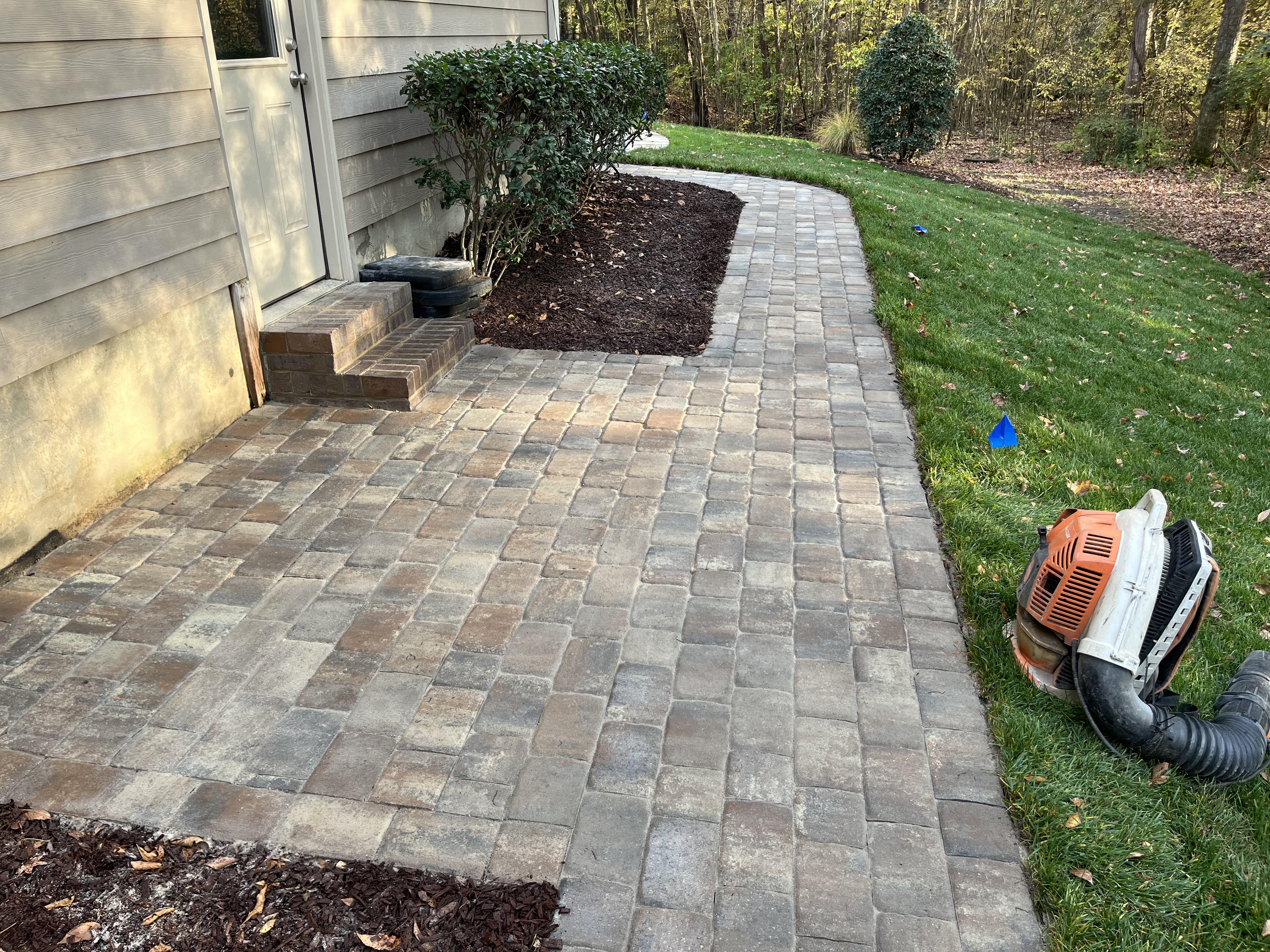
Pavers with a soldier border suit almost every house style here and can be laid to curves cleanly.
Concrete with tooled joint patterns and a brick border is a strong, economical match for traditional brick homes.
Natural stone treads and slabs suit heavily planted, informal front yards; they cost more and want careful setting so nothing rocks underfoot.
Whatever the material, colour should relate to the house — pulling one tone from the brick, stone or roof keeps the approach calm.
Planting along the route
Low, tidy planting on both sides frames the walk. Anything that flops across the paving by midsummer will be resented every time it rains.
Repeat a small number of plants rather than collecting many. Repetition is what makes a modest front bed look professionally designed.
Keep sightlines to the door open. Tall shrubs at the corner of a walk hide the entry and make a house feel closed.
Lighting and the finishing details
A few well-placed path lights beat a runway of many. Light the changes — steps, turns, the landing — and let the rest fall to spill.
Crisp edges where the walk meets the lawn or bed do more for appearance than the paving material does.
Drainage still applies at the front of the house: the walk should shed water away from the foundation, not trap it against it.
Southern Style Turf & Design builds paver and concrete walkways, steps and front entry hardscape across Lake Norman.
Frequently asked questions
What is the cheapest way to improve a front walk?
Widening it and tidying the edges, then adding restrained planting and a few lights. Material upgrades matter less than proportion.
Should the walk go to the driveway or the street?
To the route people actually use. In most Lake Norman neighbourhoods that is the driveway, since visitors park there.
Do curved walkways look better than straight ones?
Only when the curve has a reason — a tree, a bed, a grade. A curve with no cause looks arbitrary.
Want this looked at on your property?
We give free, no-pressure on-site estimates across Denver, Mooresville, Cornelius, Davidson, Huntersville and Troutman.