Three estimates for the same patio can differ by thousands of dollars, and the cheapest is not automatically the worst value — but it is almost never the same scope of work. The skill is knowing where they differ.
Compare scope before price
Put the estimates next to each other and line up what is included before you look at the totals. Most of the gap is usually scope, not markup.
Items that commonly appear on one proposal and not another:
- Excavation depth and base thickness — the single biggest hidden difference on hardscape bids.
- Haul-off of spoil versus leaving it on site.
- Drainage work behind a wall or under a patio.
- Edge restraint, joint sand type, and geotextile fabric.
- Repair of the surrounding lawn after equipment access.
- Permits, utility locates, and any required inspections.
- Cleanup and final grading.
Questions that surface the differences
A few specific questions do more than asking for a lower price.
Ask how deep the excavation goes and how many inches of compacted base are included. Ask what compaction equipment is used and whether base goes in lifts. Ask what the drainage plan is behind a wall. Ask who will actually be on site.
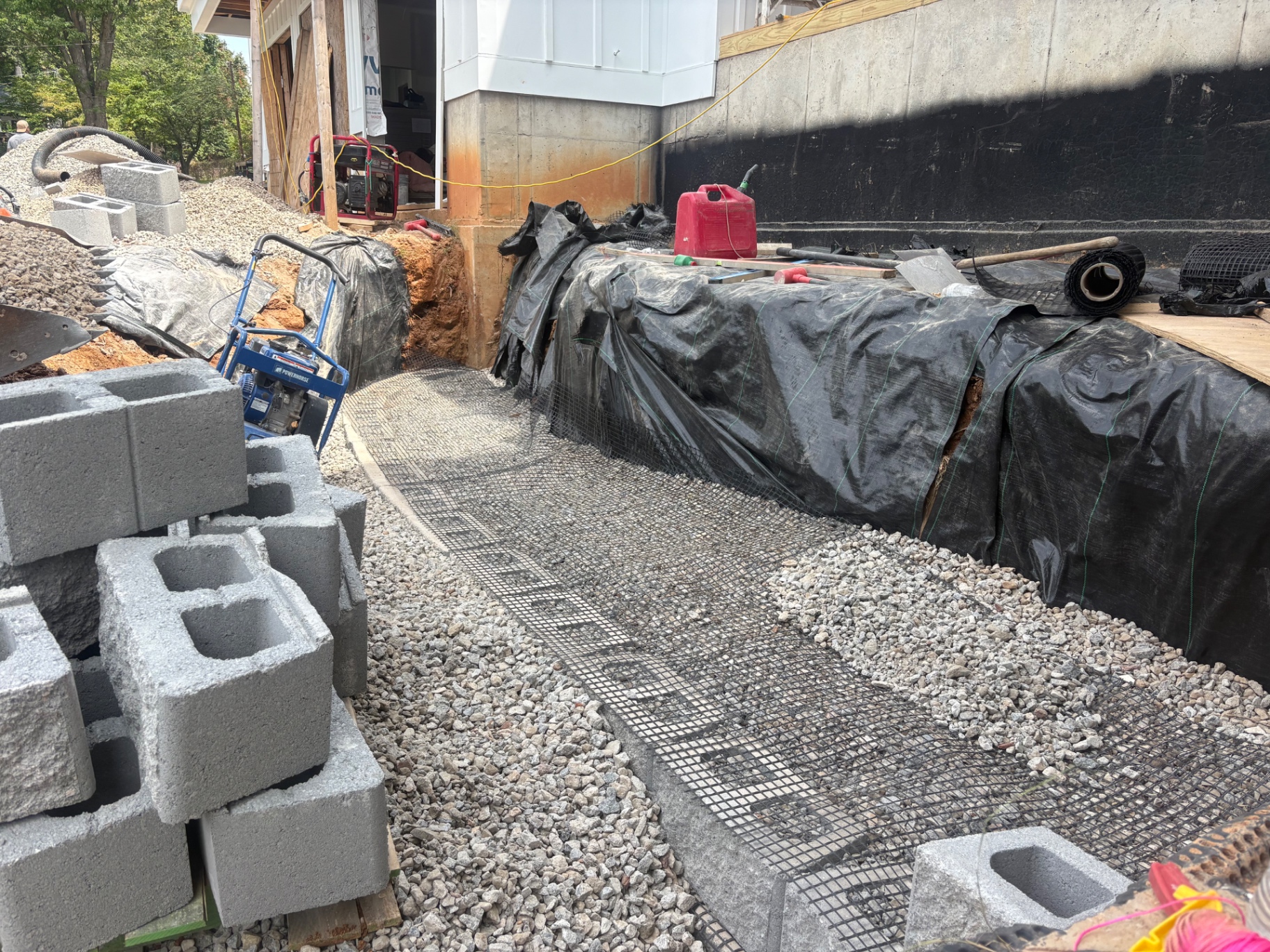
For walls specifically, ask about reinforcement and outlets, since drainage behind a retaining wall is invisible after the job is done and is exactly where corners get cut.
What a very low bid usually means
It can mean a leaner overhead structure, which is legitimate. More often it means thinner base, no fabric, no drainage, no haul-off, or a plan to add change orders once work starts.
It can also mean the contractor is not carrying the same insurance or is subcontracting the work to a crew they do not supervise.
None of that shows up in a one-page bid. It shows up in year three when the patio settles or the wall begins to lean.
Beyond the numbers
Look at responsiveness during the estimating process — it is the best available preview of communication during construction.
Ask to see completed work of a similar type and age, not just fresh installations. A five-year-old wall says more than a five-day-old one.
Check that the scope is written clearly enough that both of you would read it the same way six weeks from now. Our guide to choosing a landscaping contractor covers the rest of the vetting process.
Make the comparison apples to apples
If one proposal includes drainage and another does not, ask the second contractor to price the same work rather than assuming it is unnecessary. Often the totals converge.
Be equally clear about what you want on your end — square footage, material, and the problems you are trying to solve — so every bidder is pricing the same project.
Southern Style Turf & Design writes proposals that spell out excavation, base, drainage, and cleanup as separate items so homeowners can see exactly what they are comparing. You can request an estimate any time.
Frequently asked questions
How many estimates should I get?
Two or three is usually enough to see the range. Beyond that the value drops, and the scheduling delay can cost you the season.
Should I always take the lowest bid?
Only after confirming it covers the same excavation, base, drainage, and cleanup as the others. A lower number for less work is not a better price.
What should be in writing?
Scope, materials and quantities, base depth, drainage details, who handles permits and locates, cleanup, and the payment schedule.
Want this looked at on your property?
We give free, no-pressure on-site estimates across Denver, Mooresville, Cornelius, Davidson, Huntersville and Troutman.