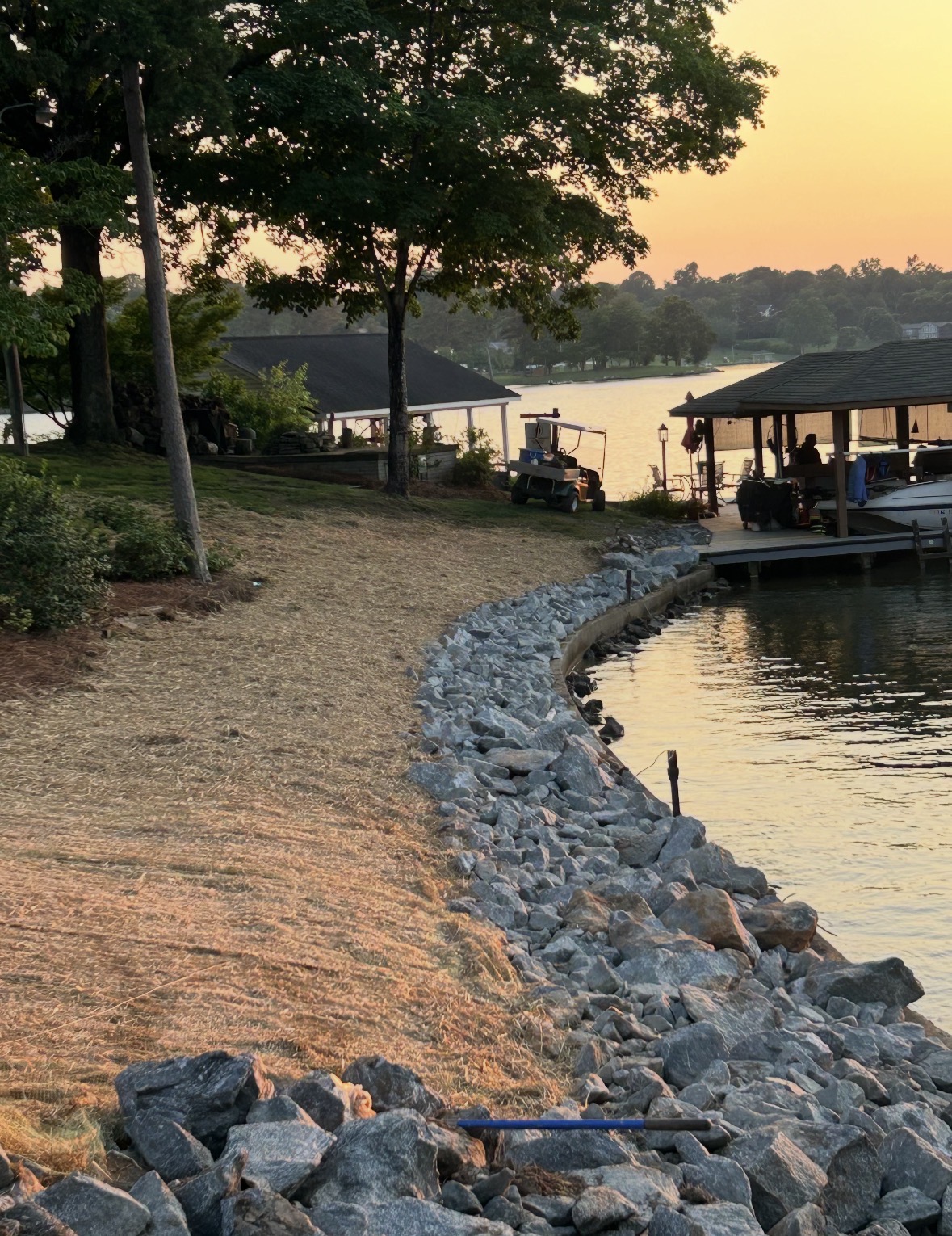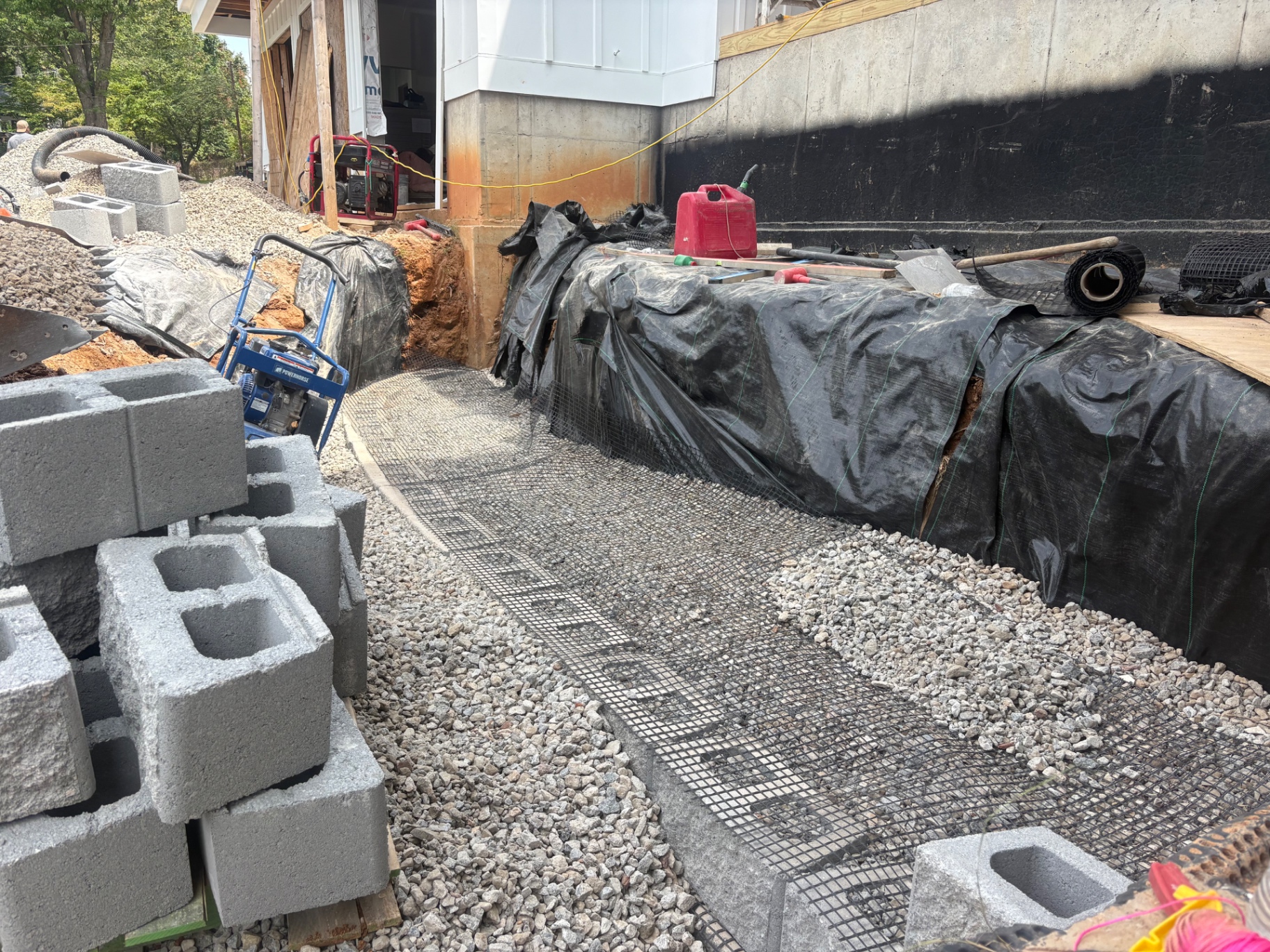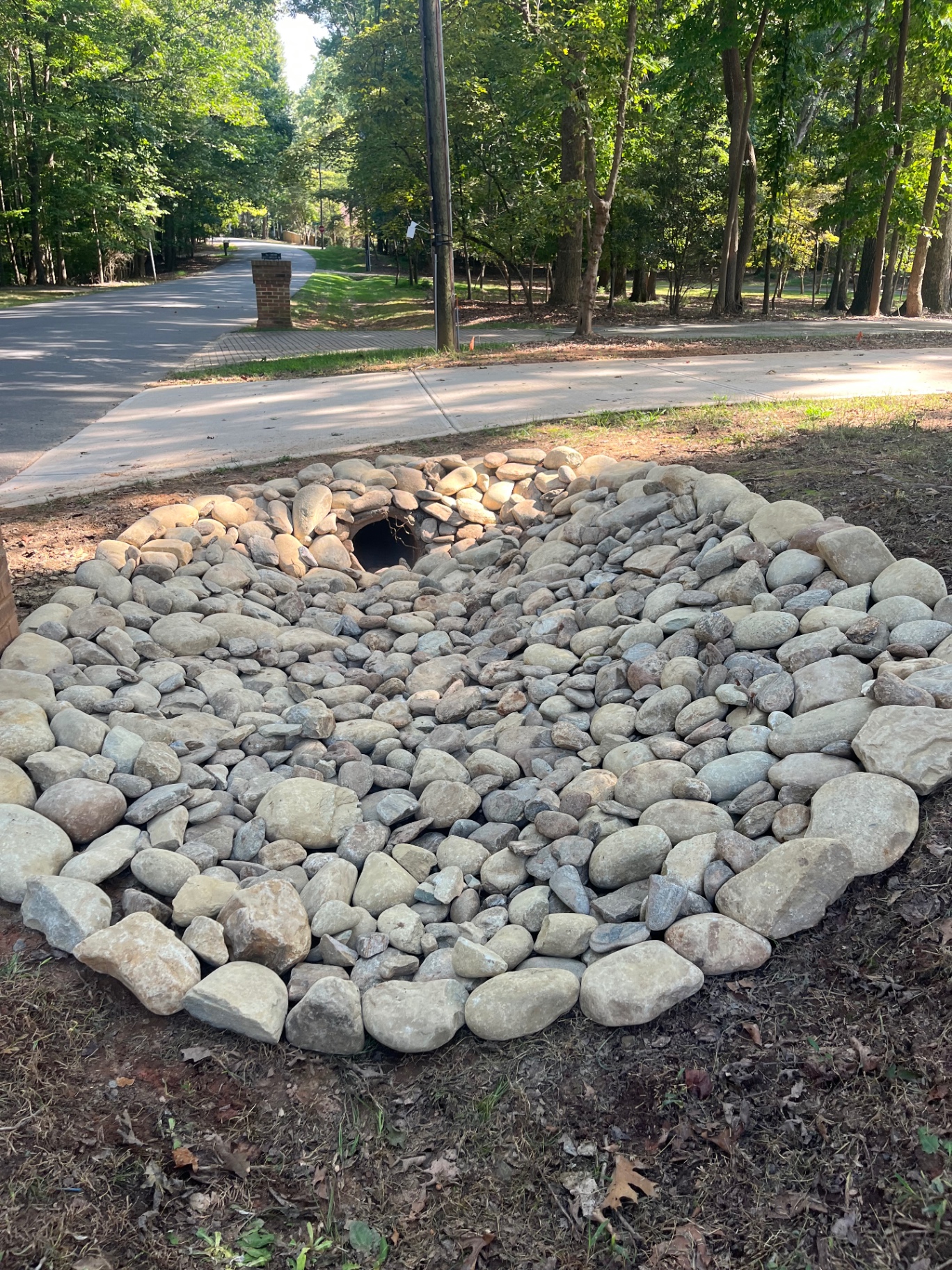
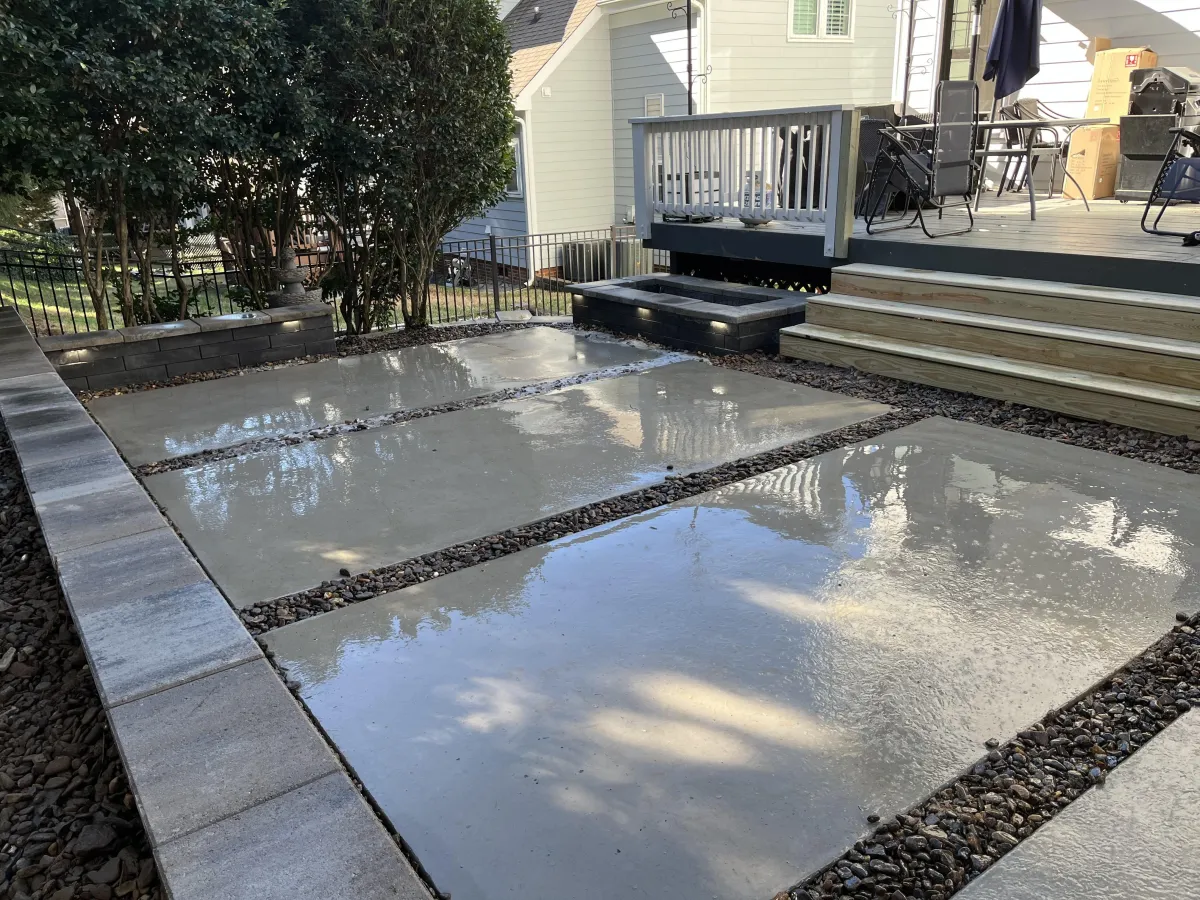
Our winters are mild enough that drainage rarely freezes solid, and just cold enough that the shallow parts of a system — outlets, grates, and emitters — can ice over exactly when a winter storm needs them working.
What actually freezes here
Buried pipe below the surface is generally fine. The vulnerable points are the shallow ends: the daylight outlet, the pop-up emitter, surface grates, and any standing water sitting in a low section of pipe.
A frozen outlet backs the whole line up. Water entering the system has nowhere to go, so it surfaces at the lowest grate or simply ponds in the yard.
Ice in a basin sump is mostly harmless, but ice sealing the grate above it means the inlet is closed during the storm.
Before the cold arrives
A short fall checklist covers most of it.
- Clear leaves off every grate and out of basin sumps.
- Check that daylight outlets are open, not buried under leaf litter or silt.
- Confirm downspout connections are intact after fall storms.
- Flush surface debris out of channel drains along driveways and patios.
- Note any spot where water was standing before winter — it will be worse when the ground is frozen.
Frozen ground makes runoff worse
When soil is frozen or saturated, infiltration effectively stops. Rain that would normally soak in becomes surface runoff instead, which is why winter storms can flood a yard that handles a summer thunderstorm without complaint.
That is also why winter is when foundation and crawlspace moisture problems show up. Water that cannot enter the soil runs to the lowest available point, and around here that is often the foundation.
If you see it happening, note the path the water takes — that observation is worth more to a drainage designer than anything a dry-day site visit reveals.
Irrigation is a separate system
Drainage and irrigation freeze differently. Irrigation lines are pressurized and hold water, so they are genuinely vulnerable to freeze damage and need proper winterization.
If you have not shut down and blown out the irrigation system, that matters more than anything on the drainage side. Our comparison of DIY versus professional winterization covers what is involved.
Backflow preventers and above-ground components are the pieces that crack first, and they are the most expensive to replace.
Ice at hardscape edges
Water that drains across a patio, walkway, or driveway instead of off it turns into an ice hazard in the few cold snaps we get.
A surface that holds a thin film of water after rain is telling you the slope is marginal. Fixing that is a spring project, but knowing about it keeps you from salting the same spot all winter — and deicing salts are hard on concrete.
Southern Style Turf & Design services and repairs yard drainage around Lake Norman year round, including systems that only reveal their weak points in winter weather.
Frequently asked questions
Do French drains freeze in North Carolina?
The buried portion rarely does. The outlet and any shallow section can ice over, which backs up the line, so keeping outlets clear before winter matters more than the depth of the pipe.
Why is my yard wetter in winter than in summer?
Cold soil, low evaporation, and frozen or saturated ground mean far less water soaks in. The same rainfall produces much more surface runoff.
Should I cover my drain grates in winter?
No — covering them closes the inlet exactly when you need it. Keep them clear instead.
Want this looked at on your property?
We give free, no-pressure on-site estimates across Denver, Mooresville, Cornelius, Davidson, Huntersville and Troutman.