A properly built concrete patio should outlast most other things in the yard. The ones that fail early nearly always fail for the same handful of reasons, and none of them are about the concrete.
What determines lifespan
The subgrade and base. A slab on uniformly compacted stone over prepared subgrade moves evenly; a slab on soft spots and uncompacted fill cracks and settles differentially.
Thickness and reinforcement matched to what the slab carries.
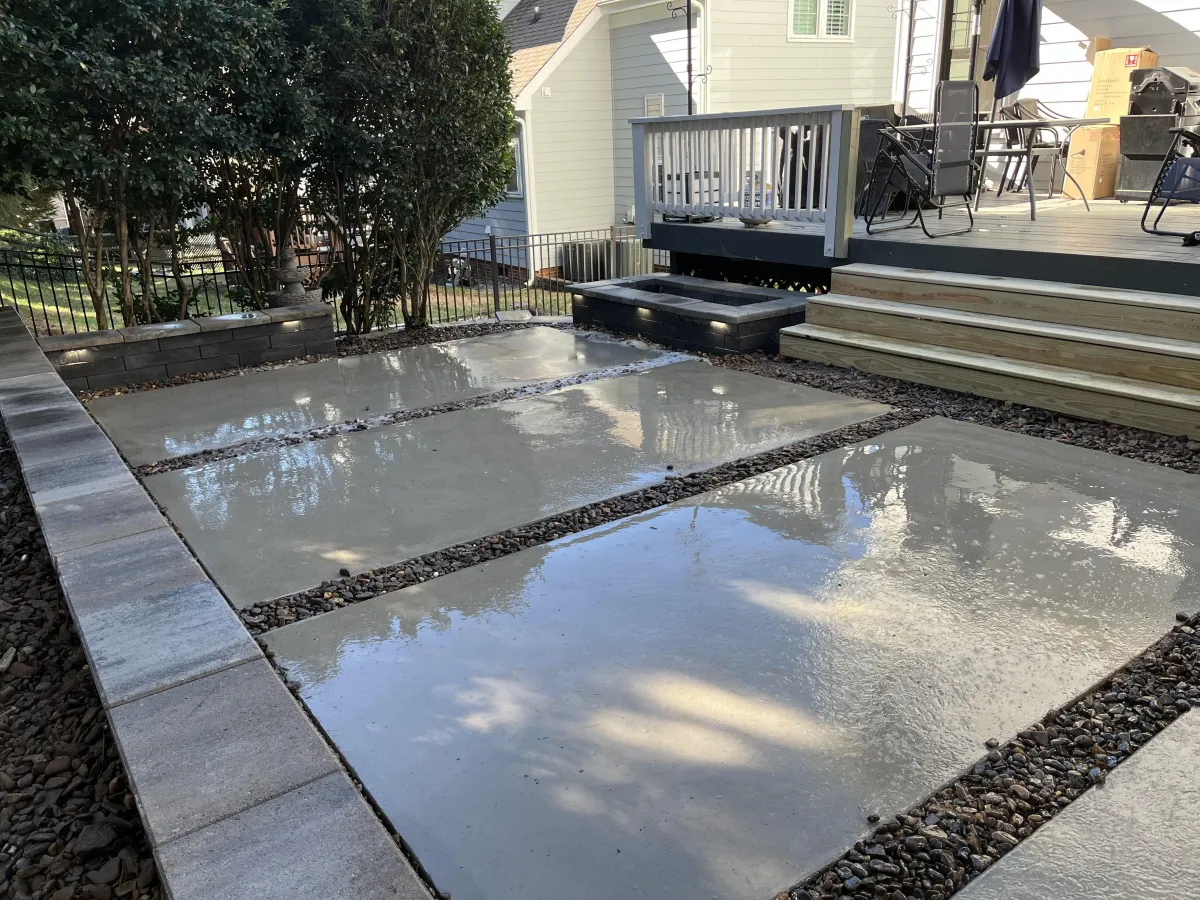
Joints in the right places at the right spacing, so shrinkage cracks happen where they were planned.
Water management. Concrete does not mind rain; it minds water sitting under it, washing the base out, and freezing in the surface.
Cosmetic versus structural cracking
Hairline cracks following control joints are the system working as designed. Concrete shrinks as it cures and joints tell it where to do that.
Random hairline surface crazing is cosmetic and normal, particularly on troweled areas.
Wide cracks, cracks with a vertical step between sides, and cracks that keep opening are structural. They point to base failure, settlement or loading beyond the design.
Surface scaling and flaking usually indicate freeze-thaw damage, often accelerated by de-icing salts.
What shortens a slab's life here
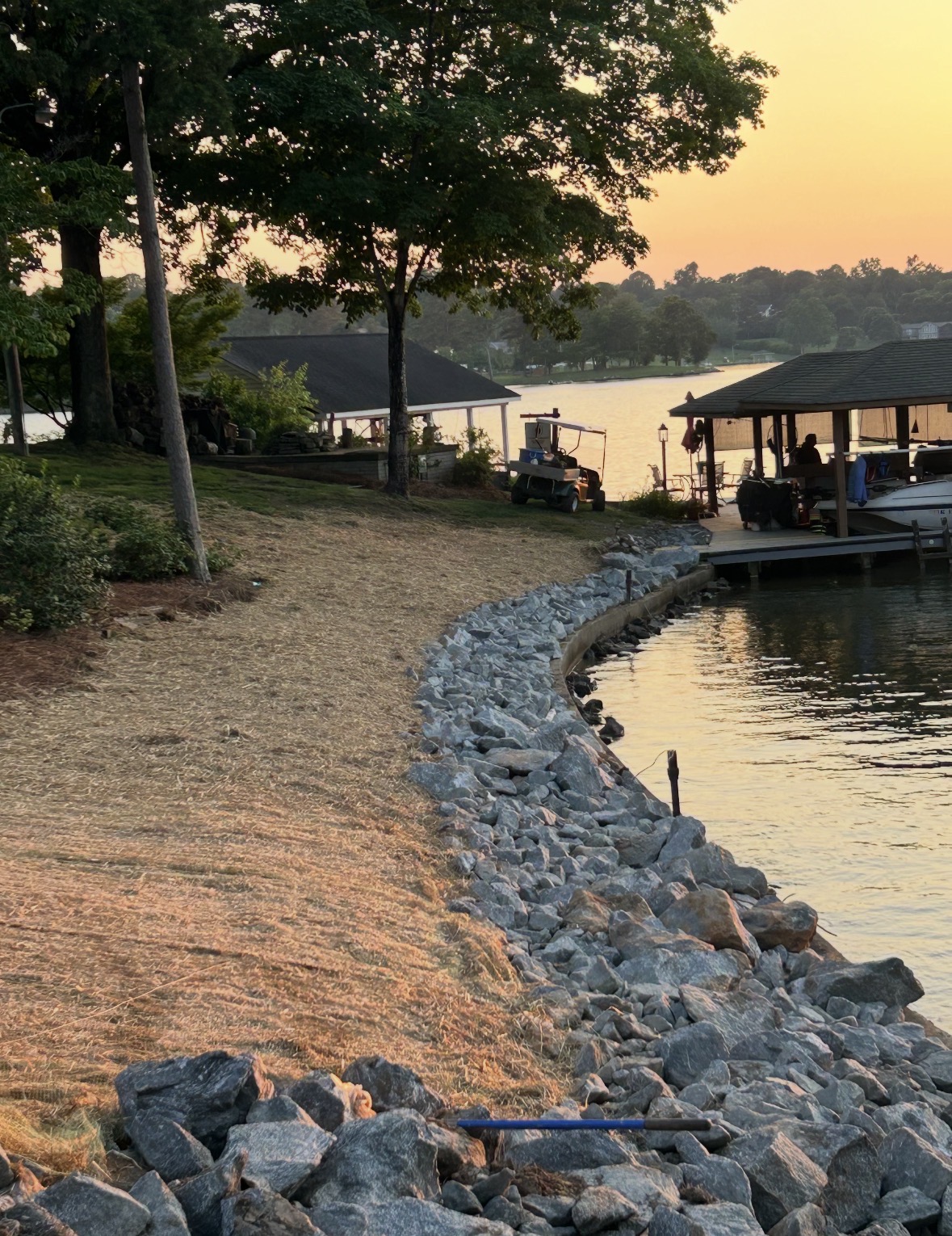
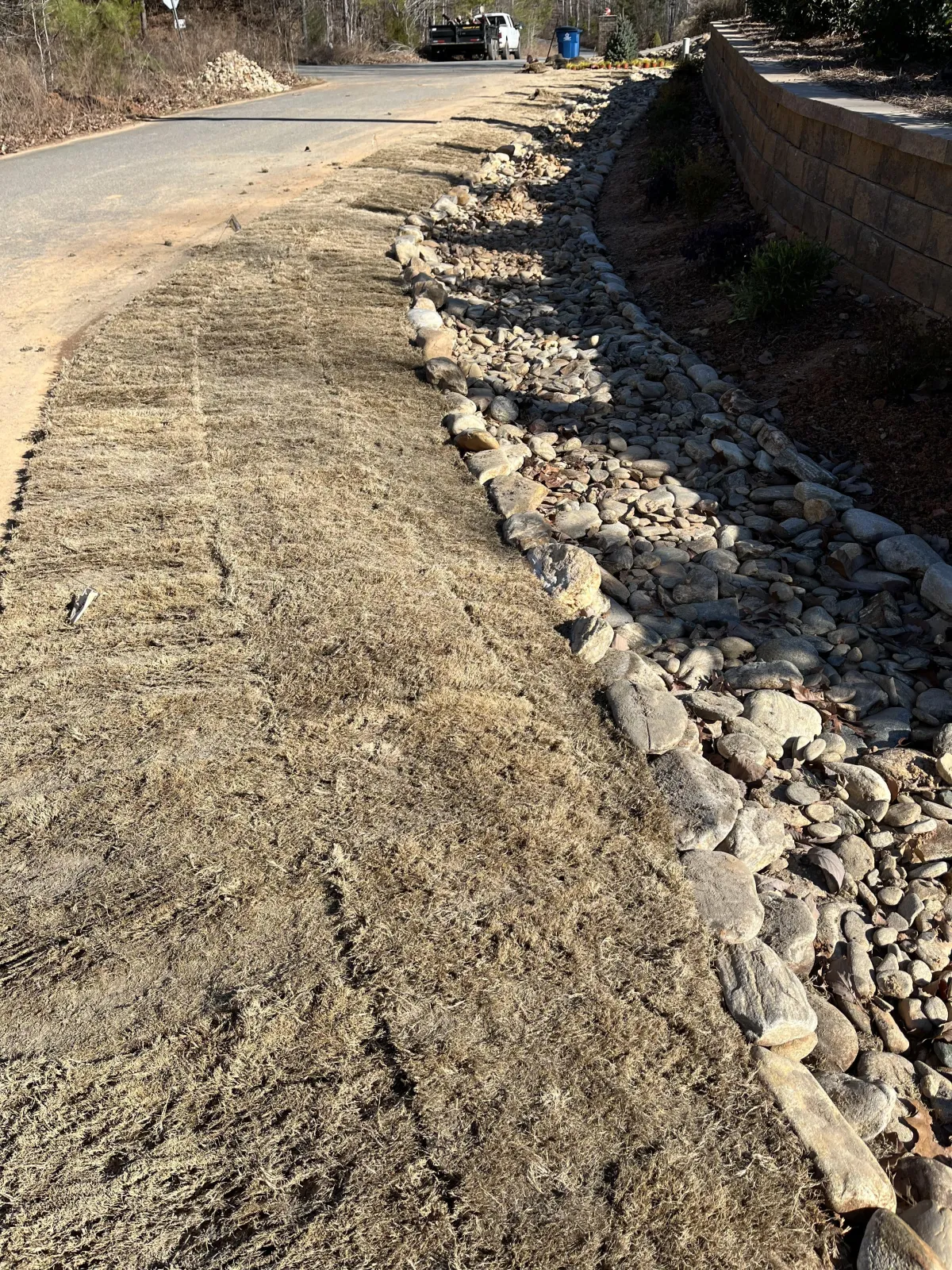
Drainage running under or against the slab edge, washing out the base. This is the most common cause we see around Lake Norman.
Tree roots growing beneath, lifting one section against another.
Vehicles on slabs poured for foot traffic.
Salt in winter on relatively new concrete.
Making it last
Keep water moving away from the slab and keep downspouts from discharging at its edge.
Clean organic debris and stains reasonably promptly, especially in shaded areas where algae takes hold.
Reseal only when appropriate for the finish, and use sand rather than salt for winter traction.
Where a slab has cracked because the ground beneath moved, resurfacing is cosmetic — the base has to be addressed or the crack returns.
Southern Style Turf & Design pours and repairs concrete patios, walkways and pads around Lake Norman and fixes the drainage that caused the problem in the first place.
Frequently asked questions
How long should a concrete patio last?
Decades when the base, thickness, joints and drainage are right. Early failure is almost always a preparation or water problem rather than a concrete problem.
Should I seal my concrete patio?
Plain broom-finish concrete does not require sealing. Decorative and coloured finishes depend on it to keep their appearance.
Can a cracked patio be repaired instead of replaced?
Cosmetic cracks can be filled and, if the slab is sound, resurfaced. Cracks caused by base movement need the ground fixed first, or the repair fails too.
Want this looked at on your property?
We give free, no-pressure on-site estimates across Denver, Mooresville, Cornelius, Davidson, Huntersville and Troutman.