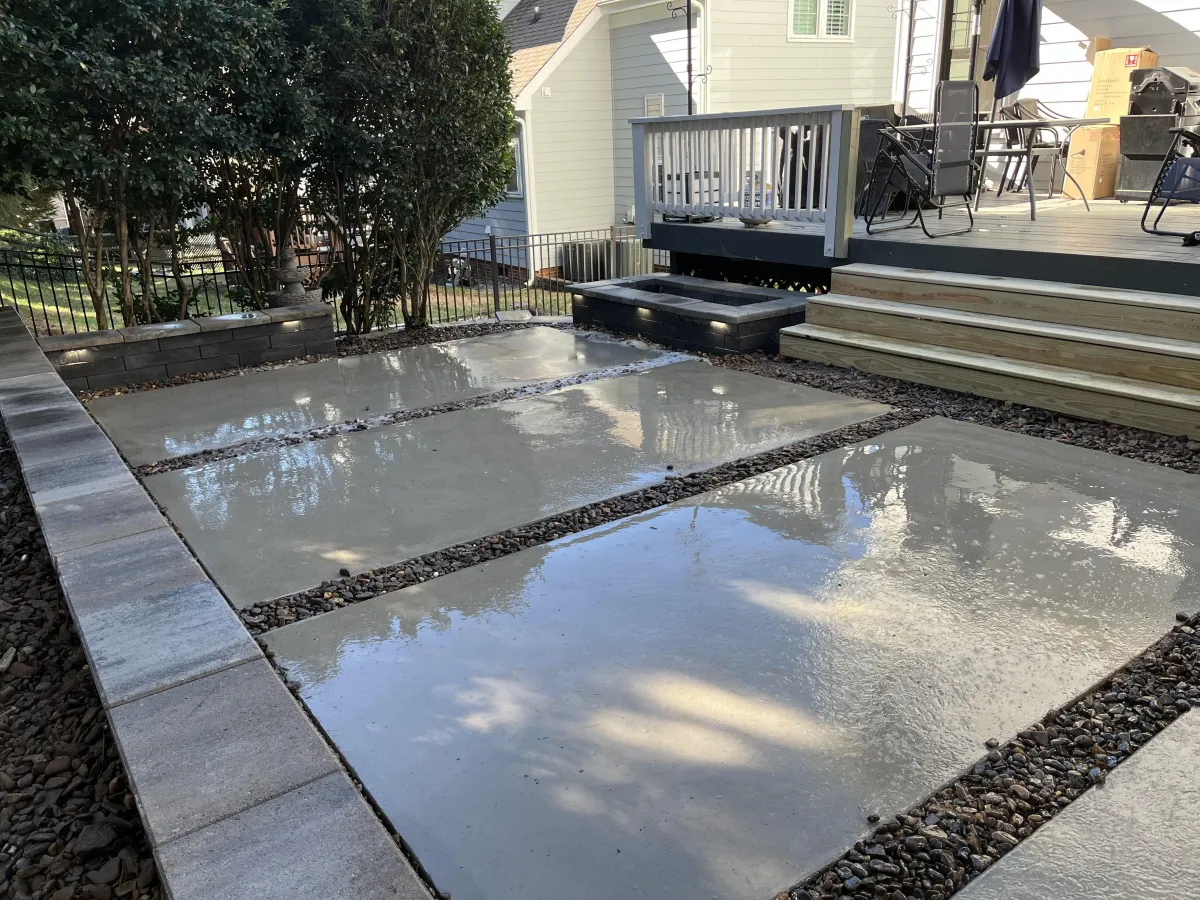
New concrete looks finished long before it is. It cures over weeks rather than days, it changes colour as it dries, and small cracks along the control joints are normal rather than a defect. Knowing what is expected makes the first month far less alarming.
The first week
Concrete gains strength through a chemical reaction with water, not by drying out. That is why curing matters: keeping moisture in the slab early produces stronger, more durable concrete.
Depending on conditions your installer may cover the slab, mist it, or apply a curing compound. Follow whatever instruction you are given about keeping it wet — it is doing real work.
Stay off the surface for the period your installer specifies. Foot traffic goes on before vehicle or heavy loads, and the timings vary with the mix, the weather and the slab.
Keep pets off it too — paw prints in a day-old slab are permanent.
Control joints and the cracks you should expect
Concrete shrinks as it cures, and shrinkage produces cracks. There is no mix and no contractor that prevents this — the craft is in controlling where it happens.
Control joints are the tooled or sawn lines across the slab. They create a deliberate weak line so the slab cracks along the joint, out of sight, rather than randomly across the middle. A crack that follows a control joint is the system working.
Hairline surface cracks elsewhere are common and usually cosmetic.
What is worth raising with your installer: a crack that is wide, that runs the full depth, that has different levels on either side, or that keeps growing months later. Those suggest subgrade movement rather than normal shrinkage.
Colour, efflorescence and surface changes
New concrete dries unevenly and looks patchy for weeks. It evens out as the slab dries through.
A white powdery bloom on the surface is efflorescence — mineral salts carried out by moisture. It is normal, it is not damage, and it generally weathers off over months. It can be washed off, though it may return until the slab has fully dried.
The final colour is usually lighter than the wet slab looked on pour day. If you were expecting the colour you saw being finished, expect it to lift.
When to seal
Sealing is optional. It helps with staining, makes cleaning easier, and can deepen colour on decorative finishes.
It must not be applied too early — the slab has to be cured and dry, and the waiting period is typically measured in weeks, following the sealer manufacturer's guidance. Sealing a slab that is still releasing moisture traps it and can cause the sealer to cloud or peel.
Sealers wear and are reapplied periodically. A sealed surface can also be slicker when wet, which is worth thinking about on steps or around a pool.
Ask your installer what they recommend for the specific finish they poured rather than applying a general-purpose product.
Ongoing care
Keep water shedding off it rather than pooling on it. Clean up oil, grease and organic stains reasonably promptly, since they set into unsealed concrete.
Clear leaves — the tannins stain and the damp underneath encourages algae in shaded areas.
Avoid de-icing salts on newer concrete in particular; they accelerate surface scaling. Sand gives traction without the chemical damage.
Southern Style Turf & Design pours concrete patios, walkways, slabs and steps across Lake Norman and grades the surrounding ground so water leaves the slab properly. Free on-site estimate.
Frequently asked questions
How long does new concrete take to cure?
It keeps gaining strength for weeks. Your installer will give timings for foot traffic and for heavier loads based on the mix and the weather — follow those rather than judging by appearance.
Are hairline cracks in a new concrete patio normal?
Yes. Concrete shrinks as it cures, which is exactly what control joints are for. Cracks that follow the joints are the system working; wide, full-depth or uneven cracks are worth raising with your installer.
What is the white powder on my new concrete?
Efflorescence — mineral salts brought to the surface by moisture. It is normal, harmless, and generally weathers away over months.
When should a concrete patio be sealed?
Only after the slab has cured and dried, typically some weeks after the pour and always per the sealer manufacturer's guidance. Sealing too early traps moisture and can cause clouding or peeling.
Want this looked at on your property?
We give free, no-pressure on-site estimates across Denver, Mooresville, Cornelius, Davidson, Huntersville and Troutman.