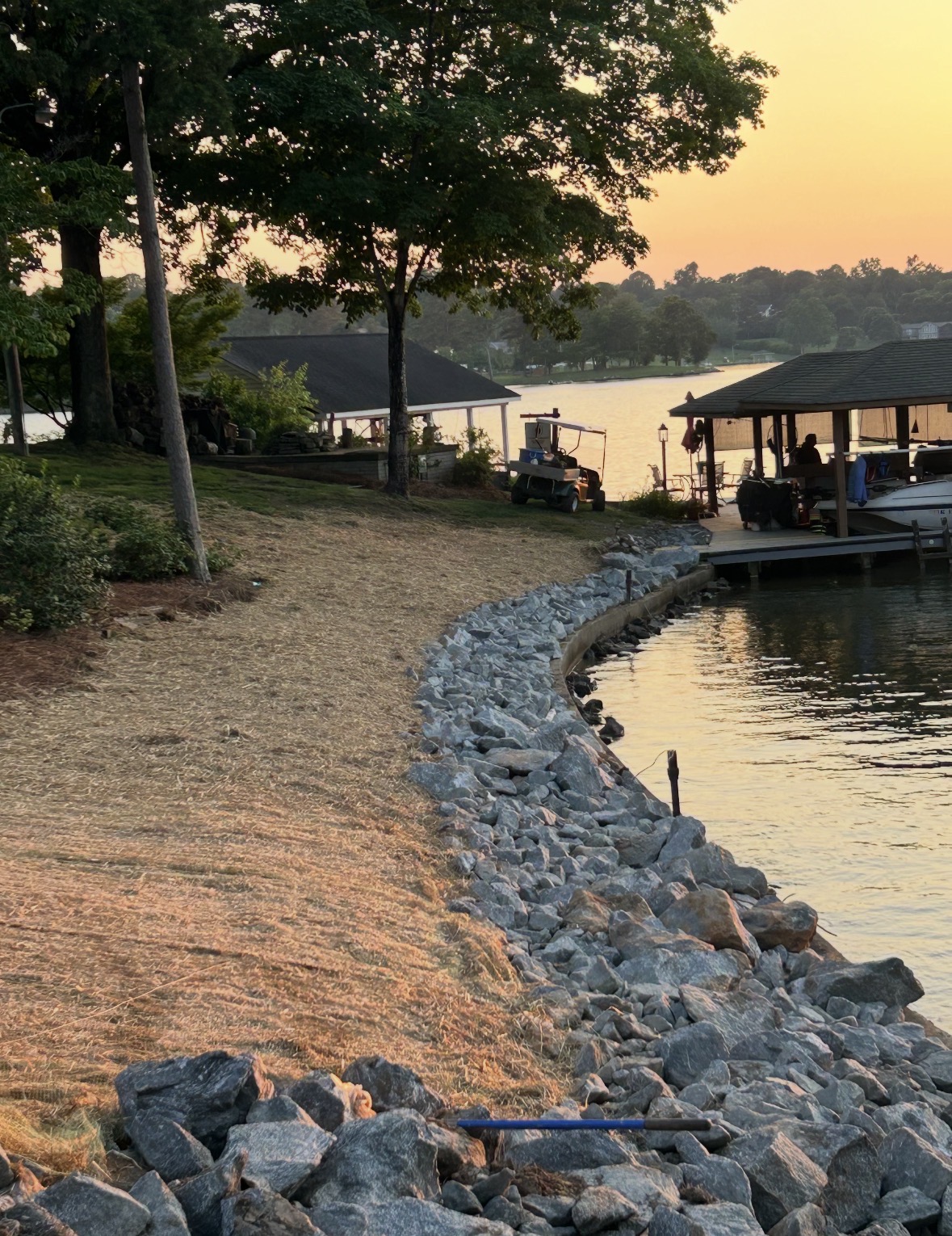
Fix the water first. Planting, patios, walls and turf installed over an unresolved drainage problem fail in predictable ways, and every one of those failures costs more to correct after the fact than the drainage would have cost before. On a full renovation, drainage is the first line item, not a contingency.
What water does to new planting
Most ornamental shrubs and trees fail in wet ground for the same reason: roots need air as well as water, and saturated soil has none. Root rot follows, and it is rarely reversible.
On Piedmont clay this happens faster than people expect. A planting hole dug into clay and backfilled with better soil becomes a bowl that collects water and holds it around the root ball — the phenomenon sometimes described as planting in a bathtub.
New turf has the same problem in a shallower form. Sod laid over ground that stays saturated thins, develops disease and gives way to the weeds that tolerate it.
What water does to fresh hardscape
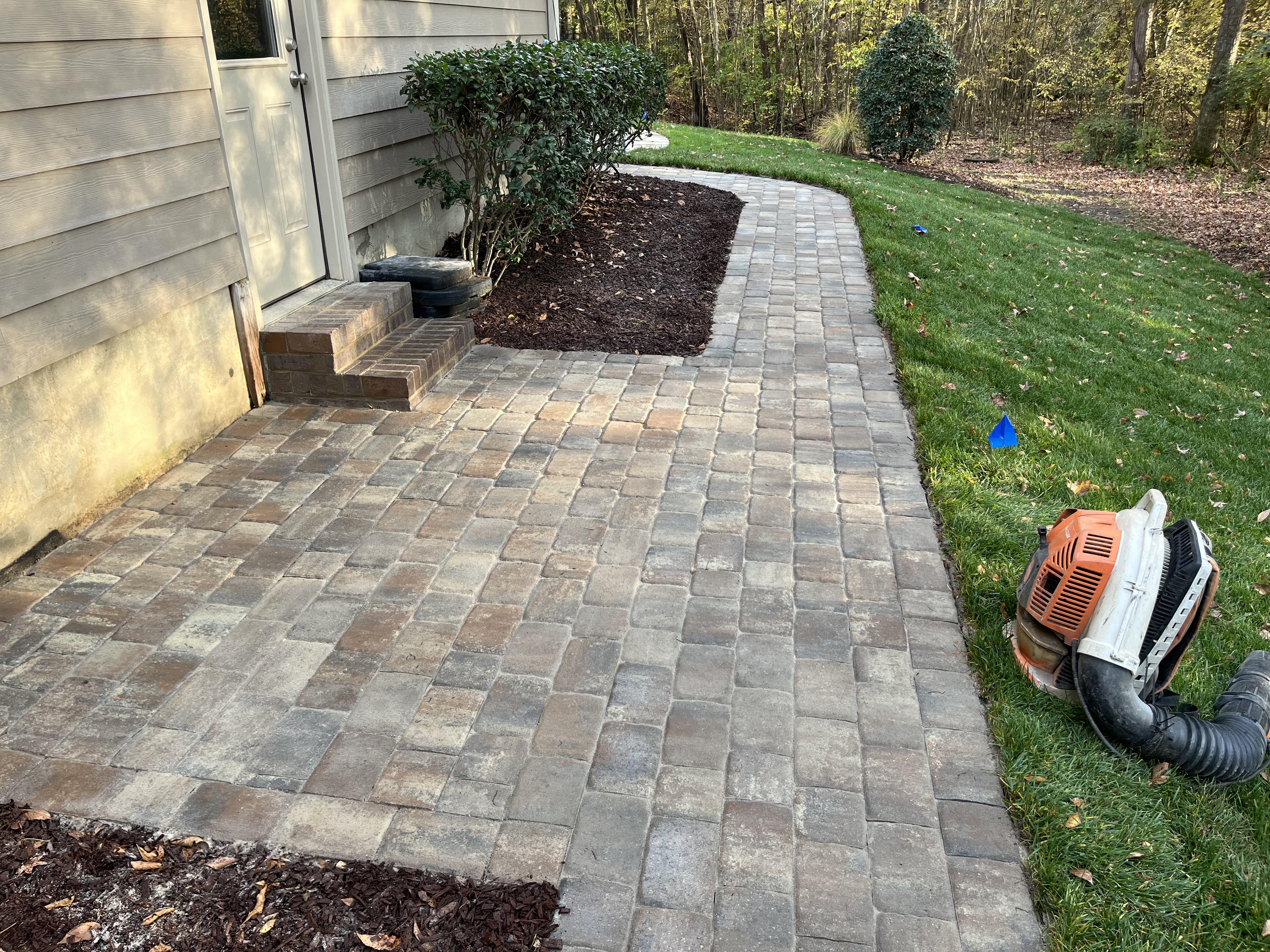
A paver patio is only as stable as its base, and a base sitting in water does not stay stable. Water moving under the base washes out fines, the base loses support, and the surface settles unevenly. Freeze-thaw cycling accelerates it.
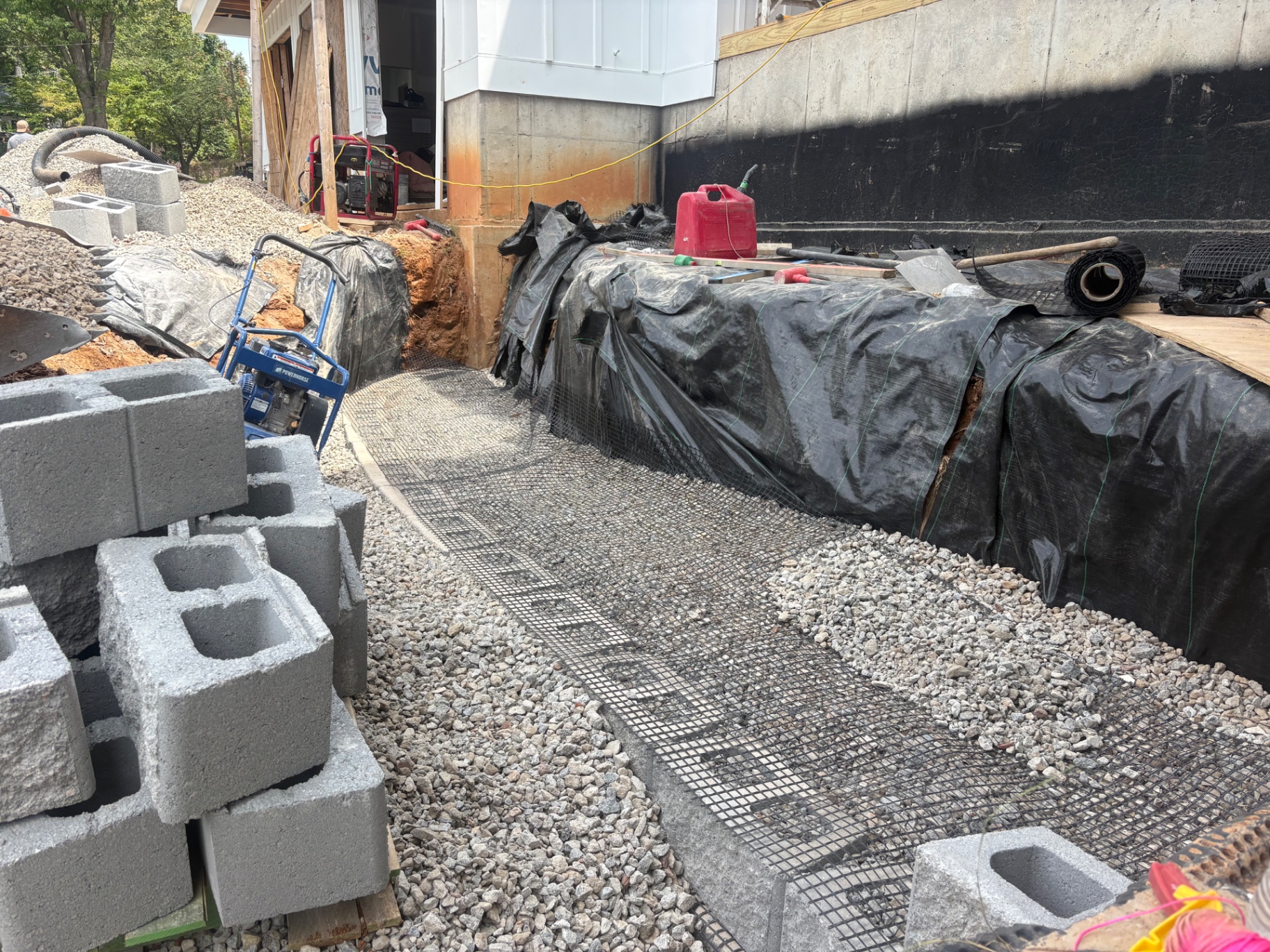
Retaining walls fail from water more than from any other cause. Water accumulating behind a wall adds pressure the wall was not designed to resist, which is why gravel backfill, filter fabric and a drain line behind the wall are structural elements rather than optional extras.
Concrete slabs and walkways over saturated or poorly compacted subgrade crack and settle. The subgrade has to be right before the pour, and it cannot be right if water is running through it.
The order of operations on a full property renovation
The sequence below exists because each step buries the one before it. Working out of order means digging up finished work.
- Diagnose the water. Watch the property in rain, establish where the water comes from and where it can go.
- Rough grading. Shape the ground before anything is built on it.
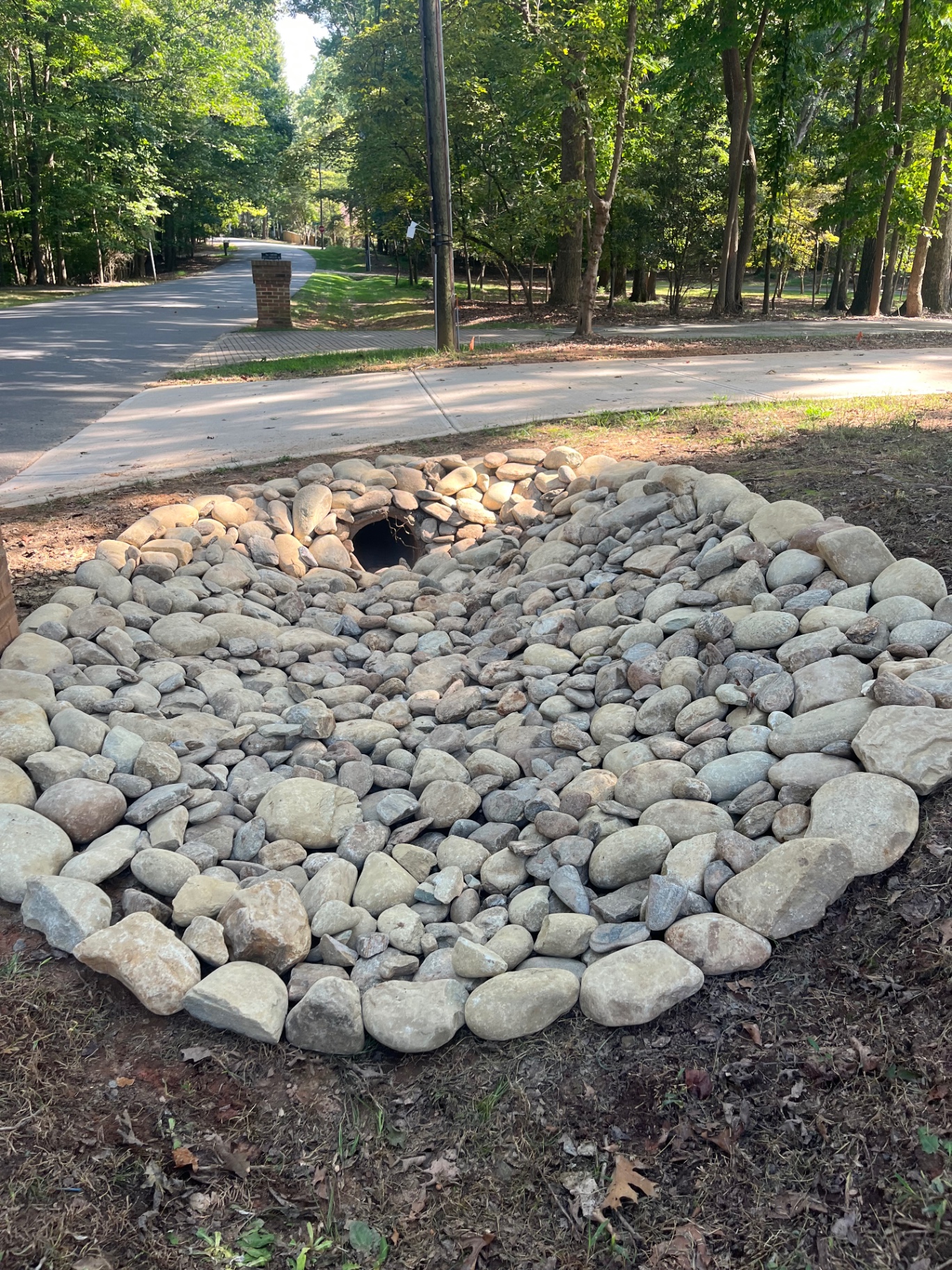
- Drainage. Trenching, pipe, inlets, outlets — all of it goes in while the yard is still open.
- Irrigation sleeving and mainlines. Under future hardscape, before it is built.
- Hardscape. Patios, walls, walkways, on a subgrade that is now dry and correctly shaped.
- Lighting cable. Run before final planting and turf.
- Planting and beds.
- Turf, seed or sod, last.
What it costs to redo work built over a wet spot
We are not publishing figures, but the shape of it is easy to describe. Correcting drainage in an open yard is a machine, a trench and restoration of the strip you disturbed.
Correcting the same problem after a patio is built means lifting and relaying the pavers, or trenching around the patio on a route that was not the best one available. After planting, it means removing and replacing mature material that has been in the ground for two seasons. After a wall has moved, it means dismantling and rebuilding it.
In every case you pay for the drainage anyway — you simply also pay for the demolition, the disposal and the replacement of whatever was built on top.
The exception worth knowing
Occasionally the landscape work is the drainage solution. A retaining wall with proper backfill drainage, a terraced slope, a dry creek bed, a regraded and planted swale — these are designed together rather than sequenced.
That is a design decision made deliberately at the start, not a reason to skip the diagnosis. The water still has to be understood before anything is drawn.
Southern Style Turf & Design handles drainage, grading, hardscape, planting, irrigation and lighting, which means the sequencing is one conversation rather than three contractors pointing at each other. Free on-site estimate across Lake Norman.
Frequently asked questions
Should drainage be fixed before landscaping?
Yes. Planting, patios, walls and turf installed over an unresolved water problem fail predictably, and correcting the drainage afterward means paying for demolition and replacement on top of the drainage itself.
What order should landscape work be done in?
Diagnose the water, rough grade, install drainage, run irrigation sleeves and mainlines, build hardscape, run lighting cable, plant, then turf.
Why do new plants die in a wet yard?
Saturated soil leaves no air around the roots, which causes rot. On clay, a planting hole backfilled with lighter soil also acts as a bowl that holds water around the root ball.
Can a patio be built over a drainage problem?
It can be built, but water moving under the base washes out fines and the surface settles unevenly. The drainage has to be resolved before the base goes in.
Want this looked at on your property?
We give free, no-pressure on-site estimates across Denver, Mooresville, Cornelius, Davidson, Huntersville and Troutman.