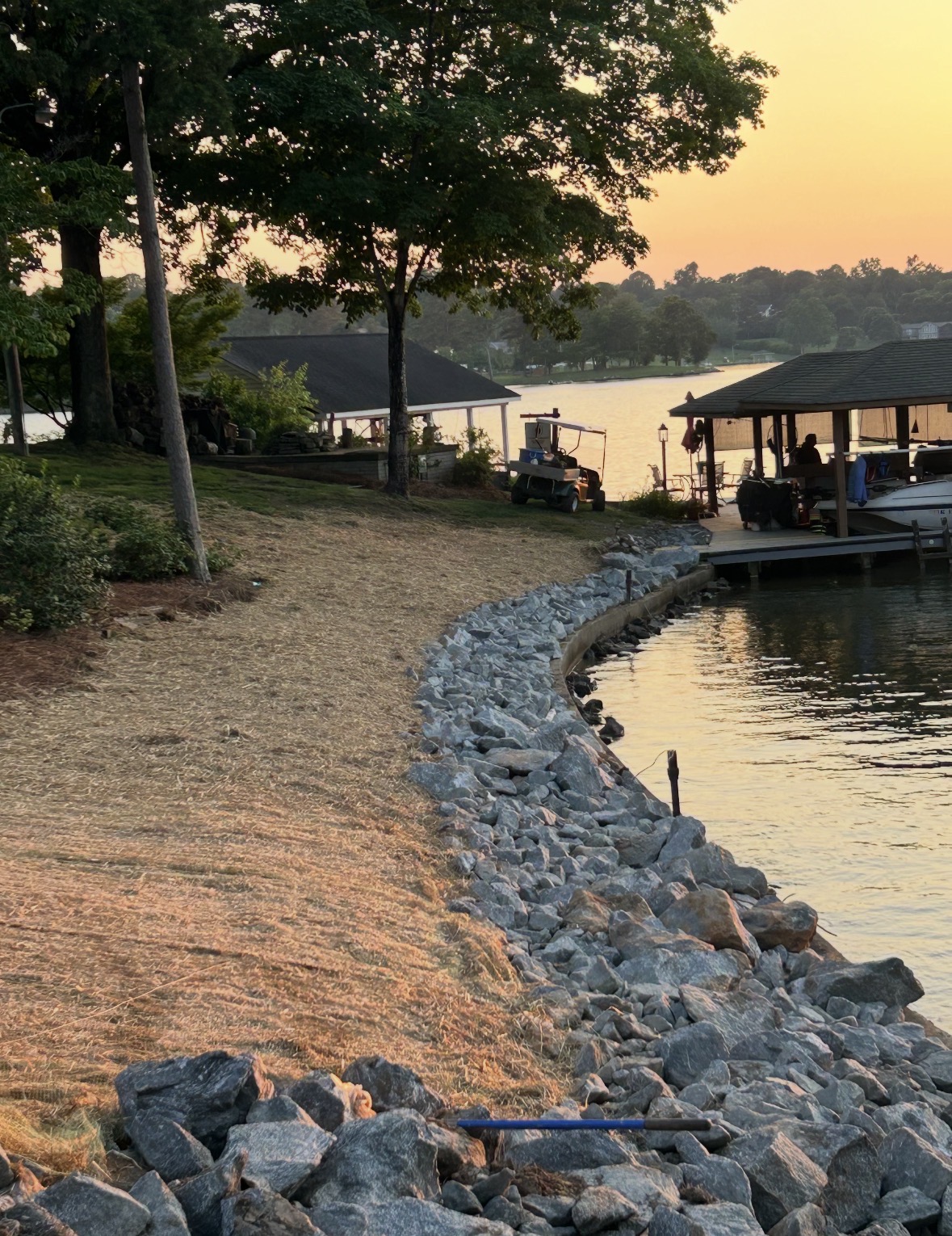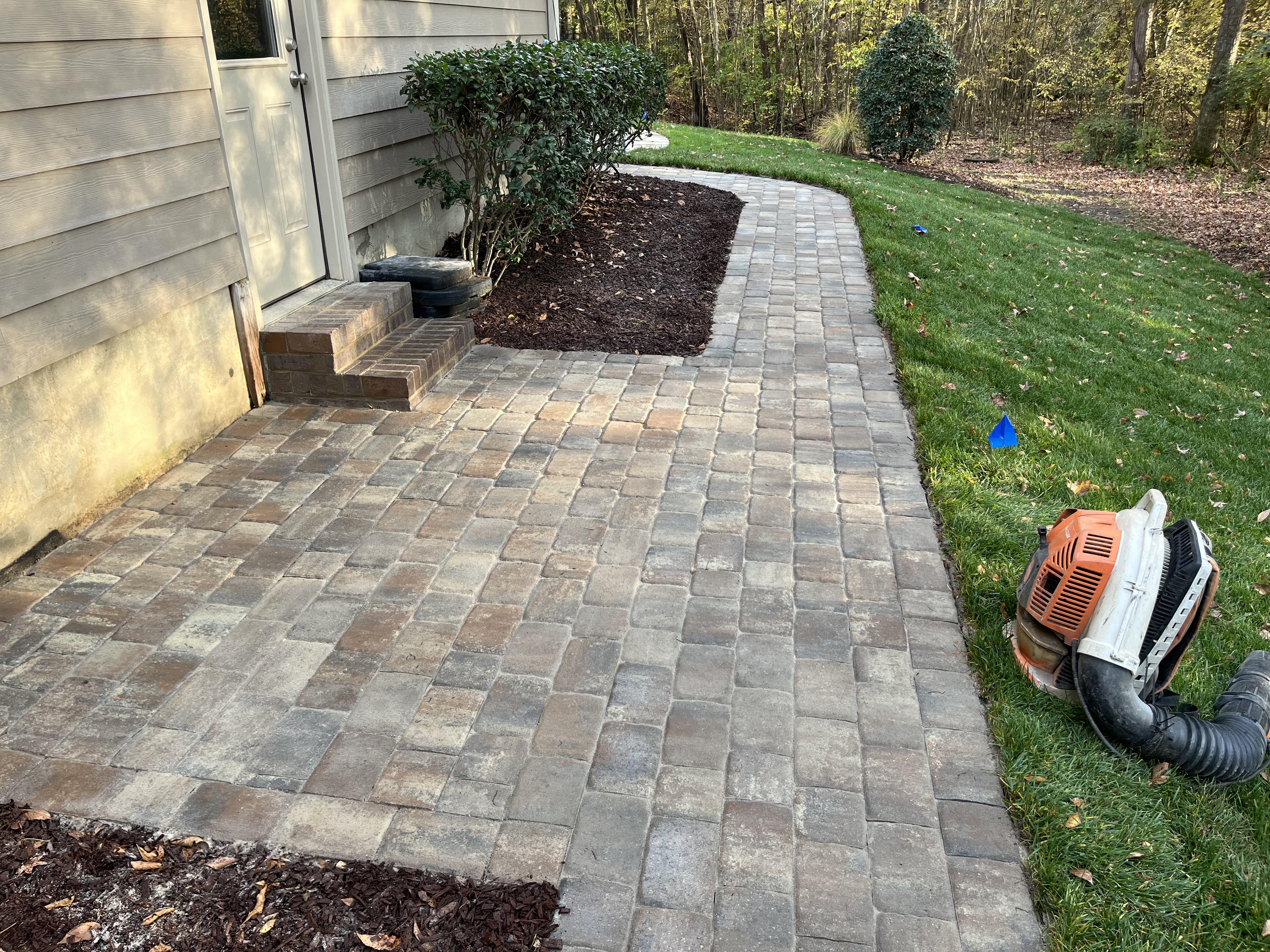
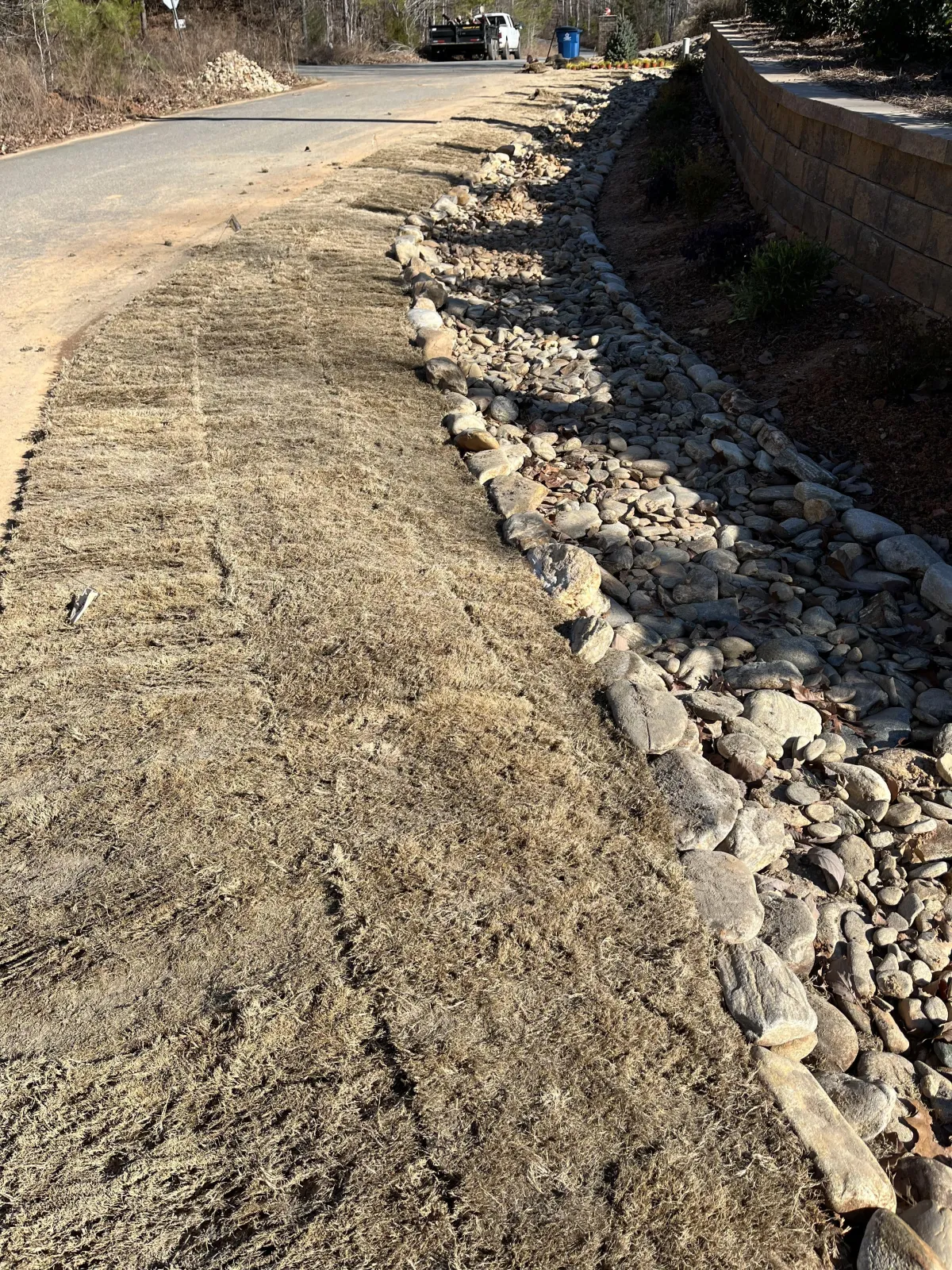
Clearing is removing what is above the ground — brush, saplings, undergrowth, trees. Grubbing is removing what is below it: root balls, stumps and root mats. Most people ask for the first and actually need both.
Why grubbing matters more than clearing
Roots and stumps left in the ground decay over years. As they break down they leave voids, and the surface above settles — under a lawn, a bed, a patio base or a wall footing.
Anything built on ground with buried organic material eventually reflects it: dips in a lawn, a low spot in paving, a bulge in a wall line.
Grubbing removes the organic material so the fill and compaction that follow are sitting on mineral soil.
How the work is sequenced
Locate utilities first. Overhead lines, buried services, septic fields and wells all constrain machine access before anything is cut.
Protect what stays. Trees to be kept need their root zones fenced off before equipment arrives, not after.
Clear the vegetation, then grub the roots and stumps, then strip and stockpile usable topsoil, then shape to rough grade.
Erosion control goes in as the cover comes off. Bare, sloped Piedmont soil moves fast in a thunderstorm.
What happens to the material
Brush and timber can be chipped on site, hauled off, or in some cases stacked for firewood. Chipping produces mulch, though fresh chip is for paths and woodland areas rather than planting beds.
Stumps and root balls are bulky and usually leave the site. Volume is what drives haul-off, and it is always more than owners expect.
Usable topsoil is worth stockpiling and respreading. Losing it to haul-off means buying it back later.
When you actually need it
Before building on a wooded or overgrown area — patio, wall, shed pad, lawn, pool.
When reclaiming a back section of a lot that has gone to brush and vines.
Where a slope is being reshaped or terraced and the existing vegetation is in the way.
Local tree, buffer and erosion-control rules vary by jurisdiction and there may be lake-shore buffer requirements near the water. Confirm with your county or town before clearing anything substantial.
Southern Style Turf & Design handles clearing, grubbing, excavation and site preparation across the Lake Norman area.
Frequently asked questions
Is stump grinding the same as grubbing?
No. Grinding removes the stump to a depth below grade and leaves the root system; grubbing removes the root ball. Grinding is fine under lawn, not under structures.
Do I need a permit to clear land?
It depends on the size of the area, slope, proximity to water and your jurisdiction. Check with your county or town before starting.
Can cleared brush be left on site?
Chipped material can often stay and be used on paths or woodland edges. Stumps and large debris usually have to leave.
Want this looked at on your property?
We give free, no-pressure on-site estimates across Denver, Mooresville, Cornelius, Davidson, Huntersville and Troutman.