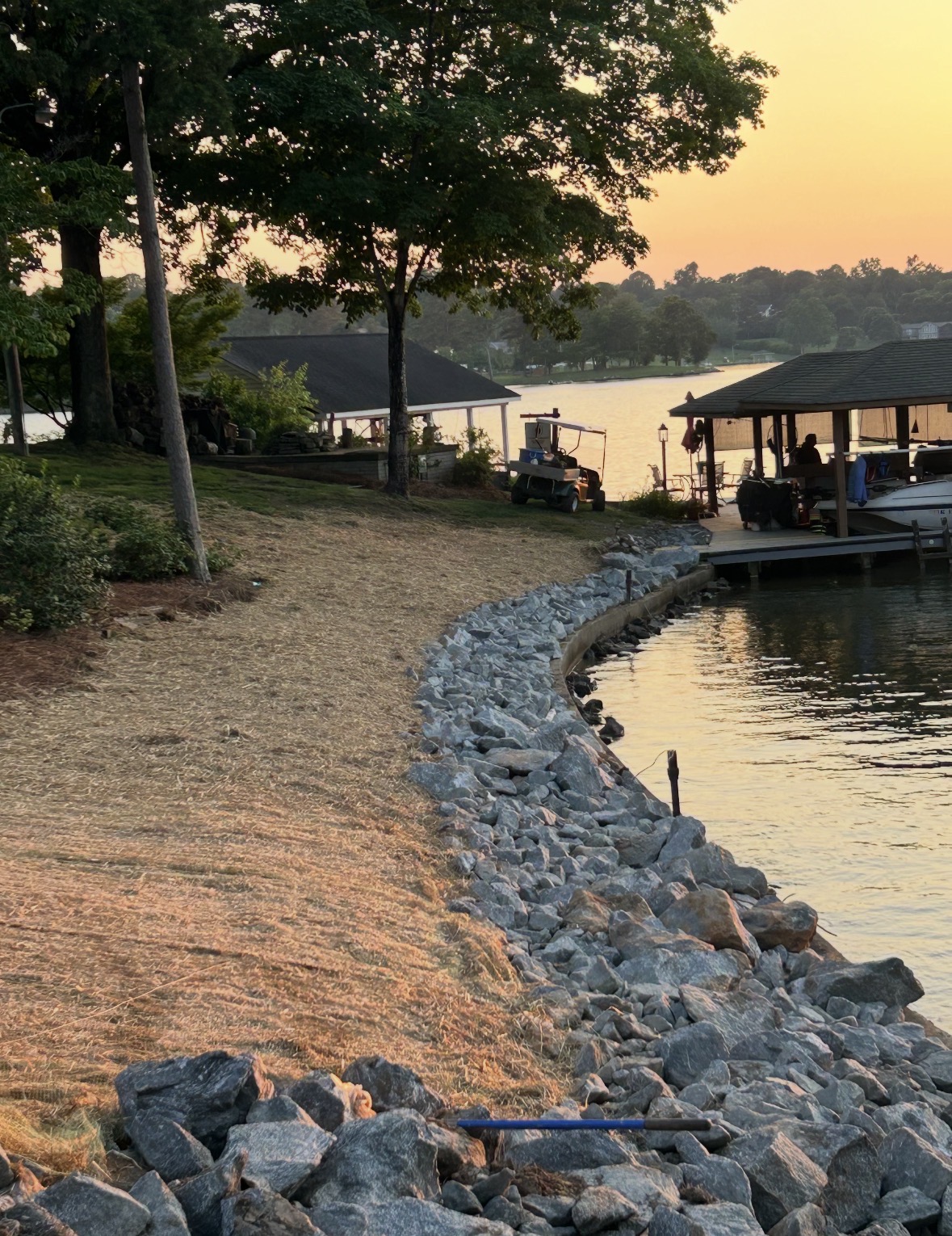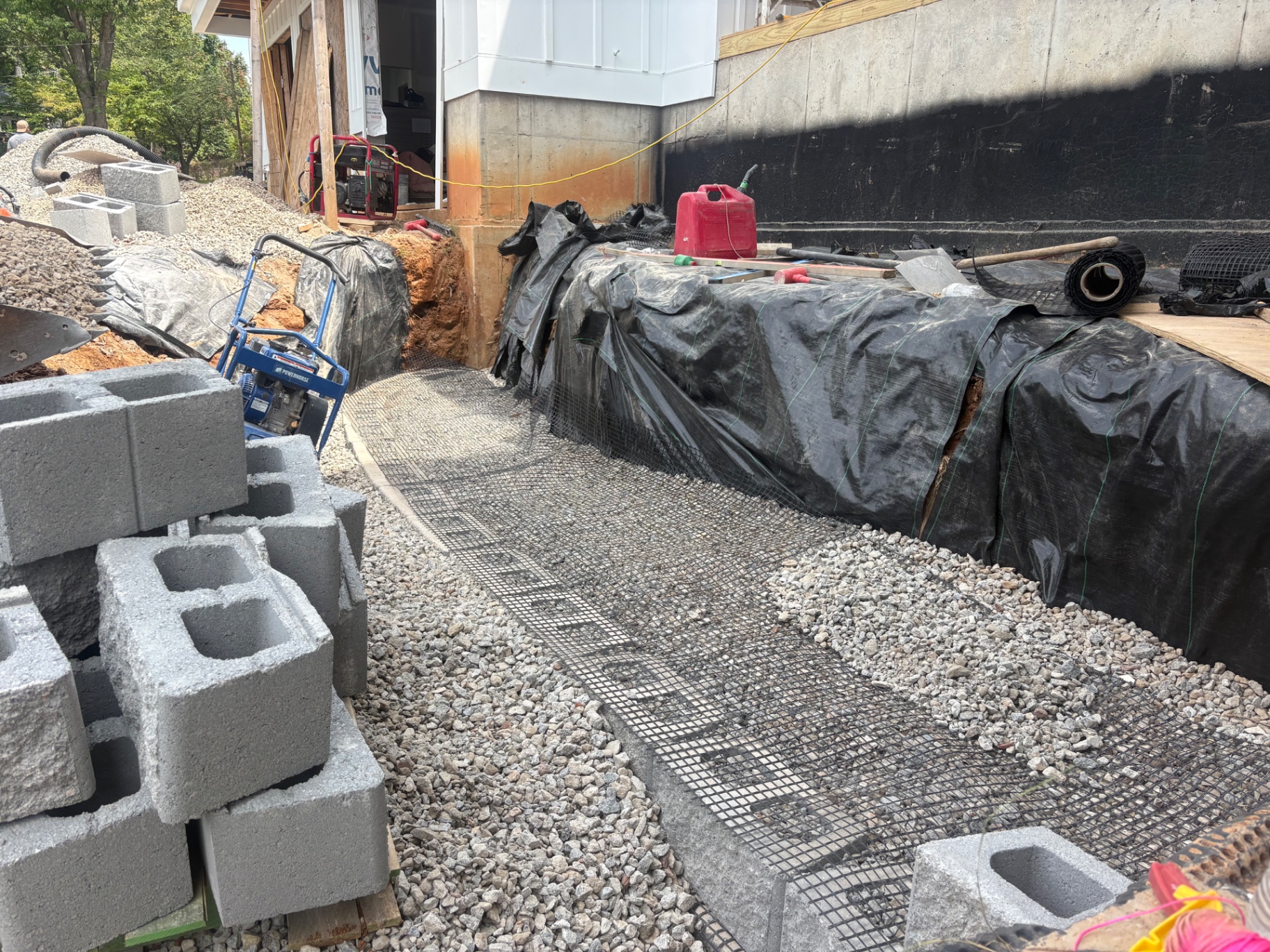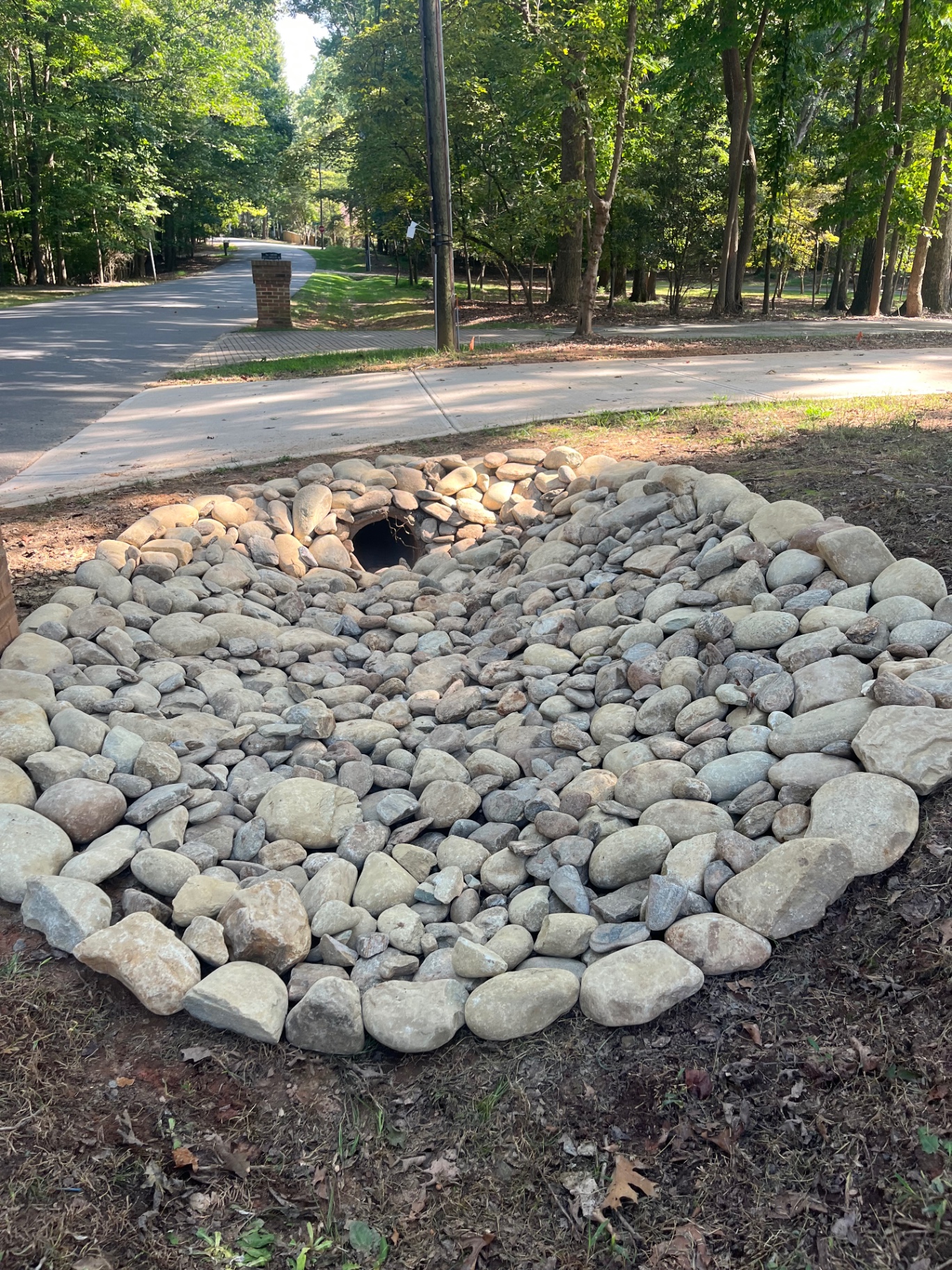
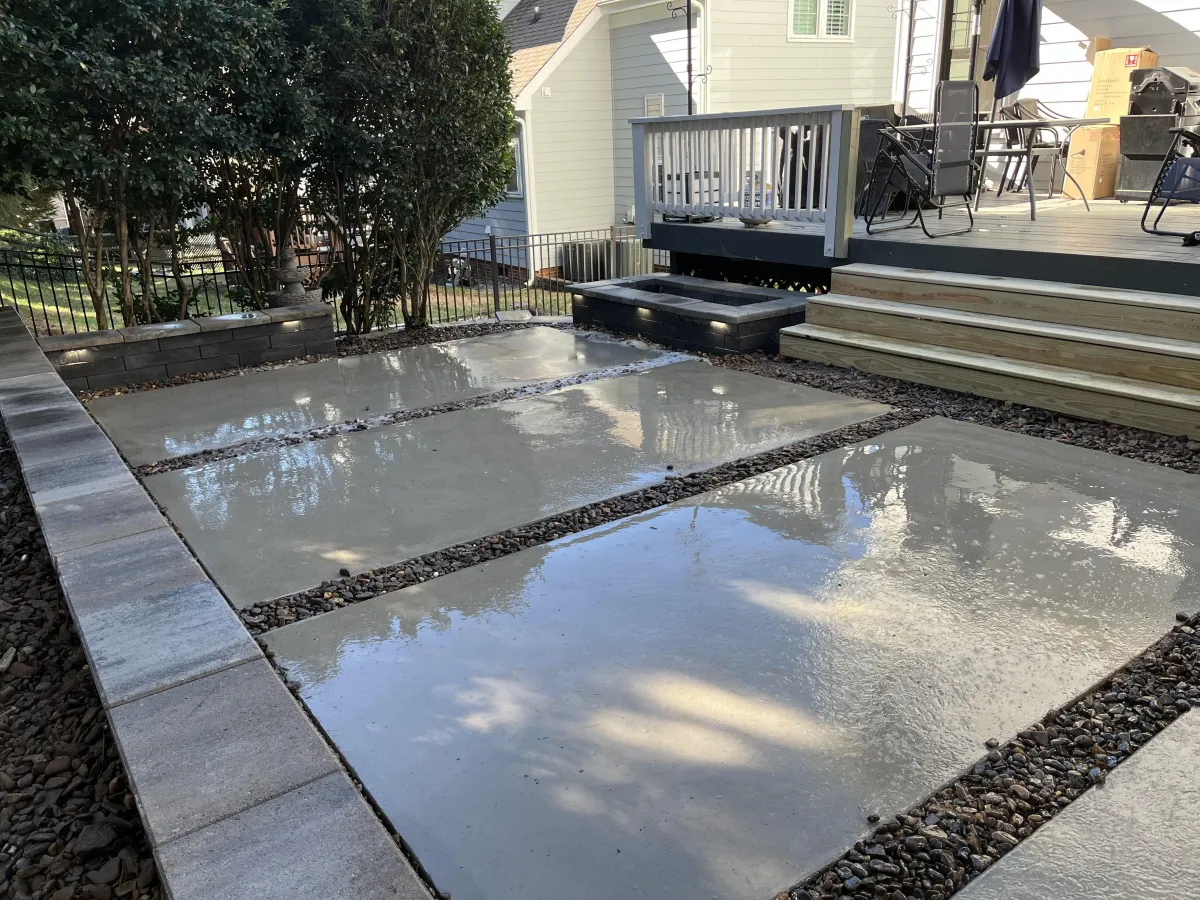
Excavation is the most disruptive phase of any landscape project. Here's what to expect during excavation, what can go wrong, and how to protect utilities and existing plantings.
Before Any Machine Touches the Ground
North Carolina 811 — call before you dig. Any excavation on a Lake Norman property requires a utility locate call at least 3 business days before work begins. 811 is the free statewide service that marks underground utility lines — gas, electric, water, cable, telecom — with flags or paint. Hitting an unmarked line is dangerous, expensive, and creates liability. We call 811 on every project before excavation begins. Homeowners hiring contractors who don't should treat that as a red flag.
What Excavation Reveals
Lake Norman properties often contain surprises below grade: buried landscape debris from previous owners, old drainage systems in unknown condition, tree roots that extend further than expected, and rock — particularly in properties closer to the Piedmont geology. We assess these when they appear and communicate before continuing. Buried surprises can affect cost and schedule; knowing about them early is better than discovering them mid-project.
Equipment Access
Most residential landscape excavation uses a compact track loader or mini excavator — equipment small enough to fit through standard gate openings (at least 36–48 inches wide) and light enough not to damage underground irrigation or drainage systems. If the project site has limited access, a hand dig or smaller equipment may be necessary, which affects both schedule and cost. Assess access to the work area before getting a quote.
Protecting Existing Plants and Structures
Established trees are the most vulnerable to excavation damage. Root systems extend well beyond the drip line — sometimes 1.5–2x the height of the tree — and severing significant roots can cause decline that shows up years later. When excavation is needed near mature trees on a Lake Norman property, we plan routes and work methods that minimize root zone disturbance. A 12-inch trench dug within 10 feet of a mature tree's trunk can cause significant long-term damage.
If existing plantings need to be protected, timing matters. Excavation during dormancy (December–February) causes less stress to plants than excavation during active growth. Soil disturbance near tree root zones is less damaging when trees aren't actively pulling resources.
We handle grading and excavation throughout Lake Norman as part of landscape and drainage projects. Free estimate — 704-460-2019.
Helpful outside reference
Before anyone digs, NC811 utility marking is required, and the OSHA trenching and excavation safety page explains why trench work needs care.
Want this looked at on your property?
We give free, no-pressure on-site estimates across Denver, Mooresville, Cornelius, Davidson, Huntersville and Troutman.